
A Journey Among Living Machines and Their Makers
You never forget the first time something made of metal looks back at you.
In a quiet, private gallery tucked into a concert hall in the heart of Shanghai’s new district, he sat perfectly upright at his writing desk, silver wig curled over plump cheeks, a ruffled collar blooming from a burgundy jacket tailored in the European style. His hand traced confident contours, sketching a small dog and the line Mon Toutou—“my doggy.” Then, suddenly, he blinked and nodded. I remember the crowd gasping. I was fourteen, standing in awe as this “boy,” not-quite-human and not-quite-toy, came to life before me. The guide told me he was an automaton—a “self-moving” mechanical device designed to mimic human or animal actions—and that he was built by a contemporary Swiss master named François Junod, based on an exceptional design from the eighteenth century.
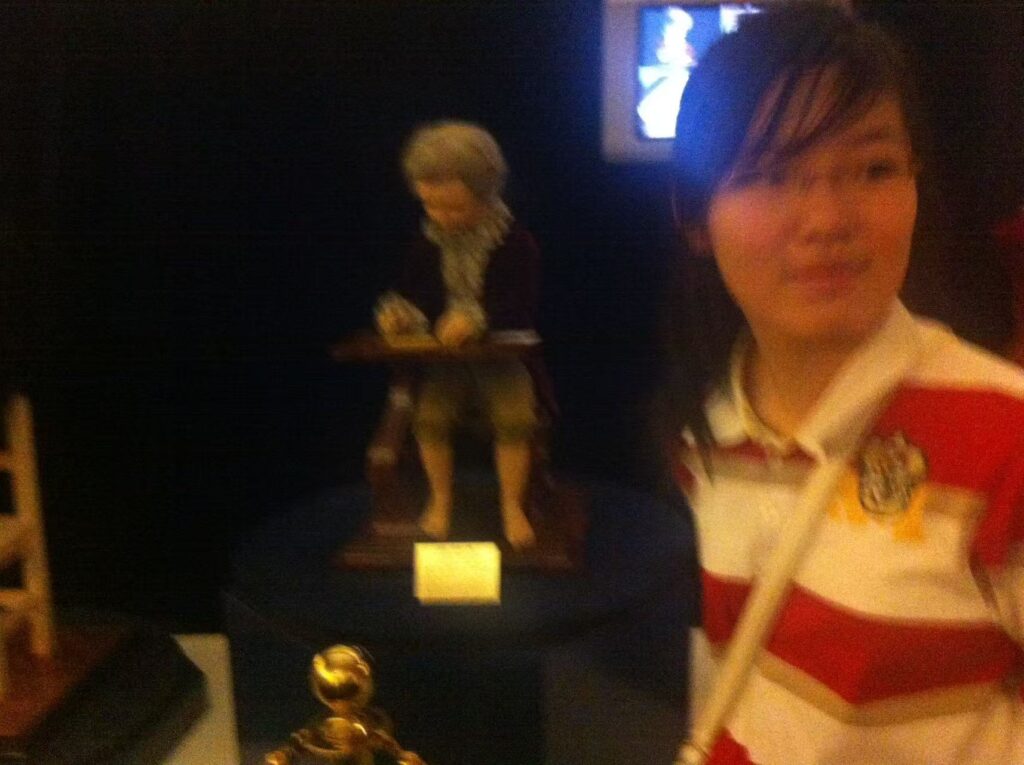
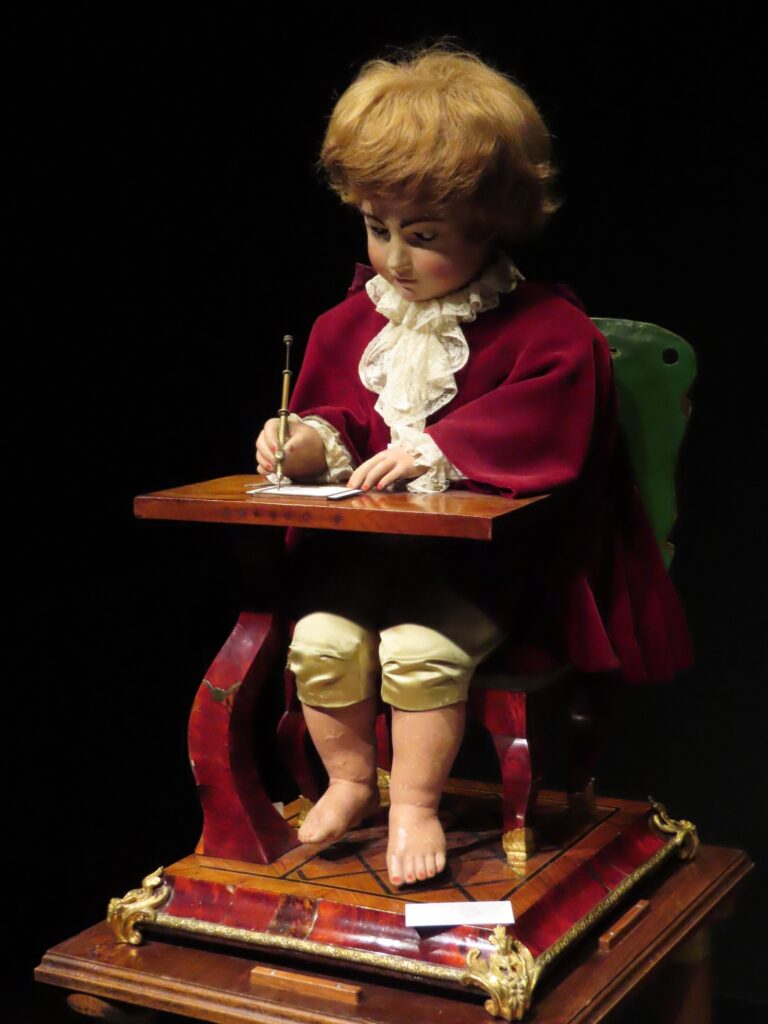
This machine was invented by the Jaquet-Droz,” the guide said, “or Ya Ke De Luo, as their greatest admirer, the Chinese Emperor Qianlong (reigned from 1735 to 1796), used to call them. The Swiss family invented the sliding piston whistle to make mechanical birds sing and designed automata that could write, draw, and play music.”
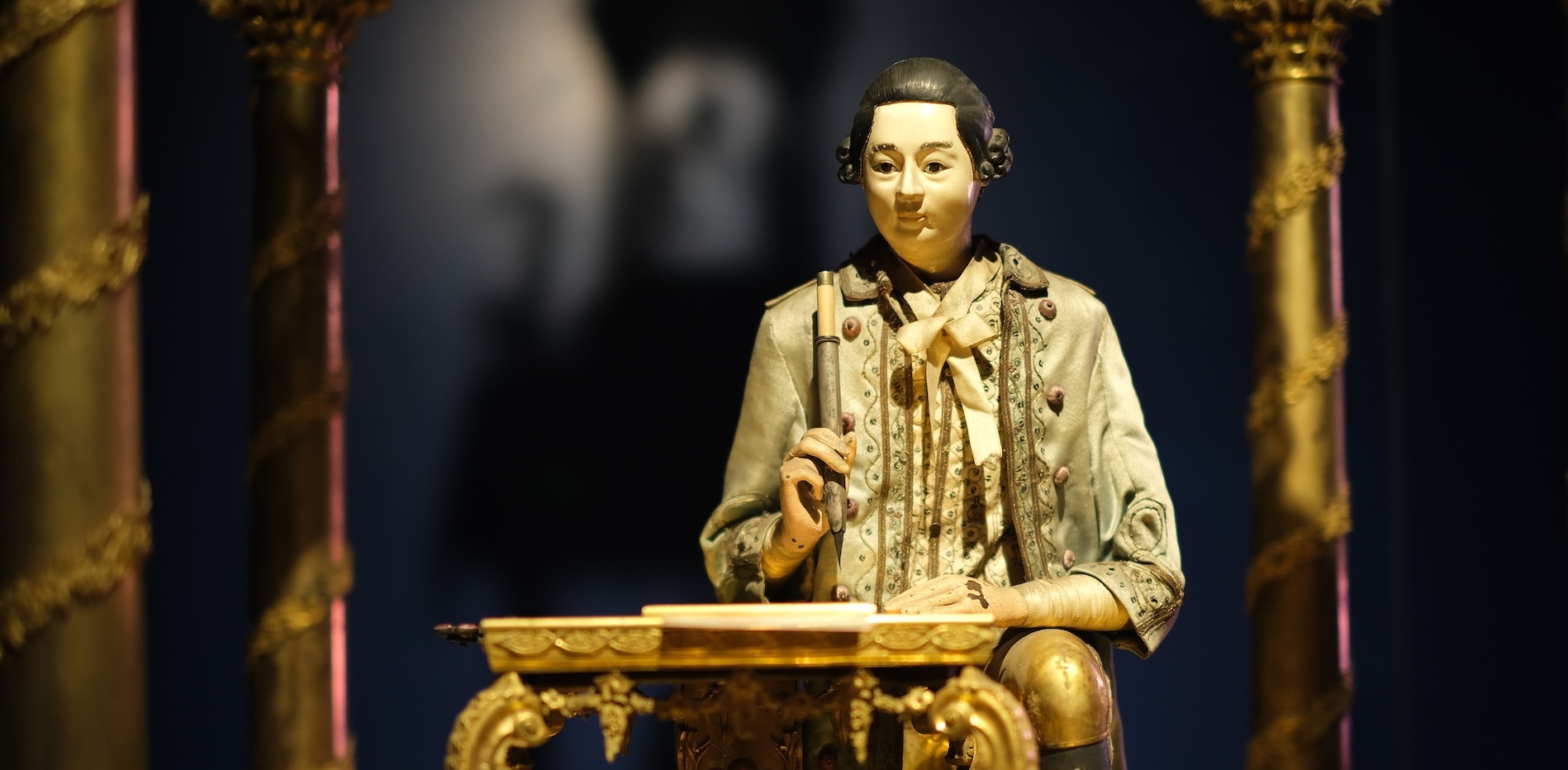
Between 2020 and 2022, I wrote my undergraduate honors thesis on a similar figure: a writing automaton long attributed to the Jaquet-Droz, preserved today in the Palace Museum in Beijing.
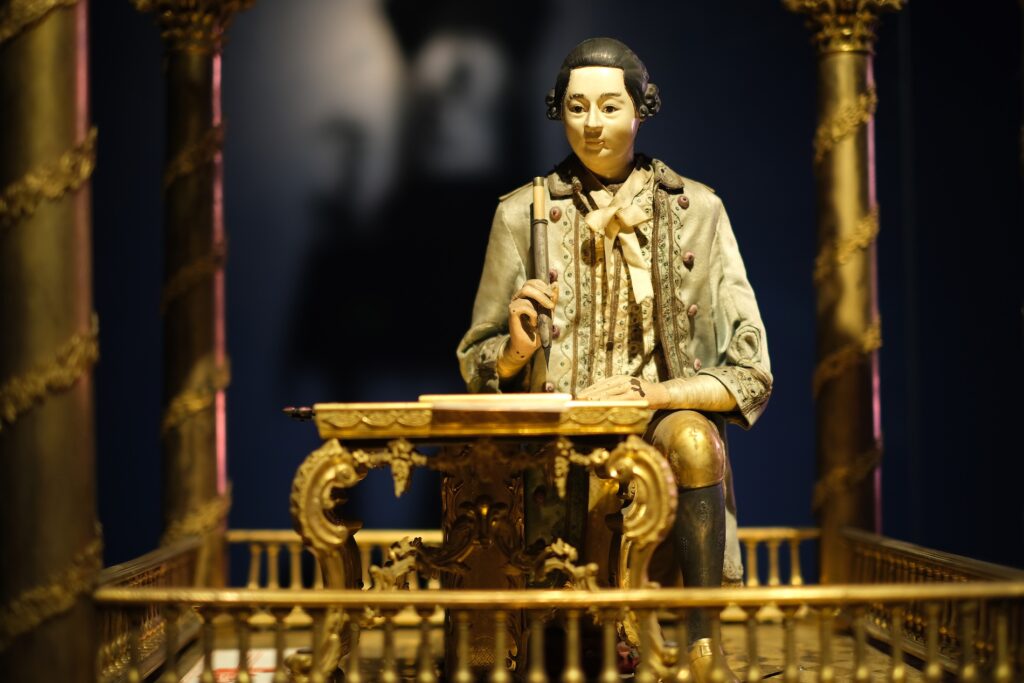
I used that thesis as the cornerstone of my application to WashU, where I hope to continue this research on the role of clockwork objects in early modern Sino-European artistic exchanges as a PhD student in art history.
For a long time, traveling to Switzerland felt like a distant dream. The cost was daunting, and the Schengen visa process remained especially difficult for Chinese passport holders like me. While researching for my undergraduate thesis, I made art about automata and the Jaquet-Droz, imagining the world of the Swiss craftsmen much as they once imagined Chinese culture—distant, unfamiliar, but fascinating nevertheless.
In the summer of 2025, I was finally able to step into that world thanks to the Newman Exploration Travel Fund. Over nineteen days, I visited thirteen public museums and private collections and researched in five archives across Geneva, Sainte-Croix, Môtiers, Fleurier, Neuchâtel, La Chaux-de-Fonds, and Le Locle. I also hiked more than twenty-five miles on six natural trails in the Jungfrau and Zermatt regions of the Swiss Alps. I watched the original Jaquet-Droz automata perform (and received the Draughtsman’s very own Mon Toutou drawing). I spoke with artists, historians, and horologists. I read original workshop ledgers with lists of goods sent to China (and about the chocolate bar and foreign wine Henri-Louis Jaquet-Droz owned, according to his probate inventory). Finally, I concluded the journey by assembling a mechanical watch movement with my own hands.
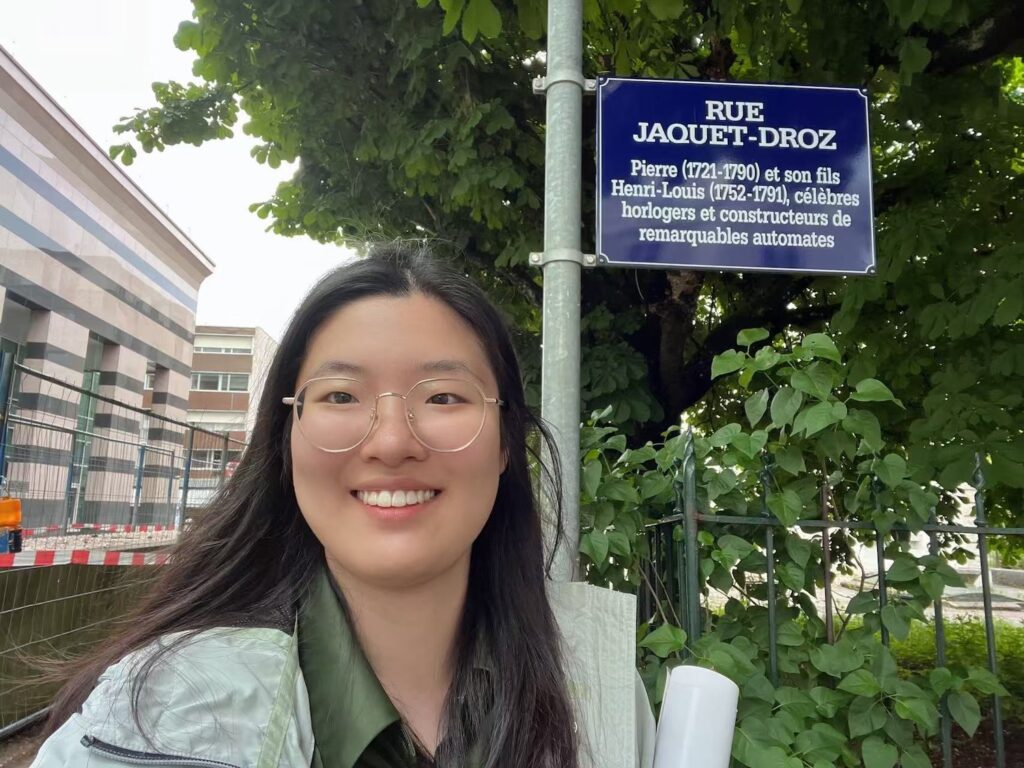
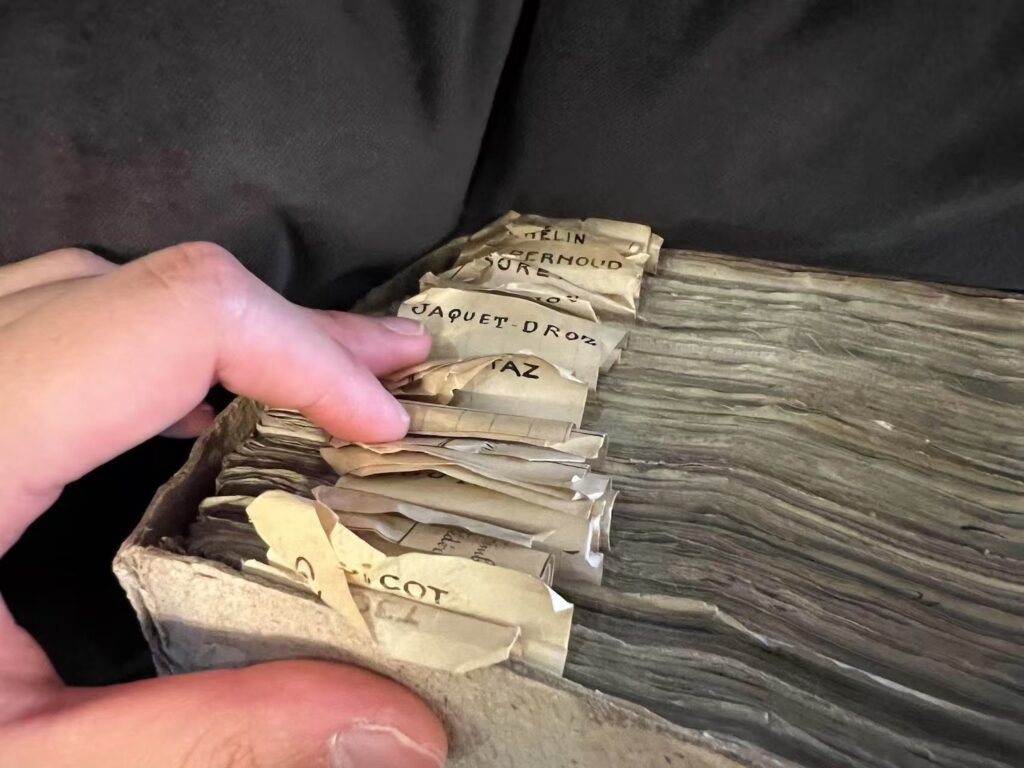
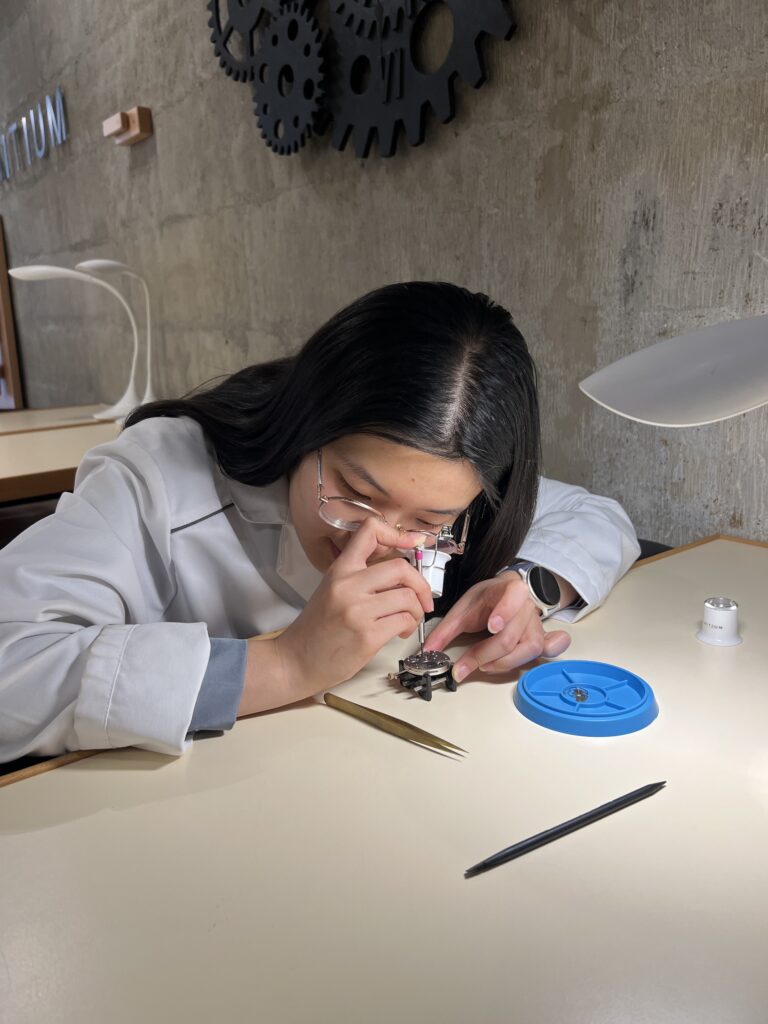
In exploring Switzerland’s watchmaking history and its entanglement with China through the lens of the Jaquet-Droz, I came to see connections between what once felt disparate: written records and historical artifacts fueled contemporary art practice and luxury design; proto-industrial and engineering innovations unfolded against the quiet backdrop of Jura meadows in the hands of the “peasant watchmakers” (paysans-horologers); the distance between Swiss towns and their foreign markets closed in the Asian artifacts filling local museum cabinets. These layered encounters shaped the course of my journey, each offering a different entry point into the enduring legacy of craftsmanship, wonder, and exchange.
Bench, Book, Brand: Meeting the Custodians of Living Machines
Although art history seems like a solitary discipline of quiet archives and museum vitrives, it is, in practice, shaped by people and connections. Automata instill wonder precisely because they are mysterious: much like a magician’s performance, their impact relies on concealment as much as craft. As someone approaching this world from the outside, both in terms of culture and training, I was often unsure how close I could get to the expertise I admired from afar. Thankfully, the individuals I met in Switzerland not only welcomed me into their spaces but also offered demonstrations, guidance, insights, and most importantly, models of what generosity and rigor can look like in the scholarly and professional world.
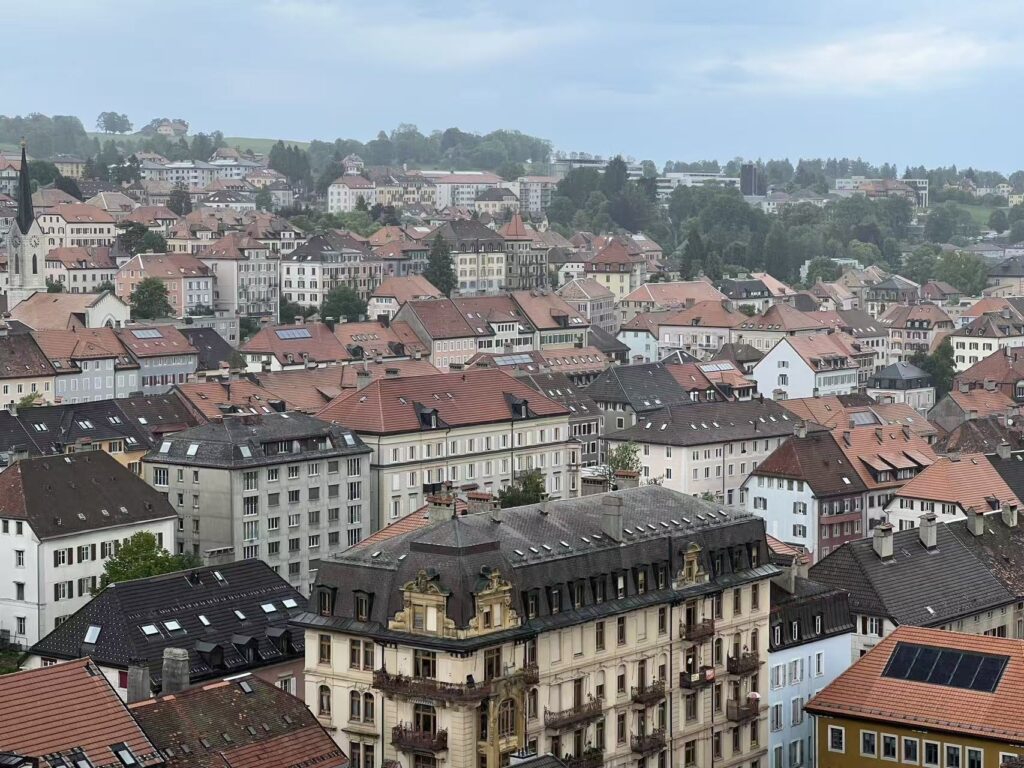
Sainte-Croix was my first destination after leaving the international bustle of Geneva (more on those adventures later). Perched in the flowering hills of the Jura and reachable only by a winding local train, the town seems more suited to hikers or winter sports enthusiasts than to first-time tourists in early summer.
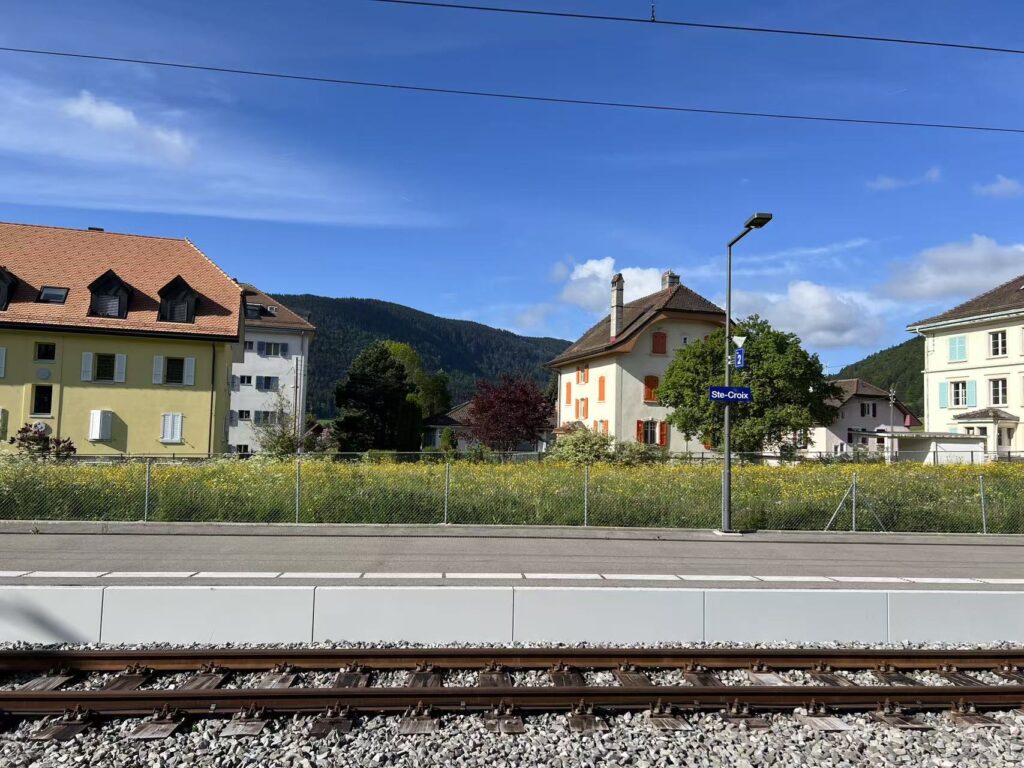
As I checked into my hotel, the owner asked, curious, “What brings you to Sainte-Croix?”
I had an appointment with someone I can only describe as a wizard.
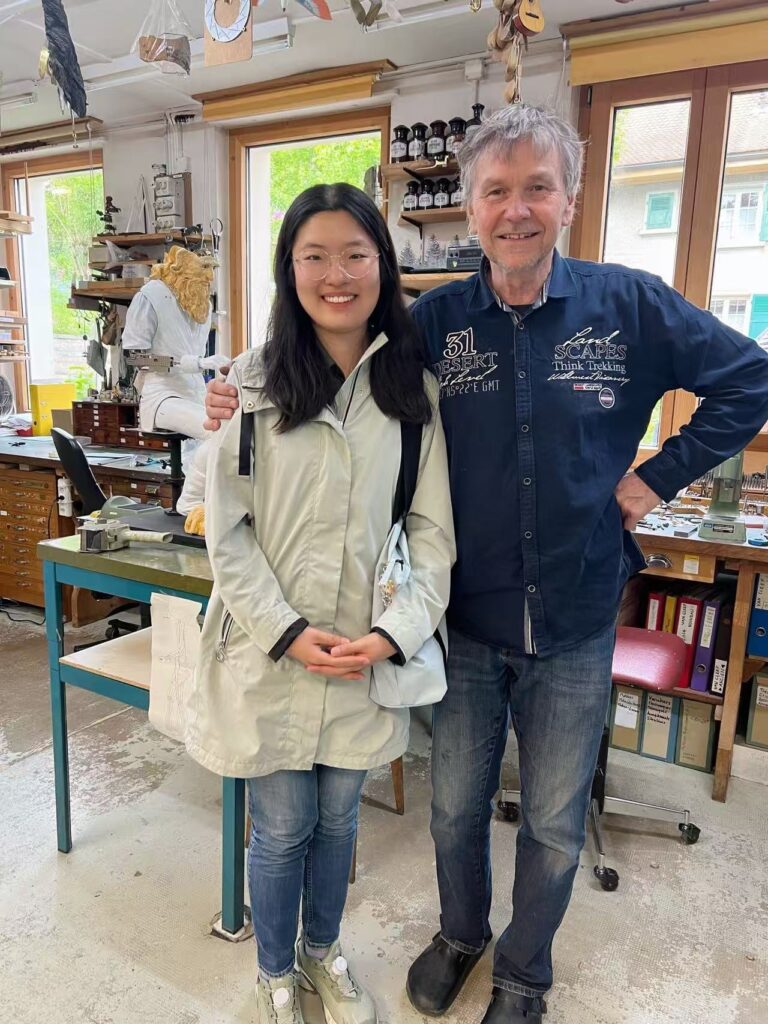
That wizard was François Junod, the local automaton artist whose creations had once transfixed me in that quiet gallery in Shanghai. A decade later, I was about to meet the man behind the magic. Earlier that day, he had sent me a kind email: “Do you need a ride from the train station?” (Sainte-Croix has the only call-to-reserve “on-demand” bus I encountered on this entire trip. Luckily, it was a good day for a walk and a ride was unnecessary.)
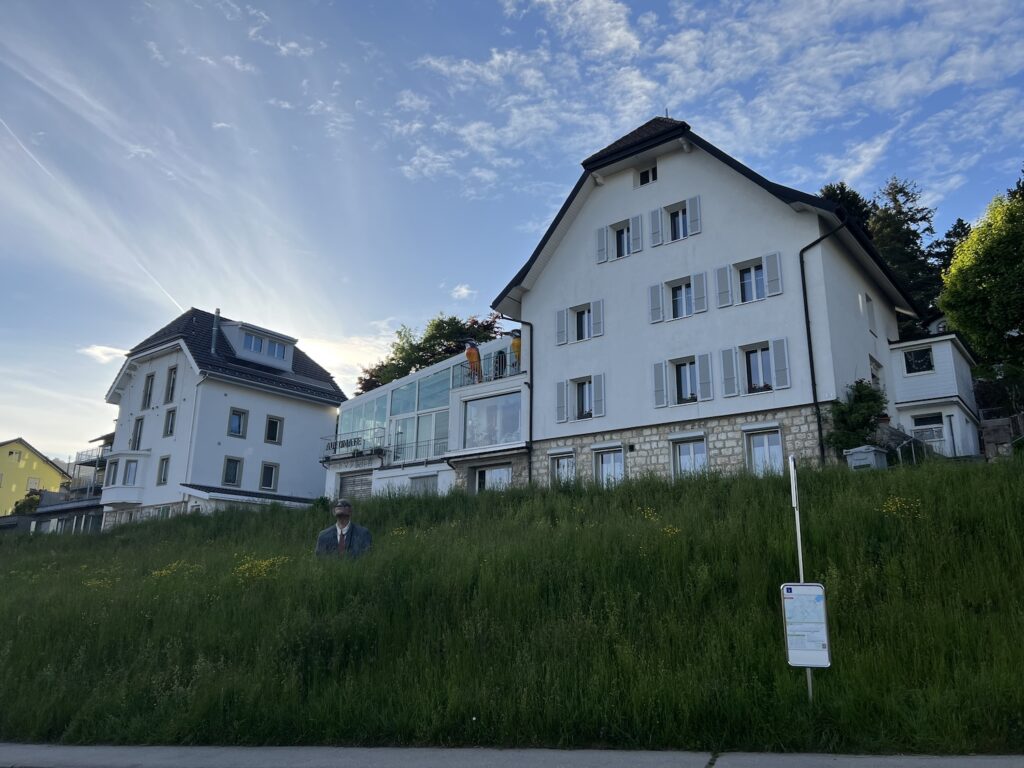
I wasn’t sure what to expect when I reached his porch and pressed the intercom. I studied the framed posters on the wall—past exhibitions, automata in performance, local visual culture—preparing myself. The door opened. “Miss Li?” he asked, smiling warmly and extending a hand. “Enchanté!” He wore a casual jacket and jeans, and yet the comparison to a wizard still felt appropriate.
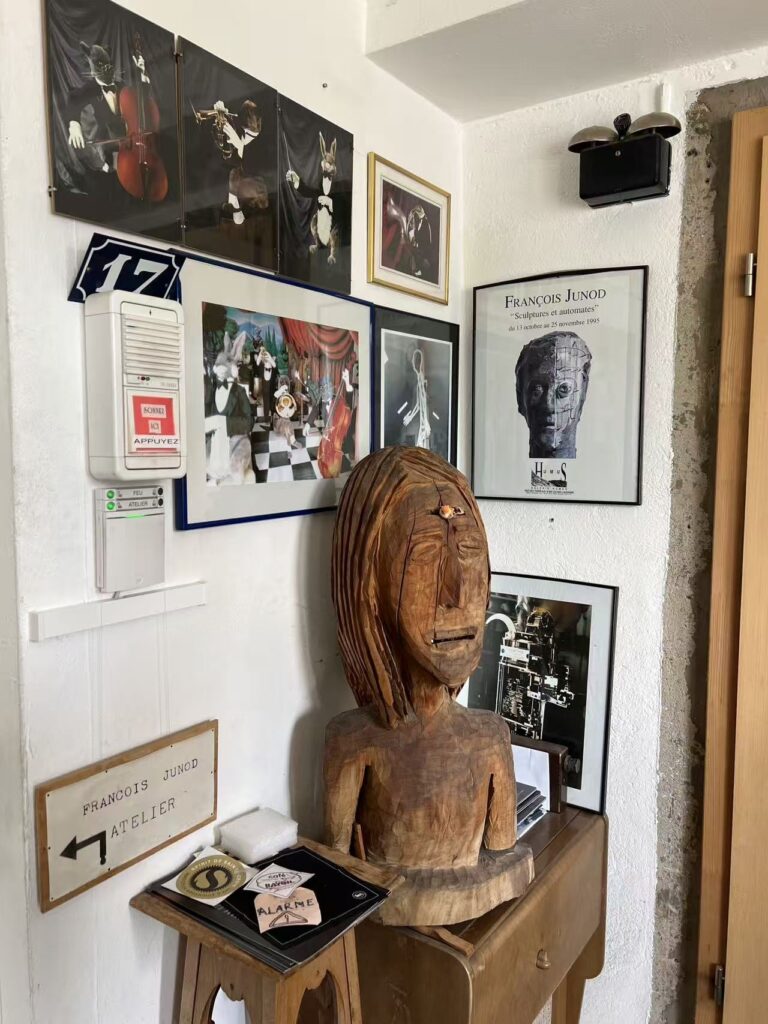
What followed was a kind of initiation. As we wound through the lower rooms of his workshop toward the main atelier upstairs, Mr. Junod brought nearly everything we passed to life: antique cylinder music boxes chimed the town’s industrial heritage; small magician and writer automata stirred awake to their performances; even a custom-built, motorized machine for testing metal cams whirred into motion.
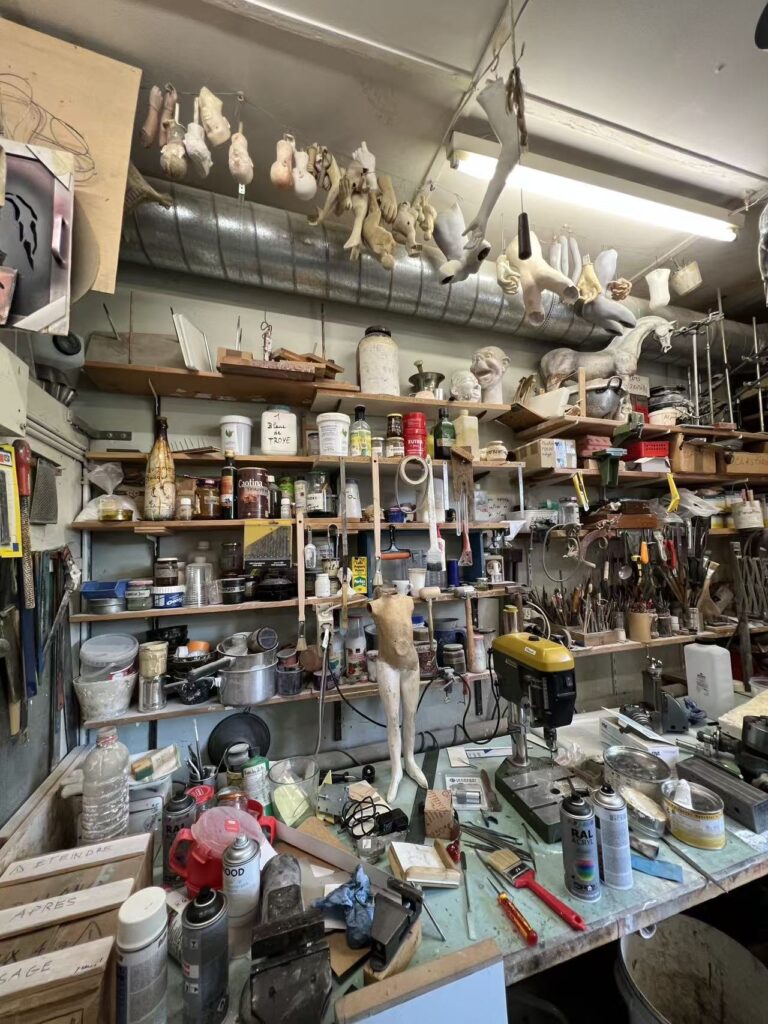
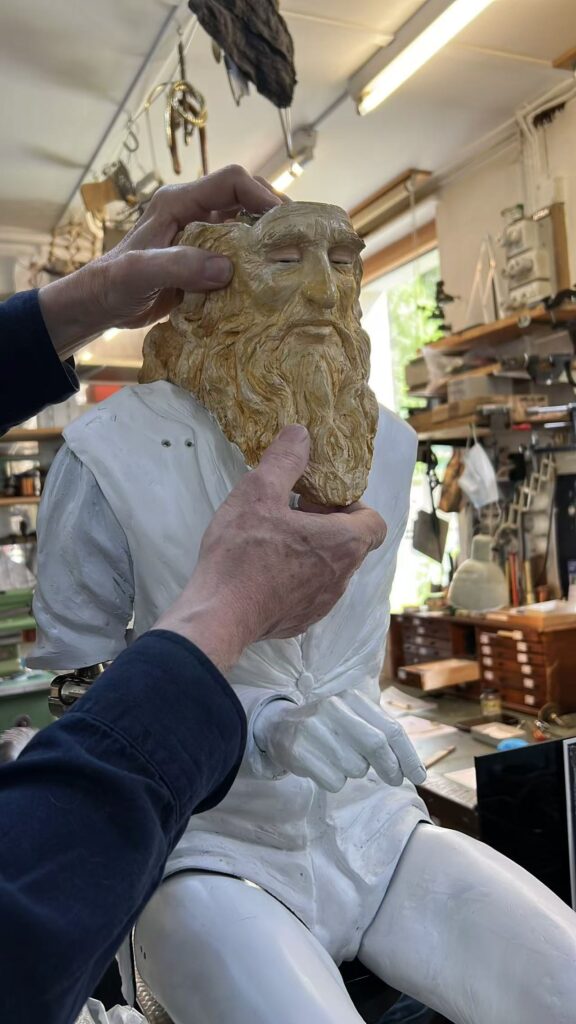
The atelier felt somewhere between a laboratory and a dreamscape—less like Charlie’s chocolate factory, with its secrets and spectacle, and more like the cinematic world of Georges Méliès, where reality-bending performances were dreamed up, hand-built, tuned to perfection, and most importantly, real.
“If you have some time in the evening after your museum visit, why not come back?” He invited me for a second visit, which I gratefully attended. Unlike a magician who holds their cloak tight, Mr. Junod shares what he loves without hesitation. Wherever my eye landed, the master artist-mechanic followed—opening boxes, winding up mechanisms, flipping through technical drawings, and even showing family treasures. In that generosity—of time, of space, of spirit—I glimpsed not just the craft of the automata, but the deep, unwavering, and human enthusiasm sustaining their magic.
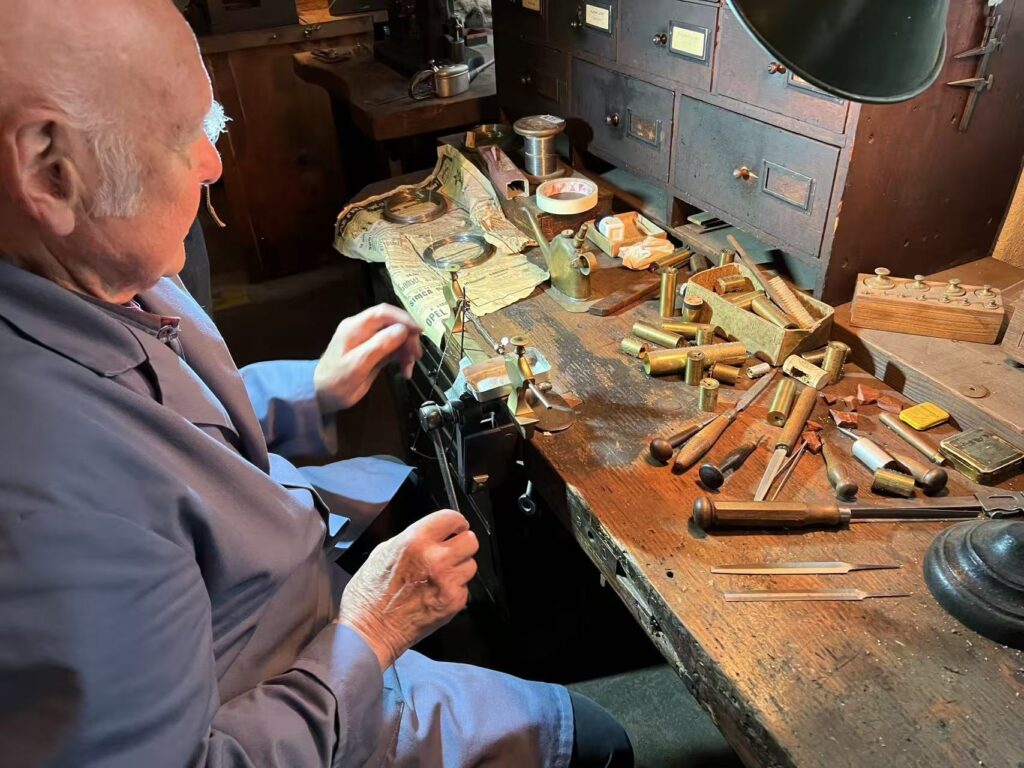
The next morning, I took the trip’s only taxi—ten miles through the winding roads of Val-de-Travers, possibly the birthplace of absinthe and home to generations of Swiss watchmakers. Many of these artisans once crafted timepieces specifically for the Chinese market, with some even settling in China. It was Sandrine Girardier who welcomed me into this historical terrain and its treasure troves
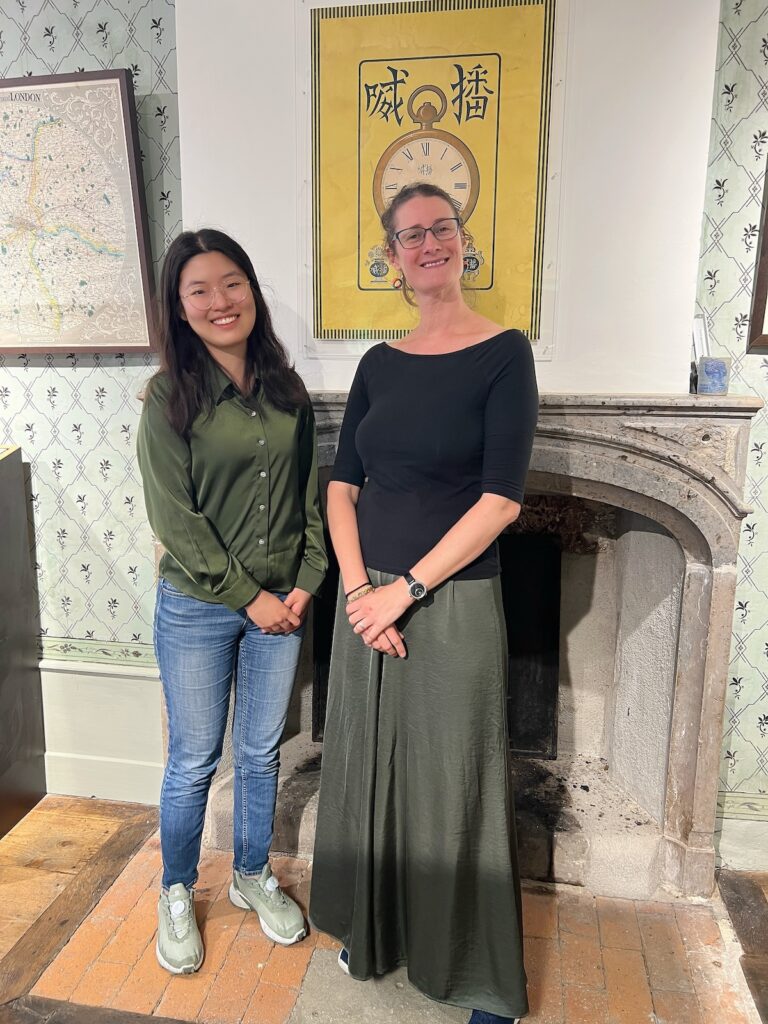
Author of the most comprehensive and recent study on the Jaquet-Droz, which she generously offers online under a Creative Commons license, Girardier now lends her talent to local museums as both curator and researcher. As a woman in the male-dominated fields of horological history and watch connoisseurship, she brings a distinct presence—at once rigorous and humble.
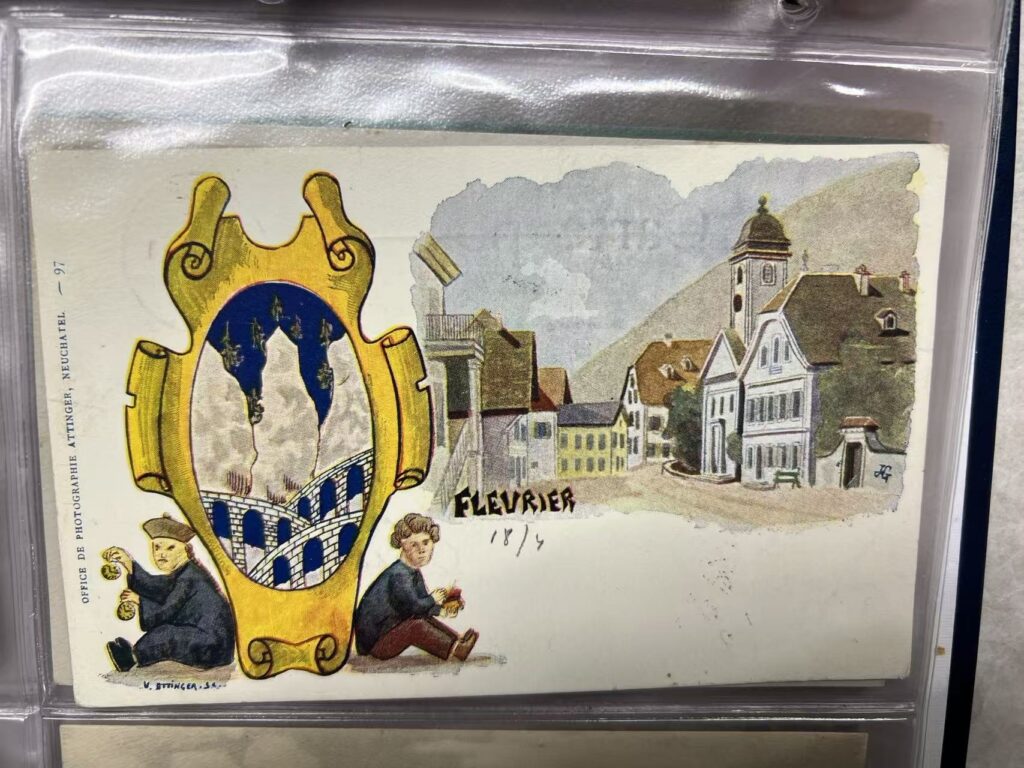
When I visited, she invited me to share my thoughts on the museum’s Asian collections—souvenirs brought back by Swiss watchmakers who had sojourned in China. We puzzled together over a nineteenth-century postcard (1897?) depicting two figures seated back to back, leaning slightly against Fleurier’s coat of arms: a curly-haired European and a Chinese man with a queue, who holds up a pair of pocket watches in a rather wooden gesture. The imagery, while dated, exemplifies the town’s pride in its historic China trade—and its longing to see itself as part of a broader world through the region’s signature industry.
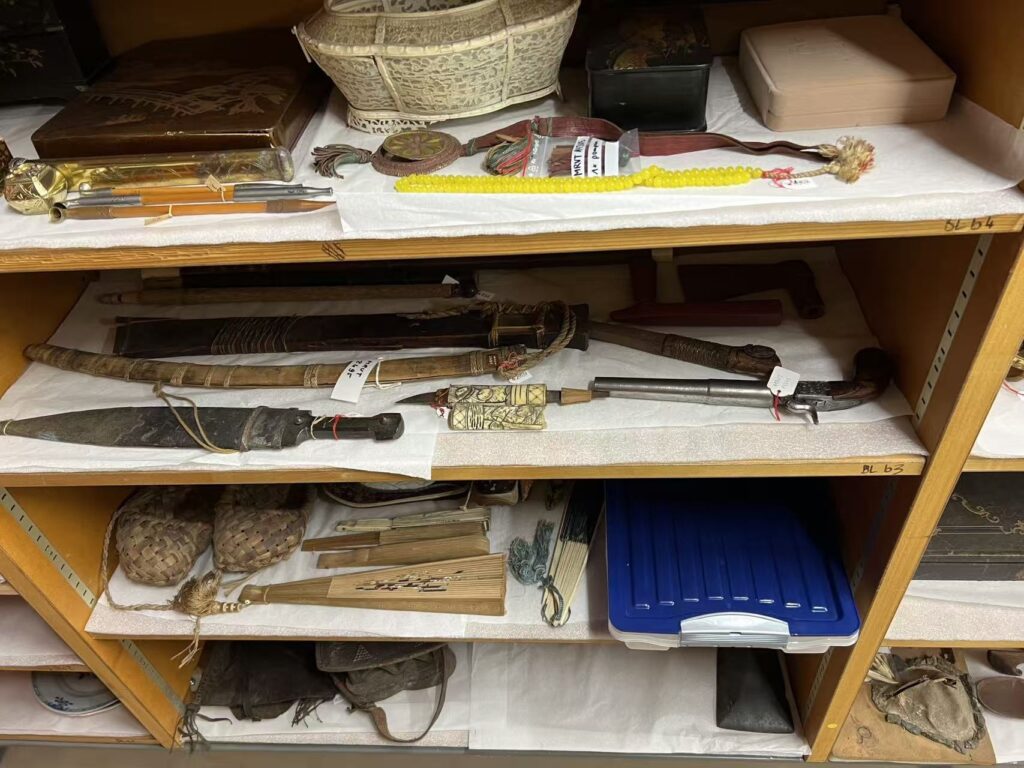
Asian objects in the storage of Val-de-Travers’ regional museum
What struck me most was not just the unusual collection of well preserved Chinese objects in rural Switzerland, but the generosity of its steward. Girardier treated my insights as contributions, not just fleeting commentary, and in her warmth and scholarly openness, I felt a sense of kinship. There is still much to be explored in this field, just as the museum’s Chinese collection remains to be fully catalogued. And, in moments like this, I began to see that I might have a place in it.
A few days later, in the heart of Switzerland’s watchmaking region—midway between the UNESCO World Heritage towns of La Chaux-de-Fonds and Le Locle, and just 4 miles from the French border—I visited the headquarters of Montres Jaquet Droz. Now part of the Swatch Group, the company continues the legacy of Pierre and Henri-Louis Jaquet-Droz and their workshop by producing richly decorated timepieces that incorporate both traditional craftsmanship and automata.
Grégoire Boillat, the in-house historian and a skilled watchmaking instructor with whom I’ve been in contact since my undergraduate research, welcomed me with warmth and enthusiasm. The visit began with a close-up demonstration of eighteenth-century “Jaquet-Droz” singing birds. These objects mirror the ones I had previously seen, silent, dormant, and encased, in Beijing’s Palace Museum. To witness similar works beautifully restored, fully in motion, housed in their place of origin, with a technical expert beside me, was profoundly illuminating—moving, even—akin to a kind of homecoming.
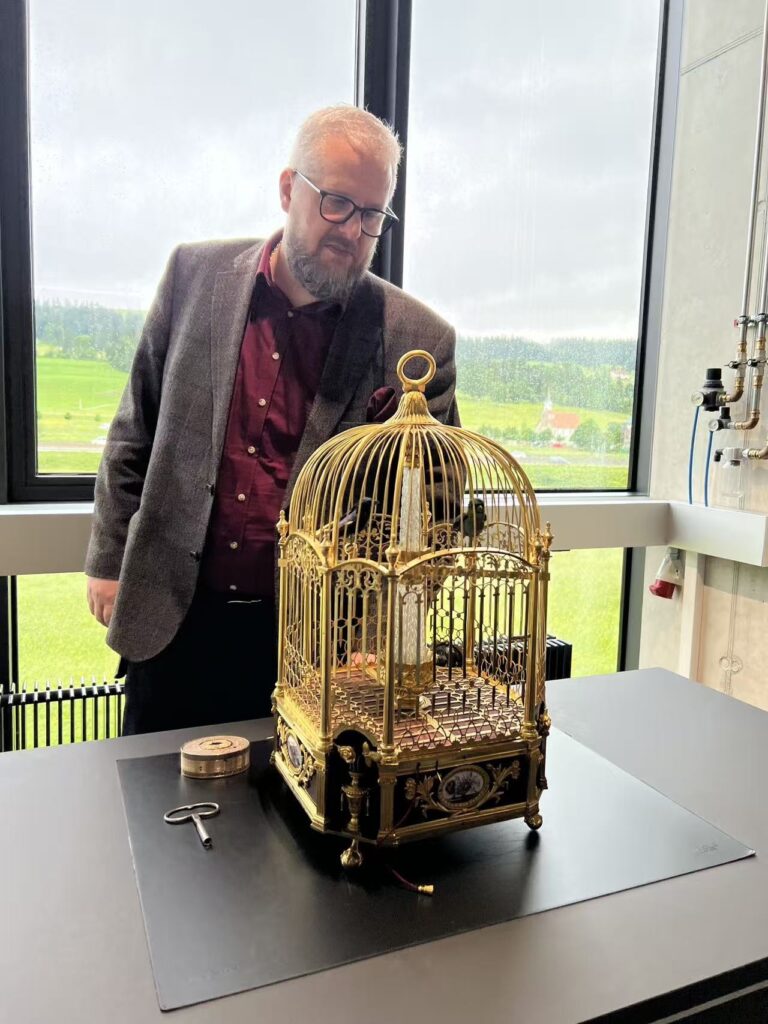
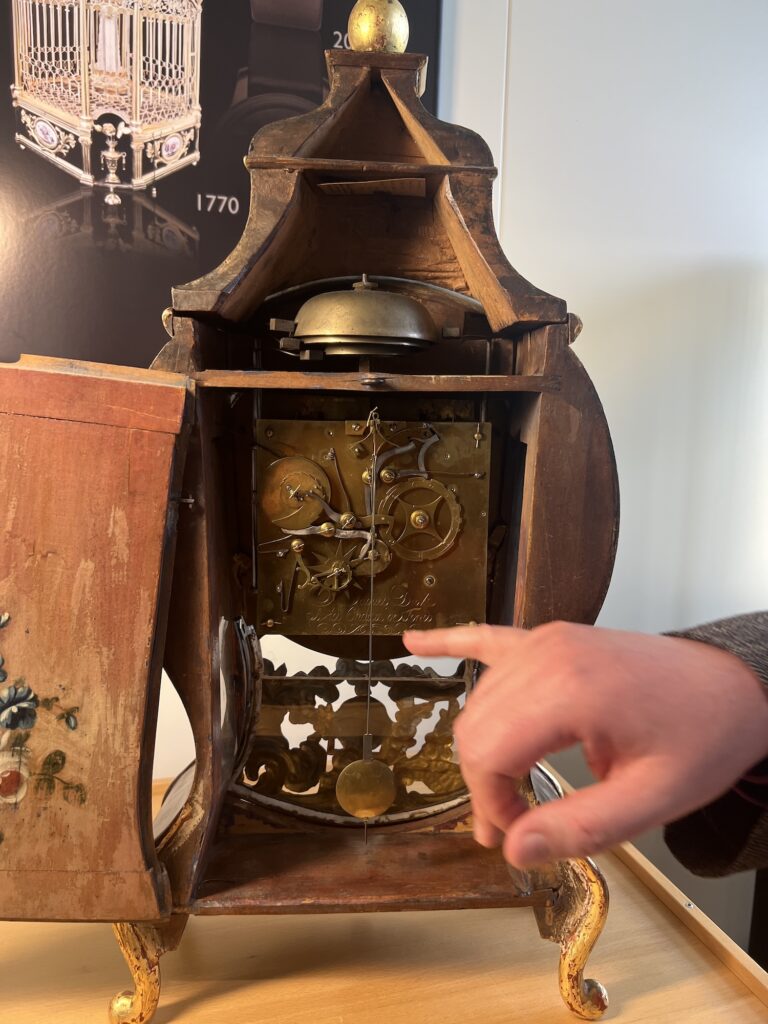
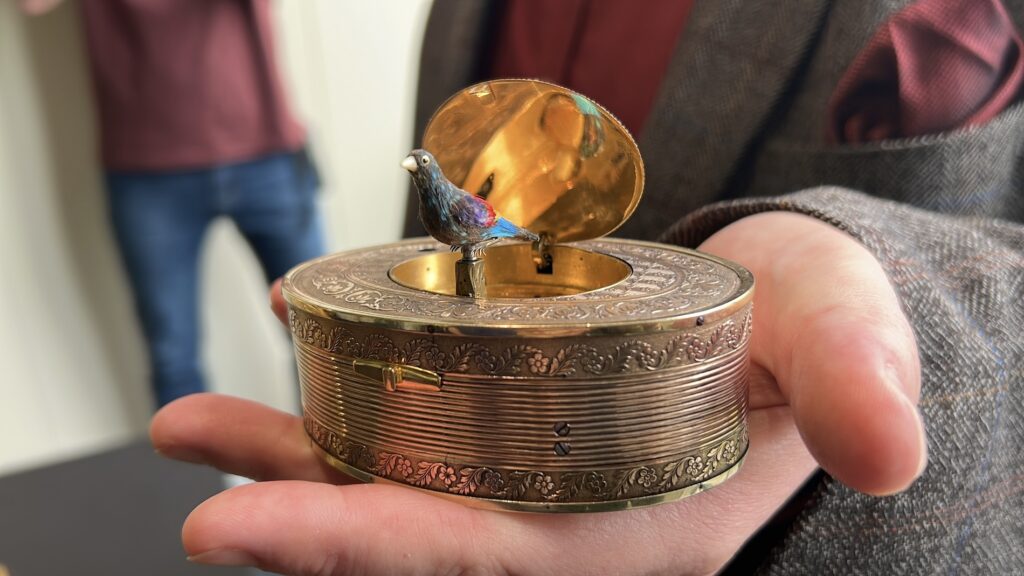
Automata are meant to move, and yet in many collections, they are frozen by the constraints of conservation or expertise. Here, they live. Here, mechanical birds do sing.
We continued to the Atelier d’art, where young artisans practiced the same age-old crafts used by the Jaquet-Droz workshop centuries ago. Hand engraving, grand feu (high-temperature) enamel, miniature painting… These heritage skills reminded me that the Swiss timepieces once traded to China were not merely commodities, or the work of a singular horologist; they were composite artworks, combining multiple crafts and layers of scientific and artistic expertise.
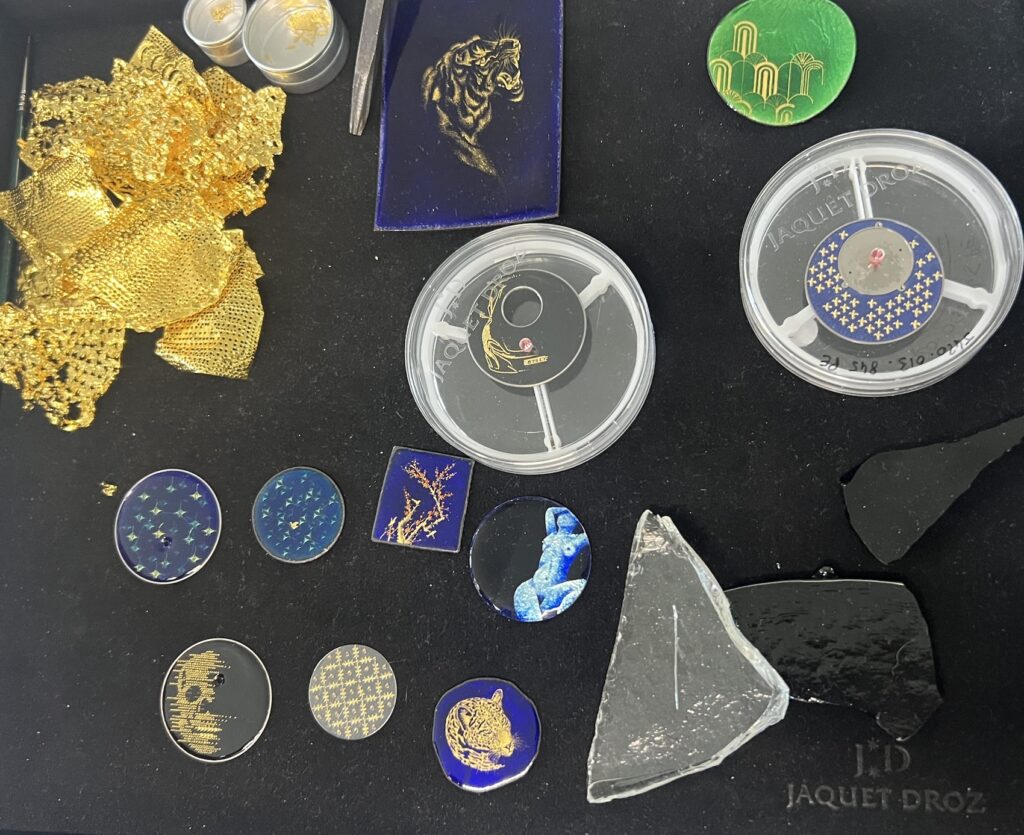
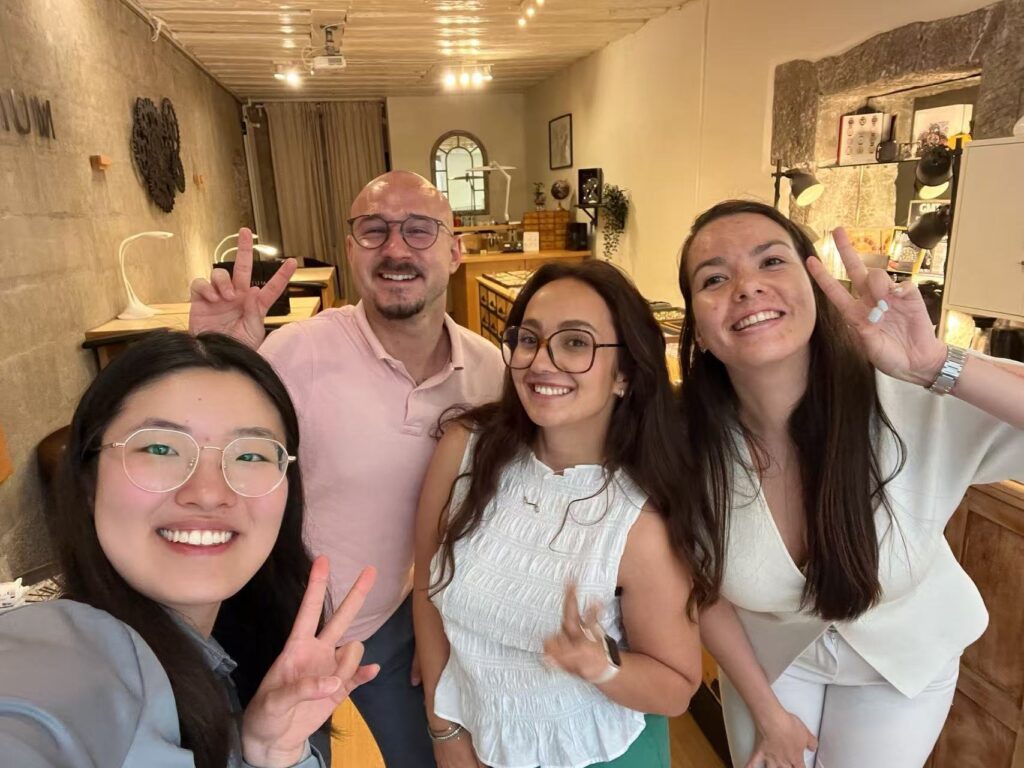
Many others shaped this journey—people whose names I never caught, or whom I met only briefly: museum staff, archive coordinators, library receptionists, and all those who listened patiently and helped without hesitation. With their support, I moved from encounters to investigation. What began in moments of wonder soon deepened into questions of method, access, and interpretation—questions I continue to navigate as I turn now to the work of transcultural research.
From Wonders to Method: Doing the Work of Transcultural Research
Switzerland’s multilingualism was an inescapable reminder that transcultural research is as much about studying trade objects as it is about linguistic and cultural understanding. For me, this trip was less about digesting large volumes of historical material and more about mapping the terrain—finding out what is where, and what I need to prepare before beginning my dissertation work in earnest. The archives I visited ranged from university collections to cantonal and museum holdings, each with its own procedures, regulations, and unique fun.
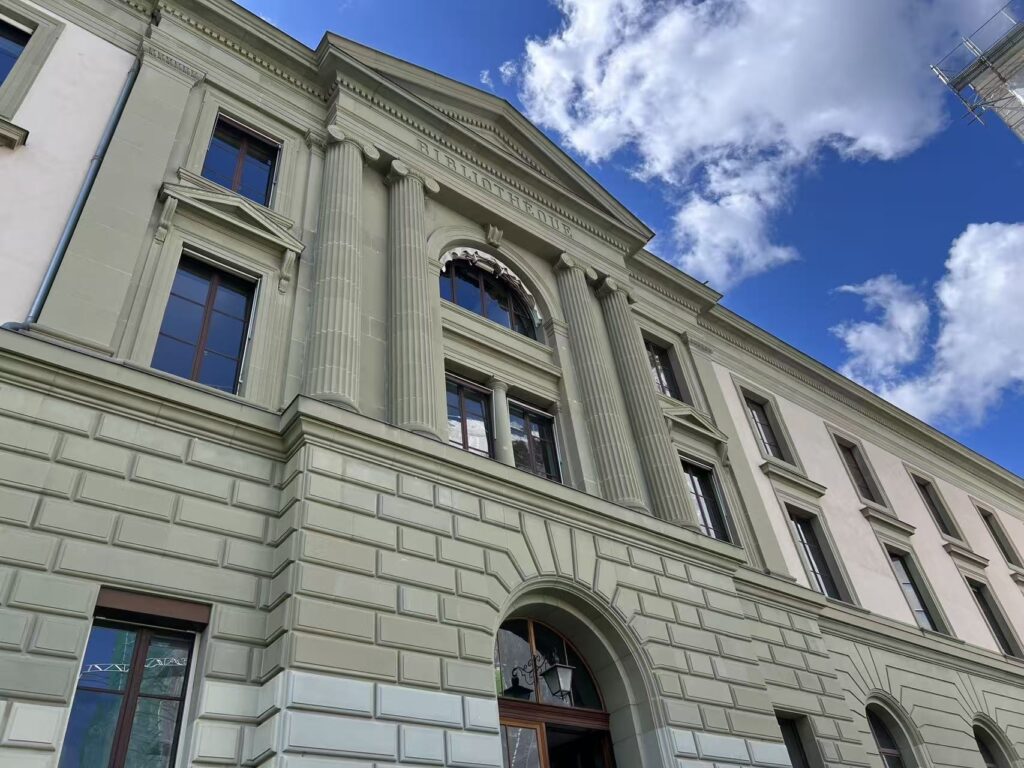
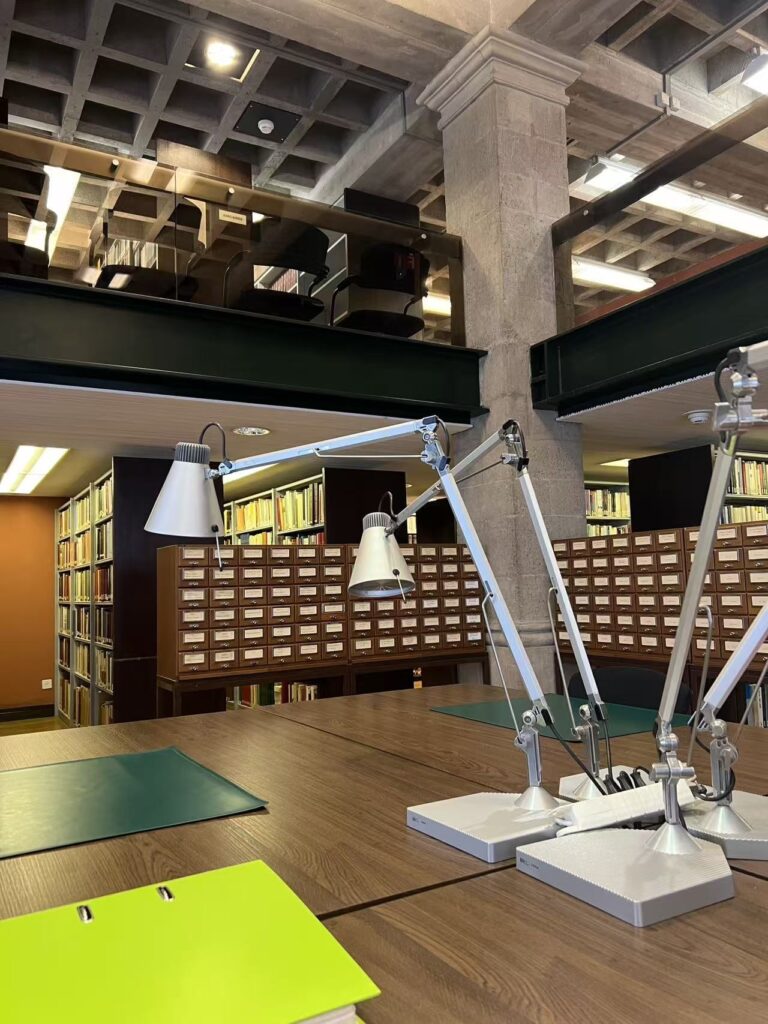
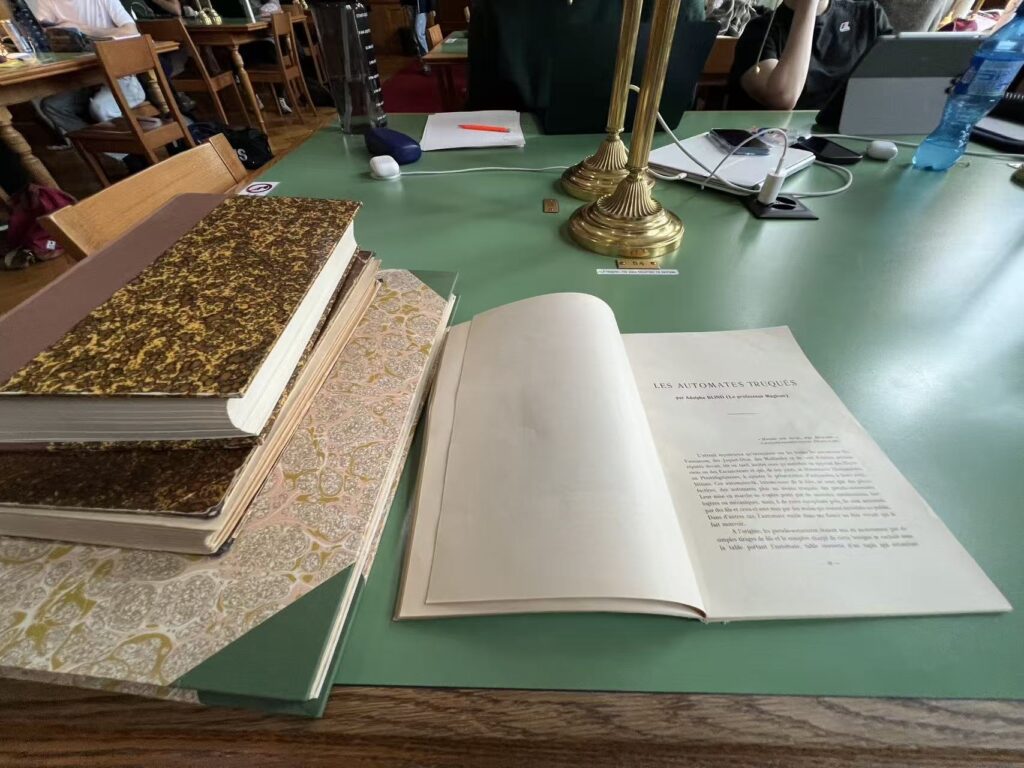
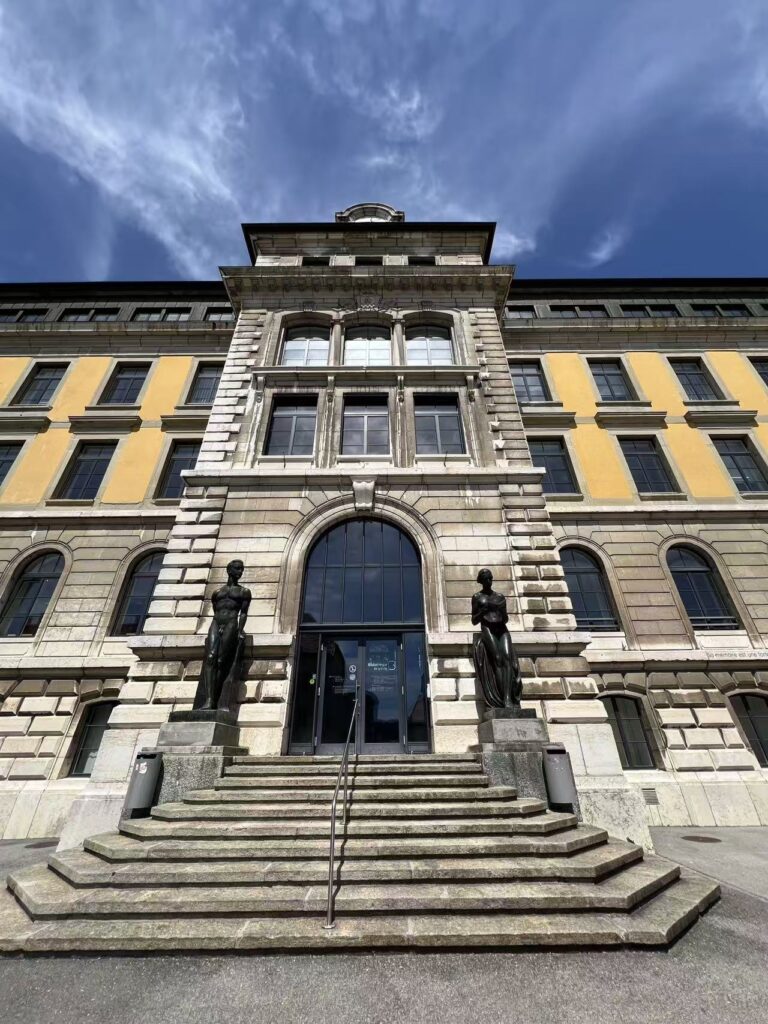
It was my first time conducting archival research in a language other than my two primary ones, English and Chinese. I had studied French intensively for reading and translation, but the experience of working in Switzerland revealed how much more was needed for professional fluency. At the Bibliothèque de Genève, the first archive on the trip, I held the ledger books and letter copies of the Jaquet-Droz workshop for the first time. It was a moment of genuine thrill as well as lurking anxiety about communication. How should I ask about reproduction rights? How would I ask for help if I needed additional materials? I moved forward in French as much as possible, despite my nervousness, and the staff’s patience gave me confidence. The documents themselves also carried their own challenges. Eighteenth-century French cursive—beautiful, fluid, and dense with period idioms—required slow reading and a bit of guesswork.
Yet the surprises from archive visits were also immense: I found margin notes, doodles, and calculation scratches in forgotten corners of the workshop’s books, and in another private archive, an exhibition card from 1907 bears an unexpected flourish on its reverse. The phrase Vive Genève, il fait bon y revenir—“Long live Geneva, it is good to return”—was written in a hand I recognized instantly. It was the Writer automaton’s. His ink letters, mechanical yet uncannily child-like, had crossed more than a century to greet me.
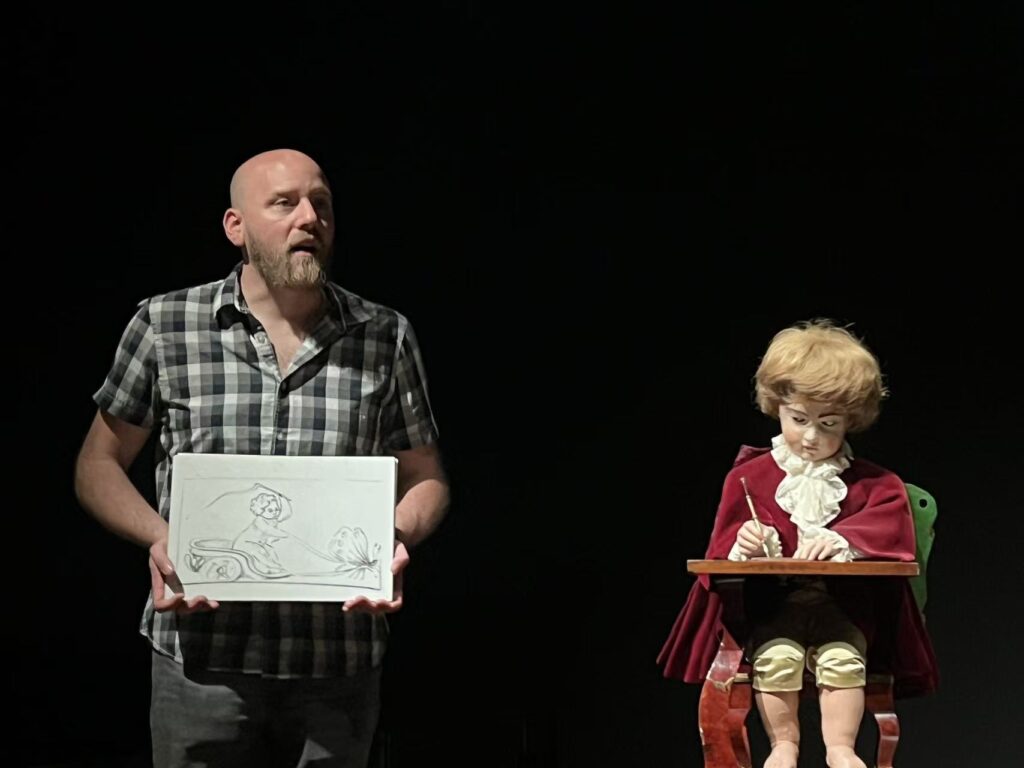
Have I mentioned that I received a copy of the Draughtsman automaton’s Mon Toutou? That was an unforgettable lesson in taking risks that matter—of speaking in a language still unfamiliar to my tongue, of making my enthusiasm visible, of trusting that curiosity will lead my way.
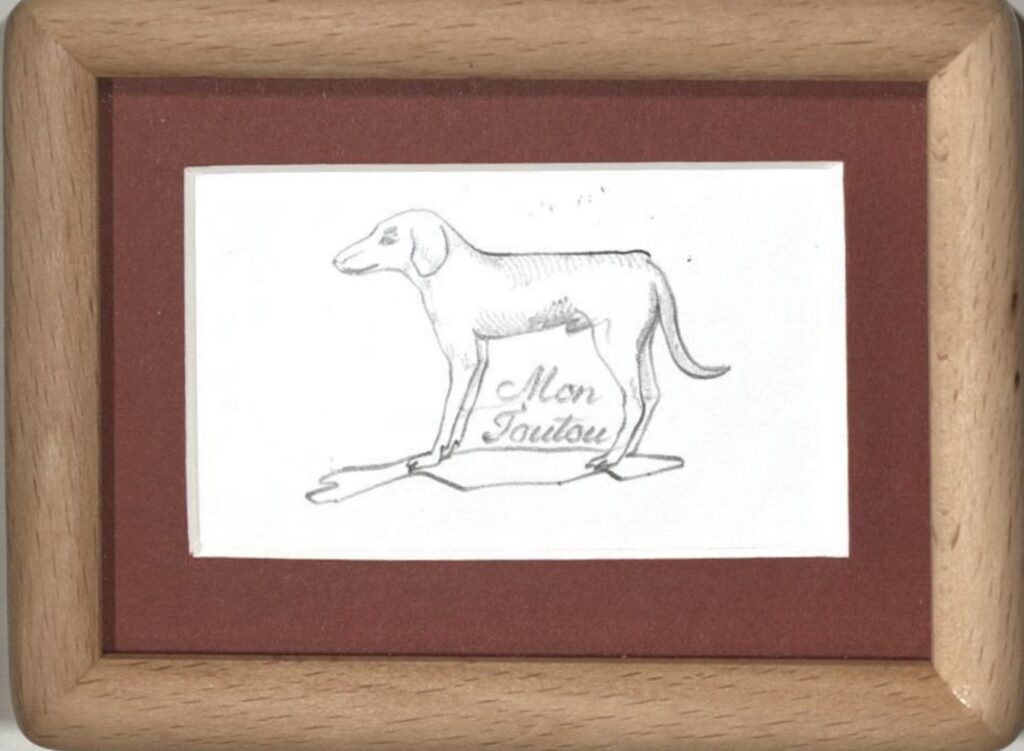
After the demonstration of the Jaquet-Droz automata in Neuchâtel, as visitors drifted away, I felt an almost physical pull to speak to the docent who brought the machines to life. My heart pounded. I began my well-rehearsed introduction—Bonjour Monsieur, je m’appelle Rayna Li et je suis doctorante en histoire de l’art … — only to stumble over the words. Did I conjugate correctly? Masculine or feminine nouns? Which proposition? Despite my clumsiness, he listened attentively as I spoke about the impact of seeing the automata in motion, about how I had dreamed of doing this research since I was 14. When I saw him hand the Draughtsman’s portrait of Louis XV to a child, I found the courage to ask—in shaky but clear French—if I might have a drawing too. “Of course,” he replied. “Do you want the Royal Couple, or the Dog?” The dog. Always the dog.
That small sheet of paper, with that pencil drawing of Mon Toutou, was more than a souvenir. It was a reminder that transcultural research lives in these moments of exchange: when language learning and risk-taking in communication become bridges, when curiosity and appreciation is met with generosity, and when an object—whether a centuries-old ledger or a fresh drawing from an eighteenth-century machine—moves between hands, carrying with it stories and histories that connect places, peoples, and time.
Yihao Li’s research trip to Switzerland was supported by the Newman Exploration Travel Fund.

- Name
- Yihao Li
- Job Title
- PhD student of Art History