
New Grant to Preserve Eight Films from General Leif J. Sverdrup
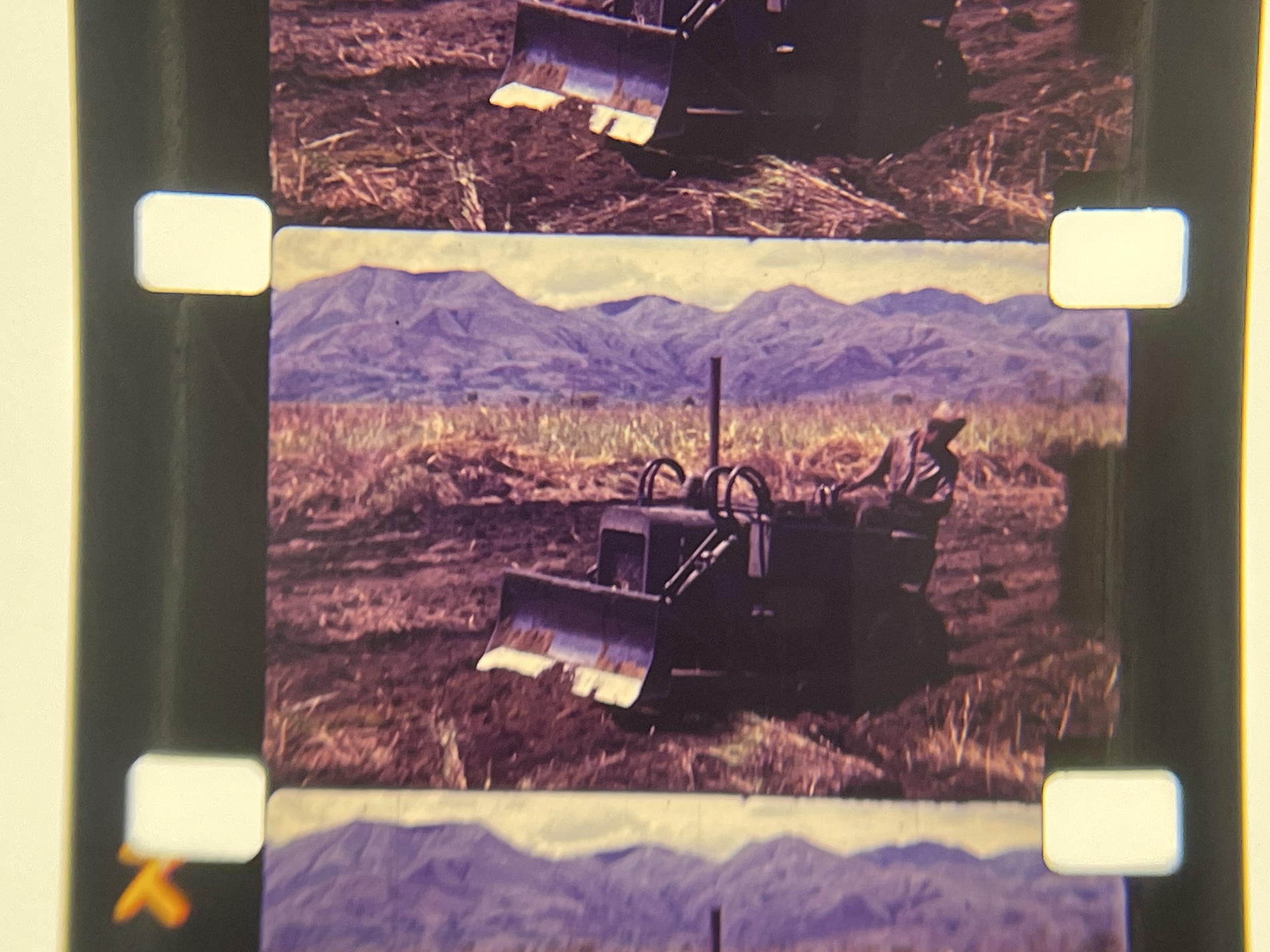
WashU Libraries has received a matching grant from the National Film Preservation Foundation (NFPF) to preserve eight reels of film shot by General Leif “Jack” Johan Sverdrup, a World War II engineer who served as Chief of the Construction Section in the Southwest Pacific Area. The films were shot between 1941–1944 across Papua New Guinea and neighboring islands, and document the interactions of US and Allied military personnel with local indigenous people to scout, layout, and construct, by hand, the airstrips at the center of General Douglas MacArthur’s island-hopping plan to retake control of the Philippines.
Born in Sullen, Norway, in 1897, Jack Sverdrup emigrated to the United States in 1914 and became a naturalized US citizen in 1918 after enlisting in the U.S. Army during World War I. He received his engineering degree and a civil engineering degree from the University of Minnesota in 1921 and 1928, respectively. Following graduation, he co-founded the engineering firm of Sverdrup & Parcel, headquartered in St. Louis, Missouri, specializing in bridge and road construction. The company grew during the 1930s with New Deal contracts and work for the Army Corp of Engineers, including bridges over the Des Moines River, the Missouri River, and a flood control system to the Kaw River in Kansas.
In July 1941, Sverdrup & Parcel was hired by the Corp of Engineers to construct airstrips in Hawaii. Shortly after, the US State Department asked the firm to take on a secret project: building a chain of airstrips as a “Pacific ferry route” allowing B-17s to reach the Philippines. Within a year of the attack on Pearl Harbor and the U.S. declaration of war, Sverdrup was commissioned as a colonel and on his way to Australia, where he reported to General MacArthur’s headquarters in Melbourne. To defend Australia, and retake the Philippines, MacArthur planned for Allied troops to gain control of Papua New Guinea. For the next two years, Sverdrup travelled across the island—equipped with a new motion picture camera he was given as a farewell gift when leaving St. Louis—to design airfields, supply routes, and needed engineering support for Allied troops.
In letters home, he reported learning the language of those who lived on the island and conversing in it whenever possible. He was invited to traditional dances or ceremonies. He provided food to his indigenous wards. And, whenever possible, he filmed his interactions.
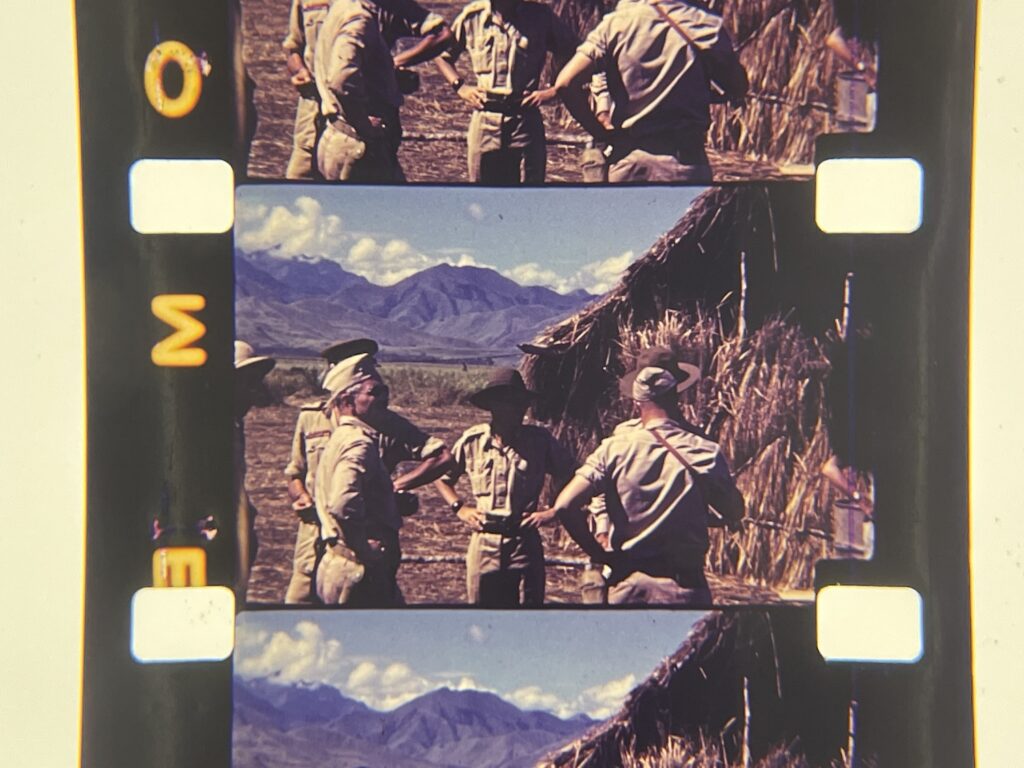
Of note in Sverdrup’s films is his focus on the indigenous Papua and New Guinean people who did vital work in construction, supply transportation, and rescuing of wounded personnel—vital work that is only casually noted in typical American accounts of this history. These films document not only these workers’ historically underrepresented contributions, constructing the airfields for modern warfare—notably, for a fight that was not their own—and ultimately the success of U.S. forces, but also their village life and community traditions.
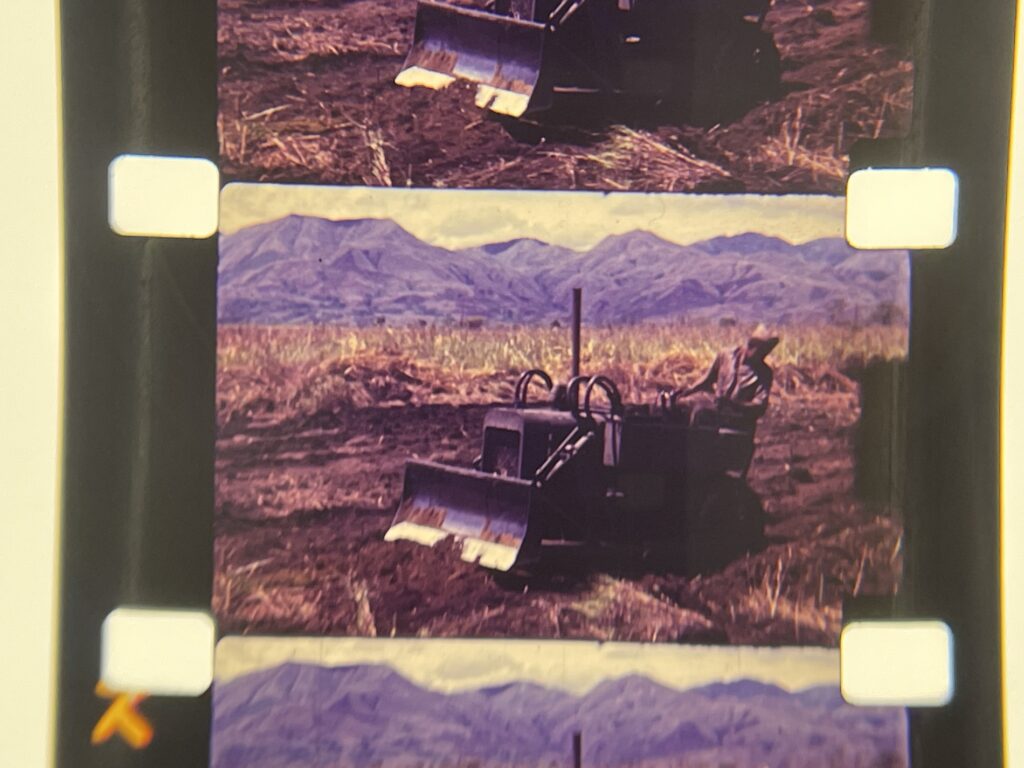
This grant focuses on a total of eight films: one by Sverdrup aboard a ship in the Pacific, six while in Papua New Guinea, and one in the Philippines. They are:
- Aboard Ship/Schooner-Type Vessel in the South Seas: King Neptune’s Court Ritual for Equator Crossing Initiation (ca. 1941-1942, 16mm, 90′, color reversal, silent)
- From Bena-Bena to Markham Valley (1942, 16mm, 390’, color reversal, silent)
- Nadzab-Lae Airborne Engineer Clearing Airfield (1943, 16mm, 250’, color reversal, silent)
- Bulldog-Wau Road (1943, 16mm, other details unknown)
- Panorama of Mt. Hagen Airstrip (1943, 16mm, 500’, color reversal, silent)
- Mt. Hagen Police Post (1943, 16mm, 500’, color reversal, silent)
- Fly River-Tanah-Mera-Drome Road Reconnaissance (1944, 16mm, color reversal, silent)
- City of Manila in Ruins (ca. 1945, 16mm, 360’, color and black and white reversal, silent)
NFPF is an independent nonprofit supported by federal funds and is devoted to saving America’s diverse film heritage. This grant pays for creating new photochemical preservation elements and projection prints, which, as they will be on polyester stock, should survive for centuries. The grant also covers the cost of digitizing these titles, which will allow the Libraries to make them widely available to all.
After the completion of this grant, the newly created film prints will be available for public screenings, and digitized versions will be placed online for streaming.
See more information on the films being preserved by NFPF this cycle.