
Six Films Preserved from the Father of Forensic Science
Thanks to a National Film Preservation Fund Grant (NFPF), the WashU Libraries’ Film & Media Archive has successfully completed the preservation of six short reels of scientific film made by Dr. Rutherford Birchard Hayes Gradwohl (1877-1959).
An 1898 graduate of the WashU School of Medicine, R.B.H. Gradwohl went on to found the modern version of forensic science. Gradwohl operated a school and laboratory in St. Louis in addition to founding the city’s police research laboratory in 1933.
Gradwohl was an experienced amateur filmmaker making films for professional and personal reasons and used films to share his revolutionary medical techniques with colleagues, as well as documenting the daily activities at his laboratory. At his medical schools, he trained hundreds of pathologists who spread his new approach across the country. He founded the professional organizations of crime scientists, the American Academy of Forensic Scientists, which still awards a prize in Gradwohl’s name to the member who has most advanced the field. And his filmmaking played an important, if now forgotten, role in popularizing his approach to pathology.
The films preserved via this grant focus on a selection of six films Gradwohl made in his professional life. They are:
- The Van Slyke C02 Test of Blood Plasma for Acidosis (1921, 35mm, 650’, black and white with tinted intertitles)
- Motion Pictures of Laboratory Technique as Taught in the Gradwohl School of Laboratory Technique (1928, 16mm, 275’, silent, black and white)
- Classroom Activities at the Gradwohl School of Laboratory Technique – two reels (1937, 8mm, 320’ total, silent, color and black and white)
- Technic of Blood Grouping and Blood Typing . . . and the Preparation of Blood Plasma (1934, 8mm, 225’, silent, color)
- High Lights of a Day’s Work, Gradwohl School of Laboratory and X-Ray Technique, St. Louis, Missouri (1941, 8mm, 360’, silent, color)
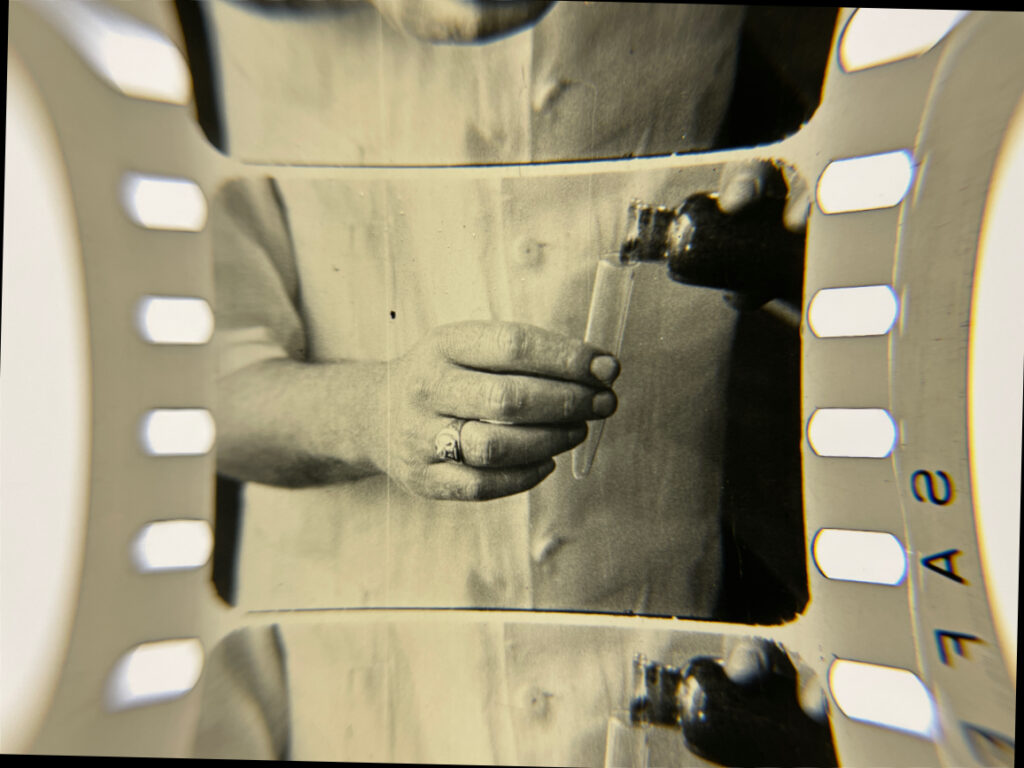
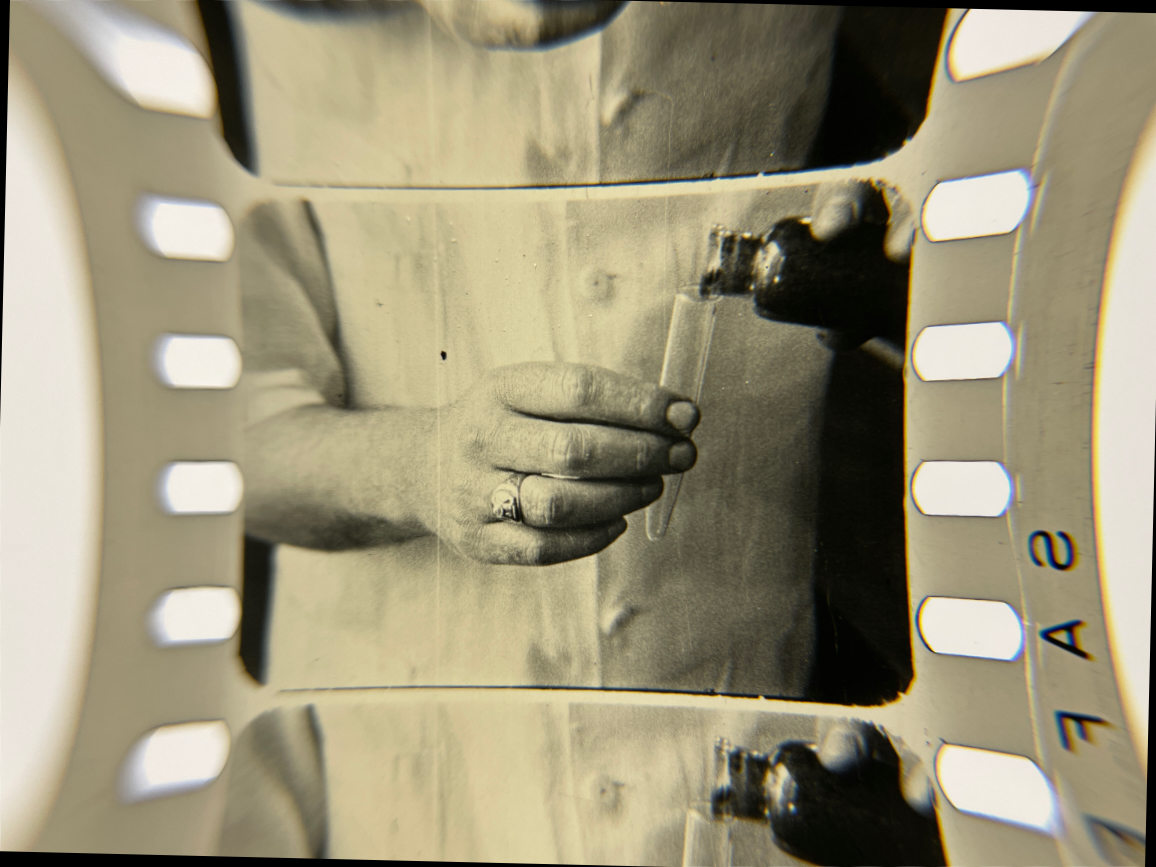
His medical films can be split into two categories, though the groups do overlap. First, there are instructional films on how to conduct experiments; that includes The Van Slyke CO2 Test and Technic of Blood Grouping films. Intertitles describe the process step by step with footage of technicians enacting the experiment in between. The films are methodical and focused on the science. At the end of watching one of these films, a viewer would be ready to try out the experiment with the guidance of an instructor. These are filmed, and thus more visual and instructive versions of the instructions that Gradwohl included in his textbooks.
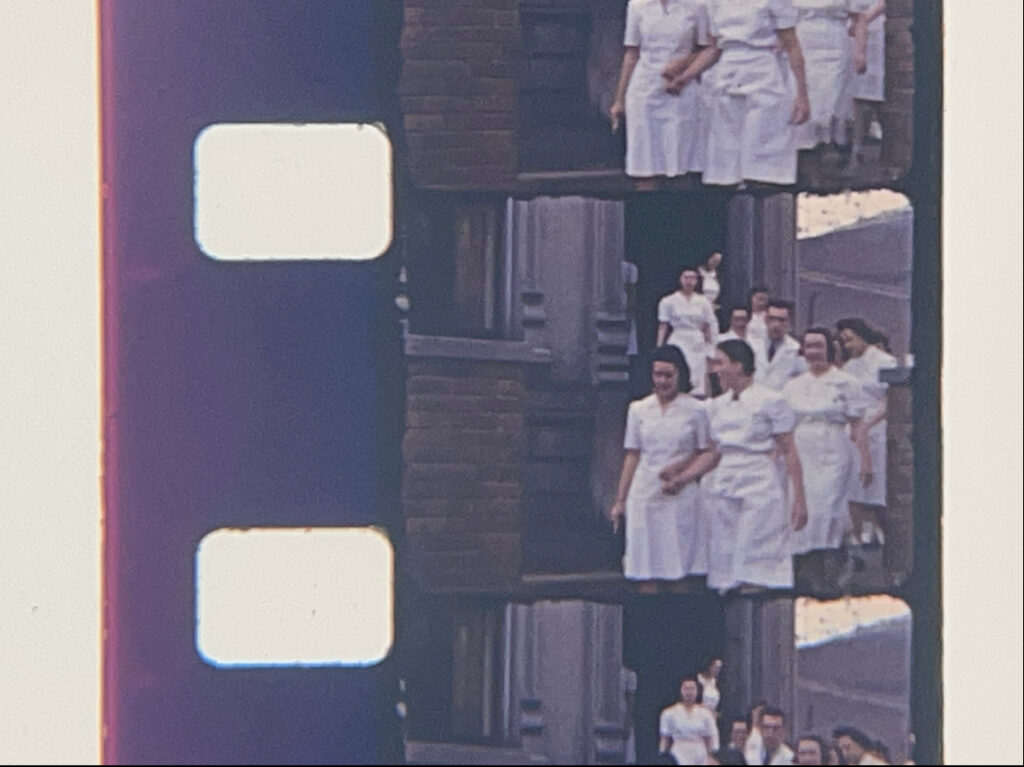
The second category is the amateur promotional films showing daily activities at his School of Laboratory Technique. The films provide an overview of what was taught at his school, mixing footage of students and instructors in classes; lectures given by Gradwohl; technicians engaged in lab work; the onboarding of new students; and other activities like depicting the technicians entering the school at the start of the day and leaving the building at the end. The students are shown in immaculately clean white lab coats, and they begin to look a bit like each other throughout the films, which can be interpreted as a visualization of the common techniques all his students learned.
Taken all together, they are records of how one of the most influential forensic scientists employed films to modernize, educate, and regulate the field. Their reserved nature is representative of the scientific method and attention to detail that Gradwohl spent his life injecting into crime pathology.
NFPF is an independent nonprofit supported by federal funds and is devoted to saving America’s diverse film heritage. This grant pays for creating new photochemical preservation elements and projection prints, which, as they will be on polyester stock, should survive for centuries. The grant also covers the cost of digitizing these titles. The six films are now available in streaming versions via Vimeo, along with all the other films WashU has preserved via NFPF.