
Five States, Many Stories of Home
On July 15, 2026, I set out on a journey across five states in America, thanks to the Newman Exploration Travel Fund Award. I was excited about the places I would see, the people I would meet, and the experiences I would have along the way.
I have lived in America for five years, but between school and my responsibilities as a mum, I haven’t had much of a chance to explore the country. Now, I finally did. More than seeing new places, I was looking forward to meeting people like me, immigrants who had made America their second home.
I wanted to know how they had built lives here, how they stayed connected to the places they came from and how they created a sense of home away from home. Somewhere between all the travel and conversations, I hoped I might learn something about the life I was building here too.
Minneapolis: Build Your People
I did not have to go far to meet my first immigrant. My Uber driver from the airport was from Benin. I’ll call him Peter. Almost immediately after I got into the car, he looked at me and asked, “Where in Africa are you from?” I laughed. How did he know?
He told me there was something about the look. Maybe he was right. As we drove to my hotel, I told him why I was traveling. I wanted to see America, but I also wanted to meet immigrants and learn how they had built lives so far from home. Peter had been in America for seventeen years and had not returned to Benin, largely because of the cost. His mother and sisters were still there, and he hoped to visit once he had saved enough. One of his dreams was to take his five-year-old son, who had never been to Benin, so he could experience his father’s culture.
In the meantime, Peter kept Benin close. He bought food from African stores and cooked peanut soup and kuli-kuli. He listened to music from home and stayed in touch with his family. He had also made friends among Minnesota’s immigrant community, although working long hours made it difficult to see them. When I asked his advice for building a good life in America, his answer was simple: be at peace with yourself. Talk to your family back home. Keep in touch with your friends.
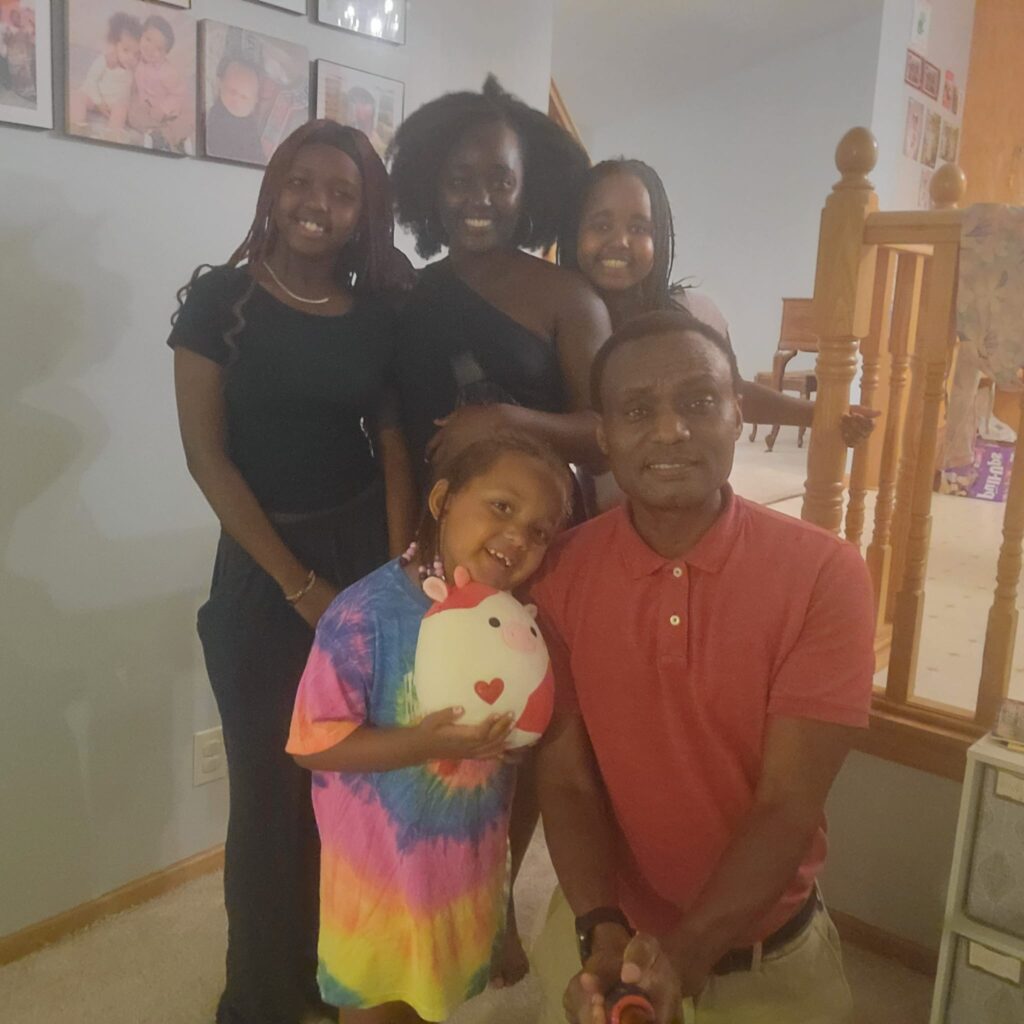
Later, I met Dylan Kioga, a Kenyan engineer living in Minneapolis with his family. A friend had connected us before my trip, and being with another Kenyan felt familiar. We traded stories about home, family and life in America. Dylan told me that one of the things he guarded most closely was his mental health. He was intentional about the media he consumed, his faith and creating community around his family.
That stayed with me. Coming to America for opportunity can give you a lot, but it can also take you far from the life and people you know. If you are going to live well here, you need people. You need friendship, community and ways to protect your well-being.
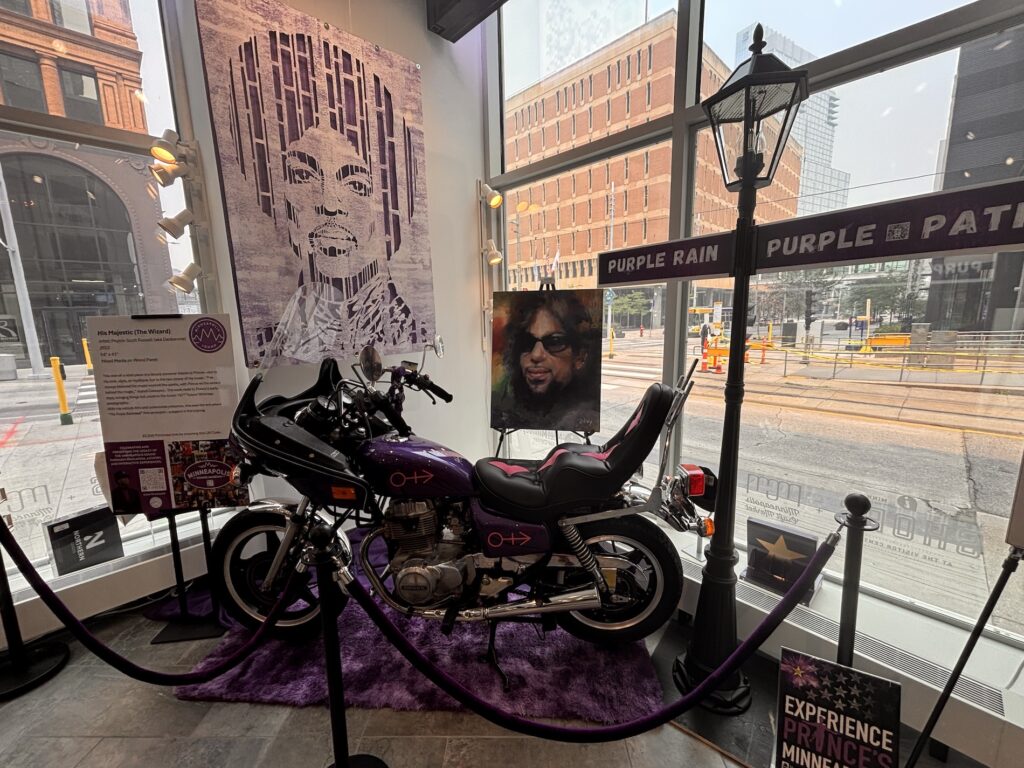
Minneapolis gave me plenty to enjoy too. I wandered through the Minneapolis Sculpture Garden, saw Spoonbridge and Cherry and the enormous blue rooster, visited the Mall of America and caught views of the Mississippi River and Stone Arch Bridge. I also saw a replica of the purple motorcycle associated with Prince and Purple Rain. Dylan had recommended the Cathedral of Saint Paul. Sitting inside that beautiful church, I felt a presence that was difficult to explain. It was calming and soothing. Peter had told me that travel had opened his mind. Seeing how other people lived had shown him how much existed beyond the place where he was born. I carried that thought with me.
Denver: Carry Home With You
Denver greeted me with energy. Soccer fever was everywhere, and one afternoon I decided to catch a World Cup match over lunch. That was where I met Nadia, my server, who was originally from Nigeria. I noticed her accent and asked where she was from.
She had lived in America for several years and loved Denver. These days, she told me, she lived a fairly quiet life. When she was not working, she was often home reading. But she had many ways of keeping Nigeria close. She tried to speak with her family back home every day. She cooked Nigerian food, including what she proudly described as a very good jollof, and returned from trips home carrying spices. She also loved wearing West African clothes.
I showed her the Kenyan bracelet I wear. “That’s one way to stay connected to your roots,” she told me. Someone from Kenya could recognize it and start a conversation. She was right. It has happened to me.
Then our conversation shifted. Nadia told me that one of her biggest adjustments in America was becoming much more aware of the color of her skin. Growing up in Nigeria, race had not occupied the same place in her identity. America changed that.
I understood exactly what she meant. Coming from Kenya, where most people around me are Black, I did not grow up thinking about my race every time I entered a room. In America, race can feel much more present. There are spaces where I am immediately aware that I am Black.
Hearing Nadia say the same thing made me feel less alone. This was not only my adjustment. Our conversation happened over chicken wings, which somehow made it all feel even more natural.
Nadia also insisted that I could not leave Denver without seeing the mountains. She was right about that too.
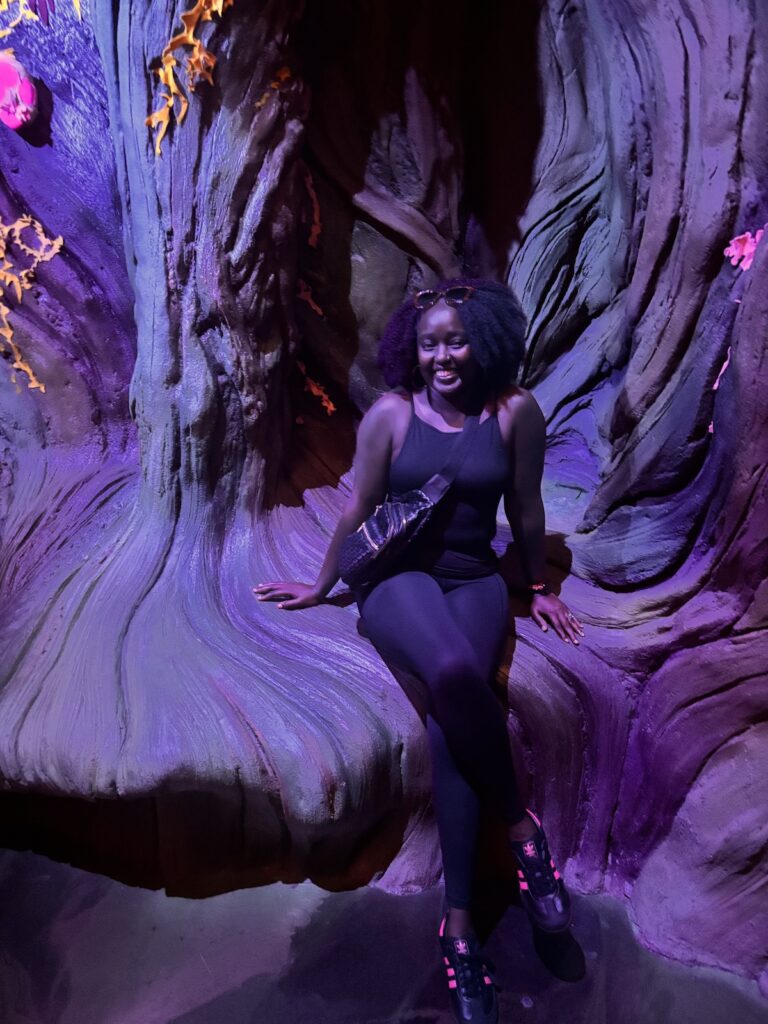
I explored 16th Street, visited Meow Wolf’s Convergence Station, a beautiful mess of strange objects, old computers, bright colors and rooms that seemed to defy explanation, and then headed toward Red Rocks, Evergreen and Echo Lake.
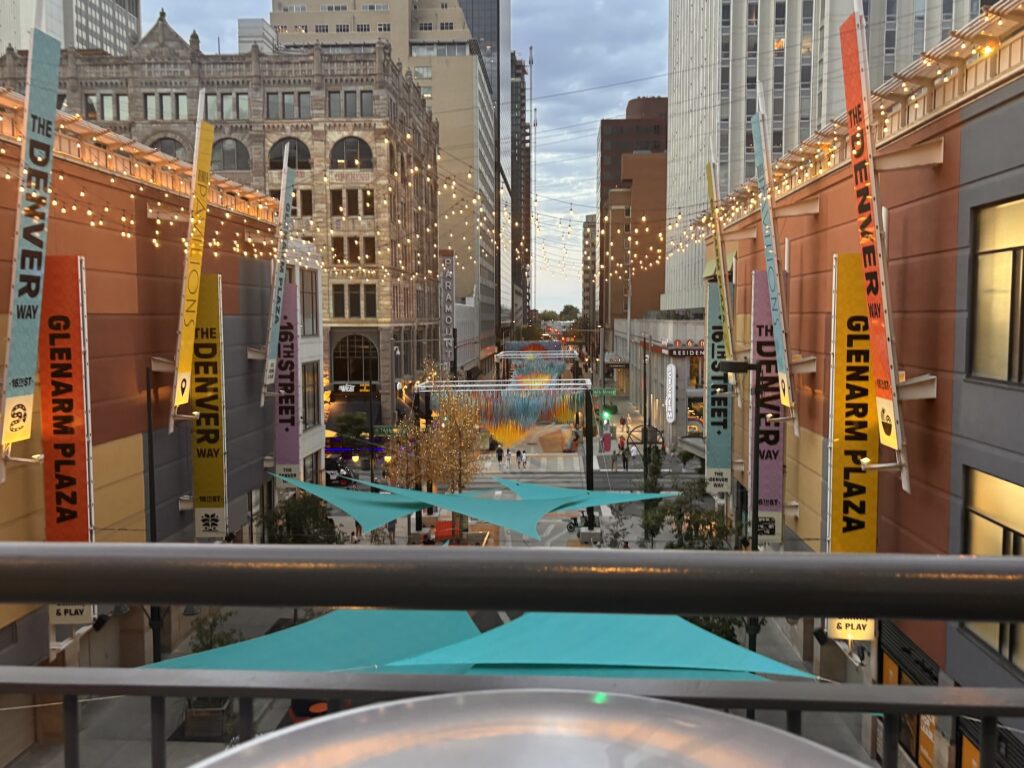
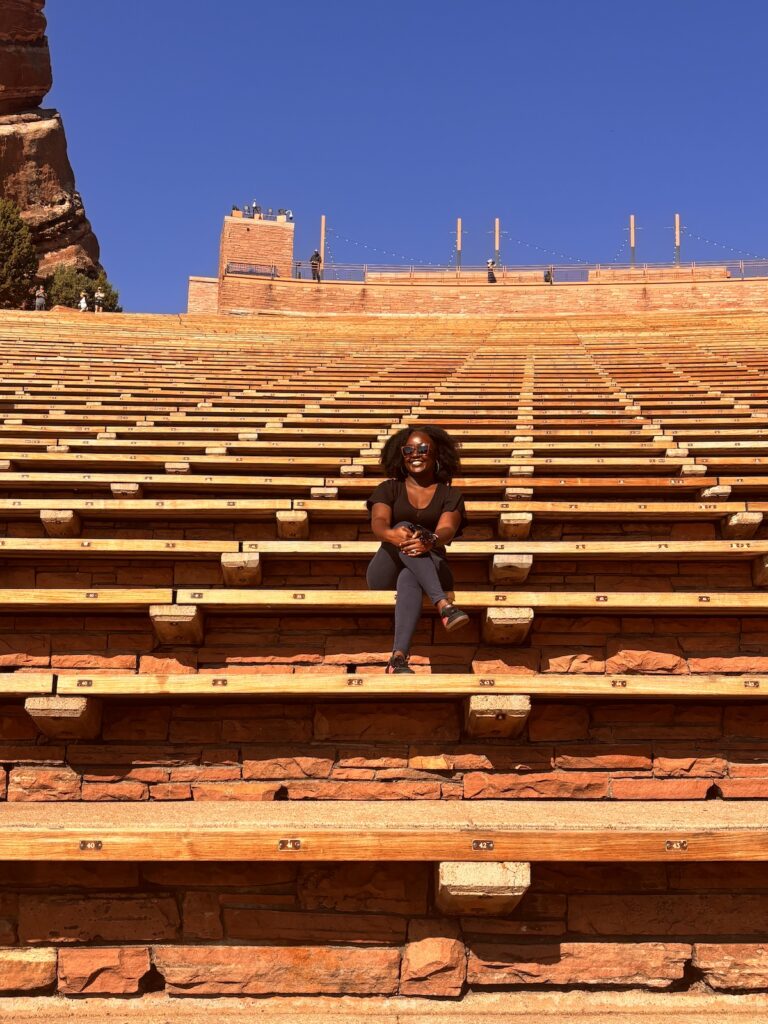
Evergreen looked like one of those small towns you see in movies, tucked between mountains and water. Red Rocks was magnificent. Standing there, I found myself hoping I would return one day for a concert. Denver reminded me that home can travel with you. Sometimes it is in food. Sometimes clothes. Sometimes a bracelet on your wrist.
San Antonio: Let Your World Get Bigger
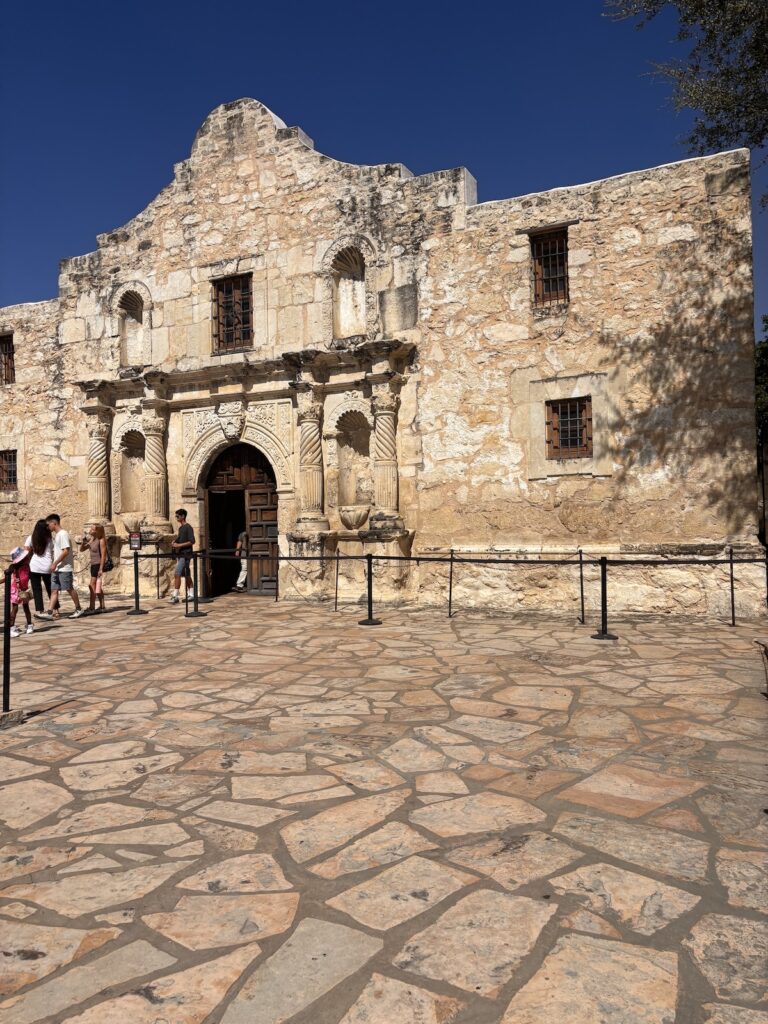
San Antonio did not go exactly as planned. I had hoped to meet a nurse from Botswana, but her work schedule changed and we could not find a time that worked. Instead, San Antonio gave me the chance to immerse myself in a culture that was not mine. I visited the Alamo, walked along the River Walk and ate my way through mole, enchiladas, pozole and elote, a dish I am now determined to recreate at home.
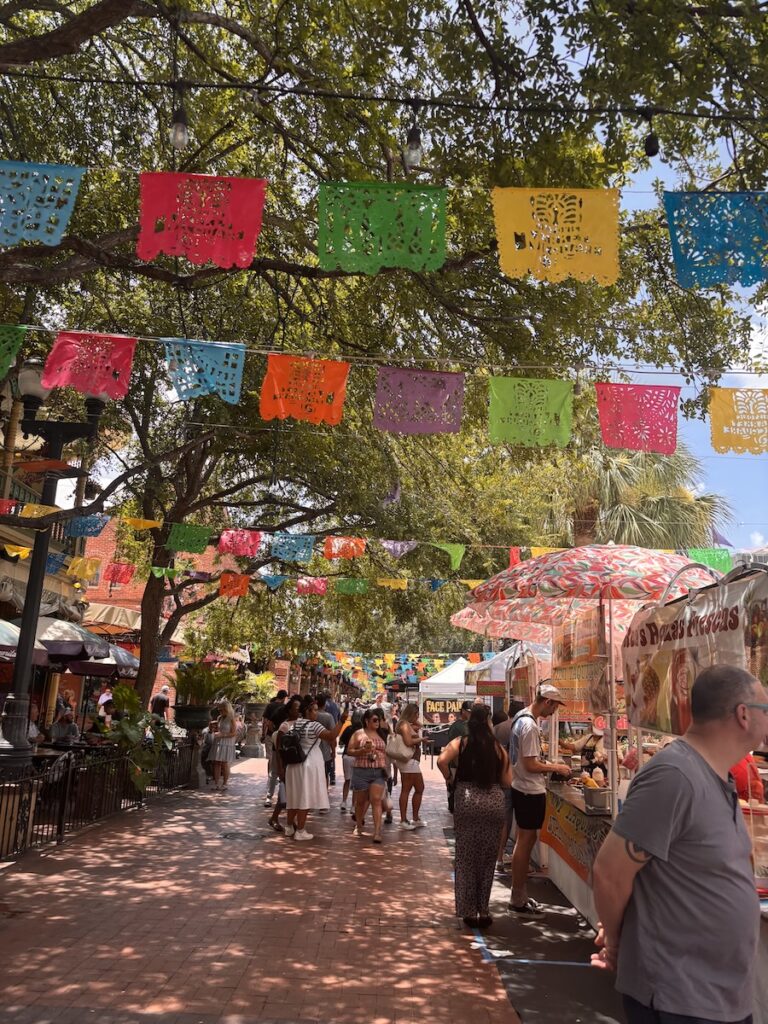
But the moment that stayed with me most happened at Historic Market Square. I walked through shops filled with colorful dresses, jewelry, hats, art and food. The place was loud, vibrant and full of life. And suddenly, it felt familiar.
In Kenya, we have markets with that same energy, colorful, noisy, crowded with people selling food, clothes, jewelry and pieces of culture. Here I was, thousands of miles from home, surrounded by people who were not Kenyan and did not look like me, yet something about the place felt like I had been there before. If I closed my eyes for a moment, I could almost imagine hearing people speaking Swahili. That was when something clicked. The world is enormous, but it is easy to make your own world very small. My culture is beautiful. I know that. But so are other people’s. You can stay with what is familiar, or you can let other people’s cultures and experiences expand your world. San Antonio reminded me to do the latter.
Atlanta: Make a Life Where You Are
Atlanta gave me one of the conversations that affected me most. There, I met Marcy. She had lived in South Africa and Kenya before coming to the United States for school. She now worked in health care and had built a family and a life in Atlanta. And that was exactly how she talked about it: a life. Not a waiting room. Not somewhere she was passing through until she could return home. She had been intentional about creating it. She had built friendships with Africans and Americans. She had family around her. And she had children growing up there. Her children, she reminded me, would remember this as their childhood. That stopped me. I can get very caught up in work and school. There is always something that needs to be done, especially while working on a dissertation and managing responsibilities at home. It becomes easy to tell yourself that friendships, fun and new experiences can wait. Marcy challenged that. If you keep waiting, she told me, life will pass you by. One year becomes five. Five becomes 10. And those are years of your life you could have been living. That touched a nerve. My children are here with me too. This is their childhood. I do not want them to remember me only working. Since returning home, I have been thinking differently about my time. I want to be more intentional about friendships and make room for experiences. I even want to finally learn how to swim. My children love swimming, and I have spent years sitting on the side because I do not know how.
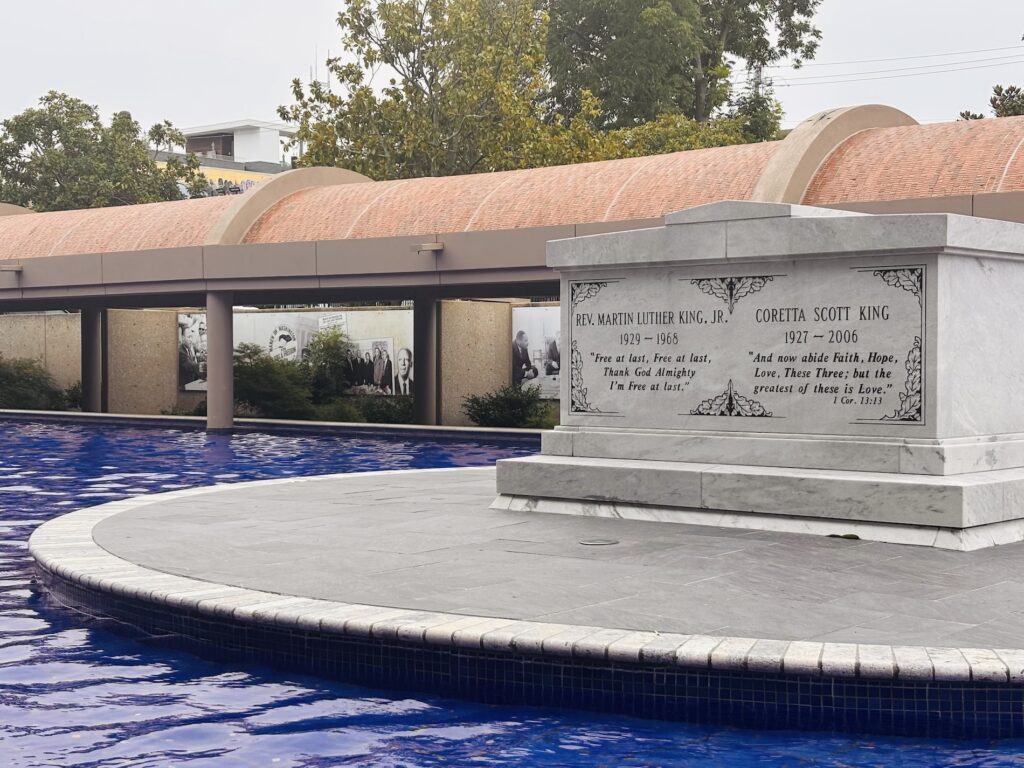
I want to get into the water with them. Marcy and I also talked about ordinary things, including Black hair, how she cared for hers, how I wore my Afro. There was something comforting about sitting over a meal and having the kinds of conversations Black women have everywhere. While in Atlanta, I visited the Martin Luther King Jr. historic sites. Walking through the neighborhood where he grew up, seeing the church where he preached, and visiting the place where he is buried made me think about Black history in America differently.
As an African immigrant, I sometimes experience Blackness in America as someone who arrived later. Standing there reminded me that African American history is part of a much larger story about separation, survival, strength and resilience. I also squeezed in the Georgia Aquarium and a dolphin show. But Marcy’s message was what I carried away: Make a life where you are.
Baltimore: Hold on to Your Purpose
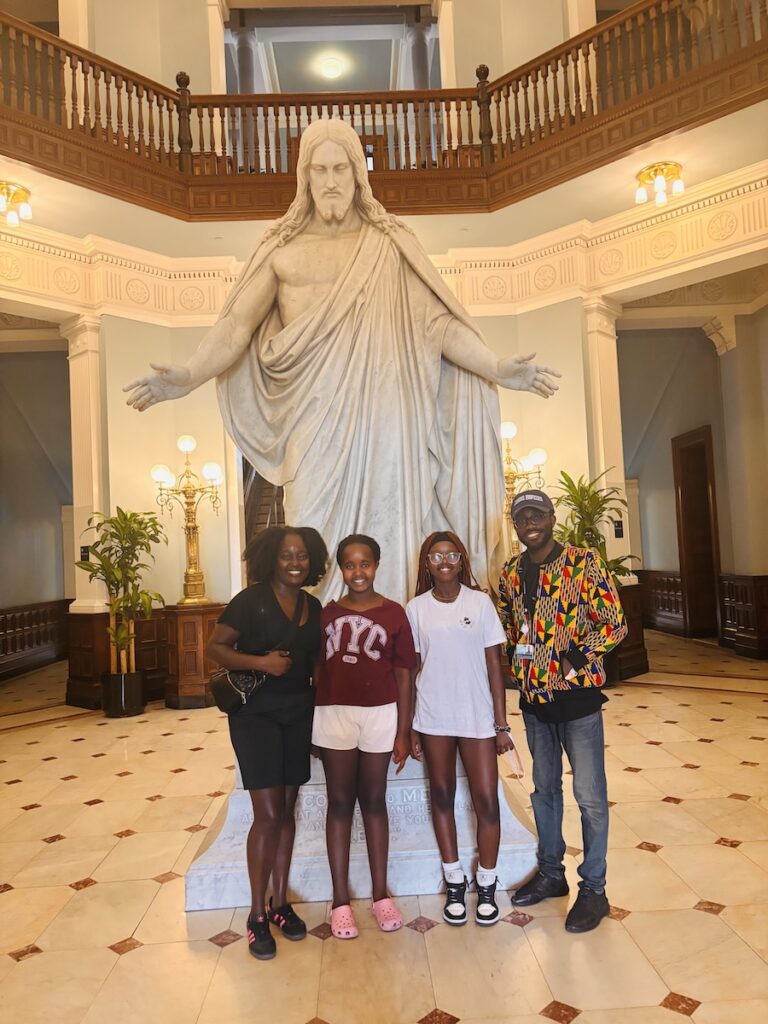
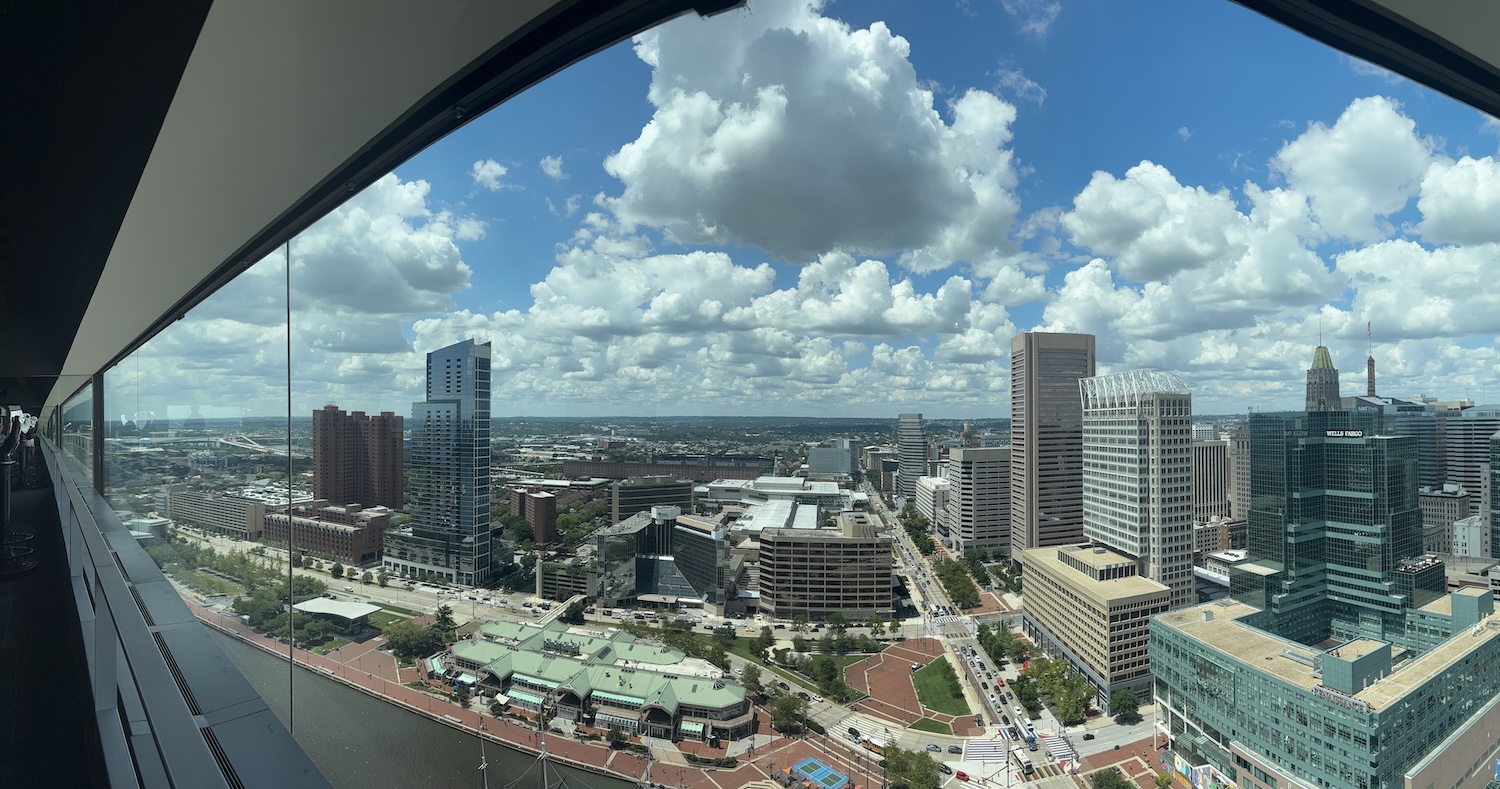
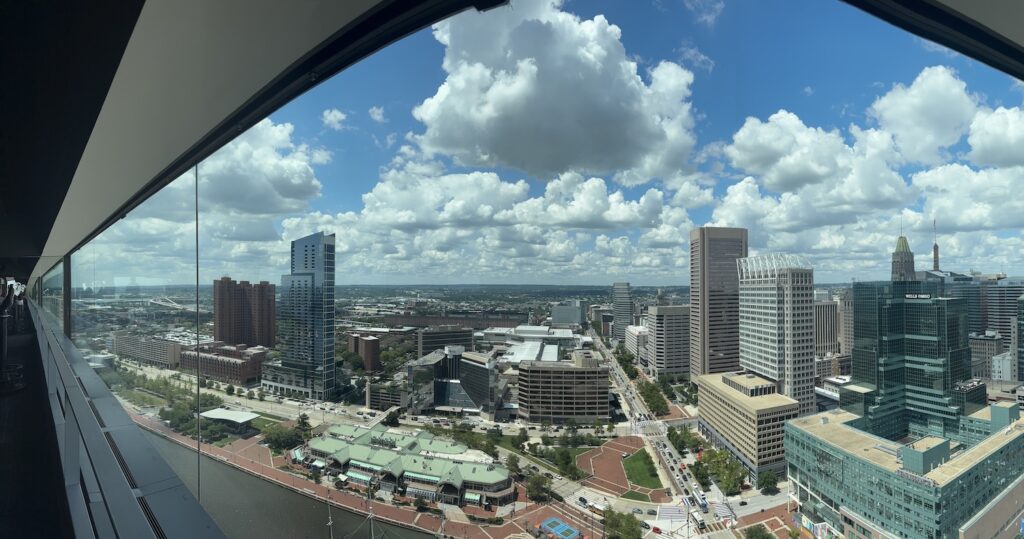
My final stop was Baltimore. There I met Baffour Baffour, a Ghanaian PhD student who had previously lived in St. Louis. When I saw him, he was wearing a beautiful jacket made from traditional Ghanaian fabric. It suited him. Baffour carried Ghana with confidence. You could see it in the way he dressed and hear it in the way he spoke about where he came from. He took me around Johns Hopkins, where he is studying mental health. We walked through the hospital and the School of Public Health as he explained some of the health disparities affecting Baltimore. They sounded familiar. Many were similar to disparities I had seen and studied in St. Louis. What struck me was the university’s proximity to communities experiencing those very problems, and Baffour talked about research there that directly involved and affected people living nearby.
Walking through Johns Hopkins also gave me an unexpected moment. As a child, I had read Ben Carson’s Gifted Hands. Years later, here I was, walking through the hospital where he had worked and seeing his name woven into its history. It felt a little like stepping inside something I had encountered only in a book. When I asked Baffour what helped him navigate life as an immigrant and PhD student, he kept coming back to purpose. He had made friends through his program and stayed connected to family and friends in Ghana and the United States. He had also found mentors and advisers who understood what he wanted to accomplish and supported that purpose. For him, knowing why he was here mattered. Purpose had become an anchor.
The Ride Home
My journey began with an immigrant Uber driver, and fittingly, it ended with one. On my way to the Baltimore airport, my driver, whom I’ll call John, told me he was from Haiti. He had been in America for about three years, and one of his biggest shocks had been the weather. During his first winter, he started getting nosebleeds. He became frightened and wondered whether something was seriously wrong. Eventually, he learned that his body simply was not used to the cold, dry air. So, he adapted. He bought a warm jacket and good shoes, and he learned how to survive an American winter. There was something almost funny about the simplicity of that story, but it captured much of what I had heard throughout my journey. Immigration is adaptation. It is learning new weather and new systems. It is missing people thousands of miles away. It is cooking food that reminds you of them, finding people who speak your language and wearing something that tells the world where you come from.
It is also discovering things about yourself that you might never have discovered if you had stayed home. John hoped to return to Haiti once his travel arrangements allowed. In the meantime, he was working hard because he had come to America for opportunity and wanted to help his family back home. He had also found people from his community. They ate familiar food together, spoke the same language and gave one another a little piece of home. As I headed to the airport, I thought about everything I had heard. Peter had shown me how travel can open your mind. Dylan reminded me to protect my mental health. Nadia showed me how culture travels with you. San Antonio taught me to make my world bigger. Marcy reminded me not to postpone living. Baffour showed me the value of purpose.
And somewhere along the way, I came to understand home a little differently. Home is where your heart is. It is where your purpose is. It is where the people you love are. And sometimes, home can exist in more than one place. You can love where you came from deeply and still build something beautiful somewhere else. But wherever you are, you have to live there. You have to be present in that moment, in that space, in that life. Because life, in the end, is what you make of it.
- Name
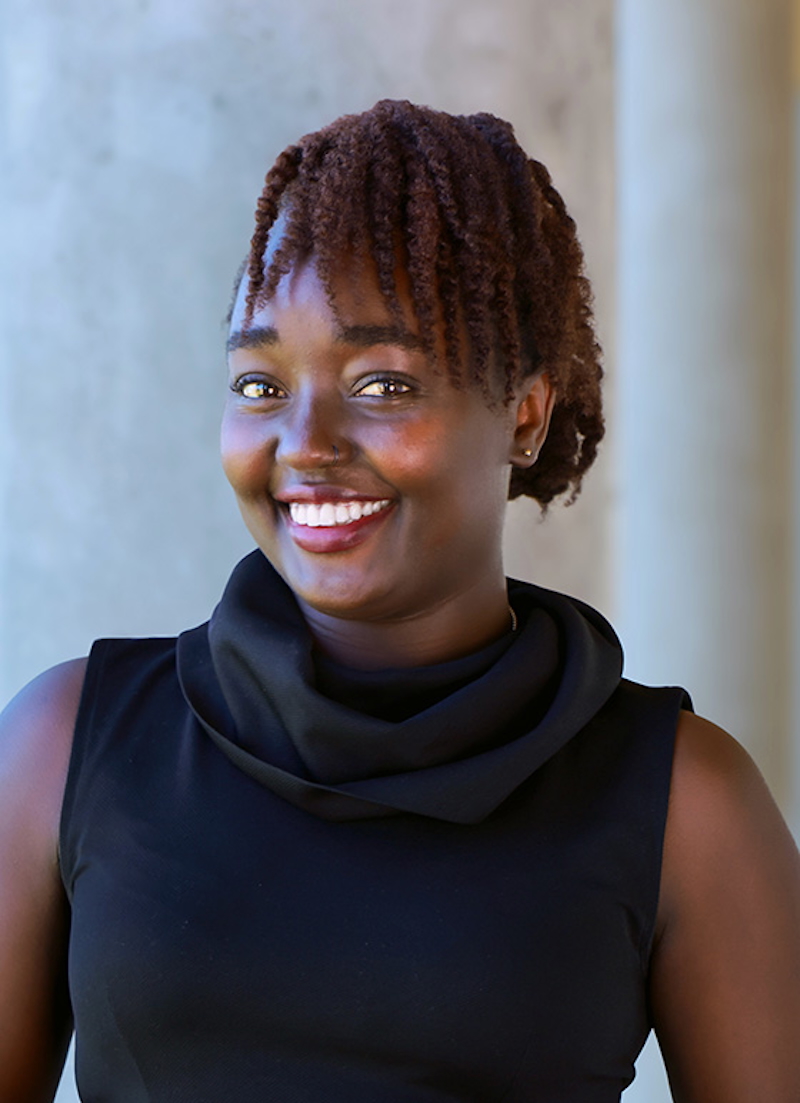
- Judith Mwobobia
- Job Title
- PhD student in the Bursky School of Public Health