
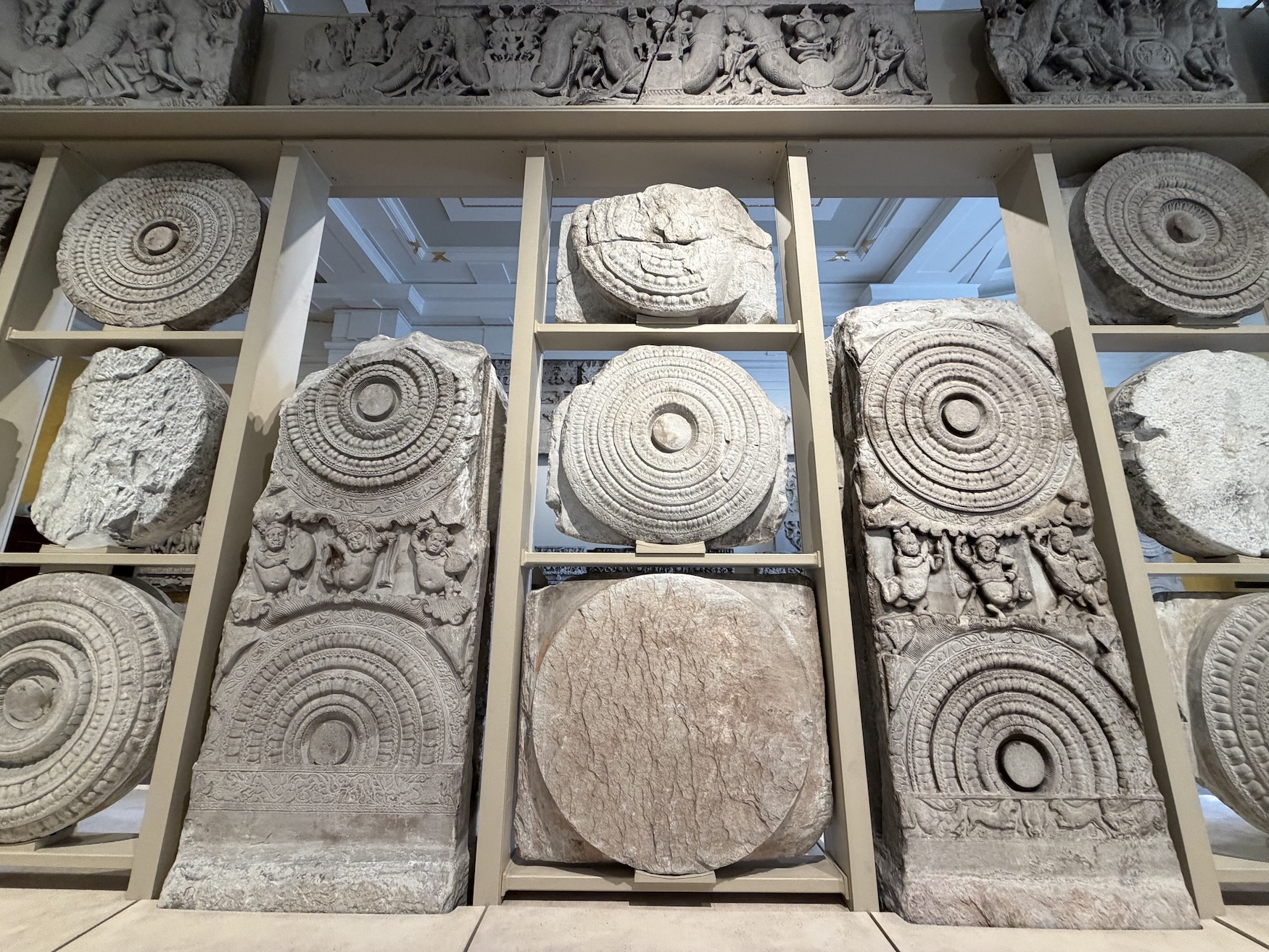
Between Birth and Death: Exploring Buddhism in Europe
I grew up between the two ends of a life, the life of the Buddha. I am from eastern Uttar Pradesh, about eighty kilometres from Lumbini, where Siddhartha Gautama was born, and about eighty from Kushinagar, where he died. Pilgrims come from all over the world to stand in those two places; for most of my life they were simply towns you could reach in an afternoon.
The Buddha was a human being, not a god, and he went through what the rest of us go through: ageing, illness, loss, and the ordinary suffering that runs underneath a life. What made him different is what he did about it. He treated it as a problem with causes, went looking for those causes, checked what he found against his own experience, and spent forty-five years teaching the result to anyone who would listen. The result fits in four lines: there is suffering; it has a cause; it can end; and there is a path that ends it.
I am a doctoral student in Energy, Environmental and Chemical Engineering. I study aerosols, the tiny particles carried in the air around us: where they come from, how they change as they travel, and what they’ve turned into by the time they arrive. The first question I brought to the tradition next door was a technical one: how does a method travel, and why did this one leave the place where it began?
But it wasn’t the only question, and in the end it wasn’t the important one. Suffering has not gone anywhere in two and a half thousand years. If people worked on that problem, tested their solution and left the method behind, the sensible thing is to find out whether it still works rather than simply admire it from a distance. The Newman Exploration Travel Fund award enabled me to find out.
One Stone, Carved Twice
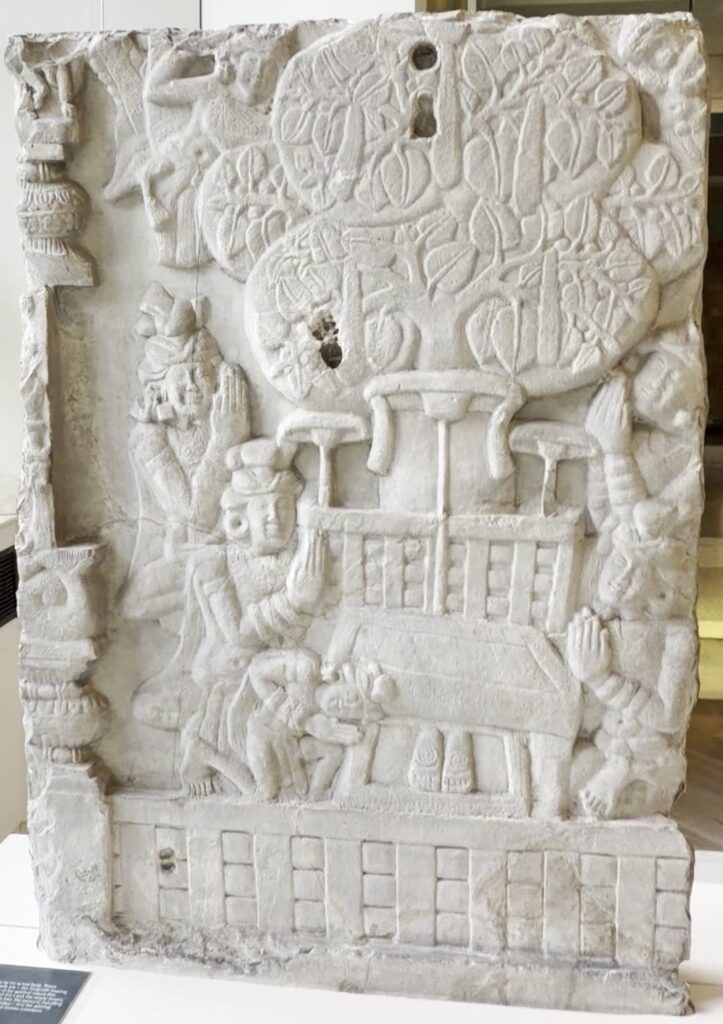
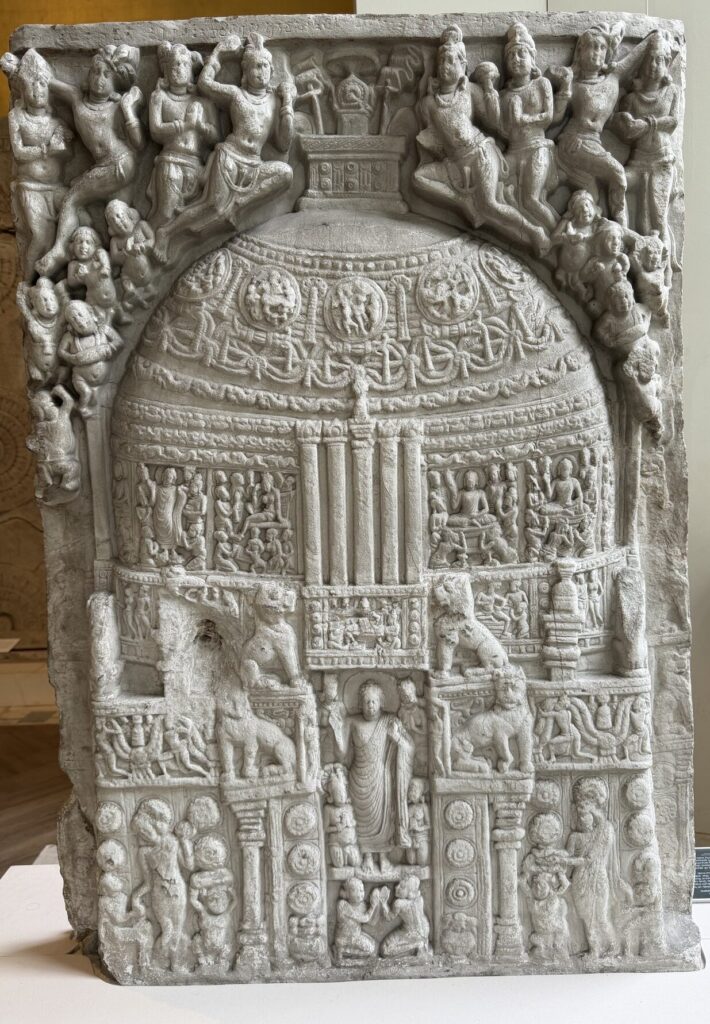
Room 33a of the British Museum holds the sculpture taken from the great stupa at Amaravati. The stupa stood in what is now Andhra Pradesh, was founded around 200 B.C., and was added to over many centuries. One slab in the room is carved on both faces. It’s a drum slab, from the round base that held up the stupa’s dome. On the older face are a spreading tree, a railing, a crowd with their hands raised in salutation, and, in the middle of all that attention, a seat. The seat is empty.
There’s no Buddha. For the first few centuries nobody showed him in human form. You were shown the tree he sat under, the wheel he set turning, his footprints and his empty throne, but never him. Turn the slab around. Three or four centuries later, here he has a body, with a face, hands, and a robe, standing in the entrance of a stupa carved in relief, with worshippers kneeling at his feet, carved smaller than he is. When the stupa was enlarged, some of the old slabs were turned round and carved again on the back. This is one of them.
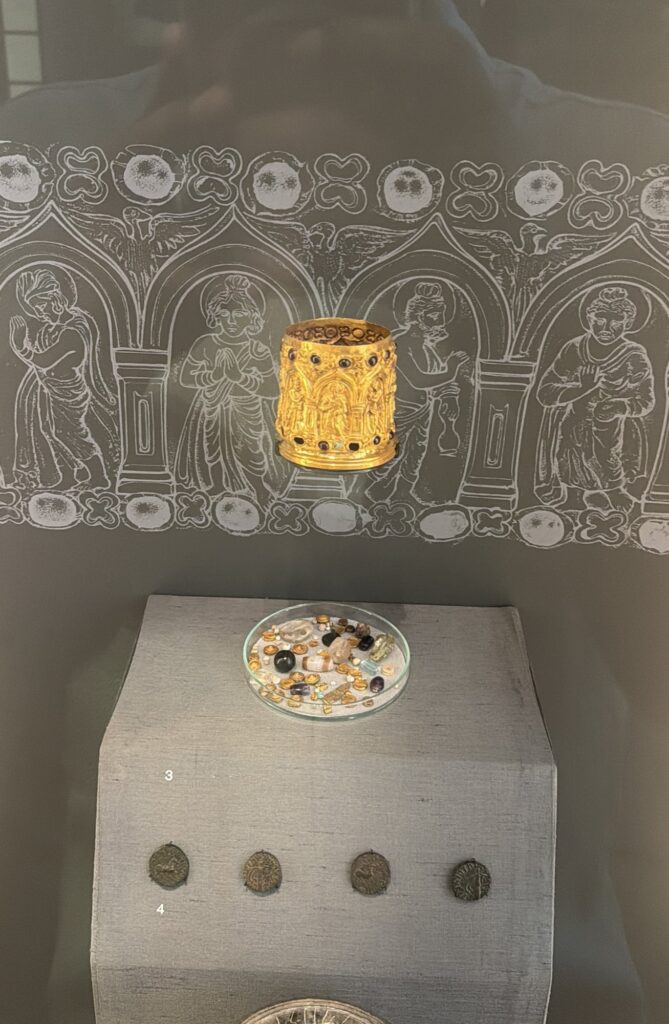
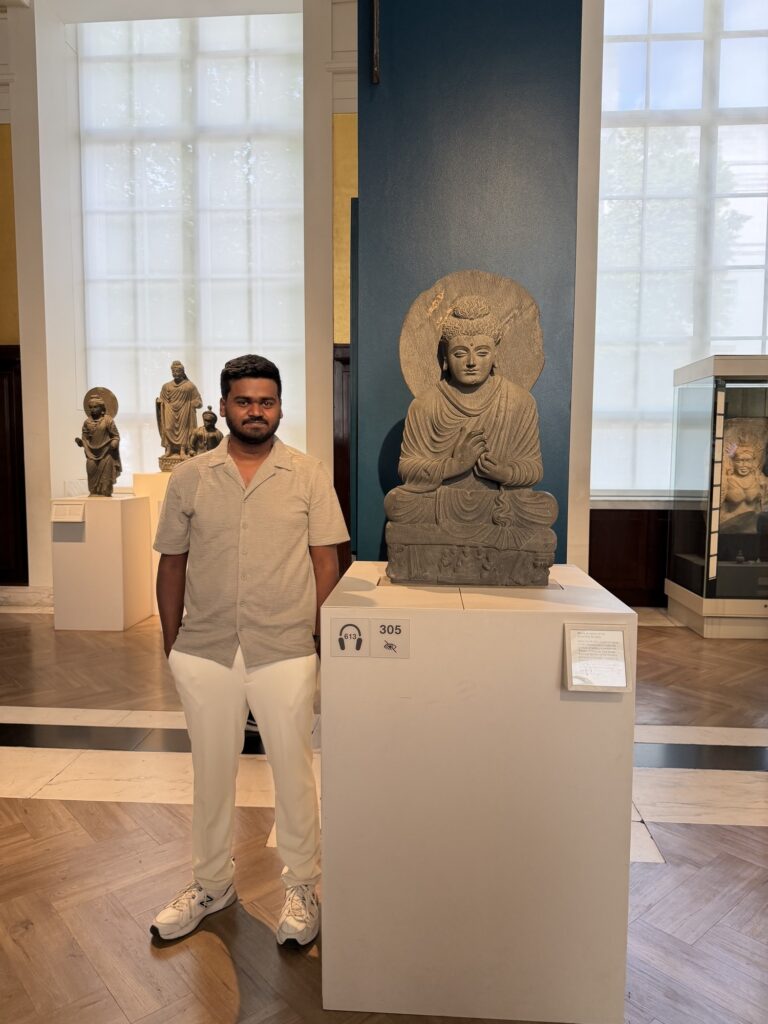
A wall label in the main gallery next door says he was first shown in human form, probably at about the same time, in Gandhara and in Mathura. Gandhara was centered on the Peshawar valley in what is now north-west Pakistan; Mathura is on the river Yamuna, south of Delhi, about a thousand kilometers away. The earliest of these bodies I saw is on a gold reliquary casket from Bimaran, in Afghanistan, which the museum dates to about A.D. 50–100. It carries some of the earliest portraits of him that exist.
Giving him a body is no fall from grace, just what happens to any idea that becomes popular enough to need a picture. But it’s the first straight answer I got: what travels is not what was sent.
Ashoka the Great, and the Wheel on My Passport
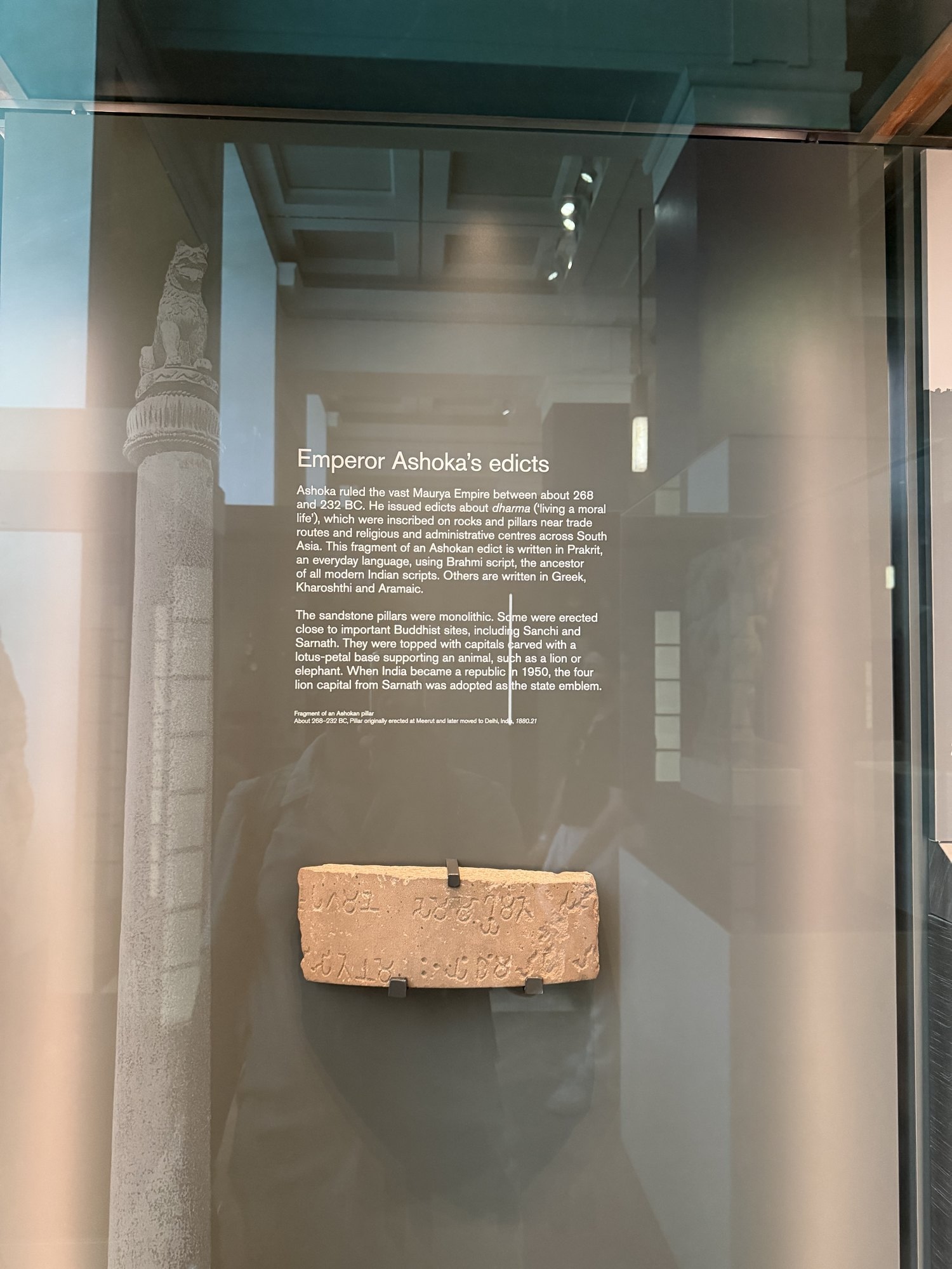
A method spreads because somebody carries it. In this case the somebody was a head of state. Ashoka ruled the Maurya Empire approximately between 268 and 232 B.C., across most of South Asia. He issued edicts about dharma (the museum glosses it as “living a moral life”) and had them cut into rock faces and onto polished sandstone pillars, placed beside trade routes and at the places people already gathered.
The British Museum holds a fragment of one of those pillars. Its label records that the edict is in Prakrit, “an everyday language,” written in Brahmi script, “the ancestor of all modern Indian scripts,” and that others are written in Greek, in Aramaic, and in the Kharoshthi script. He used what people actually spoke. The edicts weren’t meant for scholars to admire; several instruct that they be read aloud on fixed days.
One of those pillars still stands at Lumbini. Ashoka had it inscribed to record that he came there in the twentieth year of his reign and worshipped, because the Buddha was born on that spot. It is the main evidence for where Lumbini is. He also sent the teaching out of India, and the mission that took hold went south. The tradition holds that Ashoka’s own son Mahinda carried the teaching to Sri Lanka, and Sri Lanka is where the Theravada line, the “School of the Elders,” has held longest.
The label on the pillar fragment ends by noting that when India became a republic in 1950, the four-lion capital from Sarnath was adopted as the state emblem. The lions on the cover of my passport are his lions, four of them standing back to back, of which you only ever see three. They stood on top of a pillar he set up at Sarnath, where the Buddha first taught. Under their feet is a wheel, the wheel of the teaching, and the same wheel is at the centre of the Indian flag. Every Indian government document I have ever filled in carries a Buddhist emperor’s monument at the top of the page.
India kept his lions and his wheel, not his practice. Hinduism took the Buddha and made him Vishnu’s ninth avatar, which would have surprised him.
Two Roads Out of India
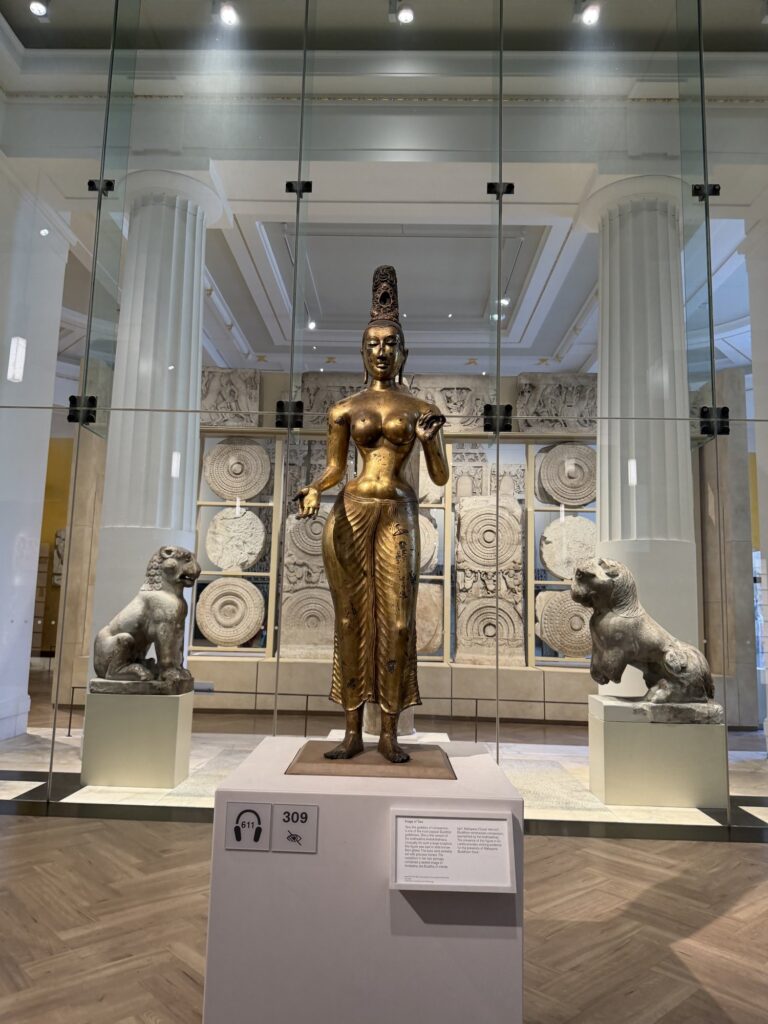
What Ashoka sent south arrived. According to the museum, Buddhism reached Sri Lanka from India “in about 250–200 BC”, which straddles the end of his reign. One statue in the same room complicates that. She is 143 centimetres tall, cast in solid bronze and then gilded, and her eyes were probably set with stones. She is Tara, the goddess of compassion, made around A.D. 700 to 800, and she is said to have been found in Sri Lanka, between Trincomalee and Batticaloa. Tara is a Mahayana figure, and Mahayana is supposed to be the northern branch. The museum’s label describes her as striking evidence that Mahayana Buddhism was present in Sri Lanka.
The other branch went up, out of Gandhara onto the Silk Roads and east into China, carrying Gandhari, a Prakrit written in the same Kharoshthi script Ashoka had used on the frontier. Sanskrit came later, and Tibetan later still. It picked up a new alphabet at every border.
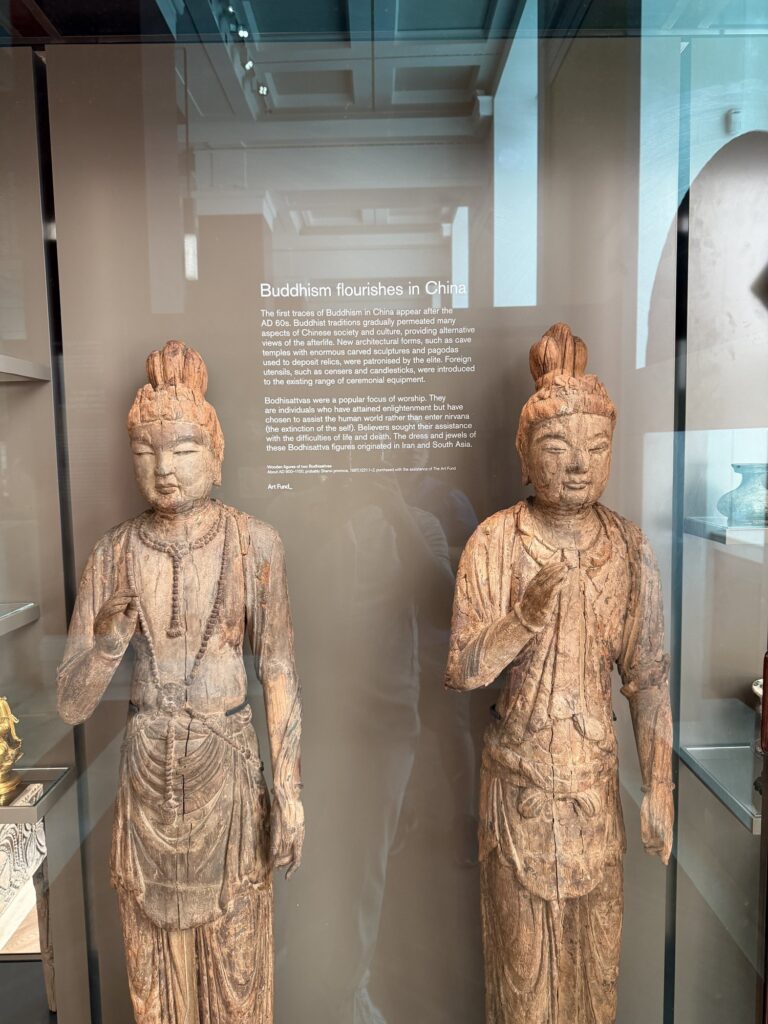
China has the first traces after the AD 60s, and by the sixth century, Buddhism is mainstream. In the gallery there are two wooden bodhisattvas, probably from Shanxi, made around AD 900 to 1100, whose dress and jewels, the label says, originated in Iran and South Asia. The figures are Chinese, but the style is borrowed.
Buddhism arrived in Korea in the AD 300s. On loan from the National Museum of Korea is an iron Buddha of the Goryeo period, AD 900 to 1000. Its label says such figures were often coated in lacquer and gilded. The label on the colossal marble Amitabha from Hebei, dated AD 585, in the well of the museum’s north stairs, says almost the same: it was once covered with colour and gilding. Most of those figures carried gold when they were made. What’s left is traces, and the traces are what we’ve learned to find beautiful. We’re admiring the damage. What survives is whatever happened to be durable, not what was made.
It Came Through Administration
I spent three days in the Asian and African Studies Reading Room at the British Library. The first manuscript I photographed was a Dhammapada, the Buddha’s sayings in verse, on palm leaf incised with a metal stylus and rubbed with lampblack so the cut letters take the ink. The letters are round, almost circular, and packed in rows. I asked Pasquale Manzo, the lead curator for South Asia, why, and what I understood from his answer was that a straight horizontal stroke splits a palm leaf along the grain. Many scripts that grew up on palm leaf went round to avoid it: Burmese, Sinhala, Tamil, Telugu and Kannada. The writing surface shaped the alphabet.
He gave me far more time than he owed a visiting student, and brought the manuscripts out one at a time so that I could photograph them. One came wrapped in white cloth inside a box, with red and gold lacquer covers and the Library’s handwritten card naming it. It was the Bhikkhu- and Bhikkhuni-Patimokkha, the rules of the Buddhist monastic order: two hundred and twenty-seven for monks in this recension, three hundred and eleven for nuns.
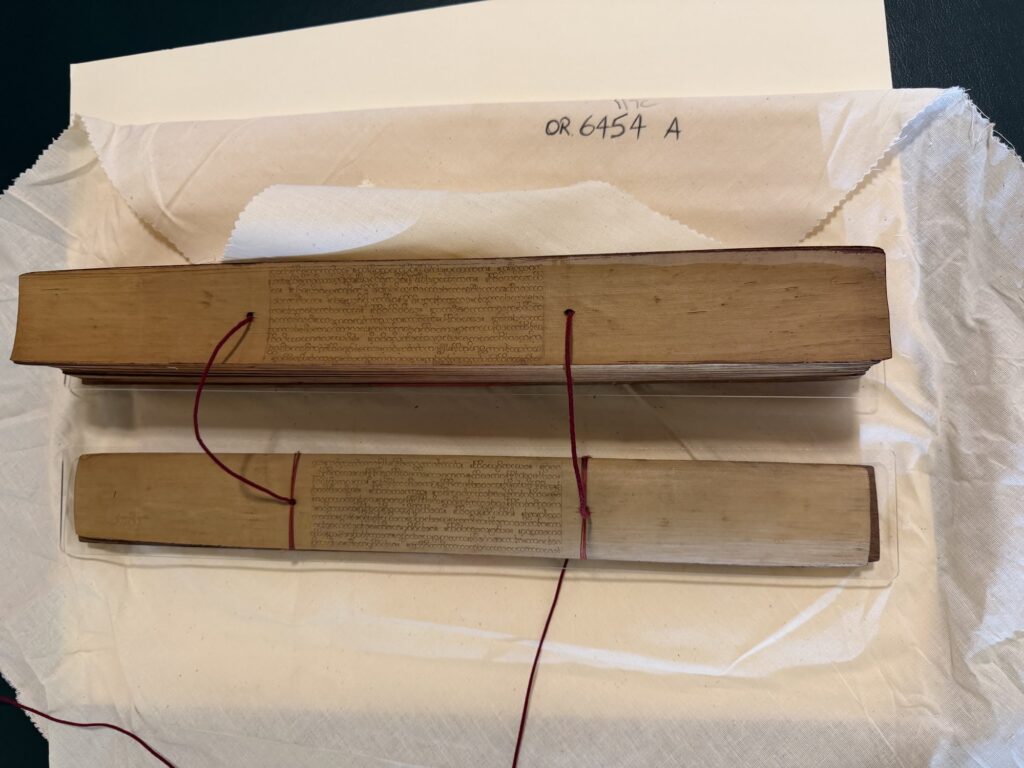
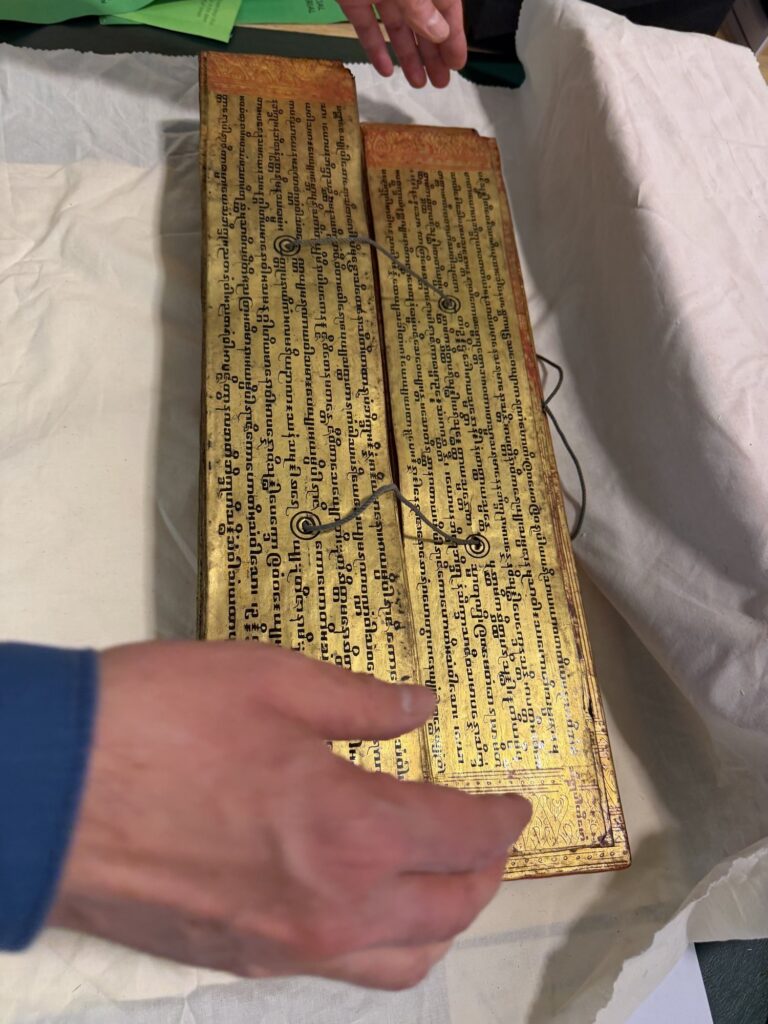
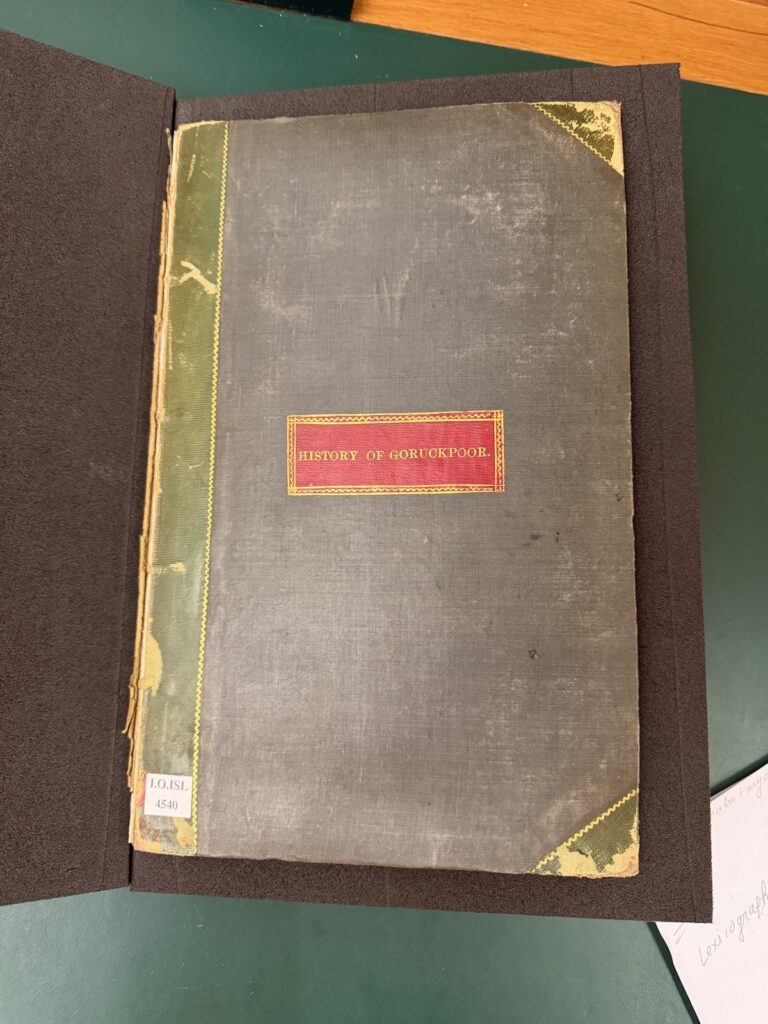
How any of it got to London isn’t a mystery; the shelfmarks show it. IO stands for India Office. This is the working archive of the East India Company and then of the Crown, kept in London since the Company’s time and transferred to the British Library in 1982. These manuscripts came through the British colonial administration, not down the Silk Road.
Somewhere on the second day I asked Manzo the question I had actually come with. Why didn’t Buddhism stay? It began in India, its legacy is on our flag, and there is almost nobody left practicing it in the country it came from. What I took away from his answer was that Buddhism arrived where there was already an established tradition. It reorganized the trip. Until then I’d been tracing an export, a good idea carried outward by people. If that’s right, I’d also been tracing a tradition that survived somewhere else after it faded where it started.
The Musée Guimet, Paris
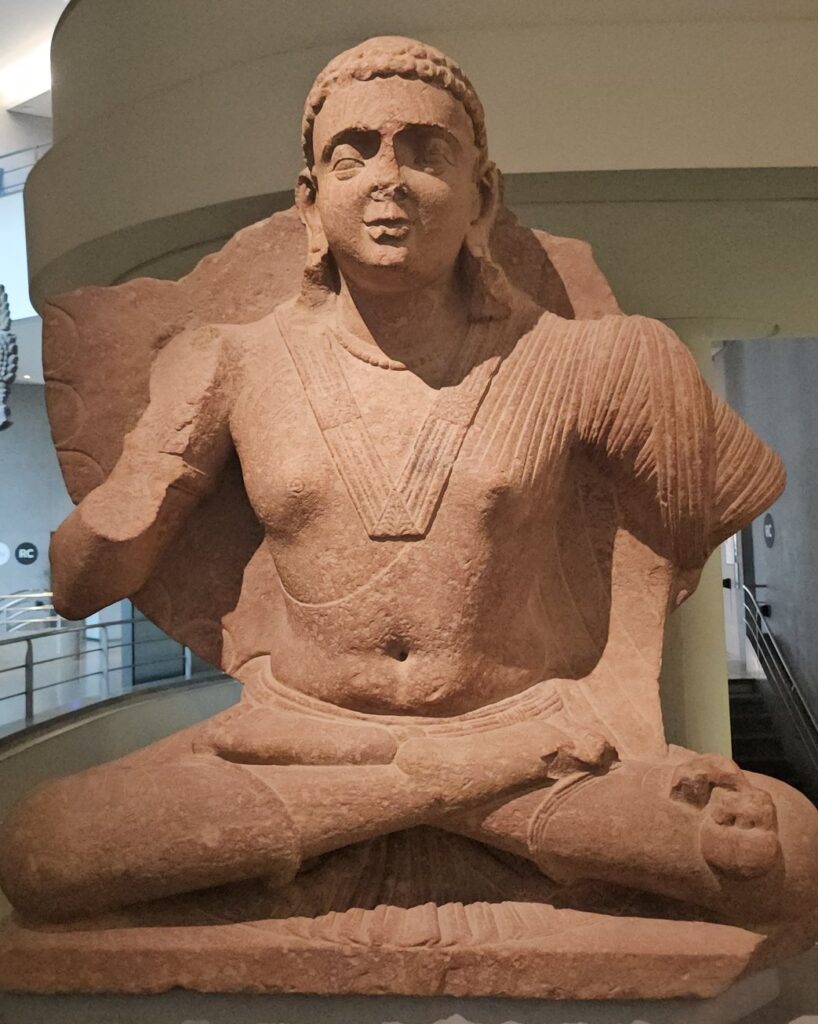
I took the train to Paris on July 31 and spent the next morning in the Musée Guimet, which is arranged country by country. The first room held a red sandstone bodhisattva from Mathura, Kushan period (late first to early second century), the other of the two places the British Museum’s label had named a few days earlier.
A Thai panel says that Theravada Buddhism played an essential role in Thailand, although it is unknown how it arrived. A tradition can reach a country and reshape it completely without anyone writing down the day it turned up.
Still a Procedure
On Monday, August 3, I took a train out of Zürich, changed at Winterthur, and walked ten minutes uphill from a small station in the Töss valley to the Tibet-Institut Rikon. It is there because of a factory. When Tibetan refugees reached Switzerland in the 1960s, two brothers who owned a metal company in the valley, Henri and Jacques Kuhn, gave them work and company flats. On the Dalai Lama’s suggestion, the brothers also built them a monastery. It was consecrated in November 1968.
Peter Oberholzer, the managing director, worked out where I was from, said there were people here from my part of the world, and took me to them, four monks working at laptops among the manuscripts. He introduced me, and we carried on in Hindi. They had grown up in India.
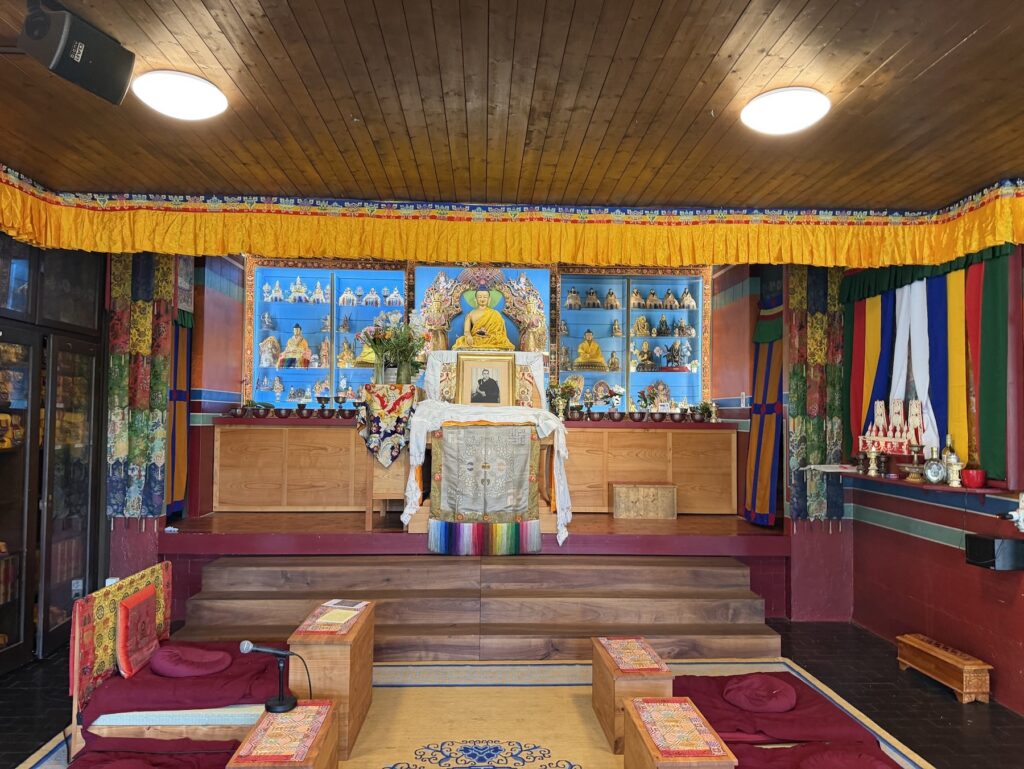
One of them, Jigme Lodue, took me through the institute, and over lunch described what the community does every fortnight. They sit together, and each says aloud any rule he has not managed to keep, apologises for it, and undertakes not to repeat it. Every two weeks. Out loud. In front of the others. He was describing the Pratimoksha, the Sanskrit form of the Patimokkha whose Pali copy I’d held in London five days earlier. It isn’t the same list, since his tradition counts the rules differently, but the rite is older than the split.
In London it had come to the desk wrapped in white cloth inside a box, and I had treated it as something a library keeps because it is old. Here it was a recurring appointment. That is the difference between a text and a method, and I had to travel eight hundred kilometres between two buildings to notice it.
The library was locked; Peter offered me the key. Inside were shelves of books and long wooden printing blocks with the text cut into them in mirror image so that it comes out the right way.
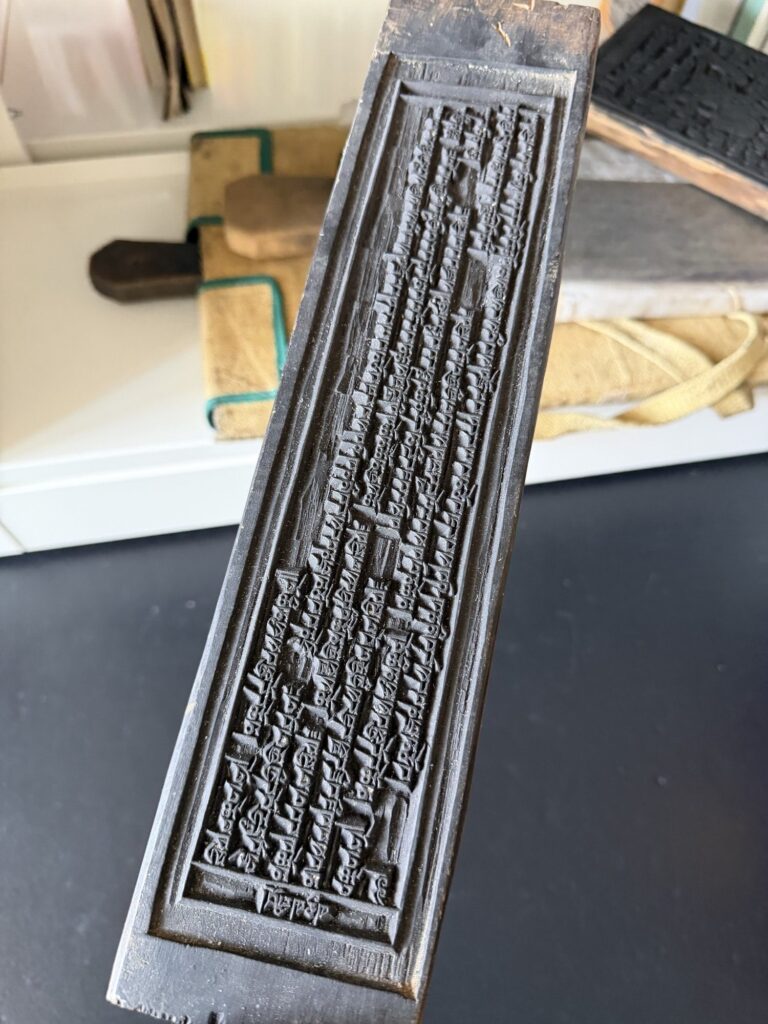
The transmission isn’t a finished historical process. I walked into the middle of it, was given lunch and a string of prayer flags, and was walked back down to the station by someone who felt, by the end of it, like a friend.
The Jungfraujoch, Switzerland
On Friday, August 7, I went up early from Interlaken Ost to the Jungfraujoch. The last stretch of that railway runs inside the mountain. You come out at three thousand four hundred and fifty-four metres, onto a plateau of old snow with the Aletsch Glacier, the largest in the Alps, running below.
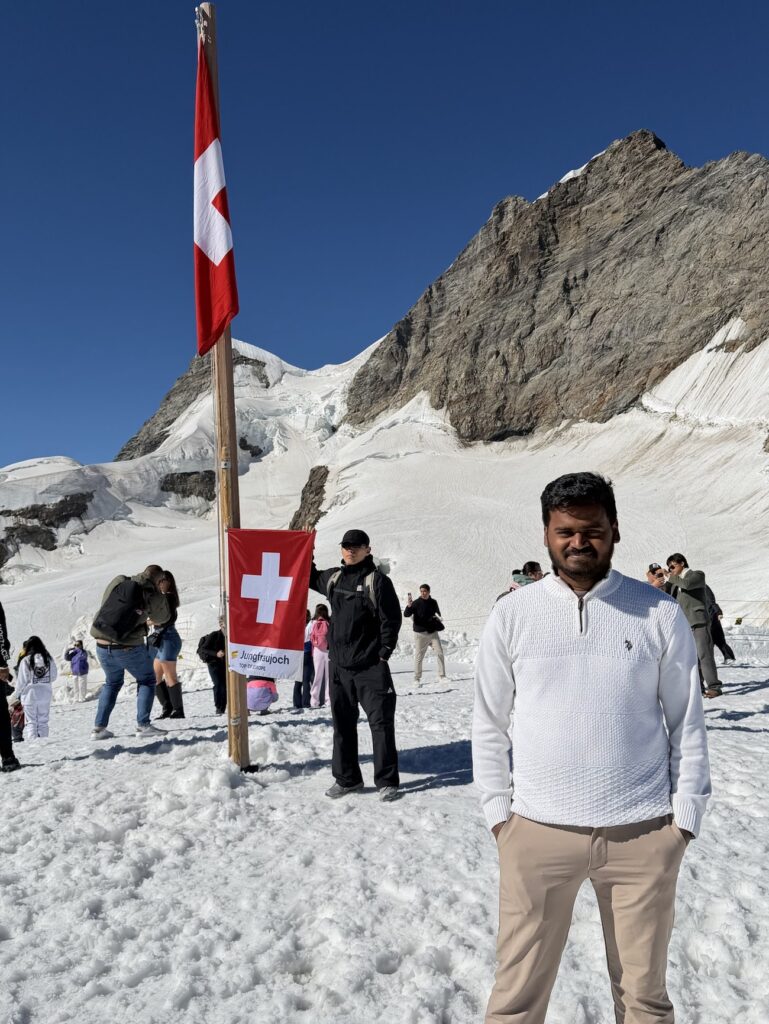
The train does the climbing, so the height is easy to miss. At that height a lungful of air carries about a third less oxygen than the same lungful at sea level, and you find that out on the first flight of stairs. I study the atmosphere for a living. It was the first morning it had ever been a fact about my own body.
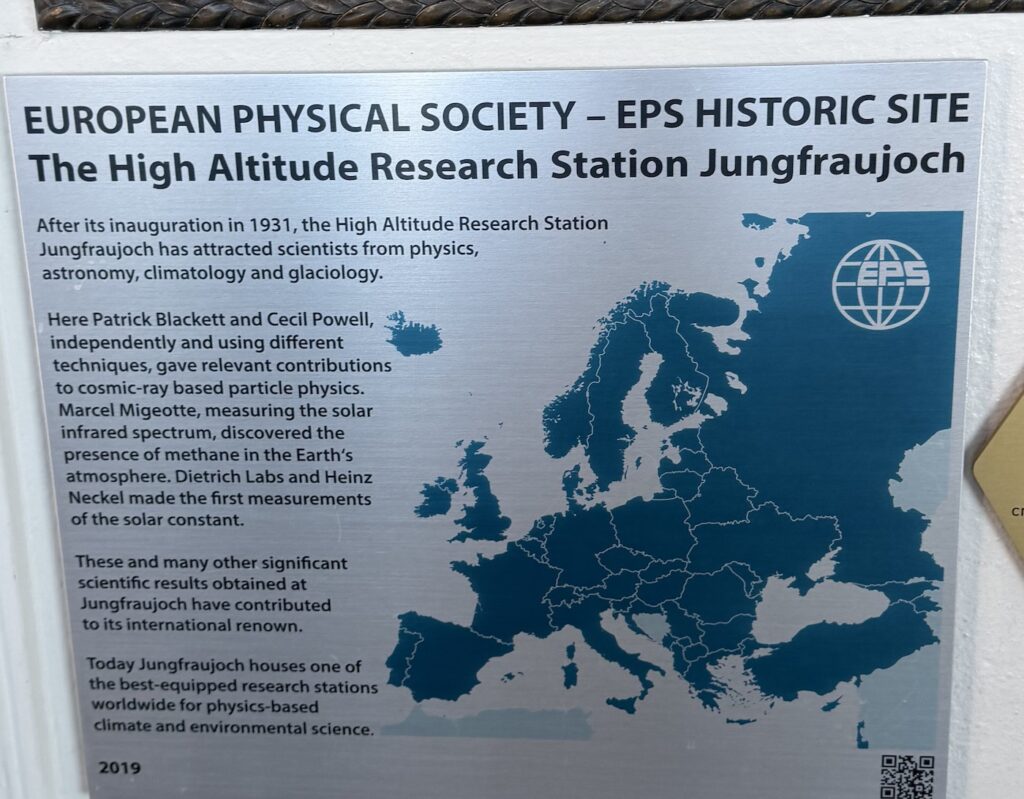
Built into the rock above the station is the Sphinx, a stone observatory reached by a lift driven up through the mountain. I’d come up as a tourist, but it’s one of the highest research stations in the world, and it measures the atmosphere.
On a wall inside, a plaque credits Marcel Migeotte with finding methane in the Earth’s atmosphere. He found it in a solar spectrum recorded in Ohio in January 1948, while looking for something else. Afterwards he put a spectrograph up here, and thirty years later somebody went back to its Jungfraujoch spectra and got a number out of them, 1.14 parts per million for April 1951. It is one of the earliest measurements of atmospheric methane. It is now about 1.9 parts per million, and the distance between those two numbers is most of what my field is for.
Plum Village, France
The last week of the trip was at Plum Village, the monastery in the Dordogne founded by Thich Nhat Hanh, who was refused re-entry to Vietnam in 1966 and could not go home for thirty-nine years. I stayed at the Upper Hamlet from August 10 to 17. It was the monastery’s Wake Up retreat, the one for young adults. I was one of very few people there from Asia.
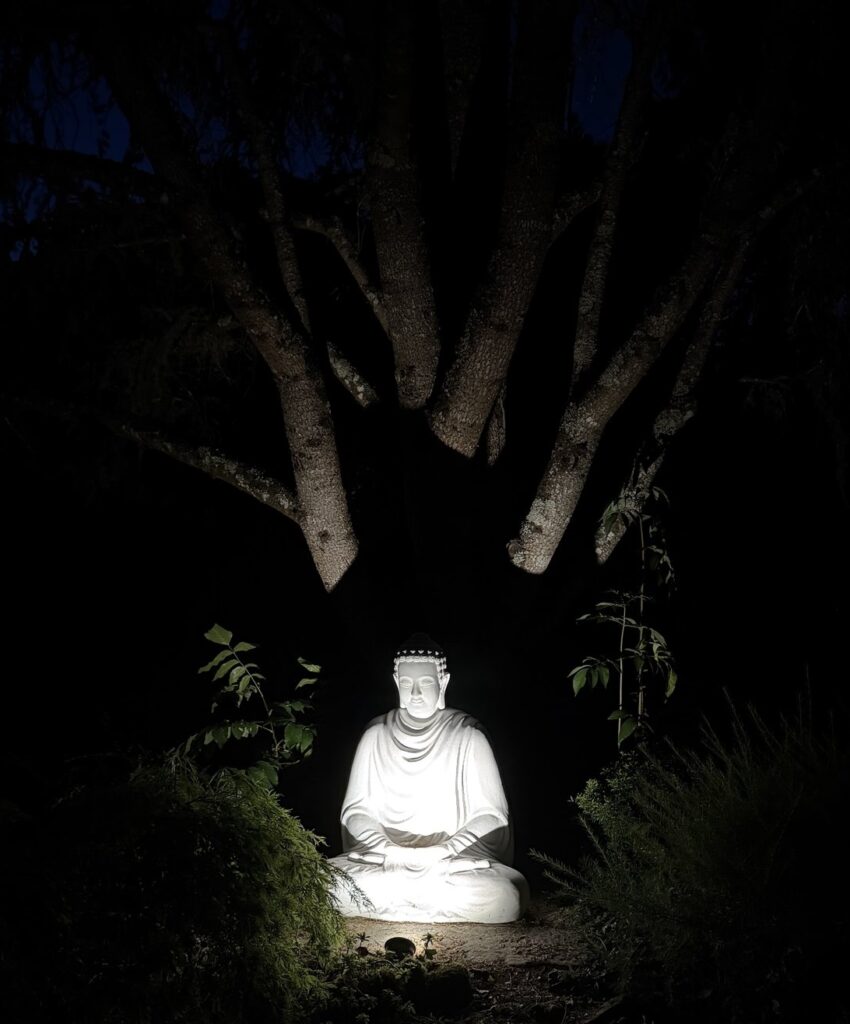
Upper Hamlet looked like home. There’s a lotus pond; the one where I grew up is bigger and untended. It’s green everywhere, and nobody’s in a hurry to get to work. I had flown to France and landed in a landscape I already knew.
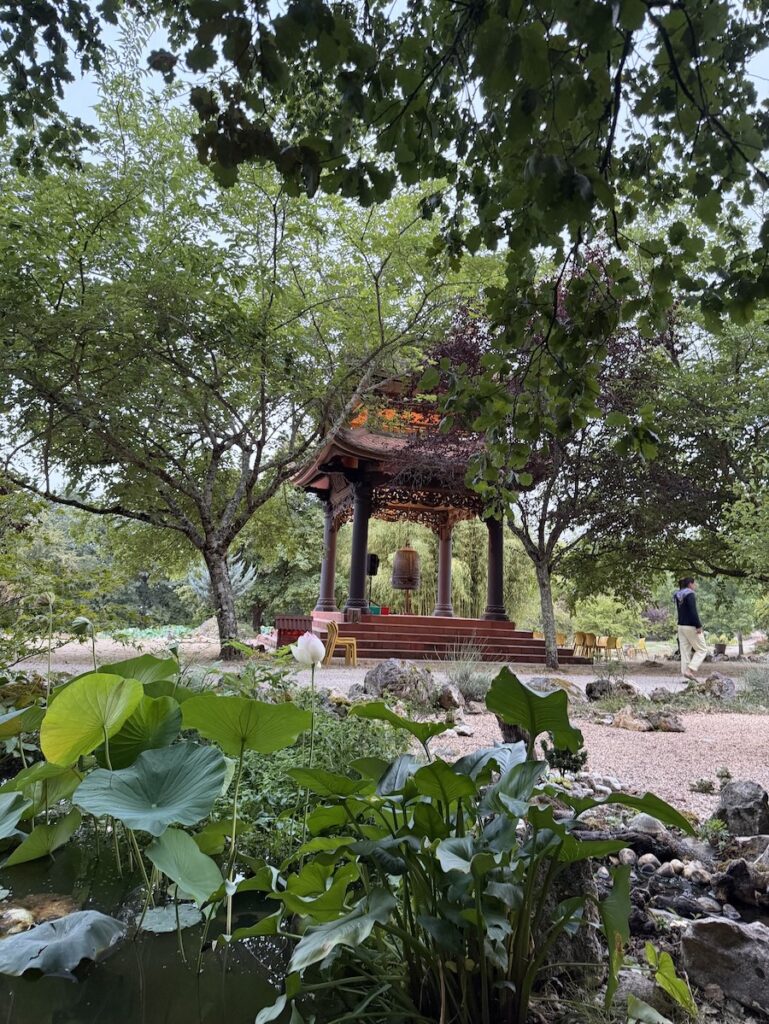
The days start early. You sit, you walk slowly in a line outdoors, and you eat the first part of every meal without talking. Several times a day a bell rings and everybody stops wherever they are, mid-sentence, mid-step or mid-washing-up, and returns to their breathing.
The monastery puts you in a group that eats together and sits together. Along the way, people said why they’d come. The particular reasons were all different. Underneath them was the same ordinary suffering every time, the first of the Four Noble Truths.
There was time to think, and what I found myself thinking about was not the trip. Nobody told me that IIT Bombay was halfway up anything. I was told it was the summit. I got there and found I was standing on a slope. Then America was the summit; I got there too, and it was the same slope.
Each time the view was good for about a week. Then it was just where I lived, and there was a new top, and I was walking again. By the second time it felt like being lied to, but it wasn’t a lie, just the only shape anybody had for a life, handed on by people who had been handed it too.
What’s left is emptier than I expected, and I mean that well: the questions that have come back are the ones I’d stopped asking. Who am I? Why? What is this for?
I didn’t work that out in France; it took me a month at home to put it into words. But I did need that week, and the trip did not settle anything. It started something.
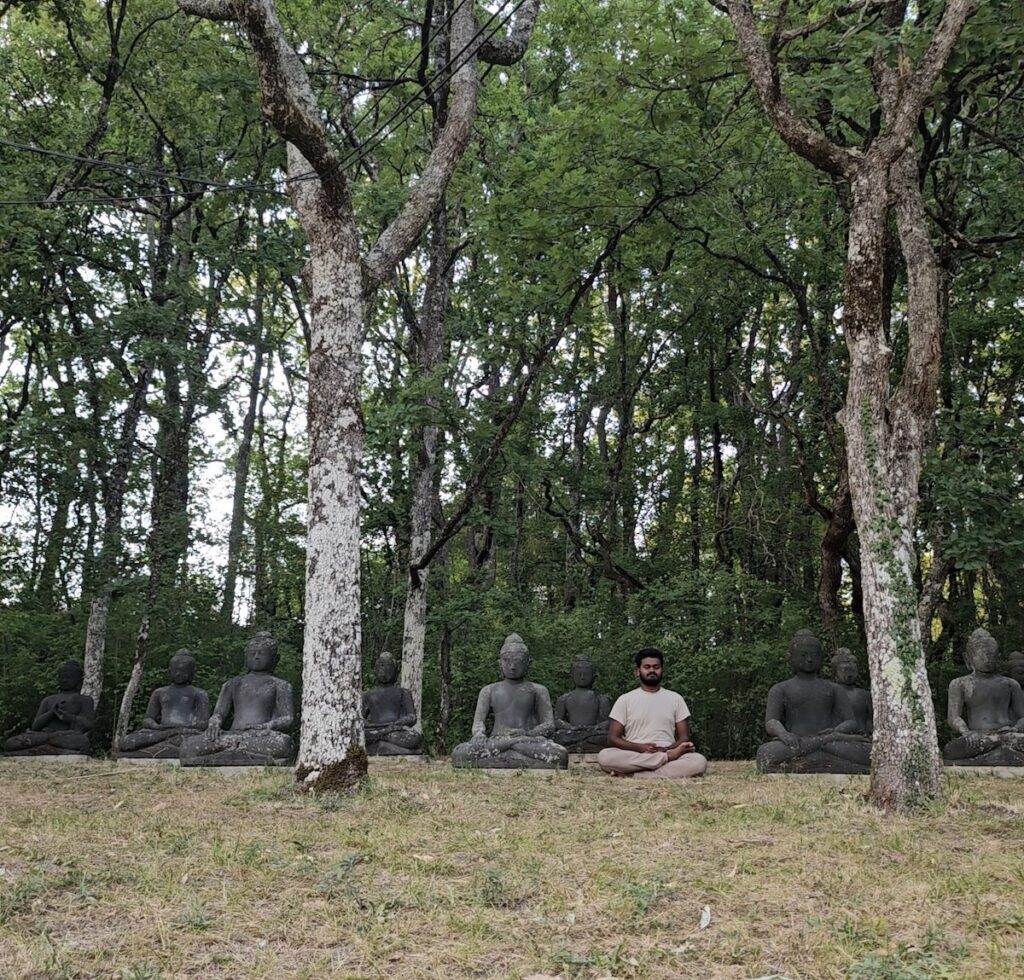
Both Ends
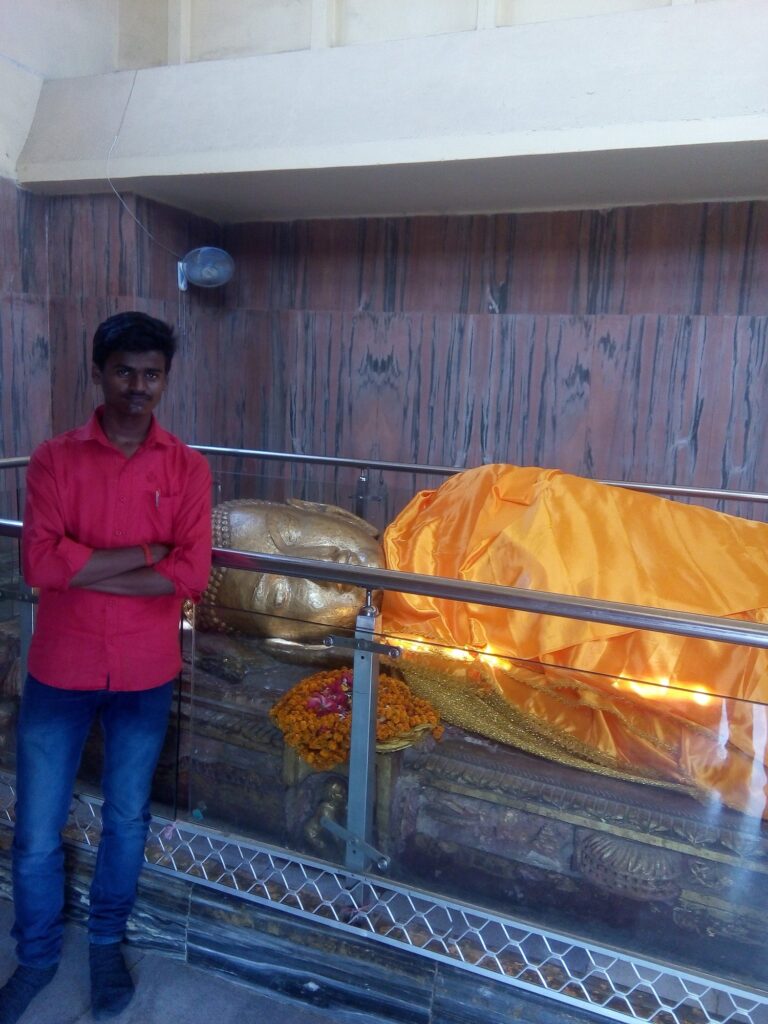
I went to Kushinagar as a teenager. It wasn’t a pilgrimage. It’s around three hours from my house, and at that age that’s reason enough to go somewhere. There is a cream-coloured temple with a big round window set under a barrel vault. Inside is a reclining Buddha six metres long, draped in saffron cloth, lying on its right side. This is the spot the tradition marks as the place he died; the statue itself was dug out of the ruins in 1876.
Later, my father and I went to Lumbini, just across the border in Nepal. It was cold. Beside the white temple is a rectangular pool, and that morning the water was still enough to hold the whole building upside down.
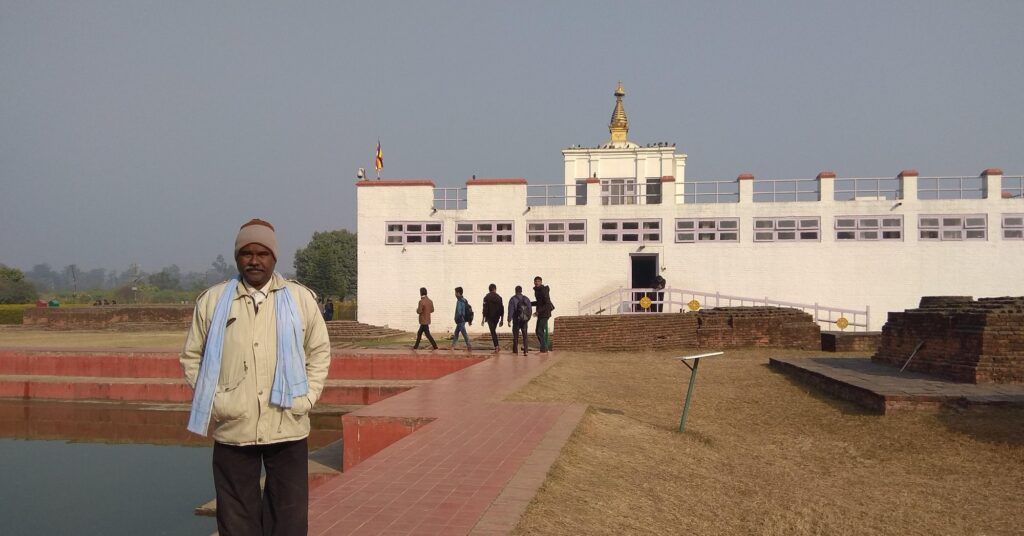
For most of my life Lumbini and Kushinagar were simply towns near home, places you could reach in an afternoon, and I never looked closely at what happened between the Buddha’s birth and his death. I had to go to Europe, thanks to the Newman Exploration Travel Fund, to understand it: that ordinary suffering has causes and a path that ends it, and that after 2,500 years the method still works.
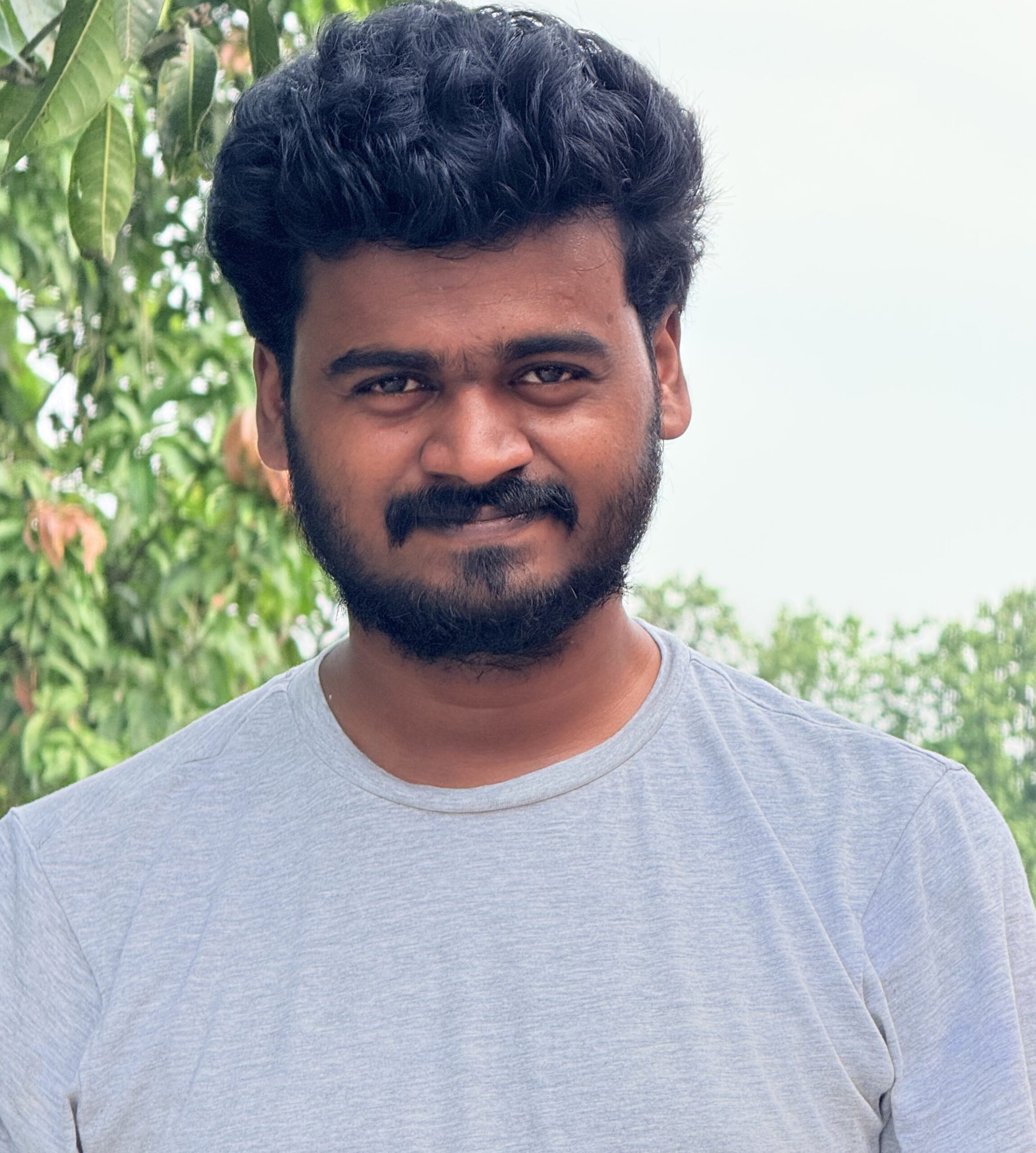
- Name
- Sumit Gupta
- Job Title
- PhD student in Energy, Environmental & Chemical Engineering