
St. Louis Reads Dante
Dante’s Divine Comedy, a 14,000-line epic written between 1306 and 1321, will be the focus of the event series St. Louis Reads Dante at Washington University. The series will feature lectures and readings of Dante, followed by an audience Q&A.
Comprising four sessions to be held from September to December in Olin Library, St. Louis Reads Dante invites readers of all backgrounds—curious newcomers and serious Dante enthusiasts alike—to engage with the timeless poem through lectures and guided discussions by scholars and translators of Dante and medieval literature. Open to all, the event aims to bring together students, scholars, and community members on a monthly journey to explore Dante’s poem, one canto at a time.
St. Louis Reads Dante is organized by Paolo Scartoni, lecturer in Italian in the Department of Romance Languages and Literatures, and Lino Mioni, subject librarian of Romance languages and literatures, Latin American studies, and linguistics.
Talks at the sessions will be delivered by faculty from WashU and St. Louis University, including Mary Jo Bang, professor of English at WashU, who has translated the three parts of the Divine Comedy—Inferno, Paradiso, and Purgatorio. Professors Michael Sherberg, Nicolò Sassi, and Timothy Moore will also lead discussions of the epic.
After covering the first four cantos of Inferno this fall, St. Louis Reads Dante will return next semester in spring 2026, with a new lineup of guest speakers. The event will continue each semester until all 100 cantos of the poem are read.
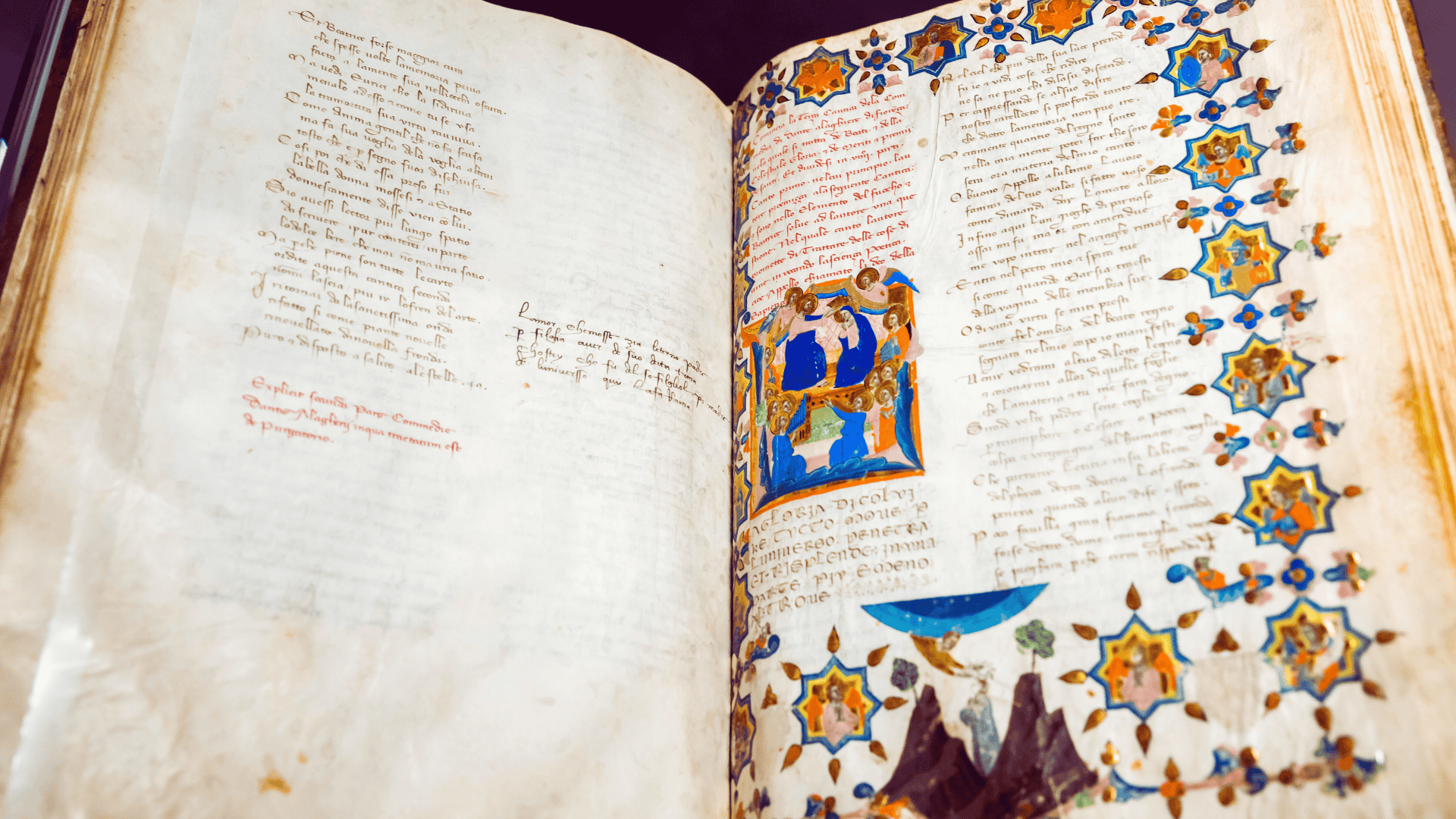
The series began on Tuesday, September 9, with WashU Professor Emeritus Michael Sherberg introducing the first canto of Inferno. Following the discussion, attendees had an opportunity to view a special exhibit of rare objects and manuscripts related to Dante and medieval culture from the Libraries’ Rare Books Collections.
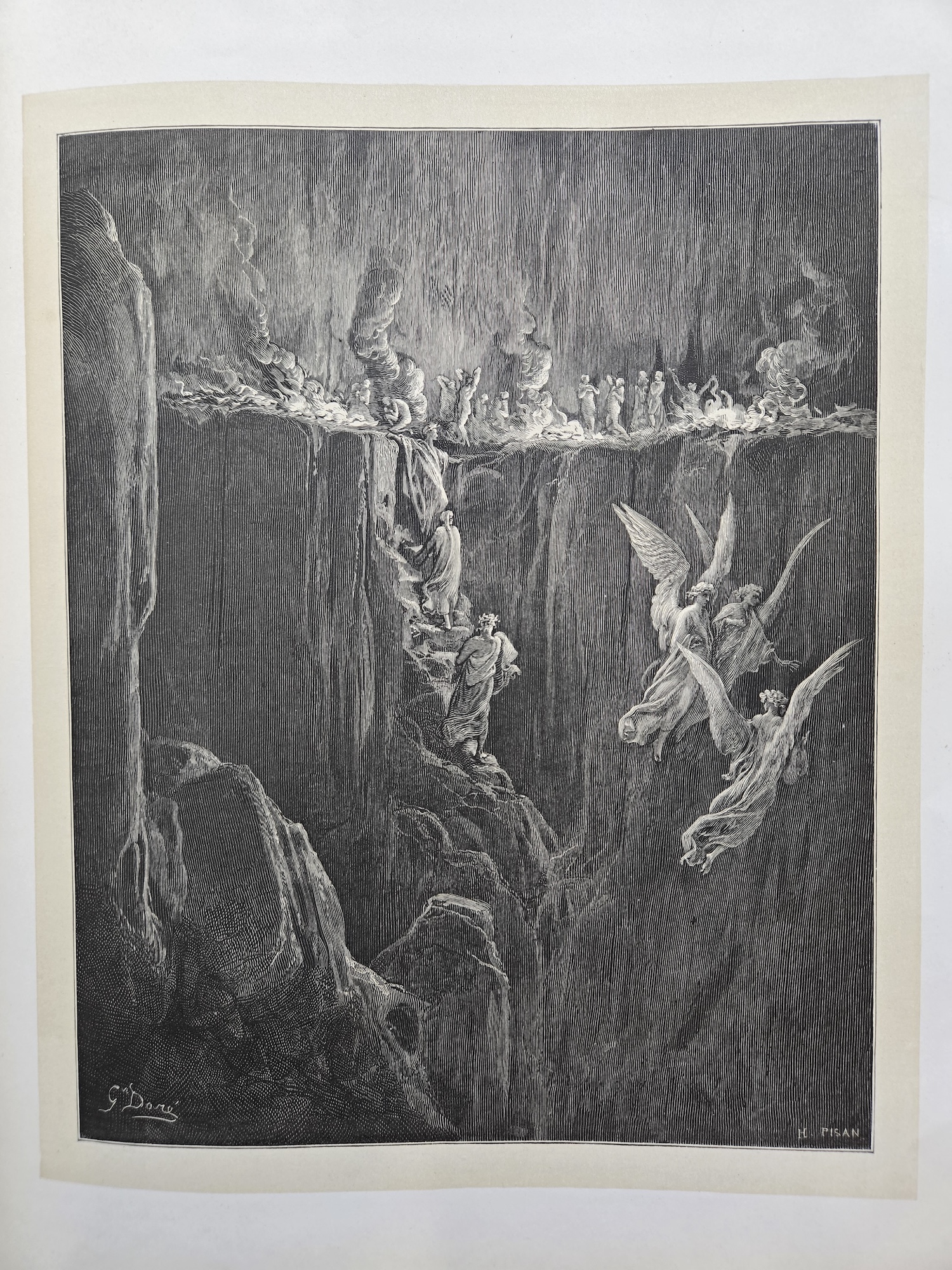
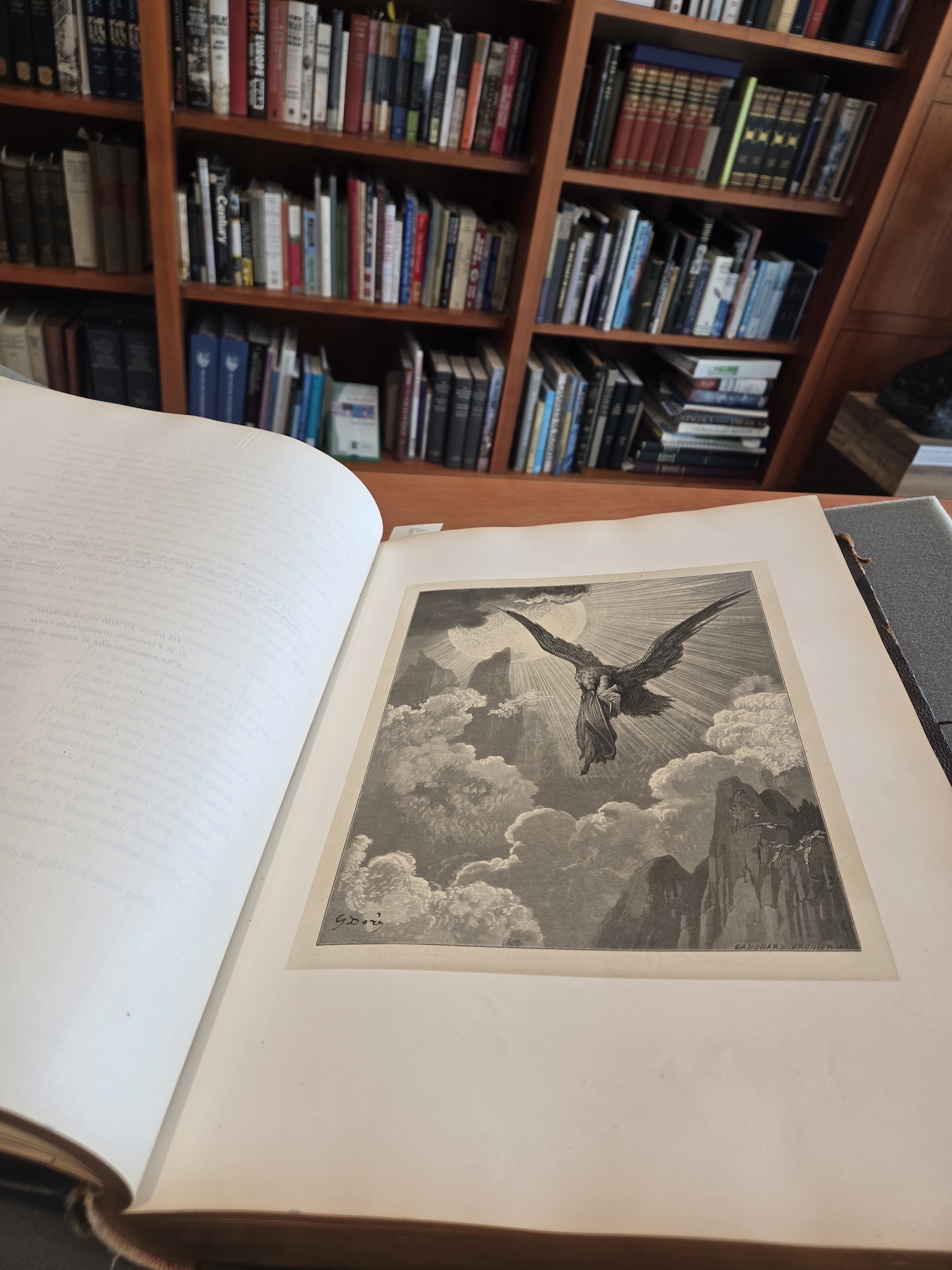
Organized by Rare Books Curator Cassie Brand, the exhibit showcased textual artifacts ranging from a 1865 French and Italian edition of Inferno, illuminated manuscripts from the fifteenth century to twentieth-century drawings for Inferno, as well as other items.
In the following interview, Paolo Scartoni discusses the inspiration behind St. Louis Reads Dante and its approach to interpreting Divine Comedy for St. Louis’s audiences.
Can you describe the genesis and inspiration for St. Louis Reads Dante? What made you conceive of this project?
Scartoni: The idea for St. Louis Reads Dante was inspired by Fordham Reads Dante, a wonderful initiative started in 2015 at Fordham University by Professors Susanna Barsella and Angela O’Donnell. They warmly supported the idea of bringing it here to WashU. At its heart, the project is simple: bringing together scholars, readers, and anyone curious about Dante to experience the Comedy as a community. I shared the idea with Dr. Lino Mioni, at WashU Libraries, who enthusiastically embraced it, and together we’ve been working to make it a reality.
Can you give an overall idea of what the sessions will comprise?
Scartoni: Dante’s Comedy is an astonishing poem that takes us on a journey through Hell, Purgatory, and Paradise. It’s both widely popular and incredibly complex—and those two qualities actually go hand in hand. Even a first reading can leave a strong impression because the imagery is so vivid and unforgettable. However, with the help of scholars from different fields, we’ll explore some of the poem’s most sophisticated nuances, as well. Each session will start with a short talk on the canto of the day, followed by a reading in Italian and in English. From there, we will begin an open discussion—everyone is welcome to share thoughts, reactions, and questions.
How do you describe the approach to Dante through this event? What can audiences expect to learn and discover?
Scartoni: That’s a difficult question, because reading poetry is a lot like meeting someone new: each of us forms a unique, personal connection with the text. What I hope people will discover is not only the beauty of Dante’s language and imagination, but also how poetry itself can be a powerful guide for thinking about the world and about our own lives.
Take, for example, the third canto of Inferno. Dante stands before the terrifying gate of Hell, reading the infamous words: “Abandon all hope, you who enter here.” His guide, Virgil, takes his hand, smiles, and leads him into the “secret things” beyond the gate. It’s a striking moment—not only because of the story itself, but because it reveals something essential about learning. Virgil, whom Dante calls maestro (teacher), introduces him to a hidden world that unfolds beneath the surface of the words. As readers, especially at the beginning, we also need guides to help us uncover the layers of meaning that lie beyond what first meets the eye. And Dante conveys this lesson not by stating it outright, but by embedding it in Virgil’s simple, human gesture.
For me, this is the true power of the Comedy: beyond its unforgettable stories, it offers a poetic lens through which to interpret and make sense of reality.
Event Information
This fall, Olin Library will host four St. Louis Reads Dante events, all taking place from 4 to 5 pm.
- Sept. 9 Inferno 1 with Michael Sherberg and Special Collections showcase
- Oct. 14 Inferno 2 with Mary Jo Bang
- Nov. 11 Inferno 3 with Nicolò Sassi
- Dec. 2 Inferno 4 with Timothy Moore
For more details, please visit the St. Louis Reads Dante event page.