
Portrayal of Kids in Comics: This Is Not the Place to Be
Comic strips have been appearing steadily in newspapers across the country since around 1900, and comic books have been a staple of American childhood since the early 1930s. Today, comics and comic books are thought of as an art form entirely dedicated to children, with the baseline being superheroes in bright color imparting heavy handed morals. Despite this centering of children in both comics writing and targeting, comics appear to be a relatively unsafe place to be a child.
Child characters appear in both newspaper strips and comic books. The Dowd Illustration Research Archive (DIRA) houses multiple examples of both formats, which when compared, show a significant difference in how these child characters are portrayed. These examples can be found in materials housed in the Craig Yoe Teaching Collection and the Center for the Humanities Comics Collection, which collectively contain both original comic drawings and printed comic books.
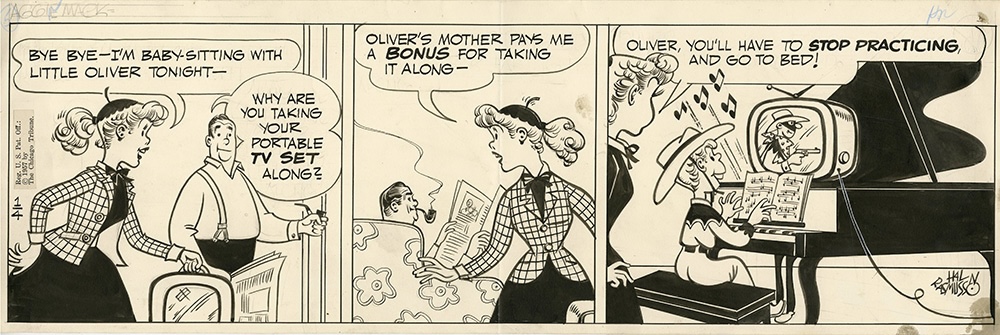
Newspaper comic strips serve a primarily adult audience. Characters are usually adults themselves and play into more mature situations and humor. Children will occasionally appear in these strips, but their portrayal is often, at best, set dressing or props for their parents. At worst, these children are pushed into the “loveable nuisance” archetype.
Gasoline Alley, created by Frank King, is one of America’s longest lasting and most beloved newspaper strips. Originally meant as a strip focused on cars and mechanics, editor Joseph Patterson wanted to attract a larger female audience and insisted that a baby be introduced into the cast. The character Skeezix would become a mainstay in the comic for decades.
DIRA houses a few original Gasoline Alley strips in the Craig Yoe Teaching Collection. One strip shows the Wallet Family on an outing to the lake. While the strip only has three panels, the close family bond between Walt and his sons, Skeezix and Corky, is clear. The banter between Walt and Skeezix is teasing and light as they both have smiles on their faces.
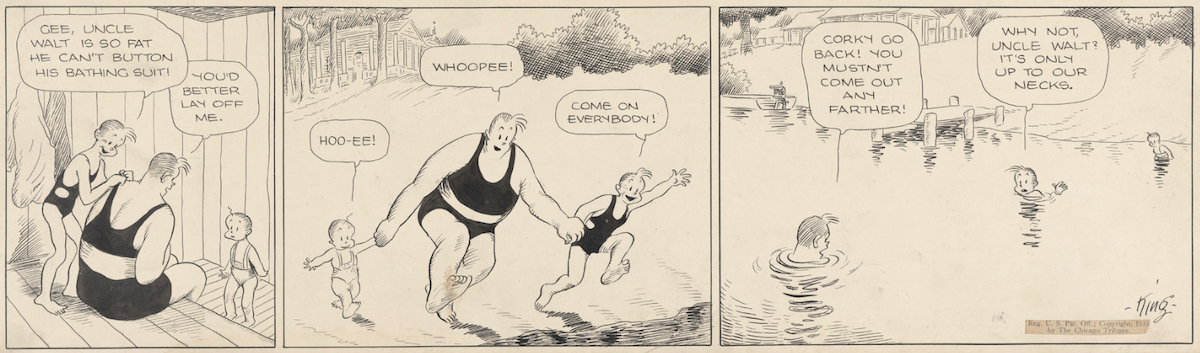
Furthermore, Walt shows off his genuinely good fathering skills when he holds the boys’ hands into the lake and warns them not to wade out too far. The evident bond potentially stems from the fact that Skeezix and Walt’s relationship is heavily based on Frank King and his own son. The strip’s target audience was also families, which is another probable driver of Gasoline Alley’s healthy portrayal of children and families.
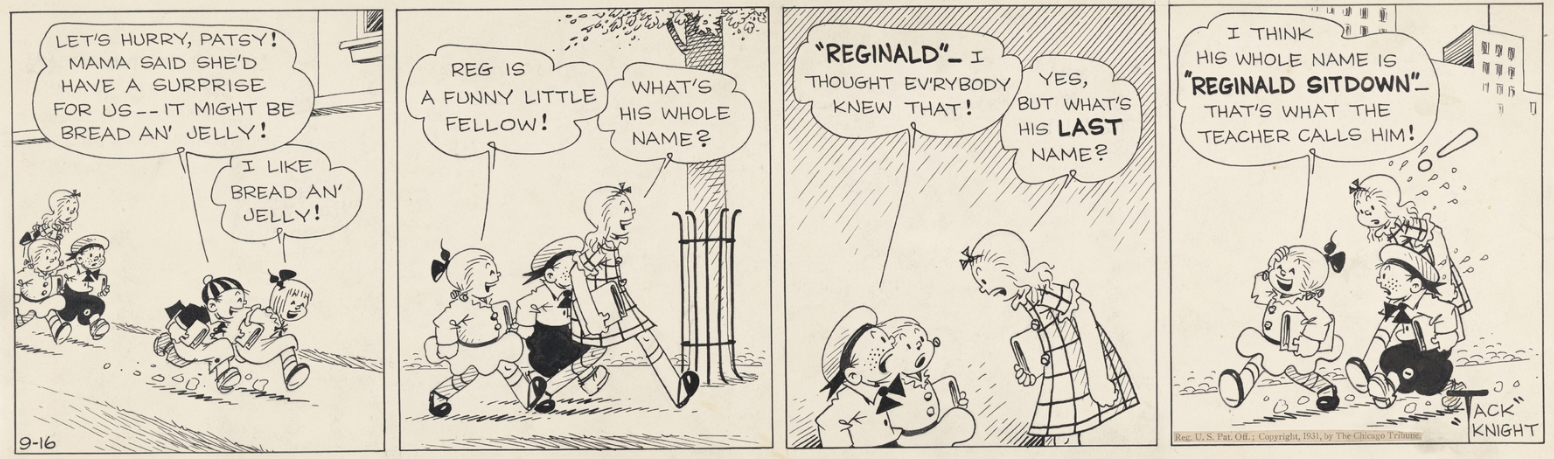
A less complex, and moderately less beloved, American comic strip exemplifies another role that children are often thrown into by a gag-a-day style comic strip. The archetype known as the “loveable nuisance” depicts child characters within adult oriented comic strips. Lil’l Folks by Tack Knight has a cast of characters predominately made up by children but is still written for an adult/parental audience.
The strip titled “The Upstart” is generally lighthearted, but the central joke is unfairly at a child’s expense. In this particular Lil’l Folks strip a group of children race home from school when an older girl asks what Reg’s full name. A youngster responds, “Reginald Sitdown–that’s what the teacher calls him!”
This draws a shocked look from the two other kids, who may understand the phrase as a mean-spirited jab from their teacher. It’s a mild example of the role kids are pushed into by their authority figures, but it can still have a lasting impact. Reg’s predicament, however, is nowhere as egregious as some of the stories explicitly written for kids have turned out to be.
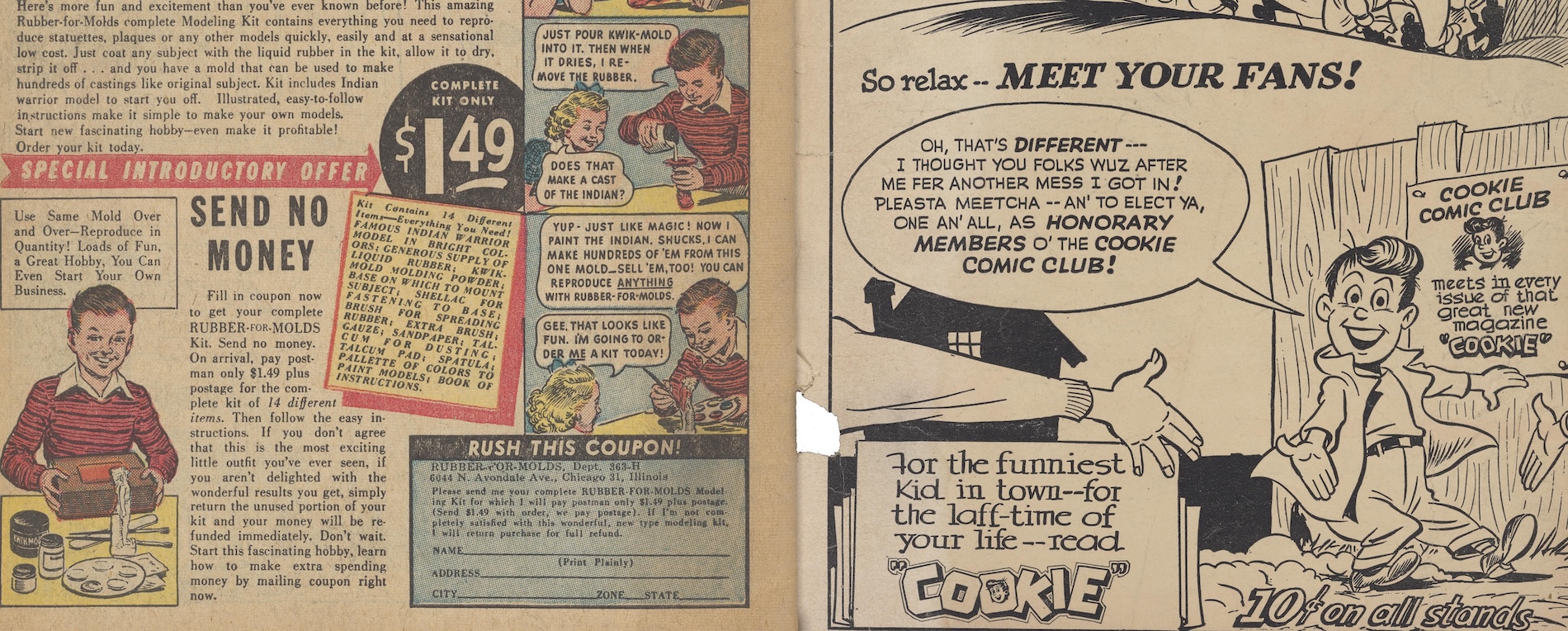
The Center for the Humanities Comics Collection holds thousands of comic books from over five decades; some of these titles specifically target a younger demographic. When looking through the comic books published specially for a juvenile audience, themes of endangerment, abandonment, and abuse were presented as common and central to the stories.
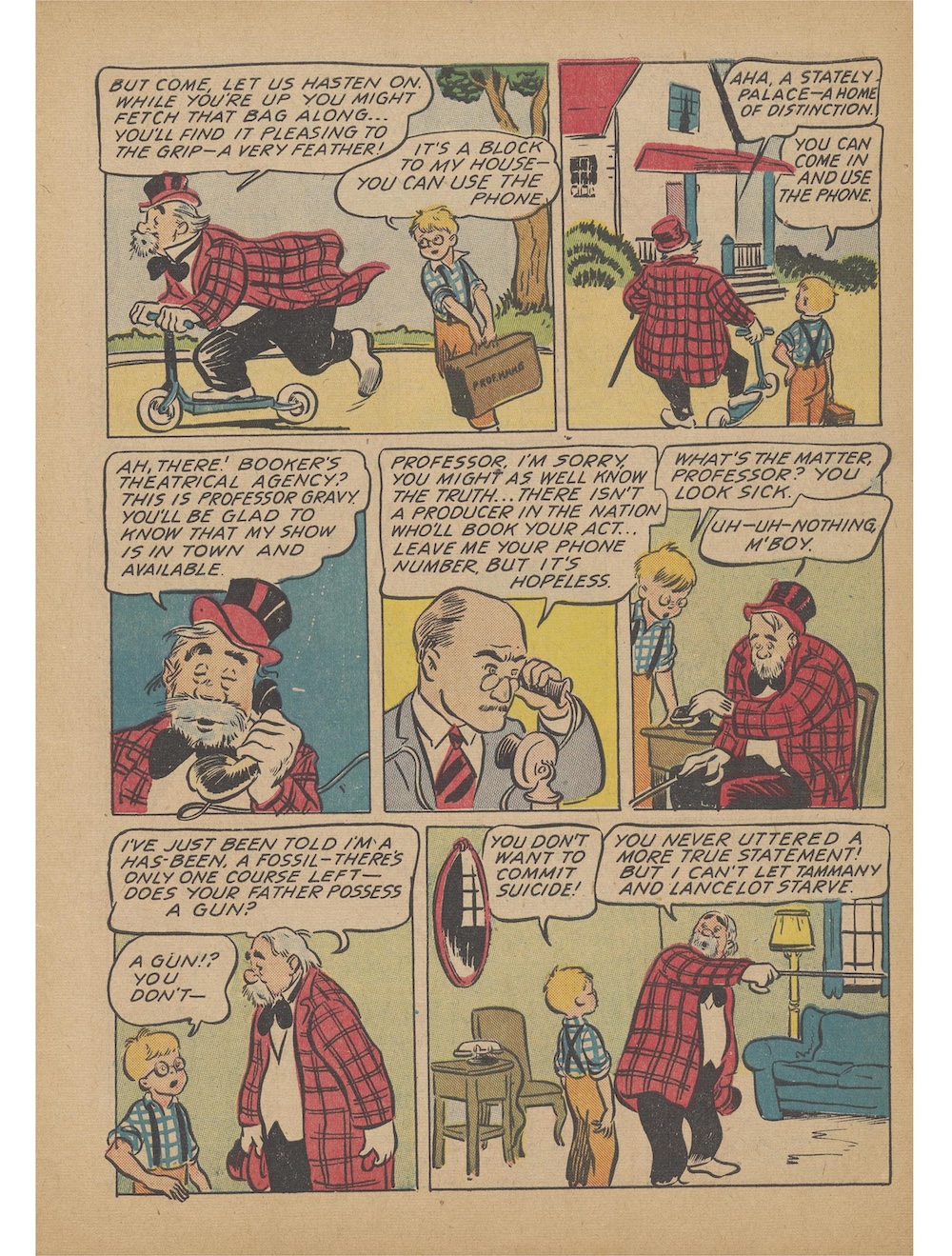
Our Gang is a comic book that covers the spectrum of dismal to damagingly offensive. The first story follows a group of kids who help a washed-up circus performer get his truck running, track down his escaped lion and tiger, and find him a new job. For all this effort, the kids get warm praise, but no other compensation for the labor, which is not entirely unsurprising. What is surprising, however, is that this story is the only one which features a fully human cast.
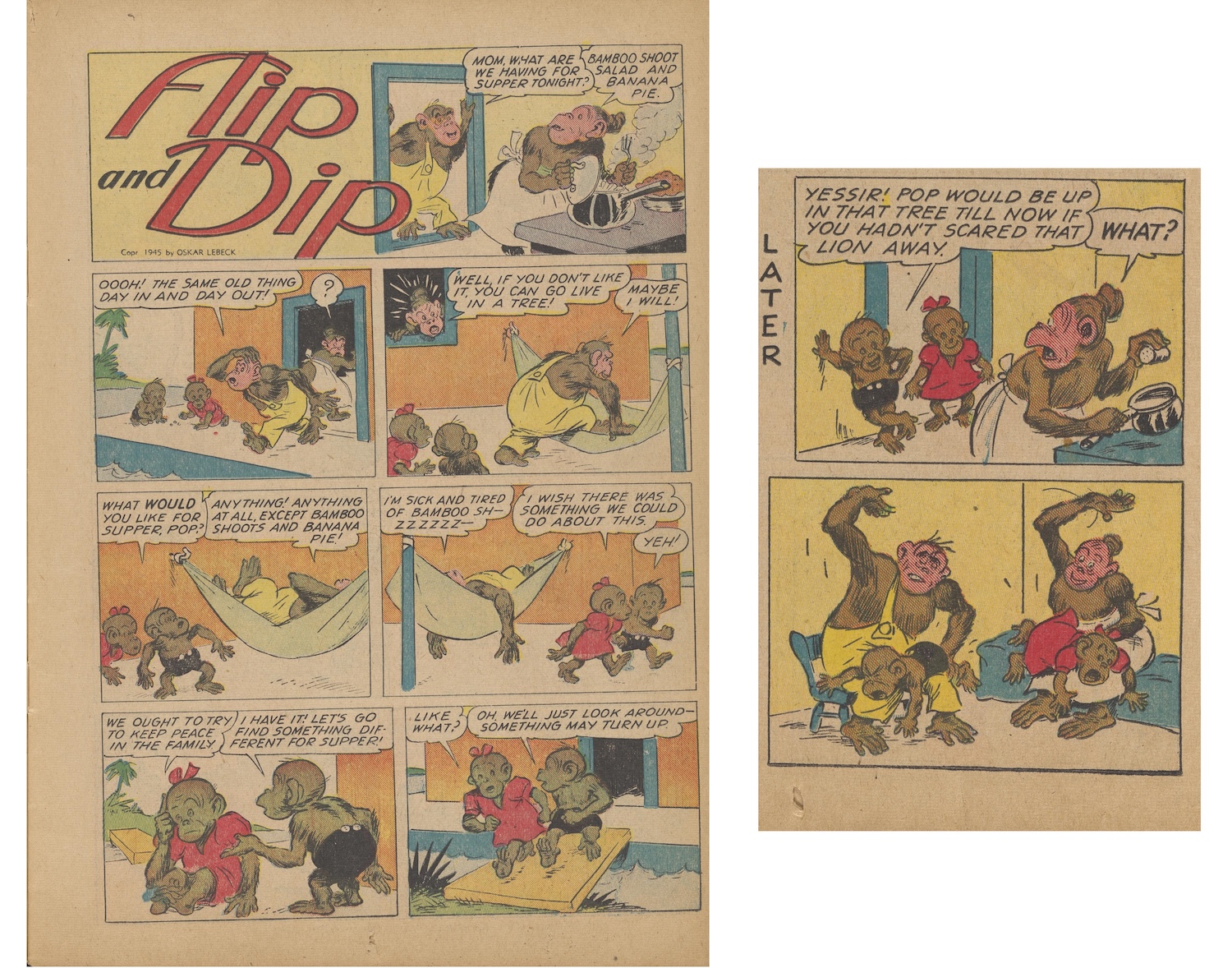
The second story in Our Gang, titled “Flip and Dip,” immediately throws that feel-good atmosphere created by the first story off a cliff. The characters here are anthropomorphic monkeys living in the jungle, and the story revolves around a series of miscommunications that ends with every single member of the family wanting to violently hurt one another. The final panel of the comic shows the parent monkeys spanking their crying children with smiles. This story stood out horribly, as the initial conflict is brought on by the children wanting to do something nice for their parents. The central moral of the story becomes a warning against doing any favors for your parents lest it backfire.
Another children’s comic imparting nearly the same message in an equally disturbing way is found in a Giggle Comics story featuring the character Superkatt. What makes this particular storyline far more disturbing is the fact that it’s meant as a Mother’s Day tribute where the opening panel depicts a mother’s hand around her child’s throat.
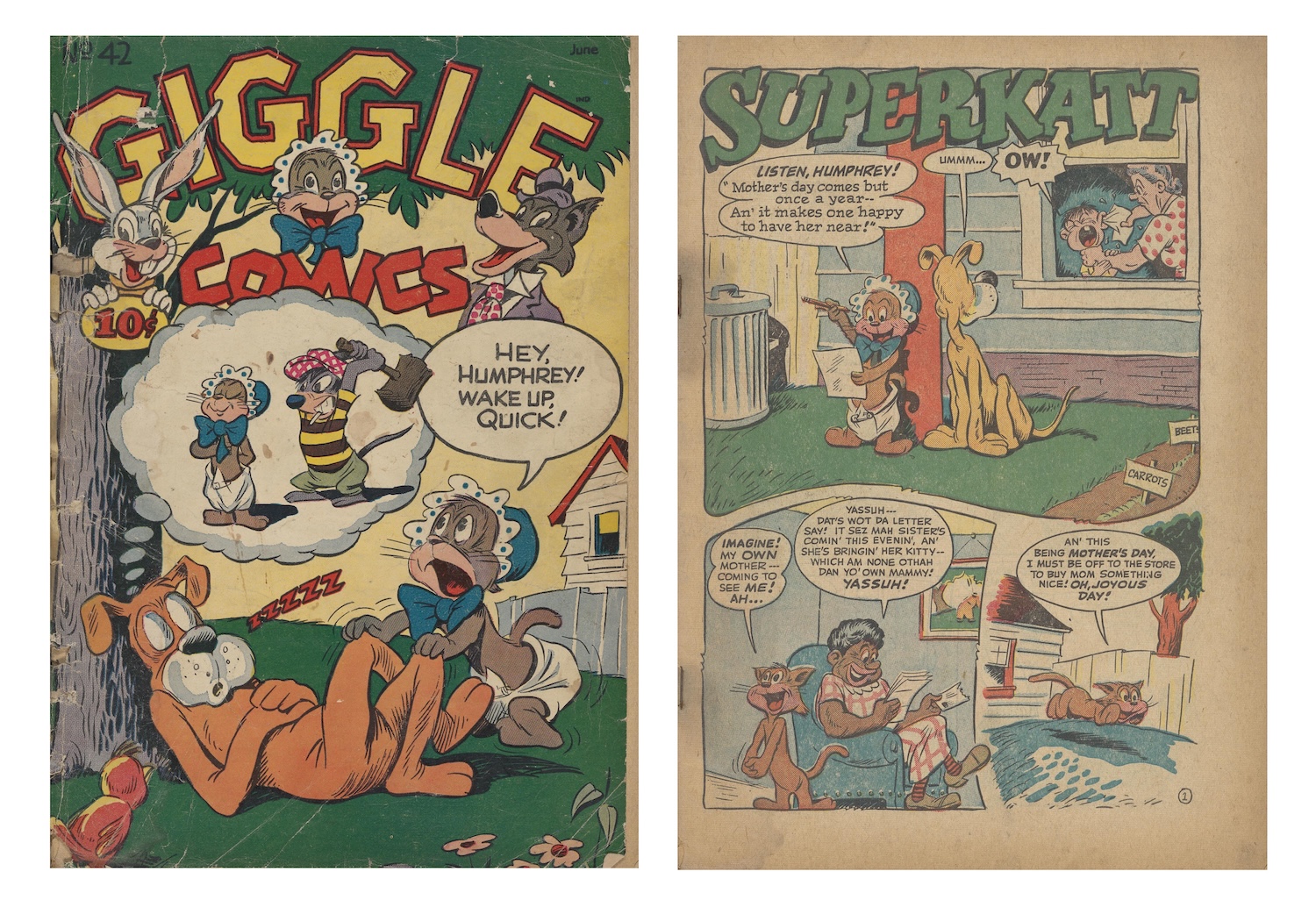
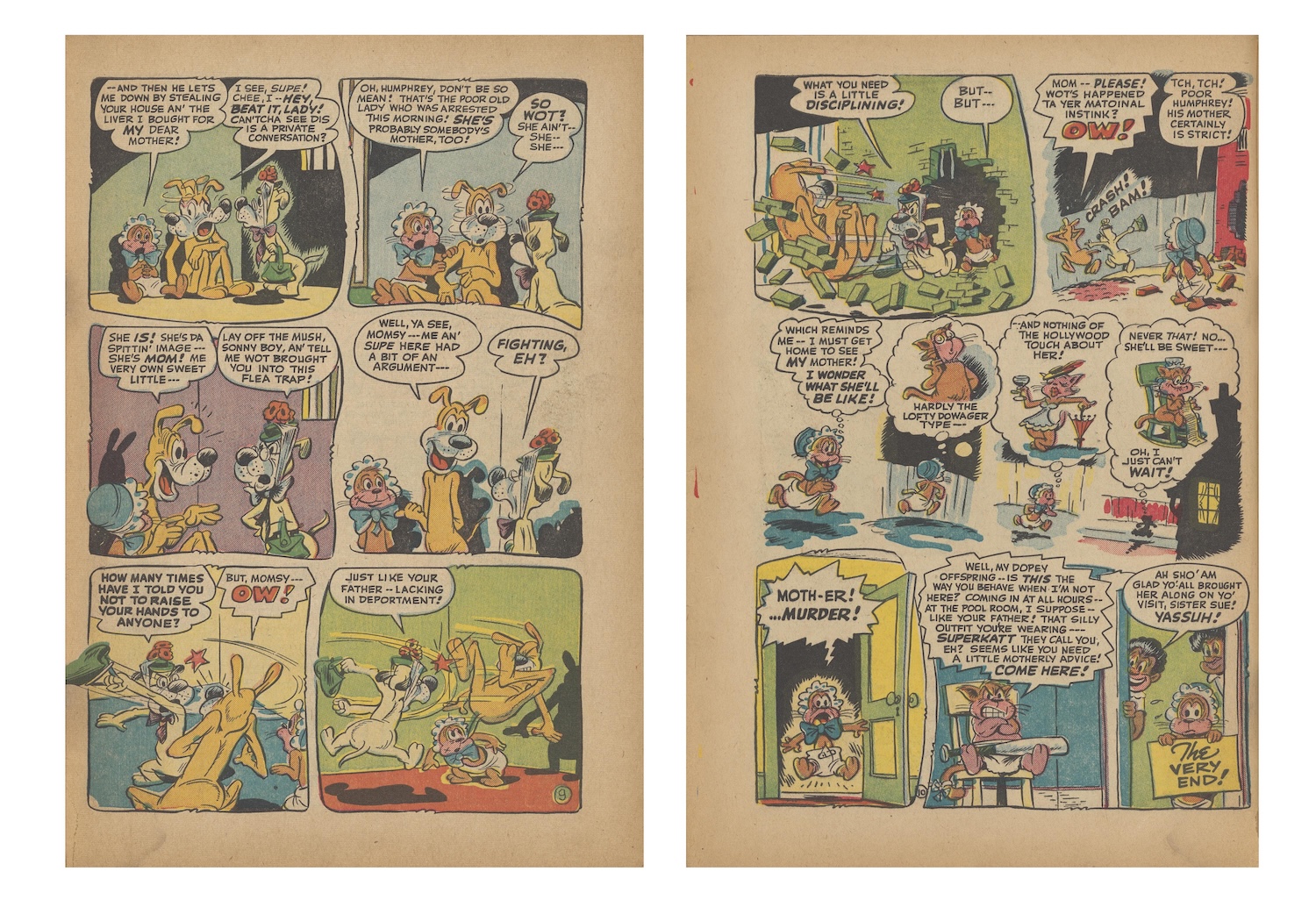
The story follows Superkatt trying to make this a special Mother’s Day for himself and his friend Humphrey. Nearly every plan Superkatt makes goes awry and eventually the two find themselves without presents and in prison. Shockingly, Humphrey’s mother who abandoned him as a child is another prisoner, but the reunion devolves into a berating and beating.
Superkatt doesn’t fare much better, as his mother waits at home with a sour expression and a baseball bat. Again, the moral being imparted to kids being no matter how much a child wants a relationship with their mother and the lengths they go to please them, it’s a lost cause and will be met with corporal punishment.
Ultimately, it’s hard to imagine any of these storylines getting approved for publication today. A historical gripe against comic books has been their supposed bad influence on children, causing delinquency. Perhaps these stories of punishment are meant as a counterbalance. With stories like these being handed to children, one has to consider the lasting impact on young minds. These comics suggest that it may be in a kid’s best interest to keep looking over their parent’s shoulder at the Sunday morning funnies.
Maria Pellegrino is an MFA in Illustration and Visual Culture candidate at the Sam Fox School of Design & Visual Arts and serves as the Dowd Illustration Research Archive fellow (February-May 2026) in the Julian Edison Department of Special Collections.