
James Merrill’s Centenary–Part 1
Earlier this year, James Merrill’s Poetic Places opened in Olin Library. This exhibit commemorates the poet’s centenary year by exploring six important places from his life that he incorporated into celebrated works of poetry and prose. The exhibit, which is open until July 19, features materials from the James Merrill Papers as well as items on loan from the James Merrill House in Stonington, Connecticut. The following is an overview with highlights from the exhibit.
Southampton
The grand mansion known as “The Orchard,” in Southampton, New York, was the formative setting for Merrill’s childhood. It was an ornamental, self-enclosed world that would resurface decades later in his beloved poems of recollection and inspire the classroom and ballroom settings for his poetic spirit world.
“The Finest Christmas I Ever Had” journal entry
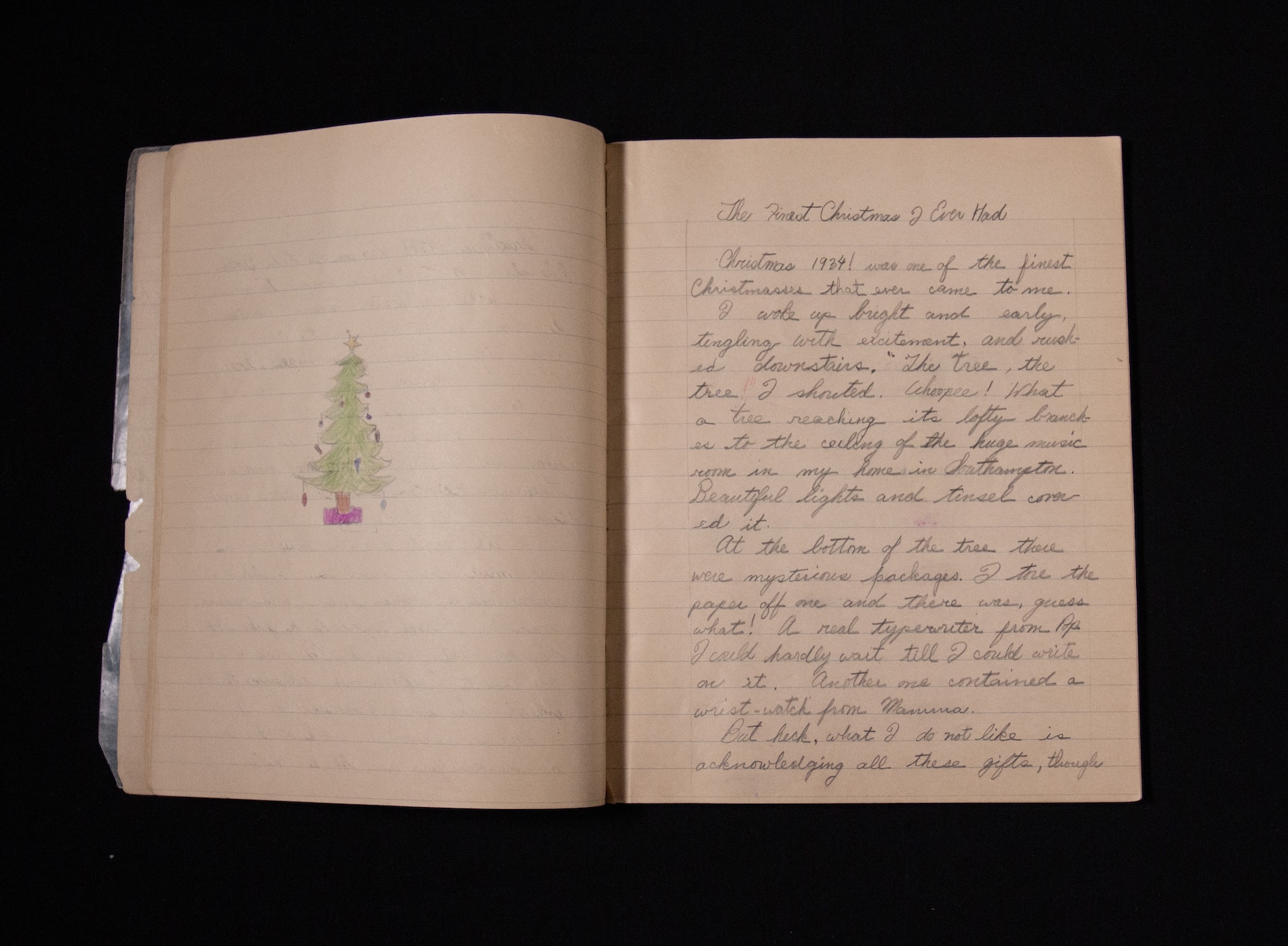
In this journal for English class in 1935-36, Merrill describes Christmas morning in 1934 in the music room of The Orchard, and his excitement about receiving “a real typewriter” from his father.
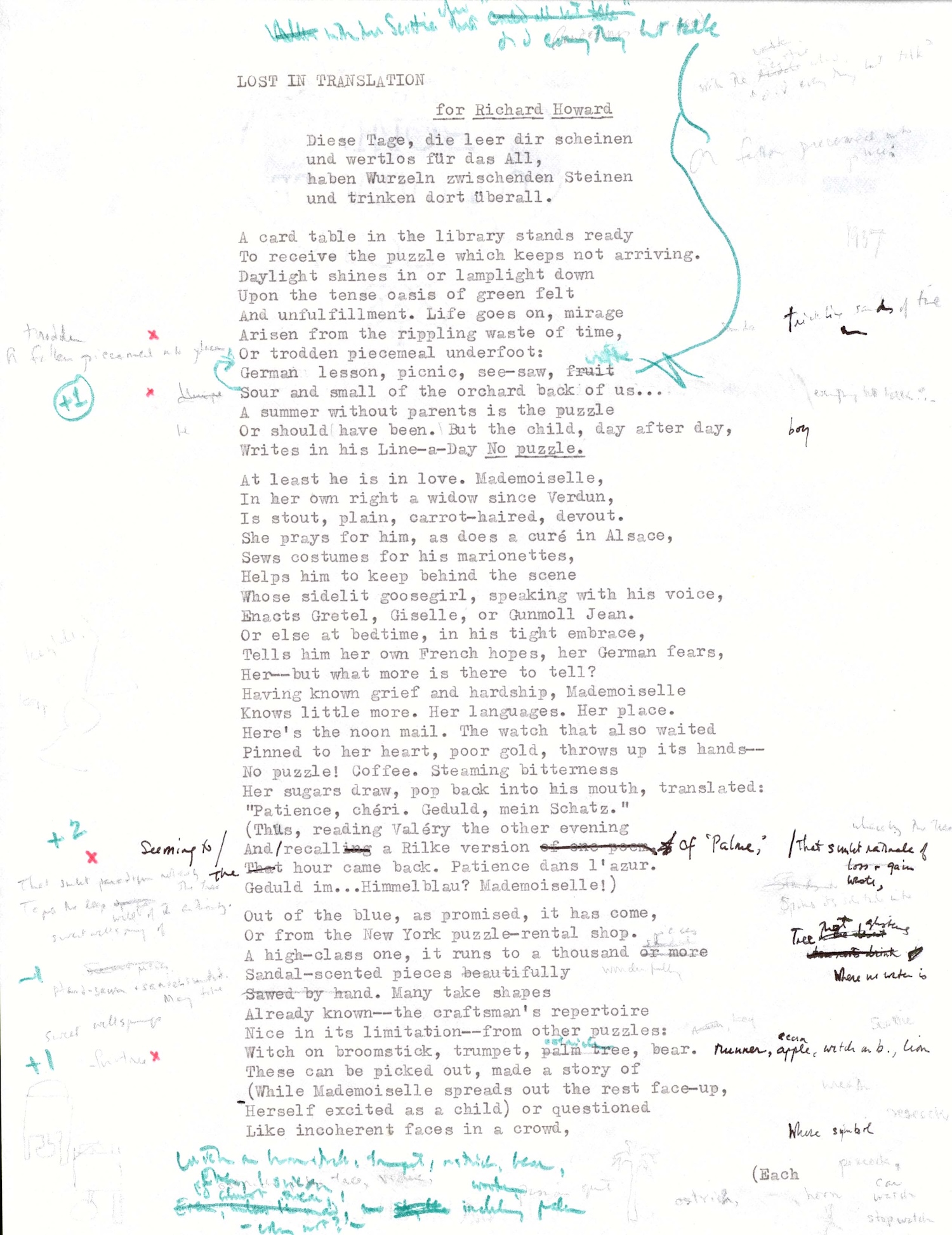
The opening stanzas of one of Merrill’s most eminent poems explore a memory of him and his beloved governess, “Zelly,” waiting for and then working on a puzzle in Southampton, which serves as an allegory for writing and translating poetry.
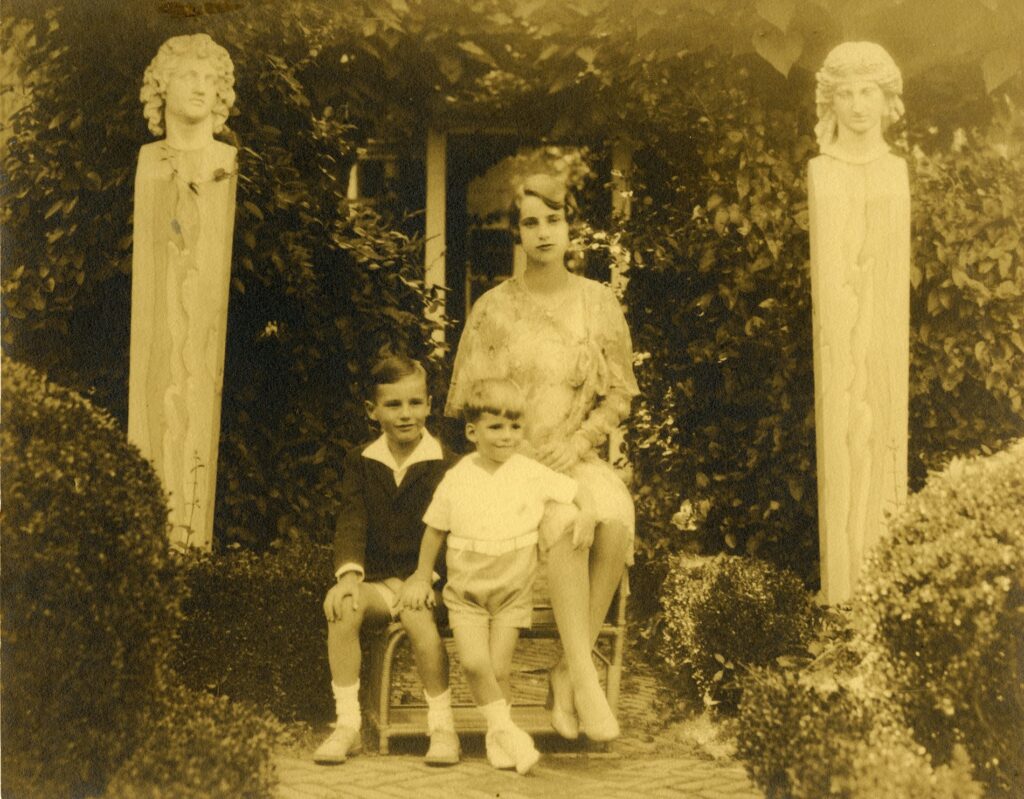
This photograph was taken in the garden at The Orchard in 1929 and kept in a scrapbook by his mother, Hellen. Merrill’s half-siblings, Doris and Charles, were his father’s children from his first marriage.
Merrill’s poem of remembrance, partially set at The Orchard, is captured in this 1968 audio recording in Brown Hall at WashU, with photographs from the James Merrill Papers added for the YouTube video. The poem was published in Nights and Days in 1966, which won the National Book Award in 1967.
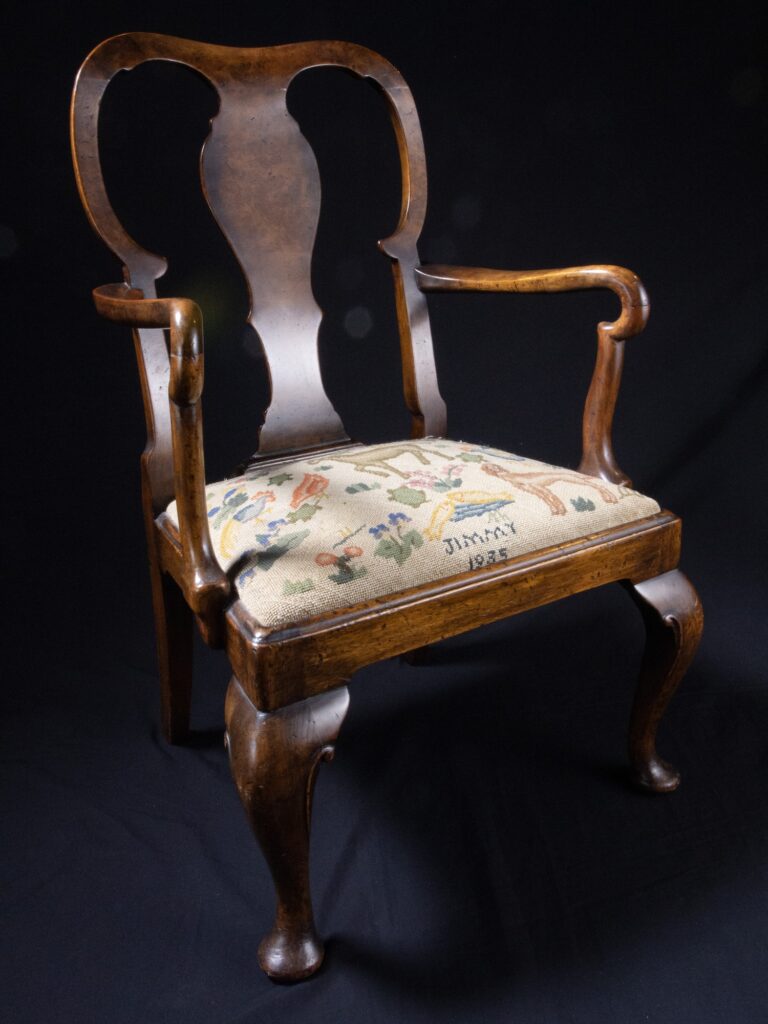
This child-size chair with embroidered designs on the seat was made in 1935, when Merrill was nine years old. It was likely kept at The Orchard and is on loan from James Merrill House.
Lawrenceville
Merrill’s high school years were spent at Lawrenceville School in New Jersey, a boarding school organized on the house system with a competitive atmosphere and an expectation of students participating in house activities, athletics, and other social activities. Merrill often struggled to fit in and was subject to bullying, but he made important lifelong friendships there, too.
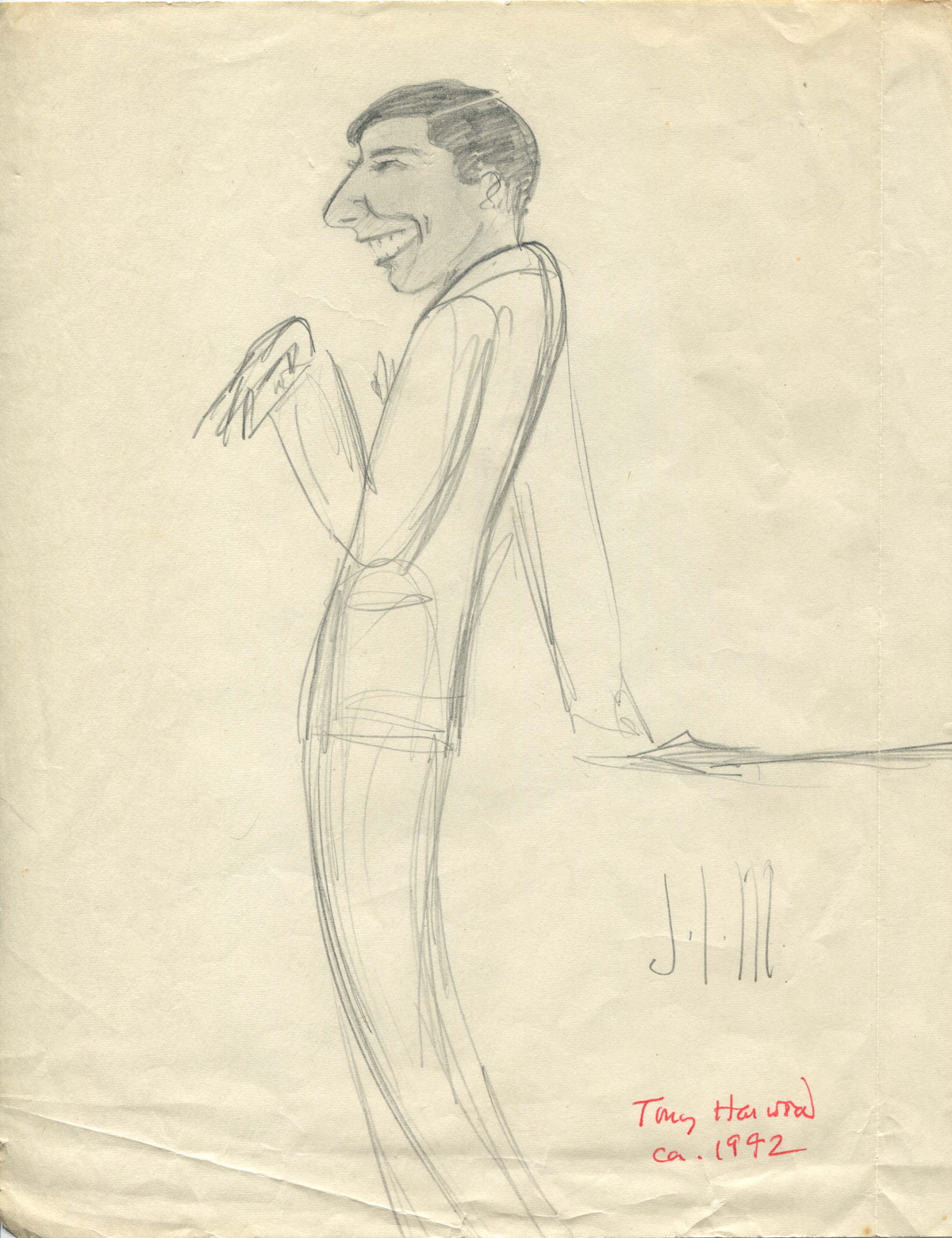
Tony Harwood was one of Merrill’s first and closest friends at Lawrenceville. The two remained friends into adulthood.
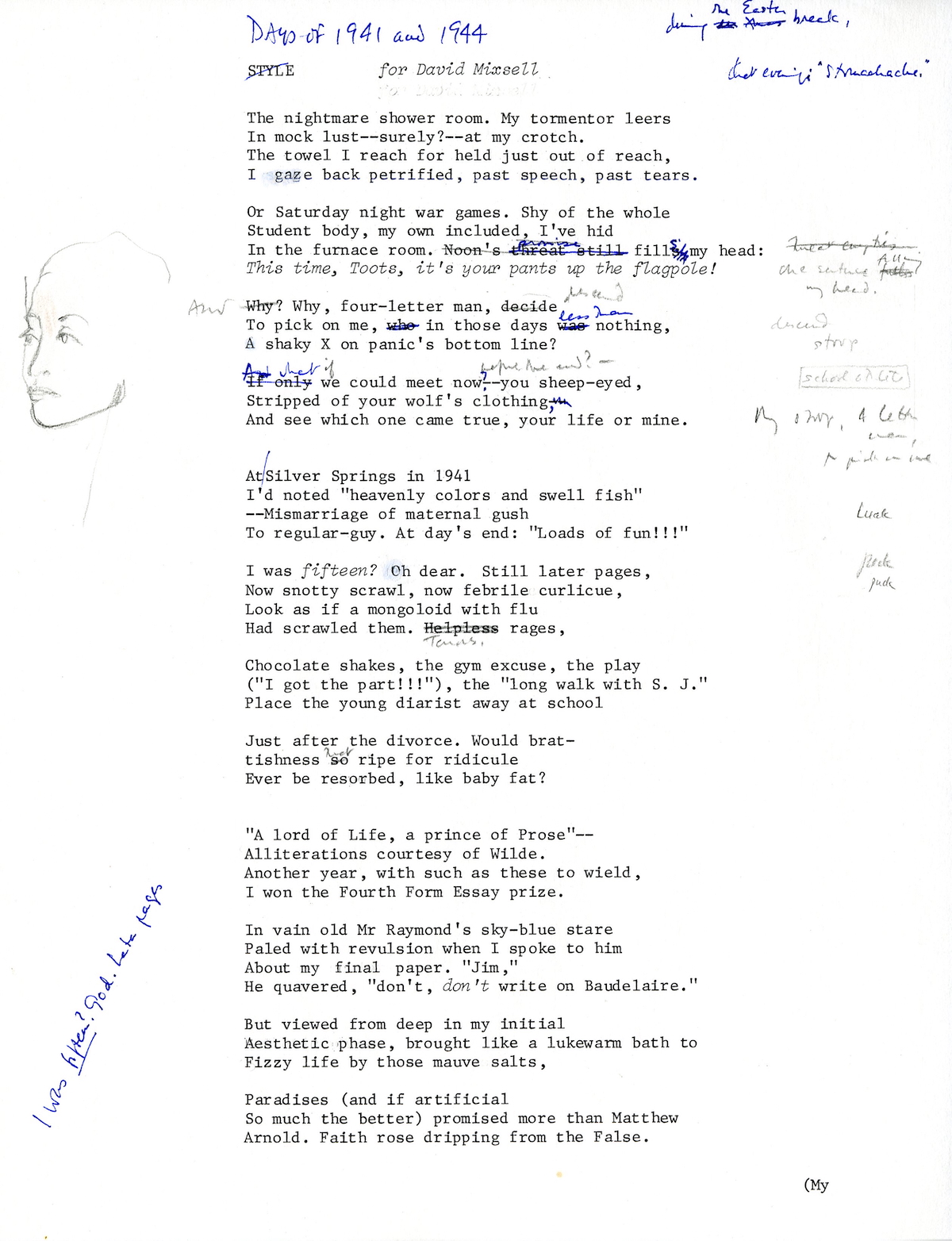
Published in Late Settings (1985), “Days of 1941 and ’44” recalls Lawrenceville School and Merrill using his diaries to become a “poet of memory.” The poem is dedicated to David Mixsell, his arch-nemesis at Lawrenceville, who would die in Europe on D-Day.
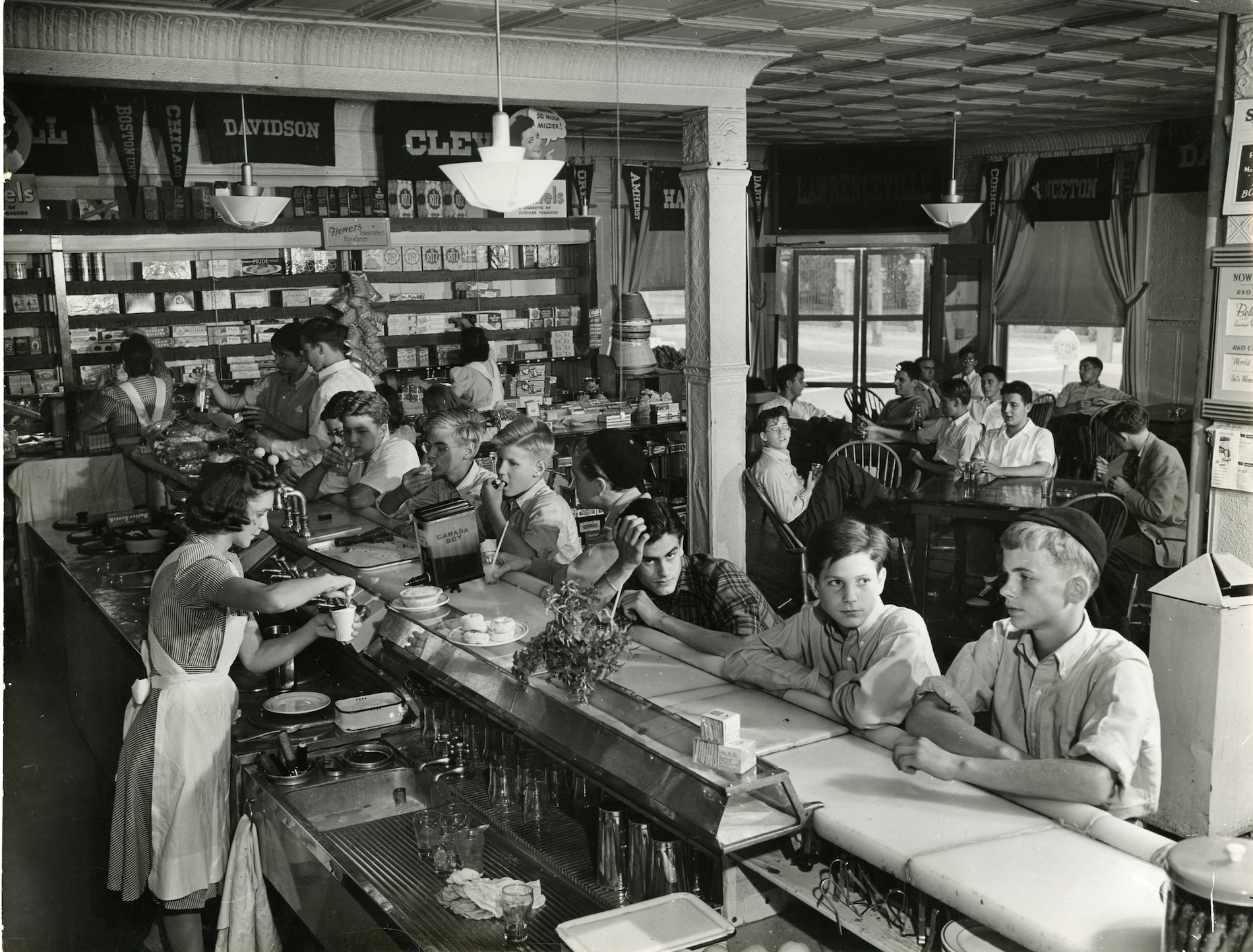
“The Jigger,” Lawrenceville’s snacks and supplies shop, was a popular hangout for the students, including Merrill and his good friend, Tony Harwood. Merrill is in the background leaning back in a chair and looking at the camera.
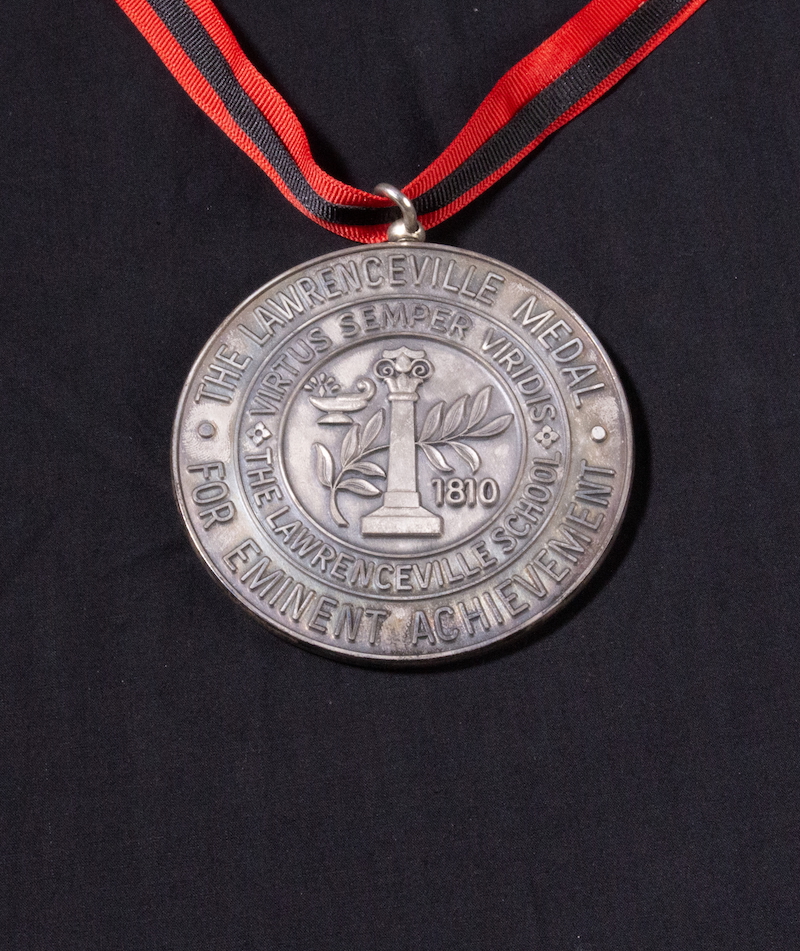
In October 1991, Lawrenceville awarded its annual medal for eminent achievement to Merrill, for his “brilliant, life-long work in a significant field of endeavor.”
Stonington
In 1954, Merrill and his partner, David Jackson, found their semi-permanent home for the next forty years, on the third floor of 107 Water Street, in the seaside village of Stonington, Connecticut. The property included five rooms above the town’s commercial center and a view of the harbor. The couple could live the secluded lives of writers there as well as host social gatherings with visitors and locals. In the years after his death in 1995, the property became The James Merrill House, with a writers-in-residence program, and is listed on the National Registry of Historic Places. Both Merrill and Jackson are buried in Stonington Cemetery.
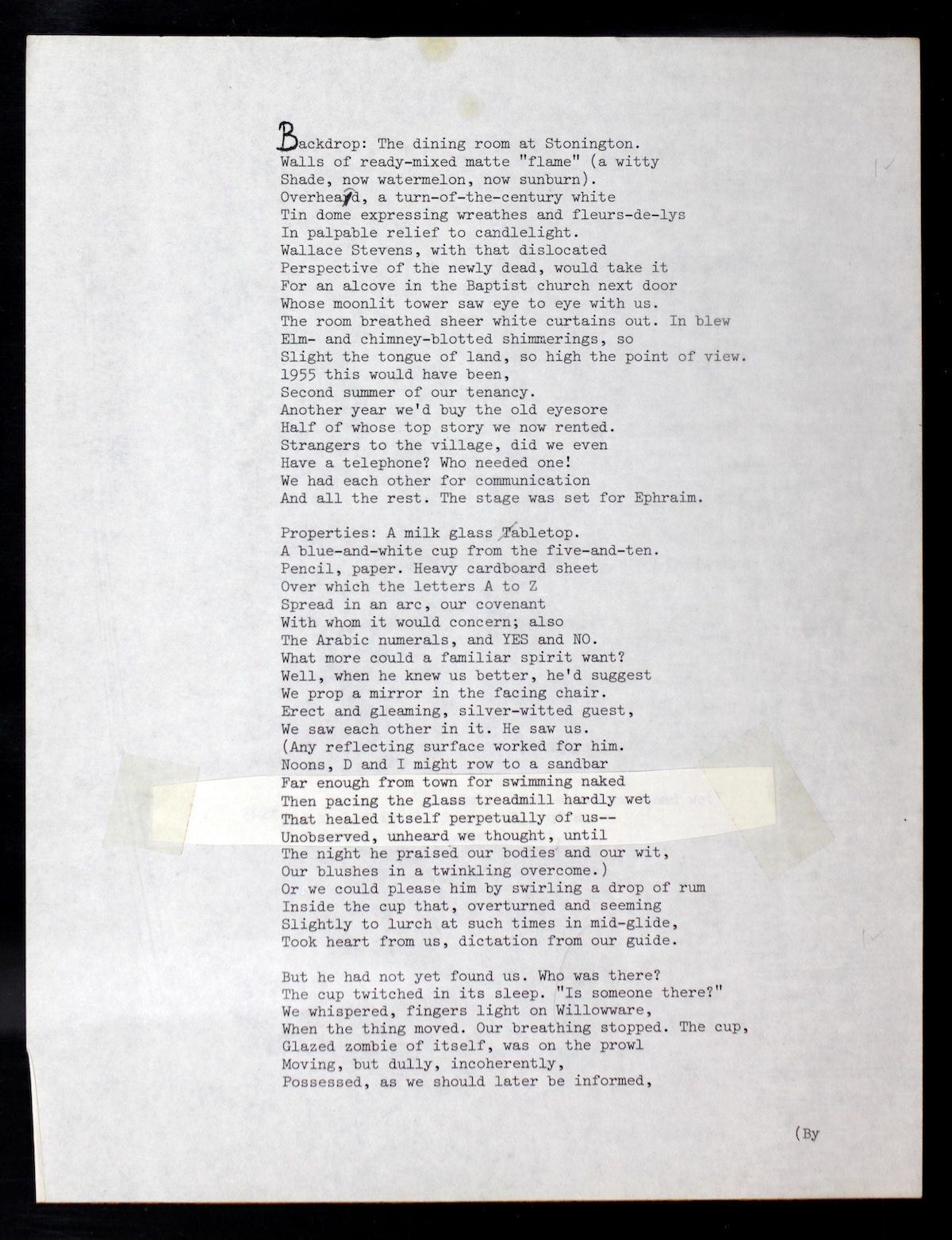
In the second section of Merrill’s 26-part narrative poem, “The Book of Ephraim,” about his two decades of Ouija board séances with David Jackson, Merrill describes the Stonington dining room in which so many of those séances took place. In the poem, it is 1955 when they first made contact with the titular Ephraim.
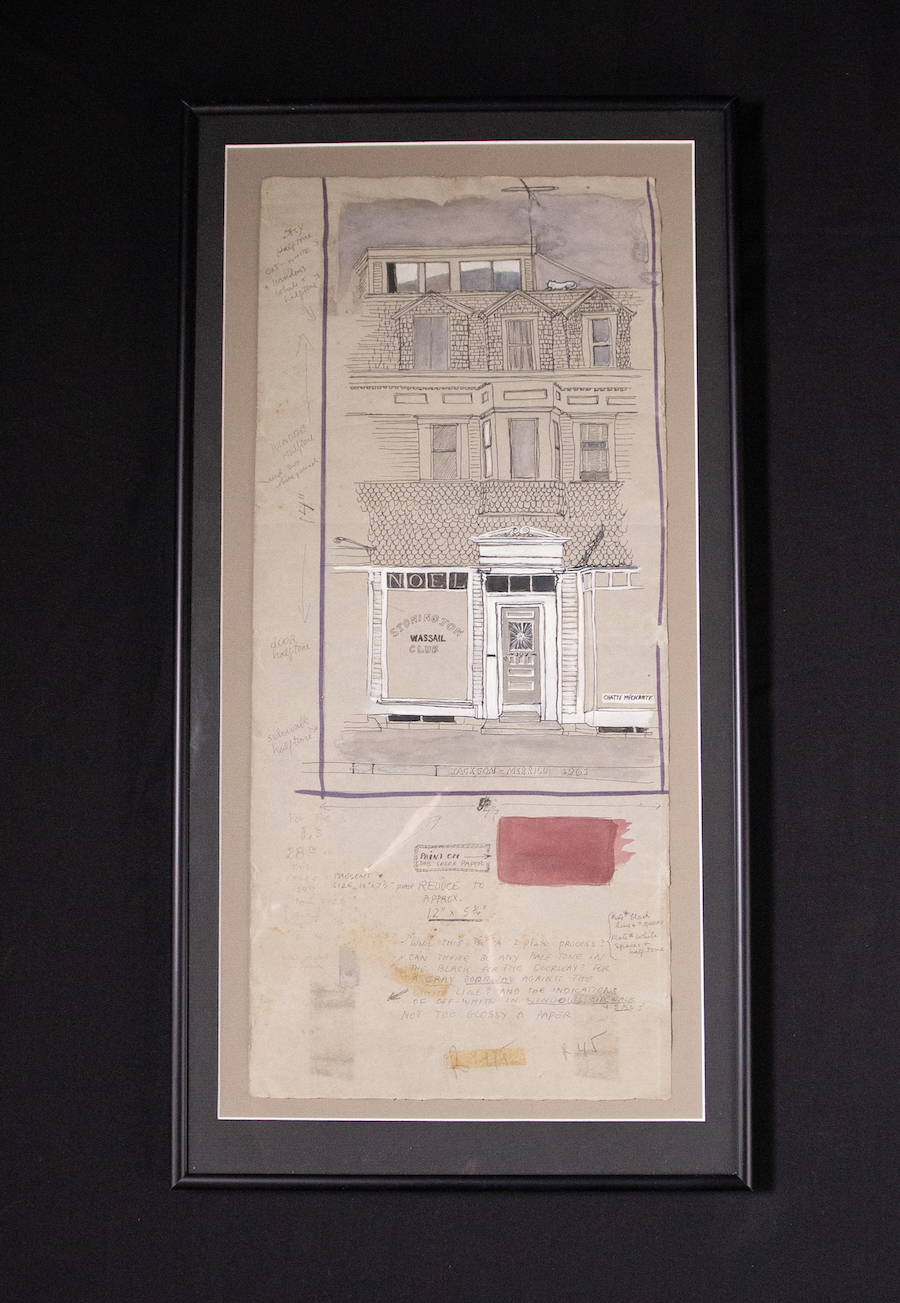
David Jackson was an aspiring fiction writer, but also an amateur visual artist. From the late 1950s to the early ‘70s, he spent much time painting and drawing, which were only shared with friends and family. This proof is from a drawing made around 1961, when he made prints of it.
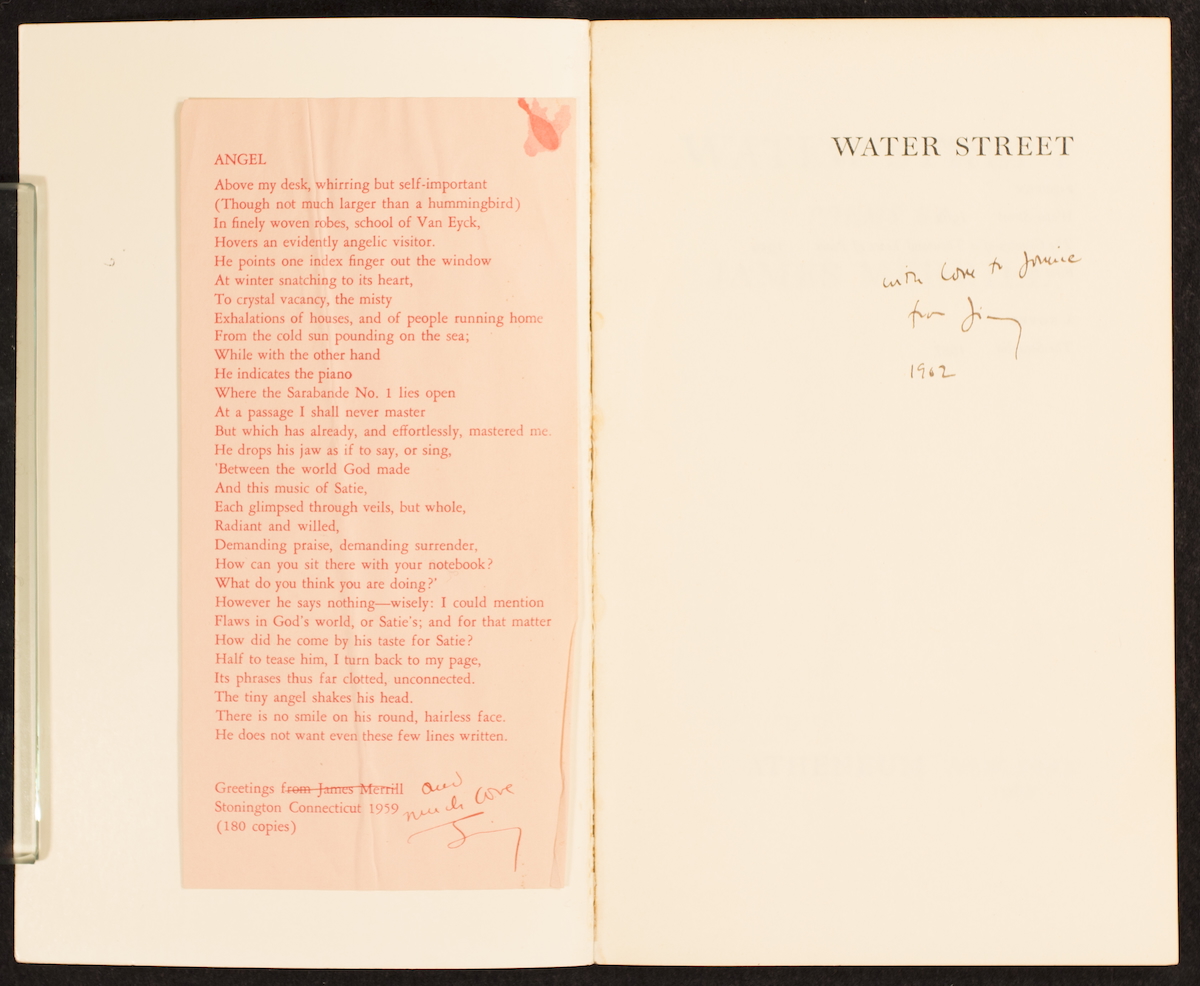
Merrill’s third poetry volume, Water Street, published by Atheneum in 1962, was not only titled after the street on which he and Jackson lived, but was dedicated to “Robert and Isabel, Eleanor and Grace,” four close Stonington friends. This copy includes a glued-in, inscribed mini-broadside of a poem from the book, which depicts the poet at his writing desk.
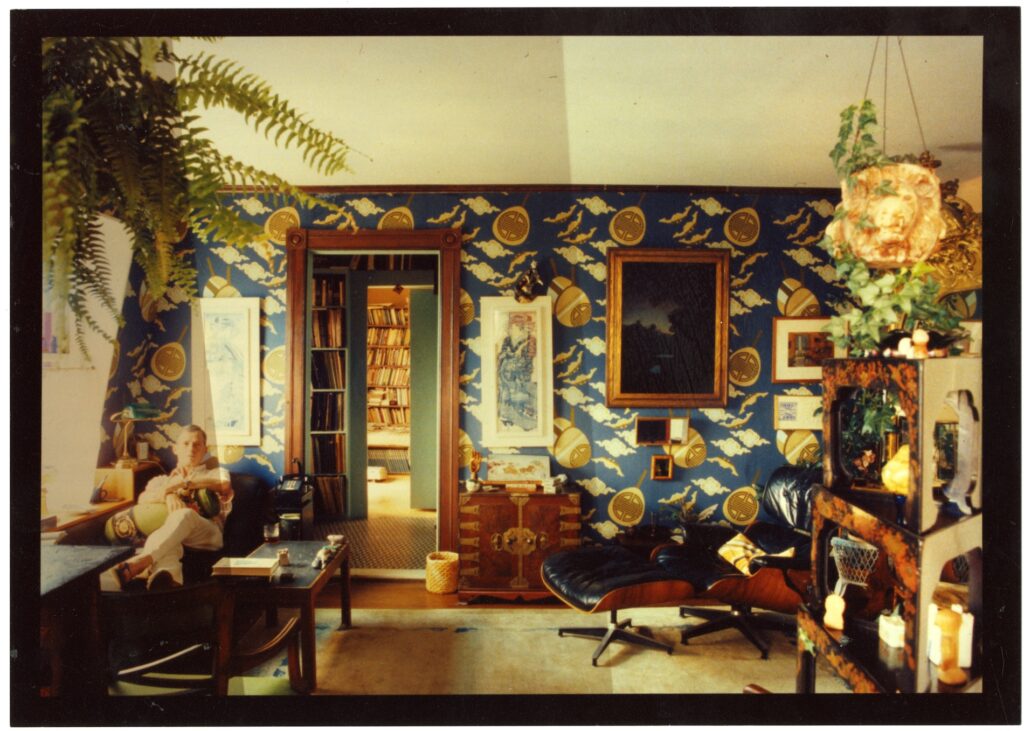
In this photo, taken in 1983 by Harry Pemberton, we are looking from the dining room into the sitting room and behind that into Merrill’s study, which one entered via a movable bookcase.
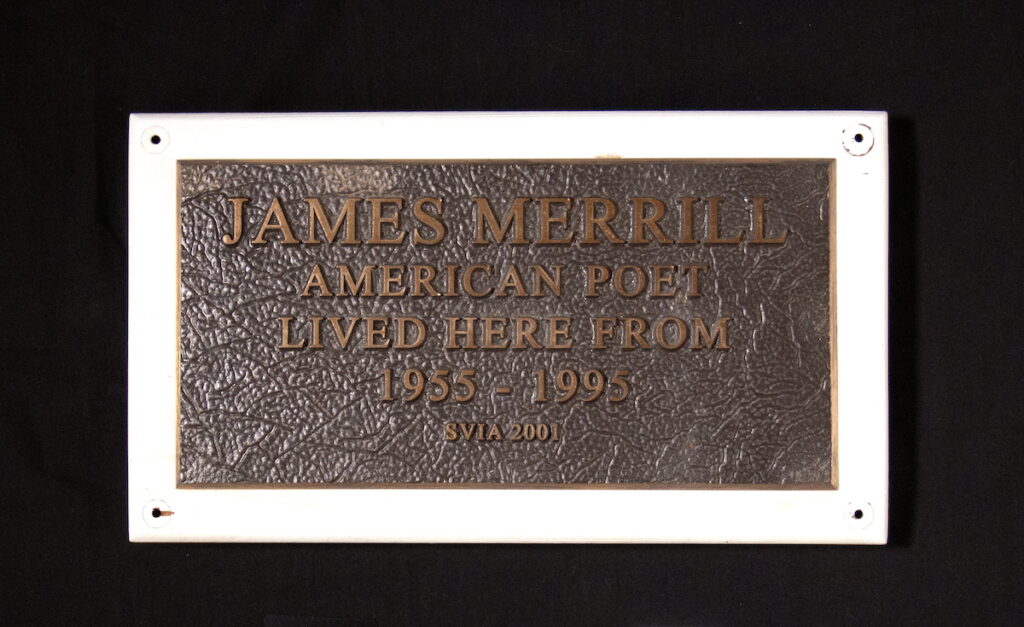
Merrill bequeathed his home to the Stonington Village Improvement Association (SVIA), which preserved it and turned it into a literary and community center. This plaque hung outside the building until the building became a National Historic Landmark in 2016. In 2024, the SVIA donated the house and its contents to the newly formed James Merrill House LLC.
Greece
Merrill and David Jackson started making extended trips to Greece in 1959, and by 1963, Merrill was writing poems and stories set there. He matured as a writer and as a person in his years alternating between Stonington and Athens (roughly 1962 to 1979), producing his most celebrated works that were both more personal and experimental, and making deep friendships that would last the rest of his life.
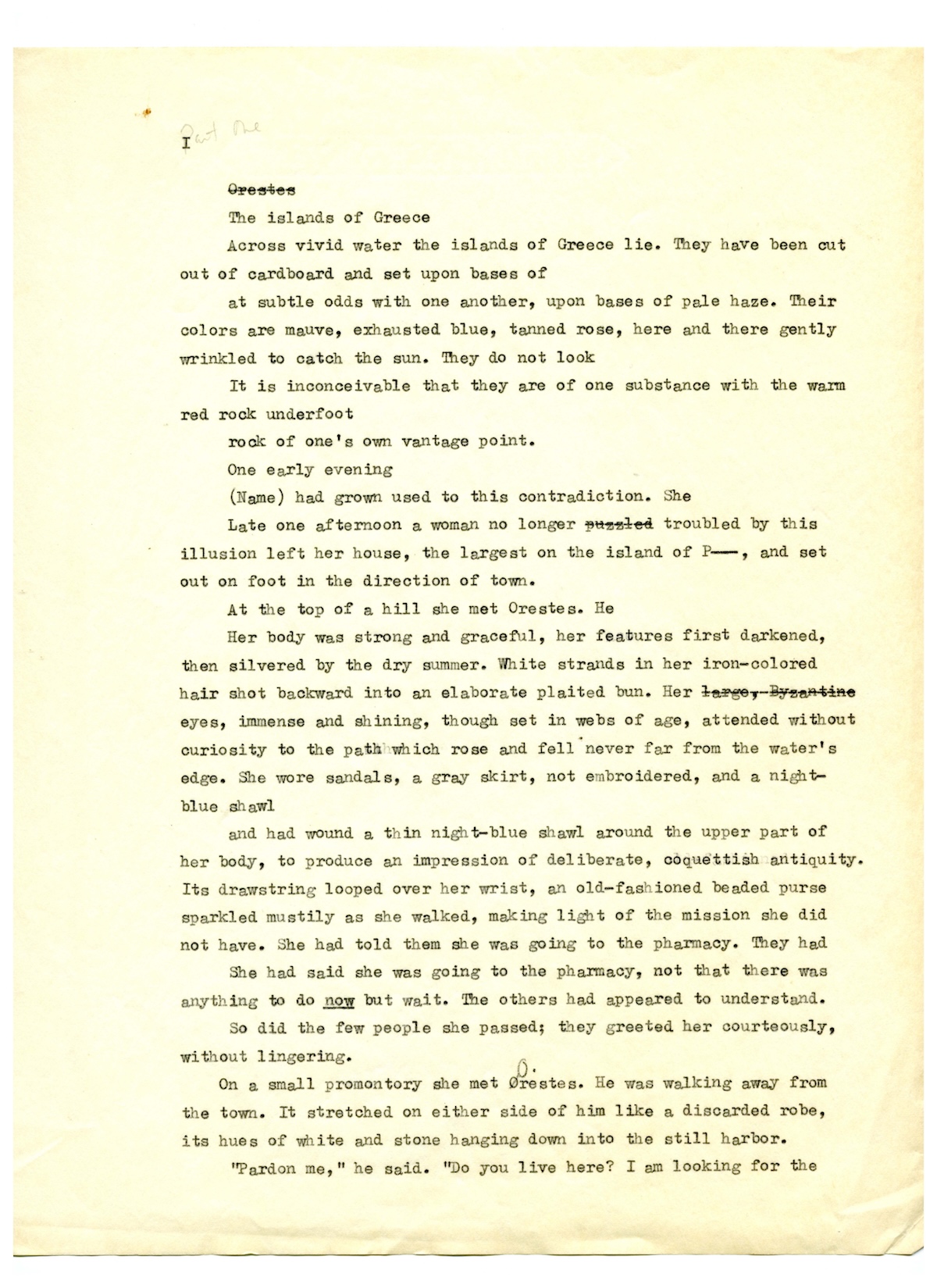
Merrill’s second—and last—novel is presented as a writer’s notebook toward writing a roman à clef novel. It was a transitional work for him. He was shedding his tumultuous relationship with his ex-teacher, Kimon Friar, and taking literary risks that would influence his subsequent narrative poems, especially The Changing Light of Sandover.
In this 1985 audio recording of a James Merrill reading in January Hall at WashU, he mentions in his prefatory remarks that the title of this poem is inspired by the Greek poet C.P. Cavafy. “Days of 1964” lovingly and archetypally portrays Merrill’s neighborhood in Athens, his matronly cleaning woman, Kyria Kleo, and his new lover, Strato Mouflouzelis.
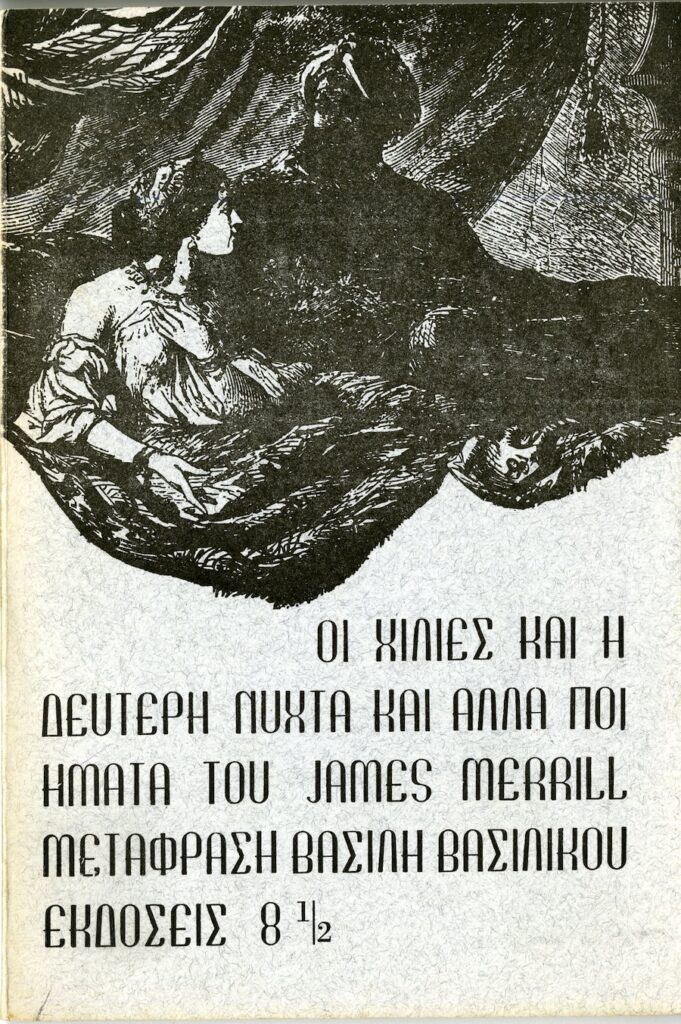
The above photo is of a Greek edition of a book featuring “The Thousand and Second Night,” a long poem set in Greece and Turkey. Merrill wrote it while he worked on The (Diblos) Notebook and incorporated the formal experimentation of the novel into his narrative poetry for the first time.
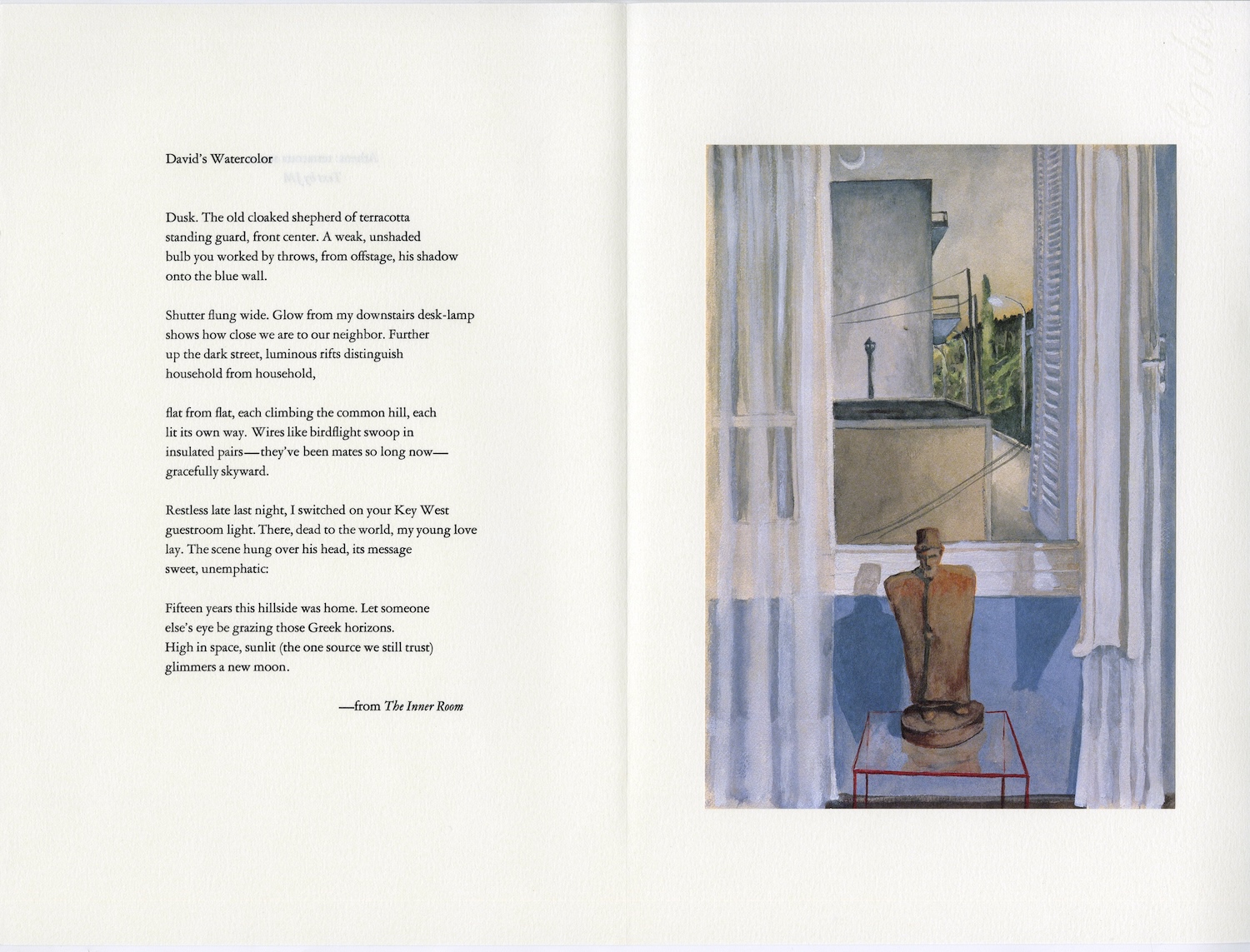
The above spread is from David Jackson: Scenes from His Life, a “lavish chapbook” Merrill produced for Jackson’s 70th birthday, containing fourteen of David’s sketches and paintings from the 1950s to 70s. Each image is paired with a related passage from Jackson’s or Merrill’s writing. This folio features Merrill’s poem in direct response to David’s painting, and in turn to their former home in Athens.

Kalstone was a good friend and eminent literary critic who wrote extensively on the poetry of Merrill, Bishop, Lowell, and others. This photo was taken near Ioannina by another close friend, Tony Parigory. The James Merrill Papers include eight of Kalstone’s journals.
Key West
By 1979, Merrill and Jackson found their new, second home (still keeping their residence in Stonington) in Key West, which had an ever-growing reputation for being home to major American writers and a more progressive attitude to sexuality than most of the rest of the country. Jackson purchased a house there on Elizabeth Street—a fixer-upper where the couple could spend time in private as well as host social events.
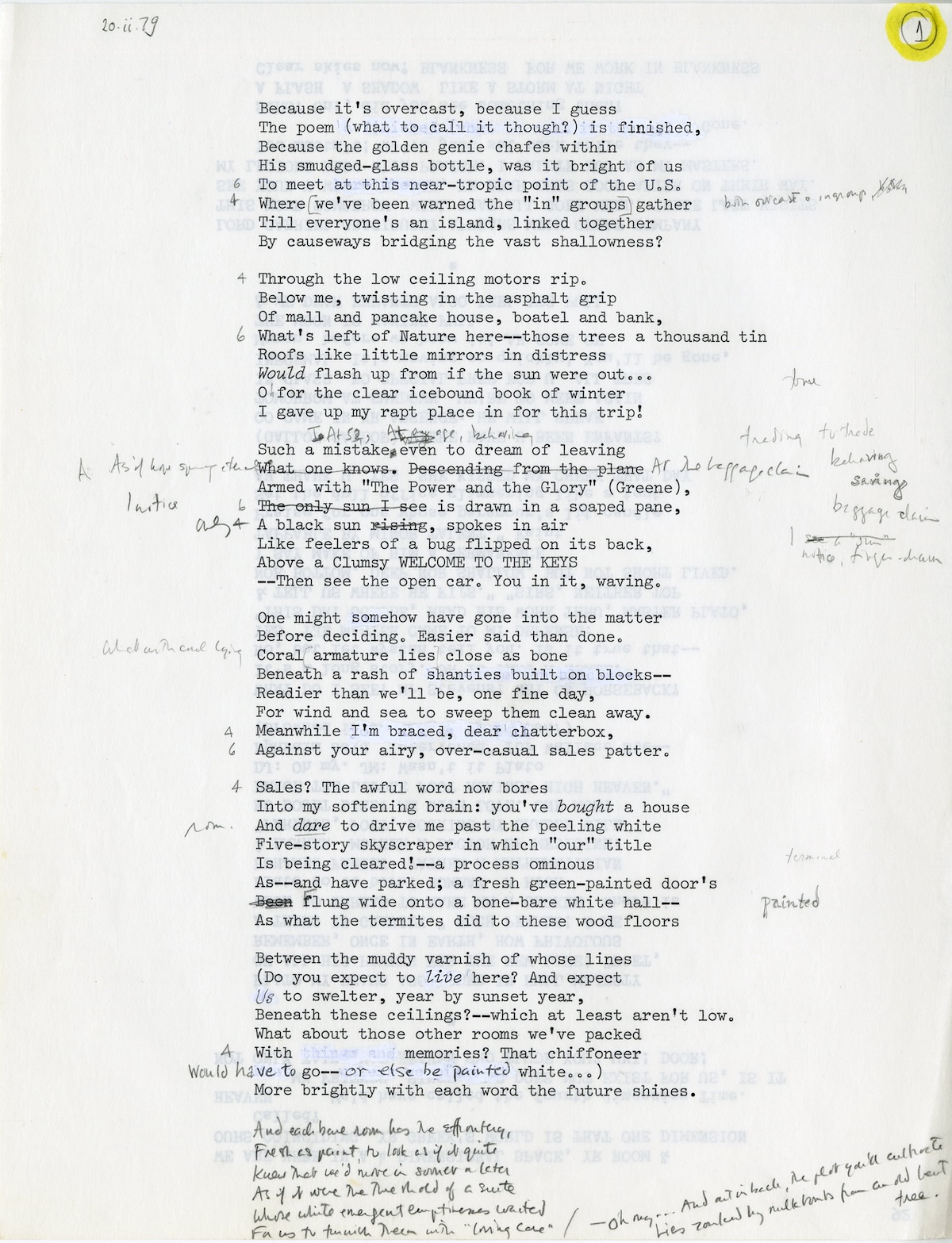
On the simultaneous occasion of Jackson purchasing a house for them in a new location and Merrill finally finishing his (and Jackson’s) untitled Ouija board trilogy, Merrill drafted a touching, affectionate poem that ends with the two strolling into the sunset as the “changing light” title is teased out.

This benefit for the Florida Endowment for the Humanities paired esteemed poets, good friends and neighbors, James Merrill and Richard Wilbur. Merrill and Wilbur were also often involved in the Key West Literary Seminar.
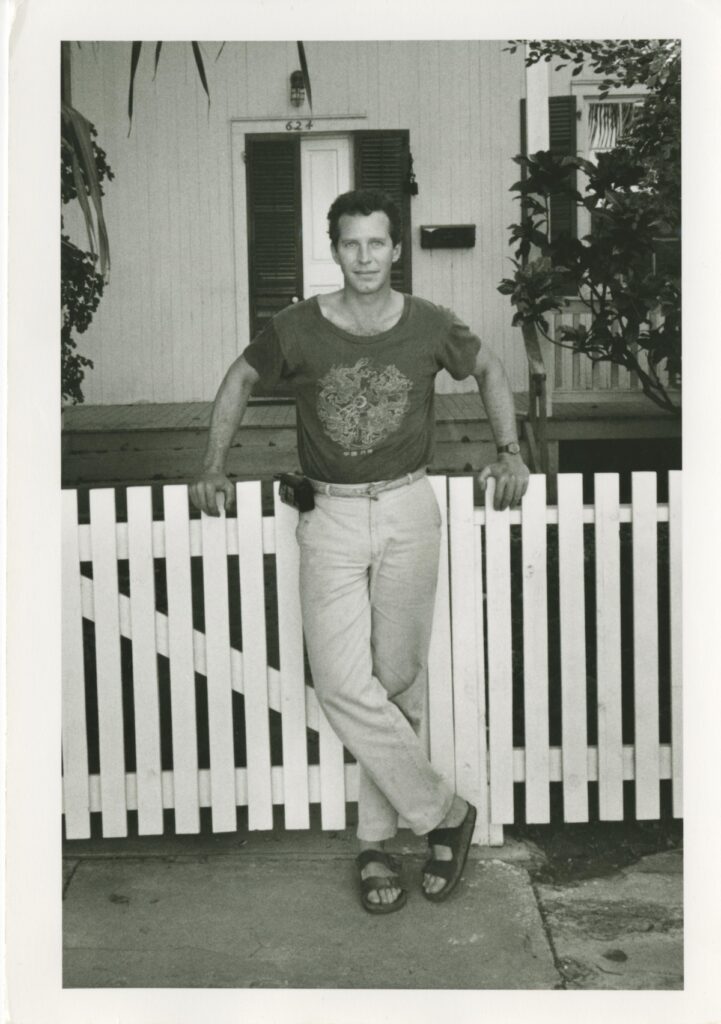
Hooten, an actor who became Merrill’s partner in 1983, produced stage and video performances of Merrill’s work. Hooten was often at odds with Merrill’s close friends in Key West, including Jackson, and was prone to intense bouts of jealousy and anger, but Merrill stayed with him until the end.
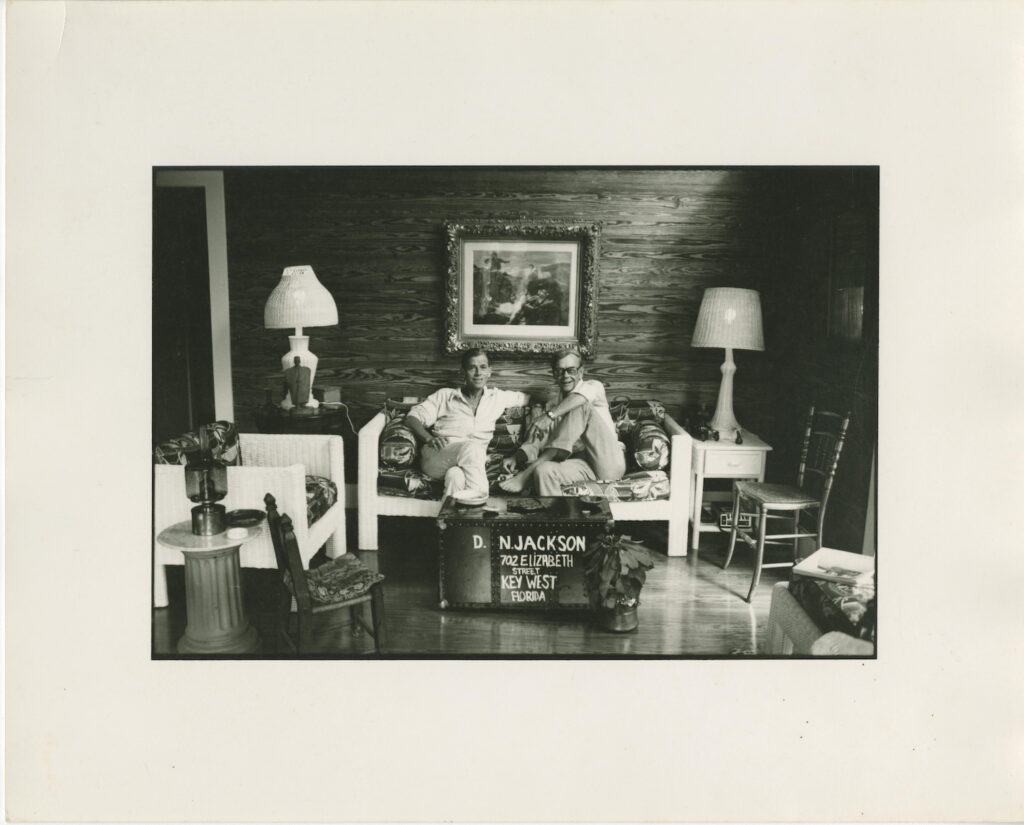
In this photograph, by Christopher Cox, a smiling Merrill and Jackson show off their remodeled home, which was, when Jackson purchased it earlier that year, quite dilapidated. As in Stonington and Athens, they had all they needed within walking distance, and a social circle quickly formed around them.
Sandover
The imaginary manor called Sandover was the setting for the concluding parts of Merrill’s Ouija board epic, Scripts for the Pageant and “Coda: The Higher Keys.” The name had an amalgamation of meanings and was inspired by a real place in his life, The Orchard in Southampton. In general, Merrill and Jackson visited the fantastical realm of the Ouija board together for almost forty years, via séances most often at their dining room table in Stonington or Athens.
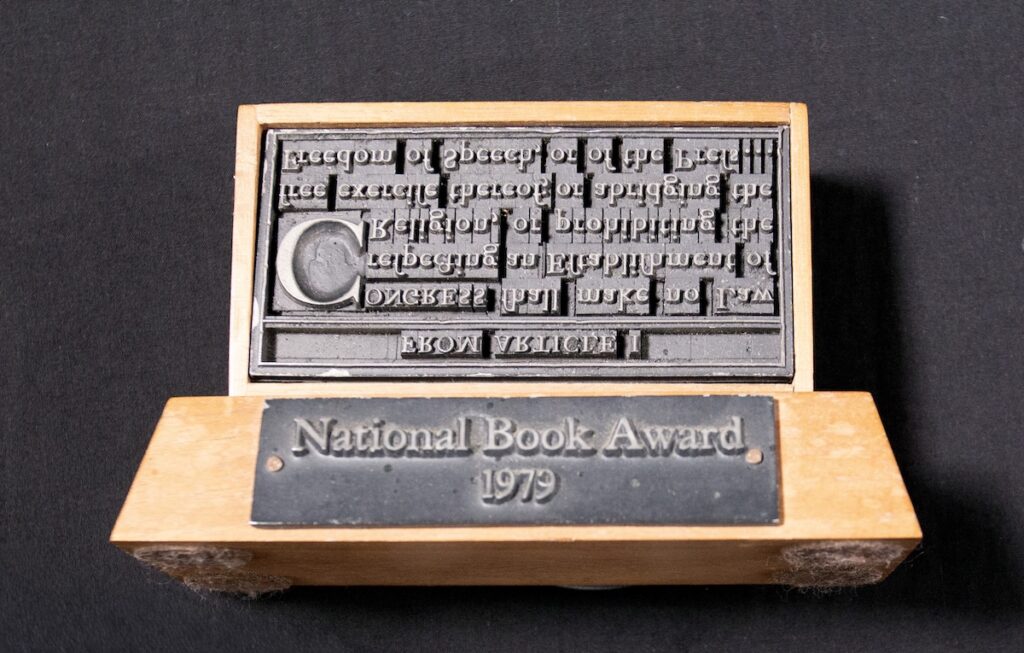
National Book Award plate
Merrill won his second National Book Award in 1979, for Mirabell: Books of Number, the second part of the Ouija board trilogy. It differed significantly from “The Book of Ephraim,” most notably in its transcriptional format as more spirits entered the conversations and the revelations became both more urgent and universal.
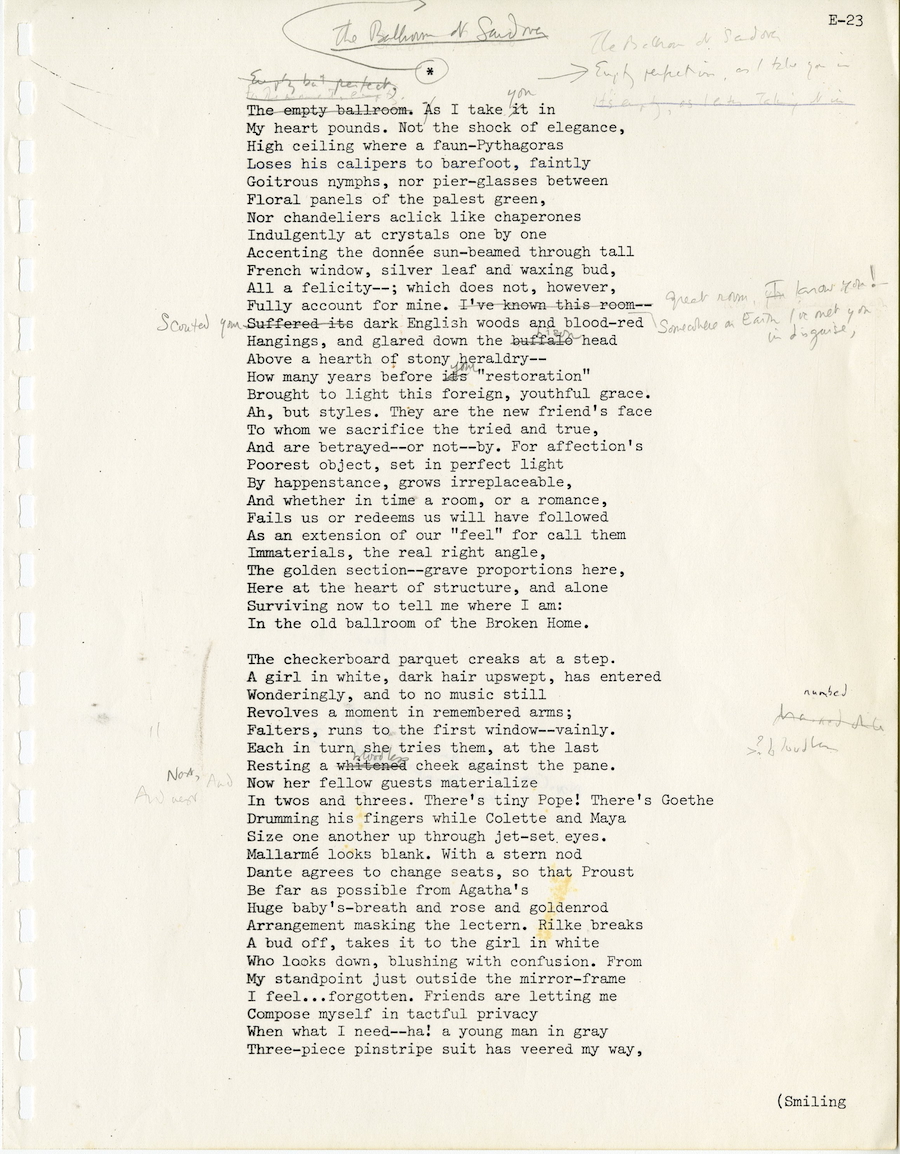
“Coda: The Higher Keys” was the epilogue Merrill wrote for his trilogy before publishing them all together as The Changing Light at Sandover. In this scene, he reimagines the huge music room of The Orchard in Southampton from his childhood as a grand, festive ballroom for the spirits of famous writers to gather to listen to the author read the entire trilogy.
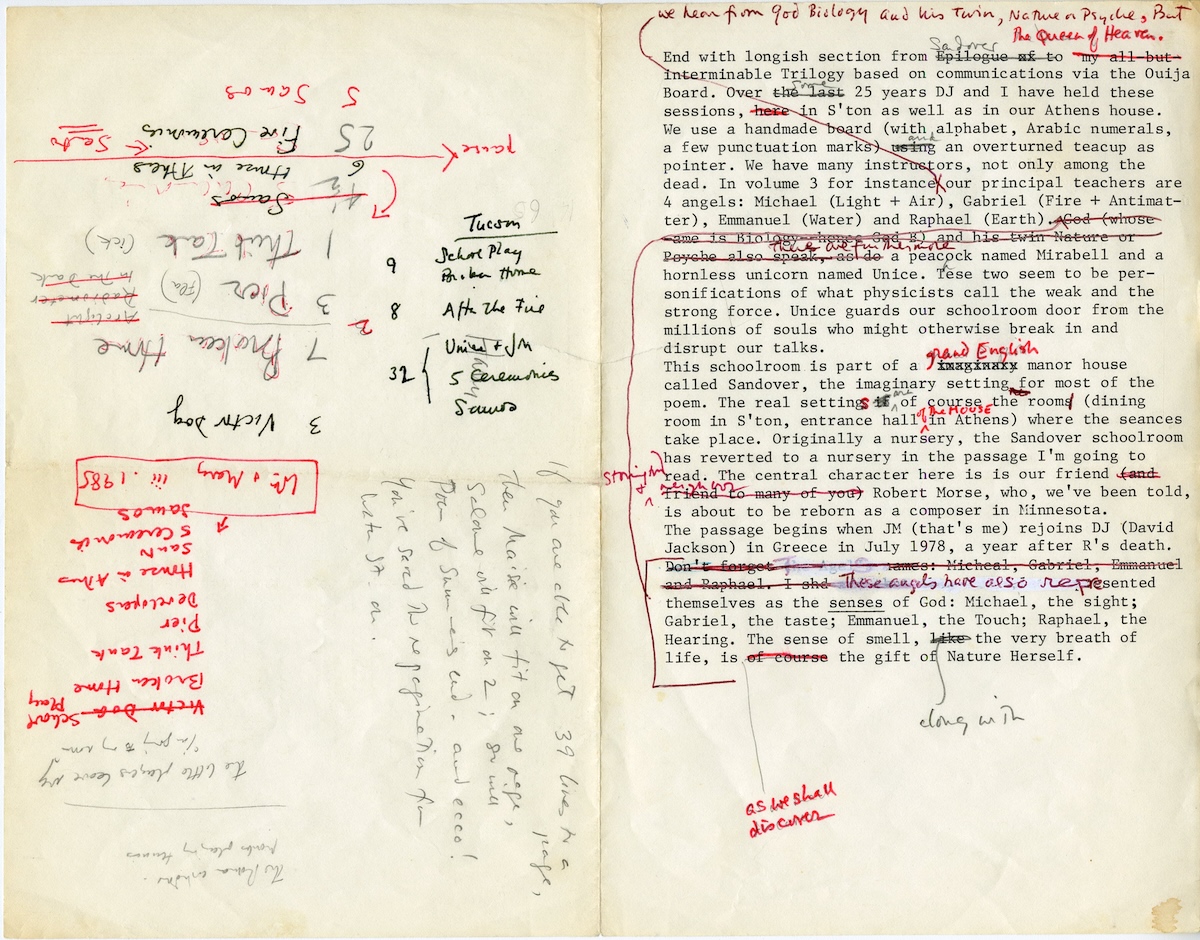
In these notes and others like it, Merrill prefaced a reading of sections from The Changing Light of Sandover (often with Peter Hooten participating) with brief explanations of the circumstances and cosmology behind it.
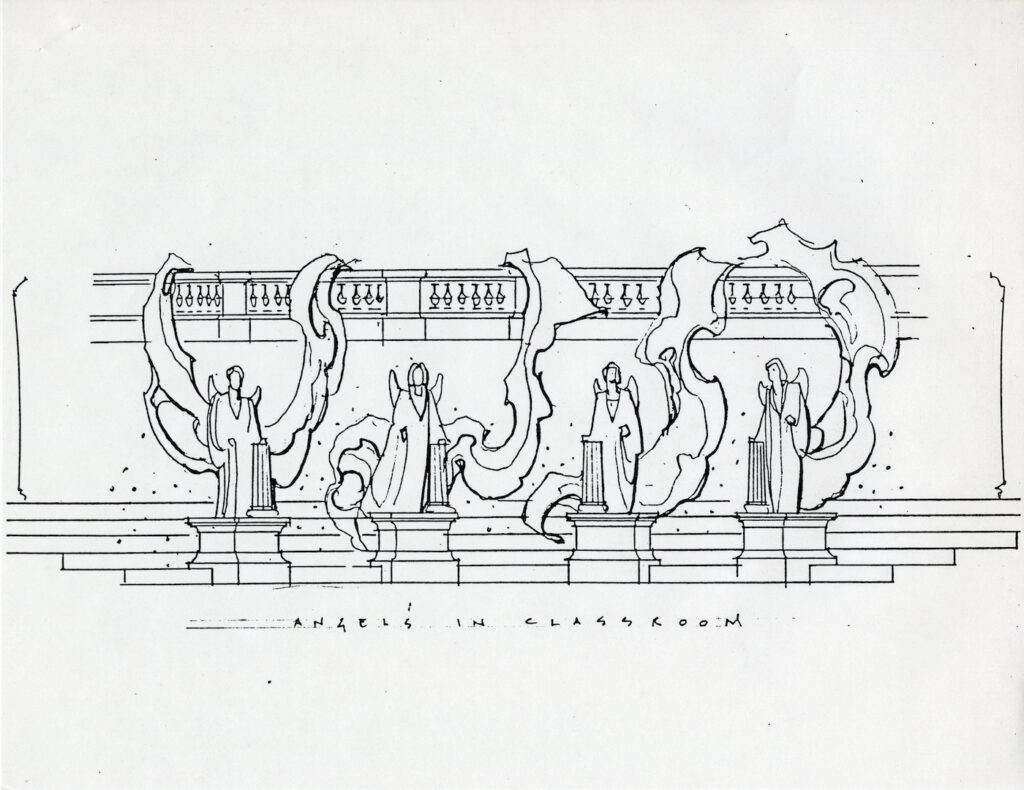
The Voices from Sandover stage and video adaptations of The Changing Light at Sandover were collaborations between Merrill and his partner, Peter Hooten. In the business proposal for the film version are renderings of different scenes, including one showing the angels in the Sandover classroom.
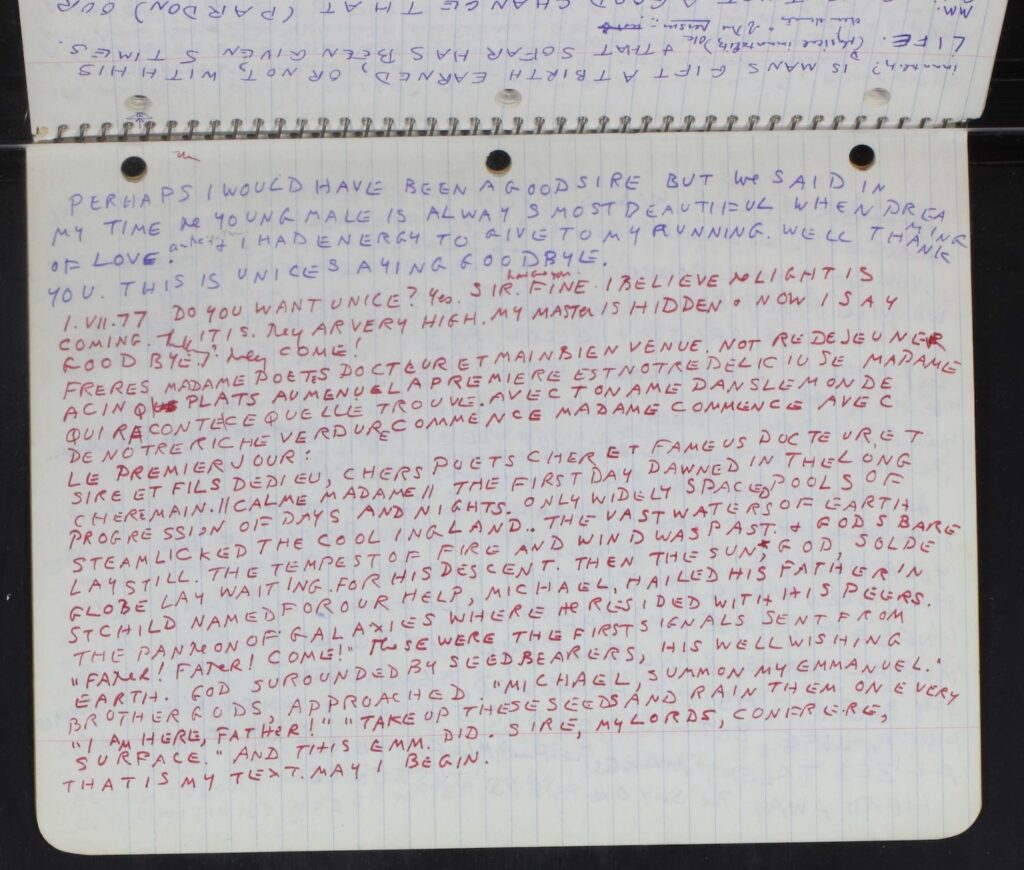
Merrill would jot down the conversations during the seances, then type them up before incorporating the transcriptions into his poems. In this entry, Unice, who guards the doorway into the Sandover ballroom, is speaking to them (in English and French) about creation.
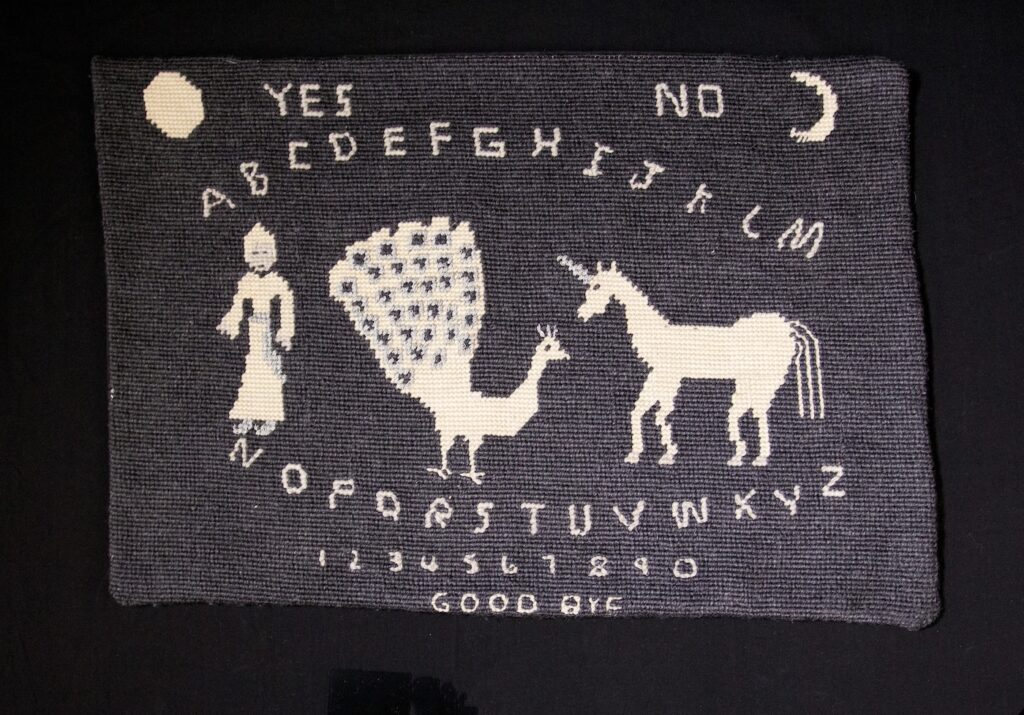
This decorative needlepoint by an unknown creator is on loan from The James Merrill House. It includes designs from The Changing Light of Sandover depicting Maria, Mirabell, and Unice.
To view more items from the James Merrill Papers that were part of past exhibits, including James Merrill: Life and Archive and James Merrill’s Poetry Manuscripts, please see our James Merrill page. This page also includes links to other Merrill-related resources in Special Collections.
Future news articles in 2026 will feature other Merrill centennial activities that are happening this year, most notably the Stonington Literary Festival.

- Name
- Joel Minor
- Job Title
- Curator of Modern Lit Collection/Manuscripts