

General Grant Has Caught the Rabbit: Vicksburg Wallpaper Newspaper
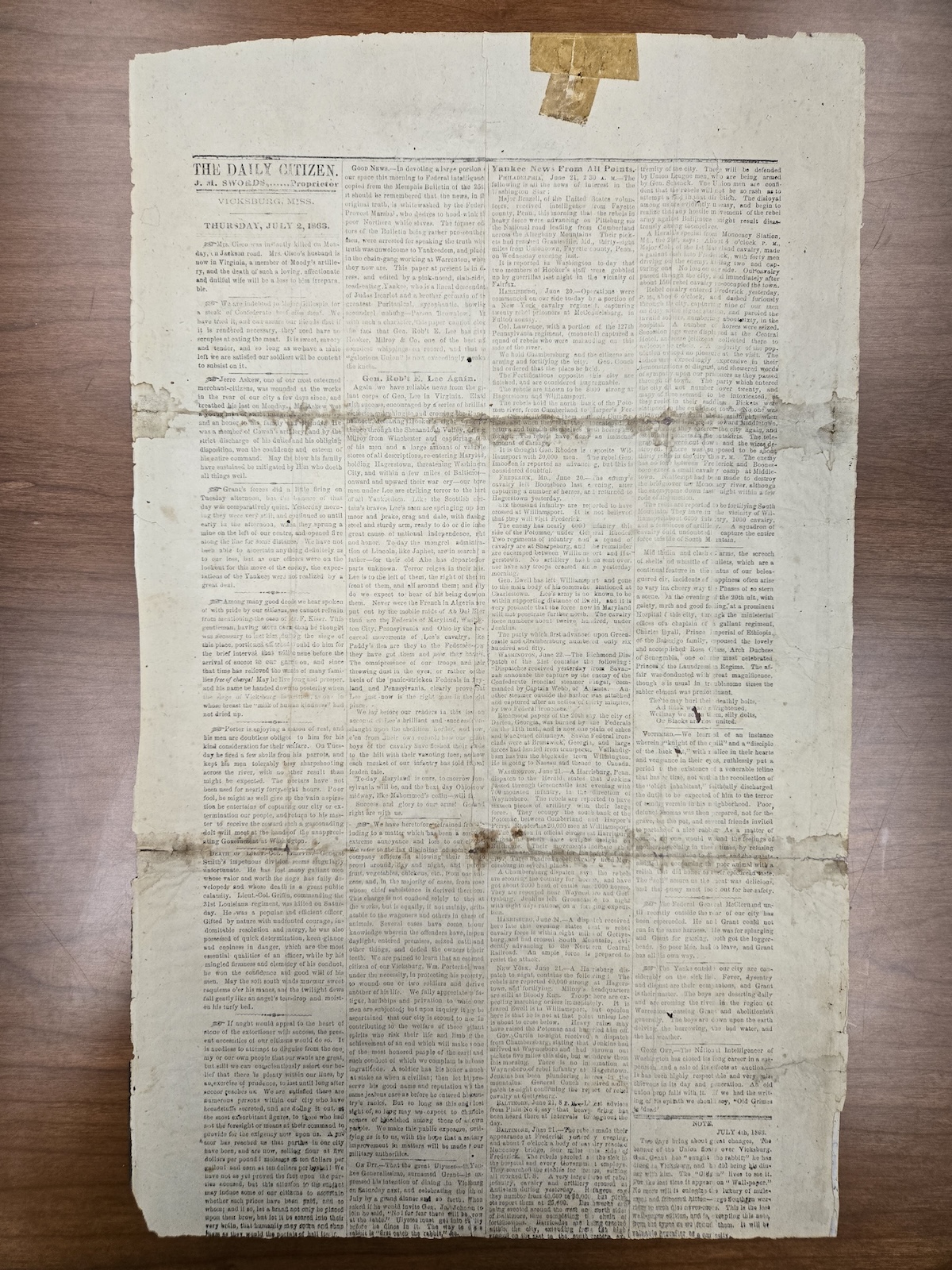
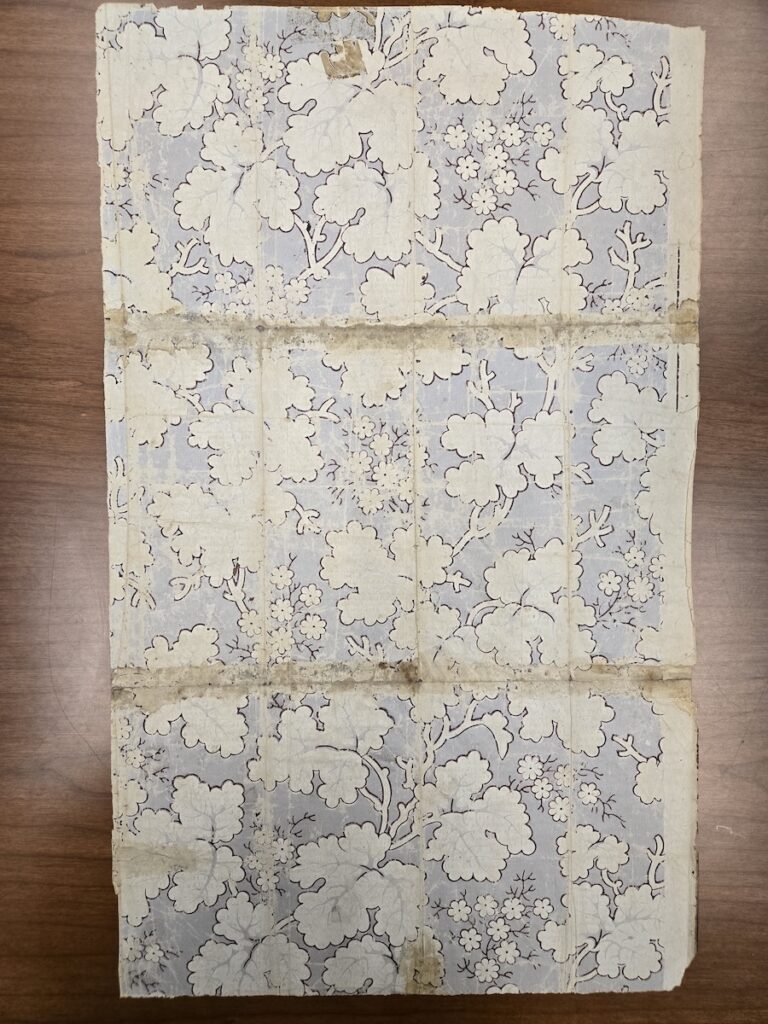
In the summer of 1863, at the height of the American Civil War, the Union army set its sights on Vicksburg, Mississippi. Vicksburg’s position on the Mississippi River made it essential to both sides of the conflict. For Confederates, holding Vicksburg meant maintaining control of the Mississippi River, ensuring a route for supplies and communication; for the Union, taking Vicksburg and the river meant dividing the southern states in half. On May 18, following a series of Union victories in the surrounding area, Union General Ulysses S. Grant began a siege of the city of Vicksburg. The siege would isolate the city and the Confederate forces within from the surrounding territory.
Within the city, resources had been running short for a while. Many southern states were suffering from the same fate. With food becoming scarce, southerners had turned to mule meat, nicknamed “Confederate beef,” for a portion of the war. Communication remained essential, and informing the citizens of goings-on in the war around them was paramount. Without newsprint paper and with no way to acquire more, several southern newspapers turned to a resource hidden in plain sight: wallpaper. Literally surrounded by the material, publishers began stripping walls to ensure the news could still be produced and distributed. By mid-June, one Vicksburg publisher by the name of James M. Swords of The Daily Citizen began doing just that. Swords conducted much, if not all, of the printing for the Citizen inside his home in Vicksburg—the wallpaper, too, came from his own walls.
The Daily Citizen had a short but notable run. Established in 1859, the newspaper was originally outspoken against the idea of secession. As the war began and forces encroached upon Vicksburg, Swords began doing what he could to encourage his readership and foster a sense of normalcy despite the conflict raging around them. He published not only reports on the war and daily news, but also turned to mocking Union forces to bolster spirits and foster hope for victory. After 45 days of the continued siege, Swords drafted a particular stab at General Grant in the July 2 edition of The Daily Citizen:
“…the great Ulysses—the Yankee Generalissimo, surnamed Grant—has expressed his intention of dining in Vicksburg on Saturday next, and celebrating the 4th of July by a grand dinner and so forth,” Swords wrote. “Ulysses must get into the city before he dines in it. The way to cook a rabbit is ‘first catch the rabbit’.”
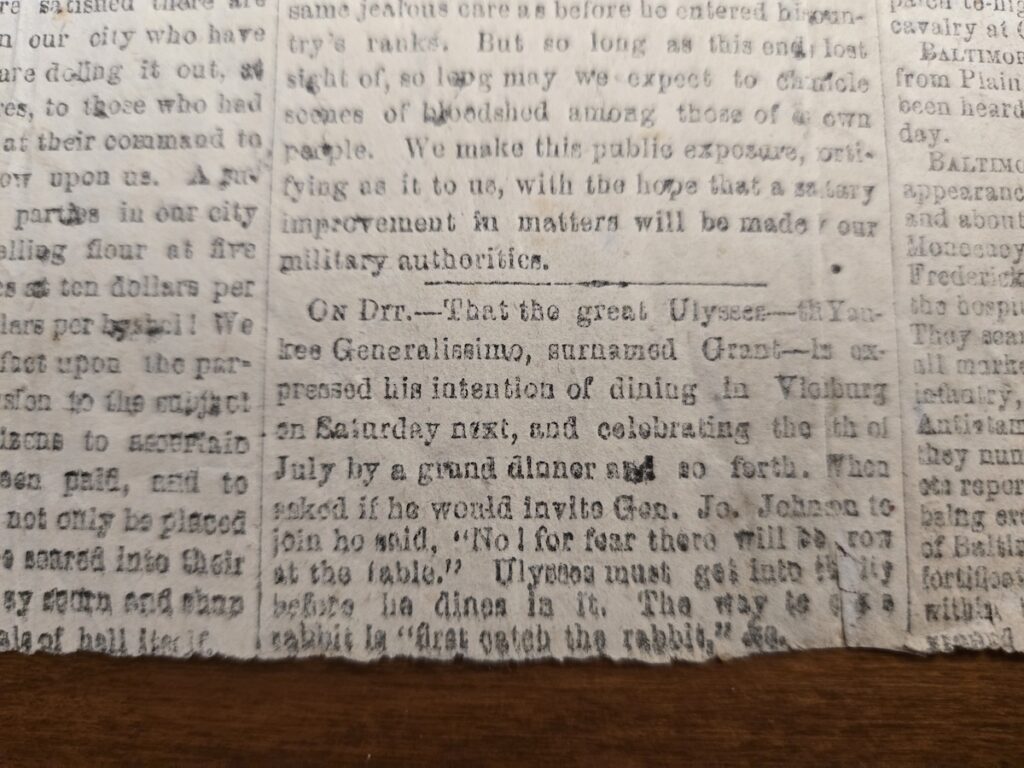
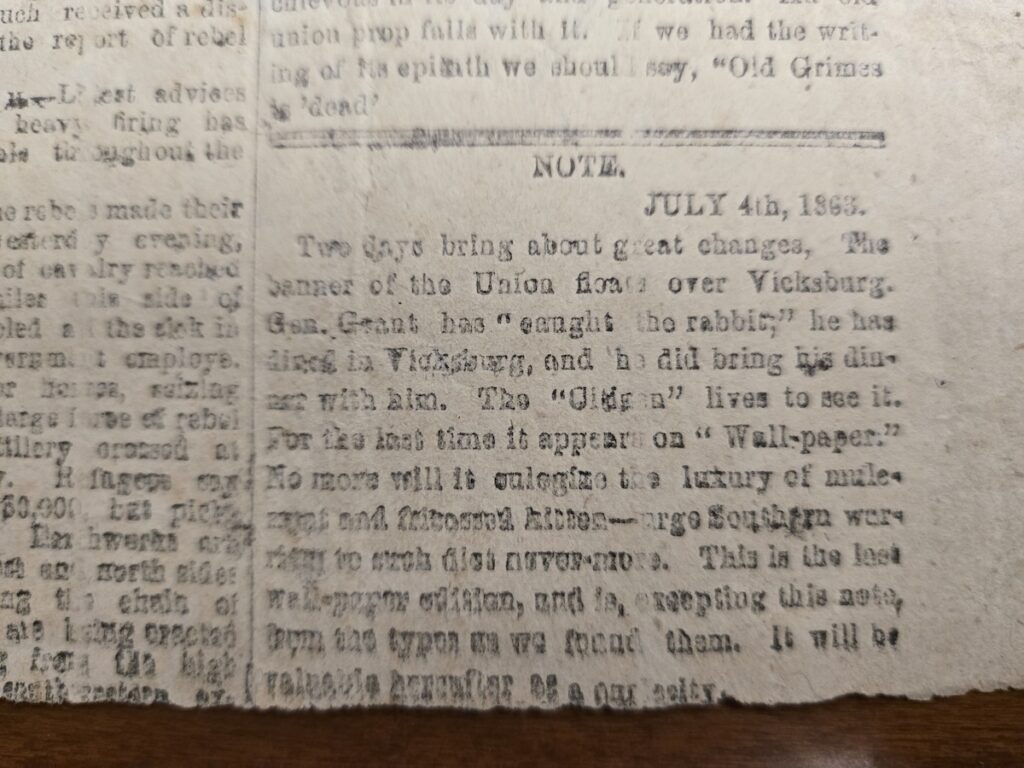
Grant took only two days to finish setting the table—before Swords could even get his taunt off the presses. When Vicksburg finally fell to Union forces on that very Saturday, July 4, 1863, Swords fled his (presumably blank-walled) home and left the Citizen’s final edition set on the press, where Union soldiers would discover it and its increasingly ironic jab at Grant. Rather than wipe Swords’ remarks from history, the soldiers replaced only a small section of type in the very bottom right corner of the page with their own report of recent events:
“NOTE: July 4, 1863 Two days bring about great changes, The banner of the Union floats over Vicksburg. Gen. Grant has ‘caught the rabbit:’ he has dined in Vicksburg, and—” apparently not one for mule “—he did bring his dinner with him. The ‘Citizen’ lives to see it. For the last time it appears on ‘Wall-paper.’ No more will it eulogize the luxury of mule-meat and fricassed kitten—urge Southern warriors to such diet never-more. This is the last wall-paper edition, and is, excepting this note, from the types as we found them. It will be valuable hereafter as a curiosity.”
And a valuable curiosity it has become. The Citizen’s brief lifespan ended with the printing of the July 2–4th edition. Though many reprints of this particular edition exist, Congress recognizes only five original copies of the account of Vicksburg’s surrender as entombed in wallpaper. This May, one such copy was acquired by the Julian Edison Department of Special Collections to be used alongside rare books, prints, and newspapers in the James E. and Joan Singer Schiele Print Collection.
The newspaper is available for research in Special Collections. For more information, contact the Curator of Rare Books Cassie Brand.
Charlie Hoppe is a graduate of the MFA in Illustration and Visual Culture at The Sam Fox School of Design & Visual Arts and served as a Rare Books Outreach Fellow in the Julian Edison Department of Special Collections.