
Four Things to Know About WashU Libraries as a First-Year Student
The excitement and activity that swirl around beginning college make the transition almost dizzying. There always seems to be some commitment, obligation, or deadline that you’re struggling to meet during your first year of college. Orientation week, introductory power points, and fun campus events take a sharp turn into study sessions, papers, midterms, and exams. As the semester hits a turning point, library visits for “lock-in” become more frequent. Yet, although it seems natural to utilize the libraries as a study space, it is less common to approach them as an academic resource.
How to Navigate Physical Resources
Combined, the WashU Libraries have 2 million physical books. If you have ever been adventurous enough to venture into the stacks in pursuit of a book or stumbled upon it in the refuge of an empty study spot during the final exam season, you’ll have likely encountered what seems to be a winding labyrinth of books. It doesn’t help that some of the book stacks are mobile. Great for compact shelving and saving space, but when you’re looking for a particular book, it’s like trying to find a needle in several moving rows of haystacks.
Unlike what might be the more familiar Dewey Decimal System that organizes public and K-12 school libraries, academic libraries go by the Library of Congress Classification, which better accommodates additional content as time passes. The Library of Congress Classification is composed of twenty-one main classes, assigned a single letter of the alphabet. Many of these classes are further divided into subclasses (e.g., Class Q for science, with subclass QC for physics and QE for geology).
Let’s try a brief run-through. Say I’m looking for an annotated version of Mary Shelley’s Frankenstein. The first thing I would do is look up the title on the WashU Libraries website in the classic catalog option dropdown. As opposed to Quick Search (somewhat of an everything search), this selectively confines results to WashU’s local library catalogs. The search result will tell me three key things:
- The book’s physical location (in this example, the Olin Library Level A Stacks)
- If the book is currently available
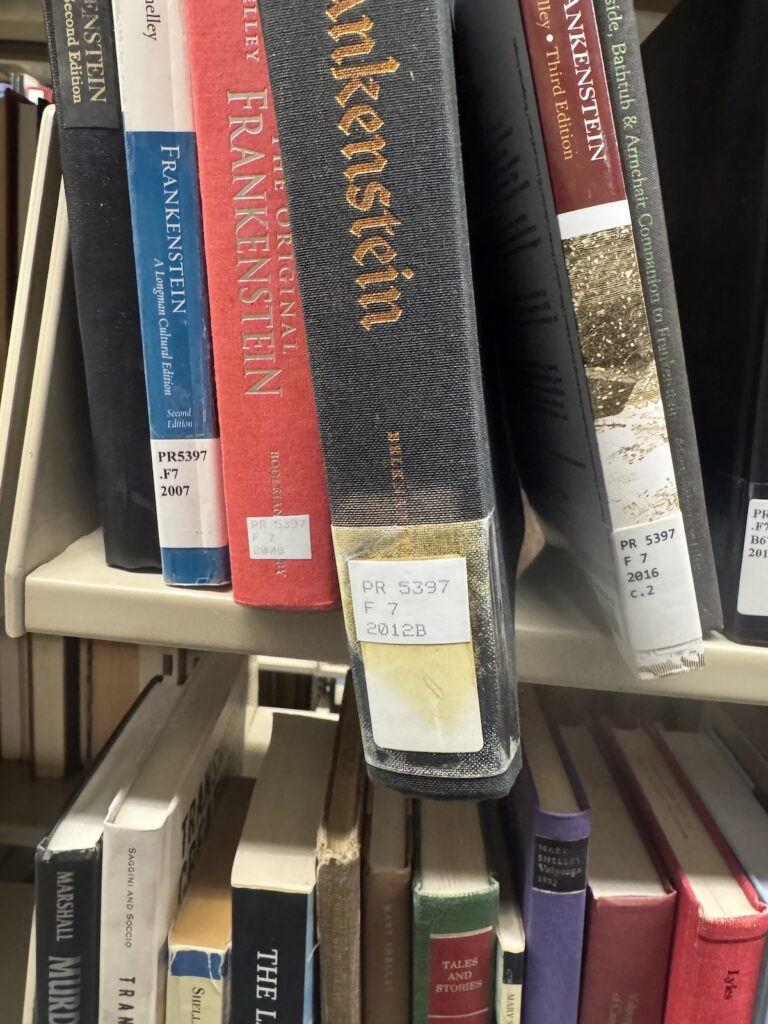
- And the book’s call number (PR5397.F7 2012b), which will guide me to the book’s exact spot on the shelf.
So, after arriving at the Level A stacks (by using the directory), what now?
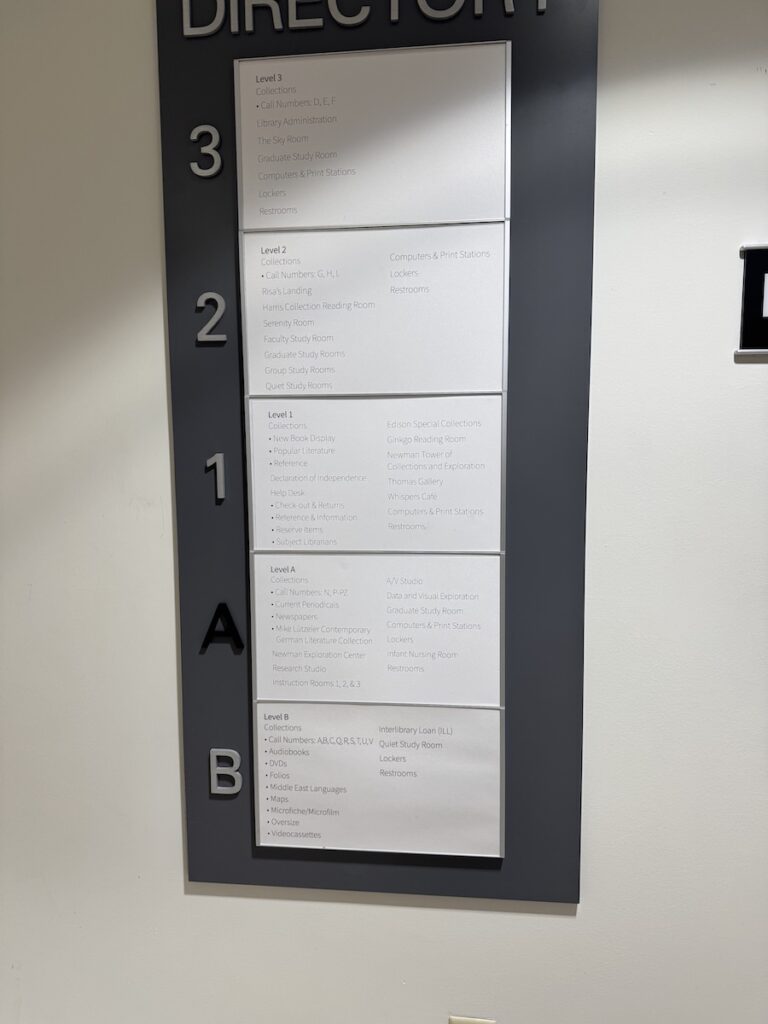
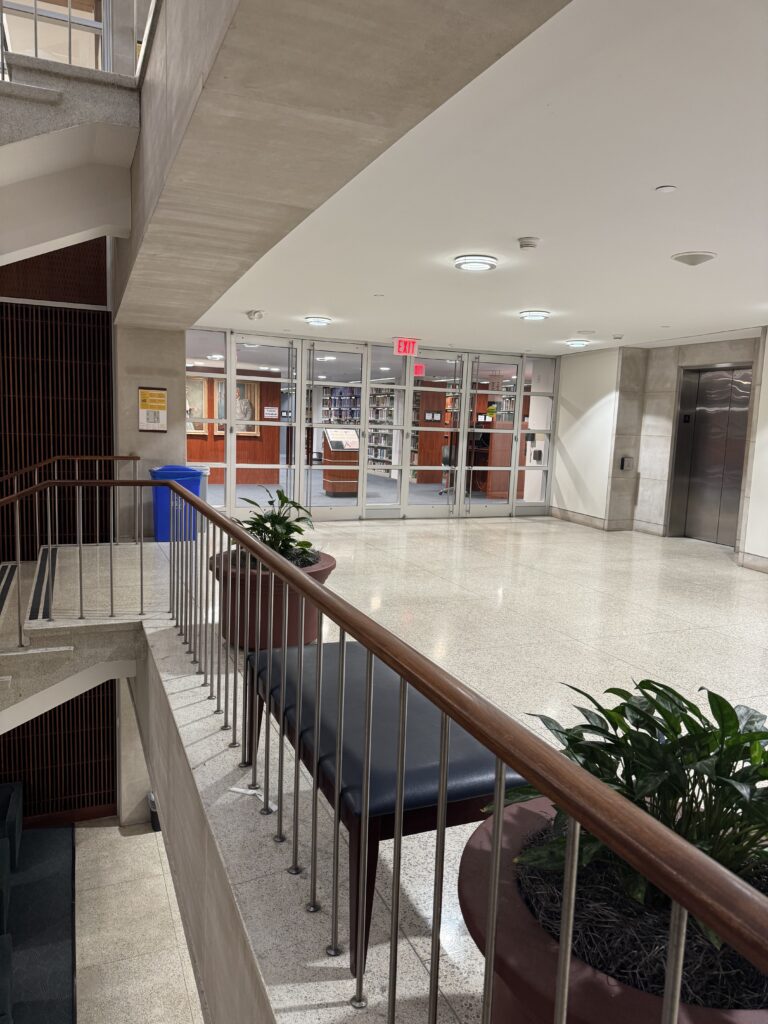
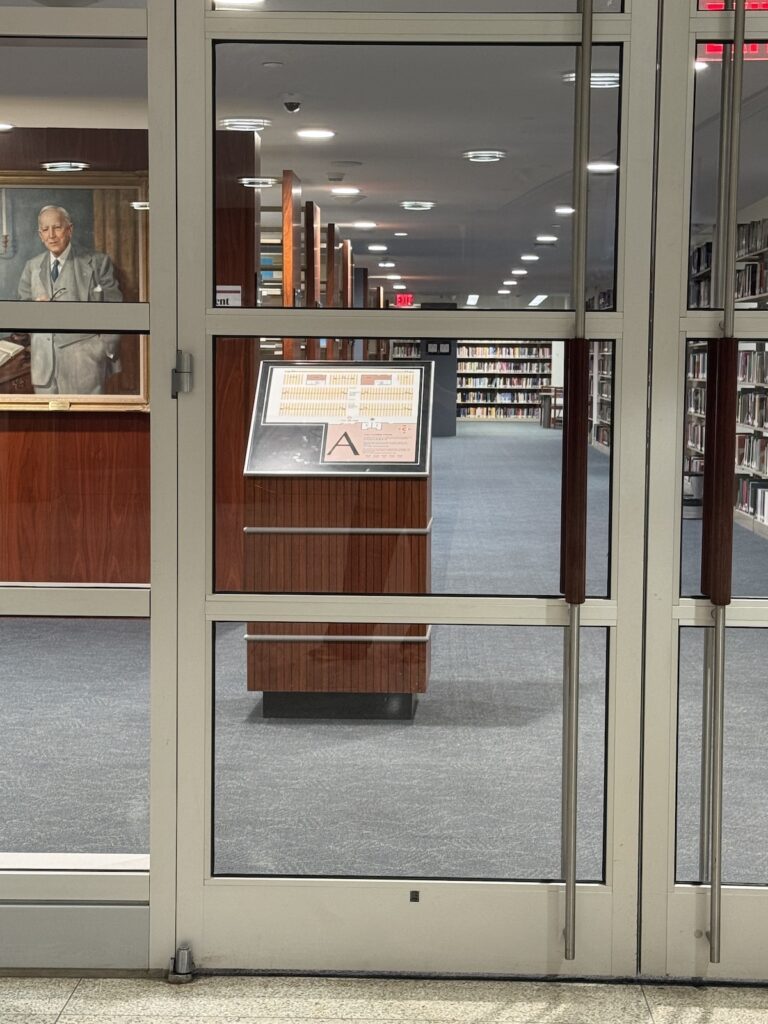
Upon entering the Level A stacks, I will be immediately greeted with a floor map defining shelf placement. Just like this floor map, many readily accessible guides and notations help with locating a particular material.
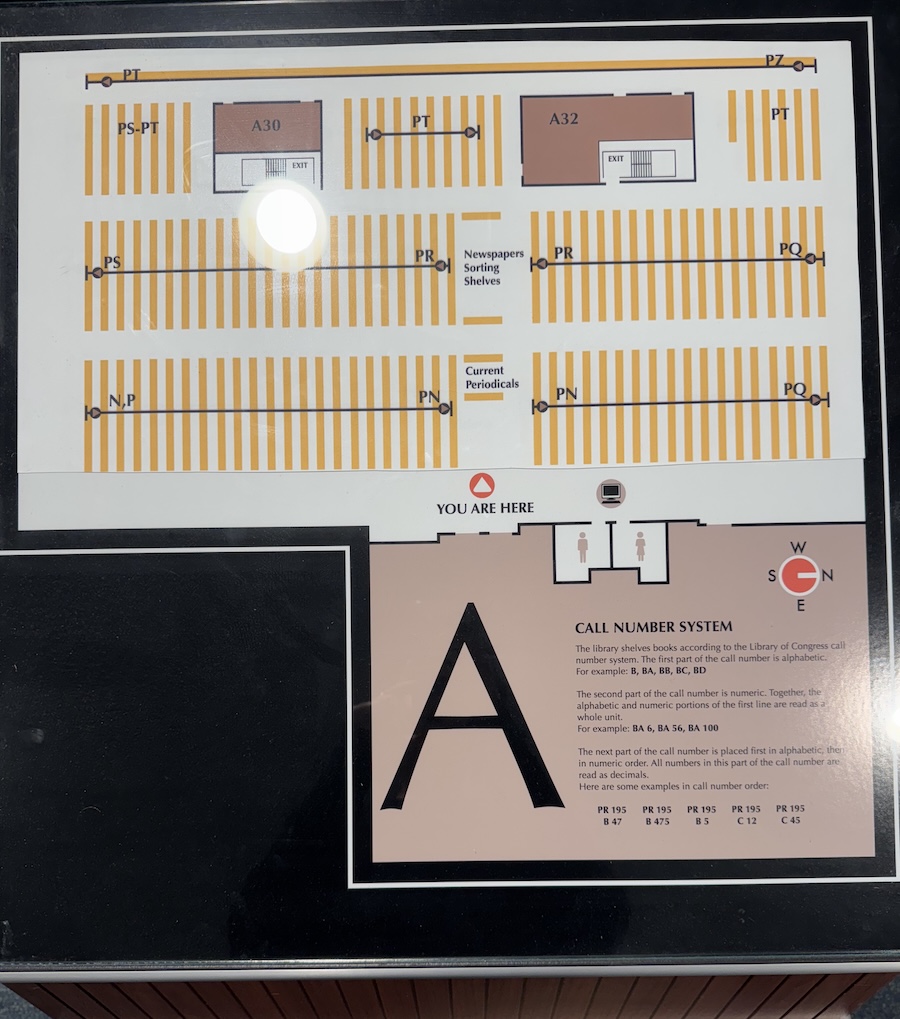
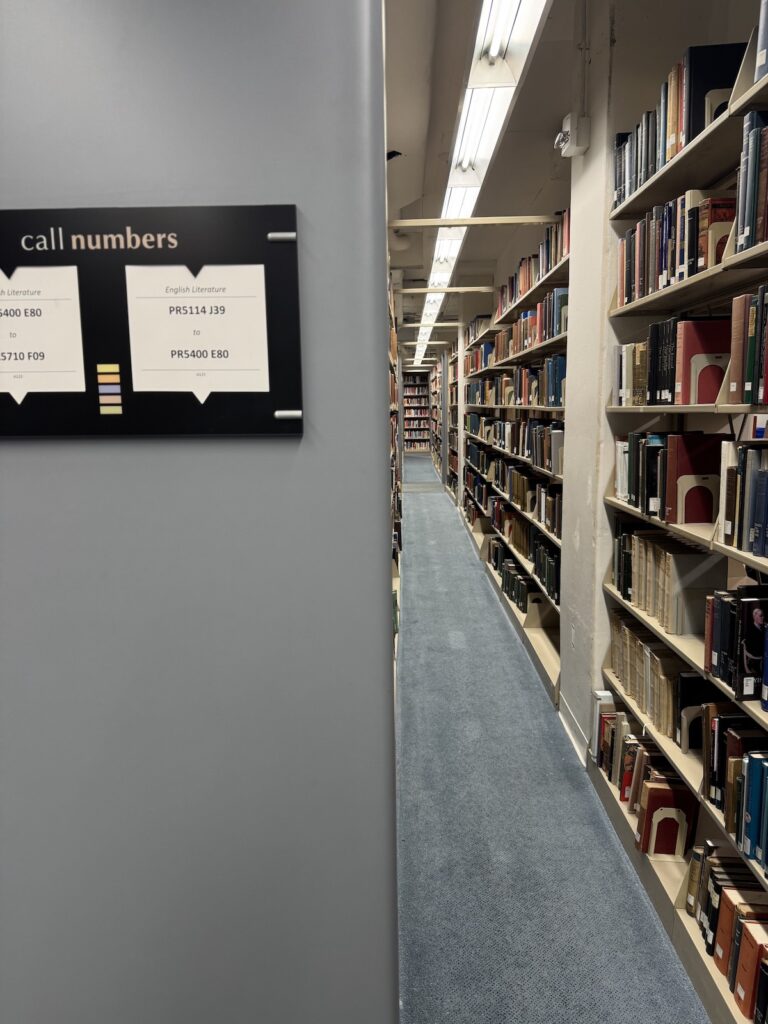
After locating the correct shelf, I’ll reference the four components of the call number of my book to pinpoint its position: the class letters (PR), the class number (5397), the cutter number (.F7), and the year of publication (2012). Note that the numbers will increase as you walk further from the front of the shelf and continue down the rows.
How to Navigate (Digital) Resources
“The research essay is an 8–10-page formal paper that engages with 5-6 secondary sources and contributes to a scholarly conversation in a meaningful way.”
I remember being hunched over at a small white booth in Olin, watching the sun set as I struggled to filter viable academic sources to use for my College Writing paper. Apparently, the Google search box was not the pinnacle of academic research.
As a student in the digital age, much of the material we are required to reference is online sources. This can be an equally or even more challenging task, given the sheer amount of information online and the process of filtering for scholarly sources.
Whether it be online journals, E-books, or conference papers, the Libraries allow students access to 772 scholarly databases. At first glance, the amount of digital information is overwhelming—almost too daunting to broach. How exactly would you find a particular source?
Access the organized collections of these databases—where the bulk of academic references are located—through the Libraries filter dropdown. As the sources are arranged by alphabetical order, narrow your search more selectively by title, subject, content, or vendor. If you’re still unsure of where to start, click into the Recommended Databases to access an organized list of six databases that have a broad range of sources.
Help is Available (and Accessible!)
Maybe you encounter trouble going through any of the steps above. Or maybe you don’t even know where or what to start searching for. When asked what the key takeaway was for first-year students navigating an academic environment where everything is new and unfamiliar, Chris Brady, Circulation Librarian, says: “Don’t be afraid to ask!” There are staff, services, and resources at every step to help guide you to the right direction, such as 24/7 chat (a live chat service available online to answer questions about library usage), circulation and borrowing services, and Interlibrary Loan (which helps students borrow materials outside the WashU Libraries).
WashU Libraries (Plural) not Library
Believe it or not, the John M. Olin Library is not the only library on campus! Although acting as a central hub, there are, in fact, other libraries on the Danforth Campus. In addition to Olin, there are six other libraries on Danforth: the Business Library, the Brown School Library, the East Asian Library, the Gaylord Music Library, the Kranzberg Art and Architecture Library, and the Law Library.
[Gaylord Music Library will close permanently in May 2026 to make way for a new residential hall on the Danforth Campus on the corner of Forsyth Boulevard and Wallace Drive. The Music Library’s collections will remain accessible and will be housed in Olin Library, West Campus, and Special Collections. Read more.]
Beyond location and name, each library has defining features that give it its own character. From noise level to architecture, but especially in the specialized resources and collections they house, the differences between each library are striking.
Beyond location and name, each library has defining features that give it its own character. From noise level to architecture, but especially in the specialized resources and collections they house, the differences between each library are striking.
Whenever Olin seems to be a little cramped, tear yourself away from the temptation of the fluffy pastries at Whisper’s Cafe to take the time to explore any one of the other libraries (pictured below).
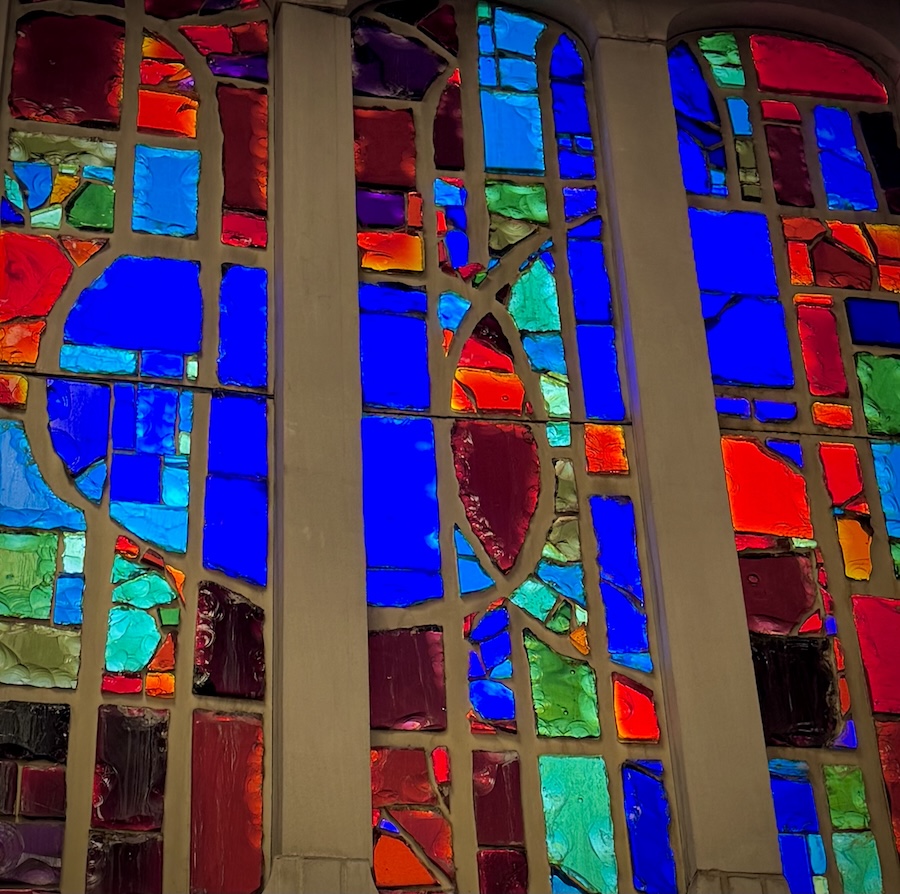
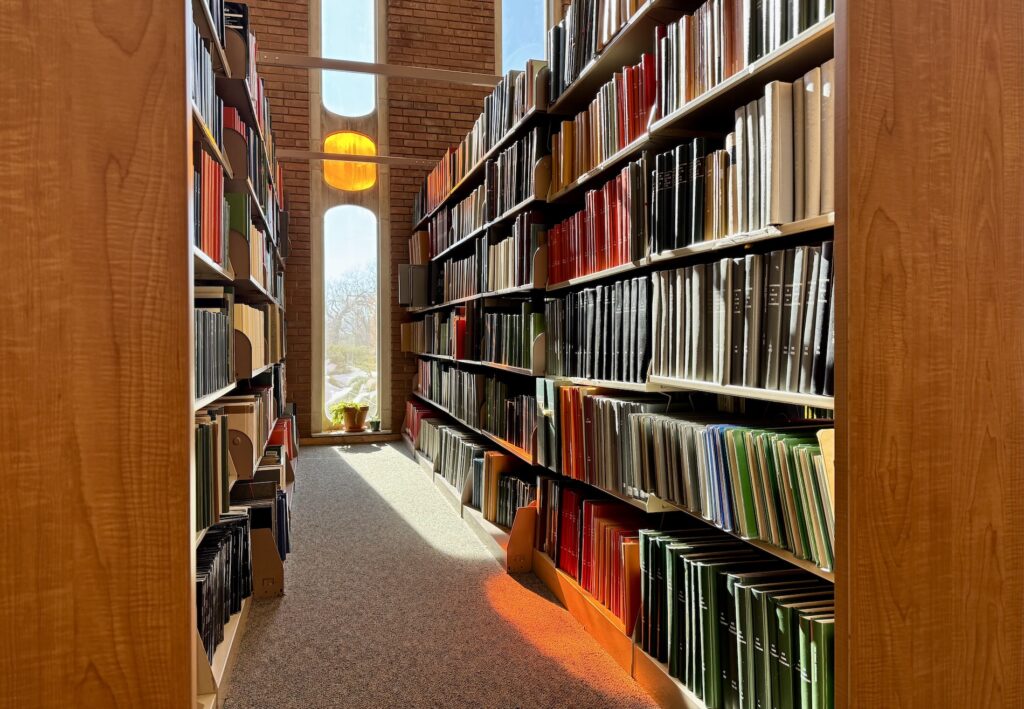
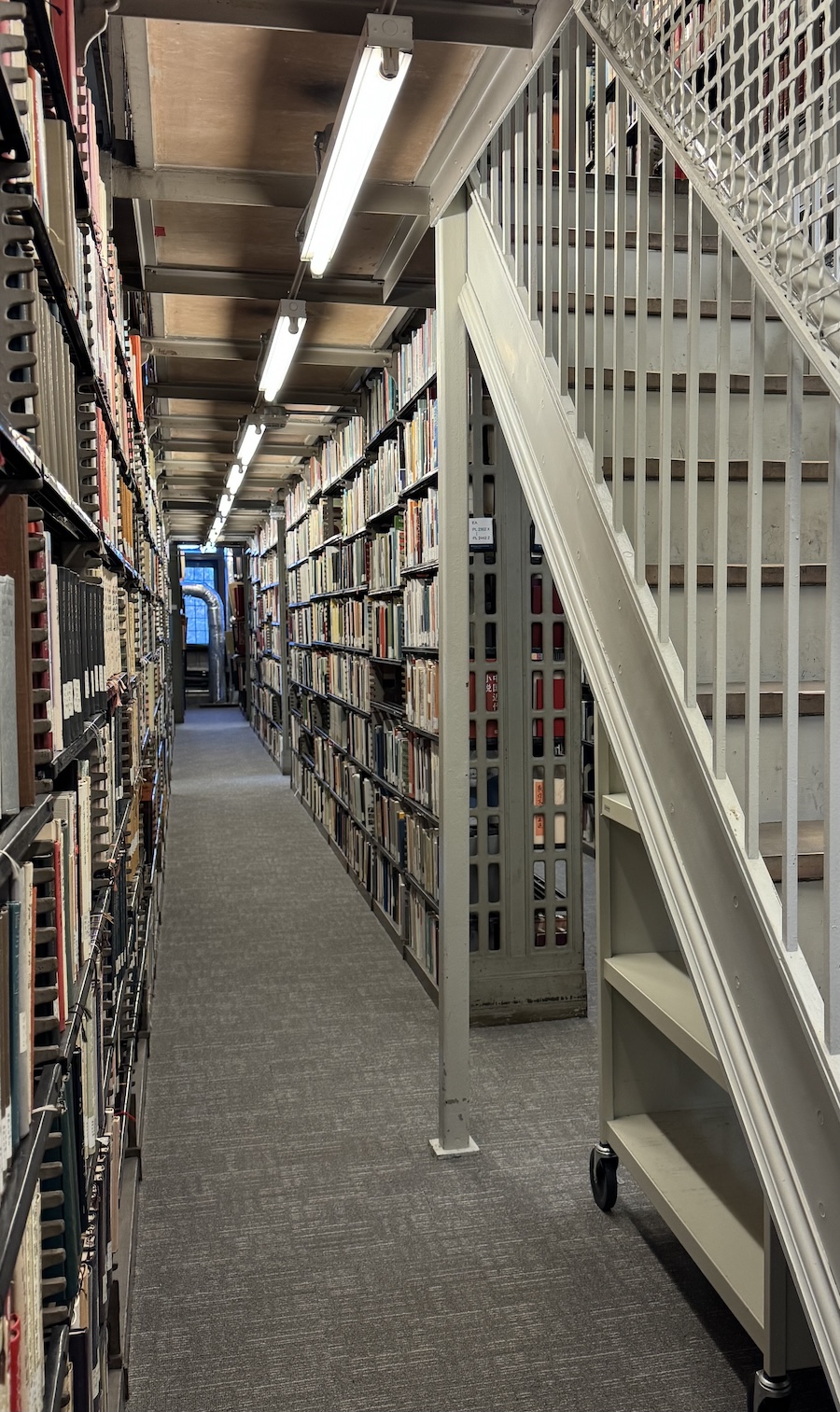
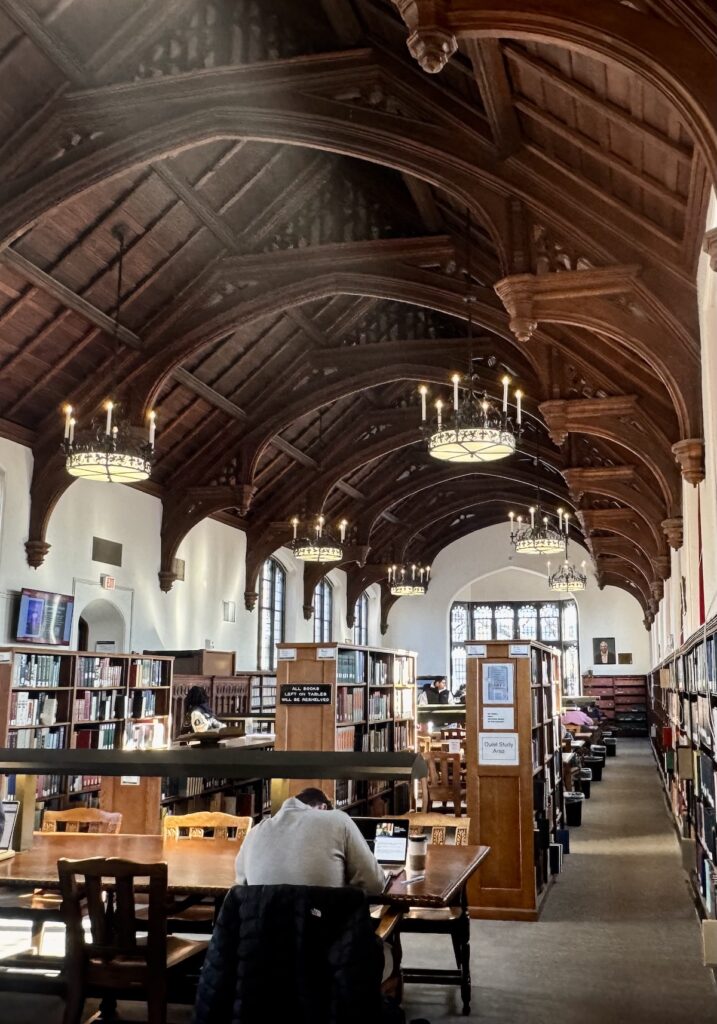
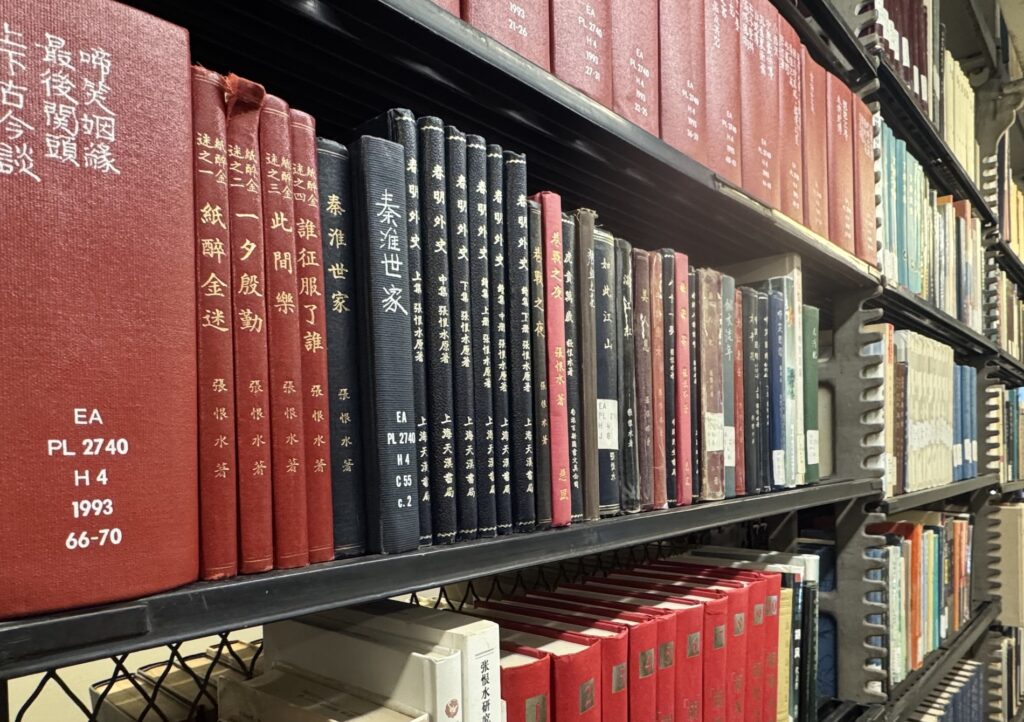
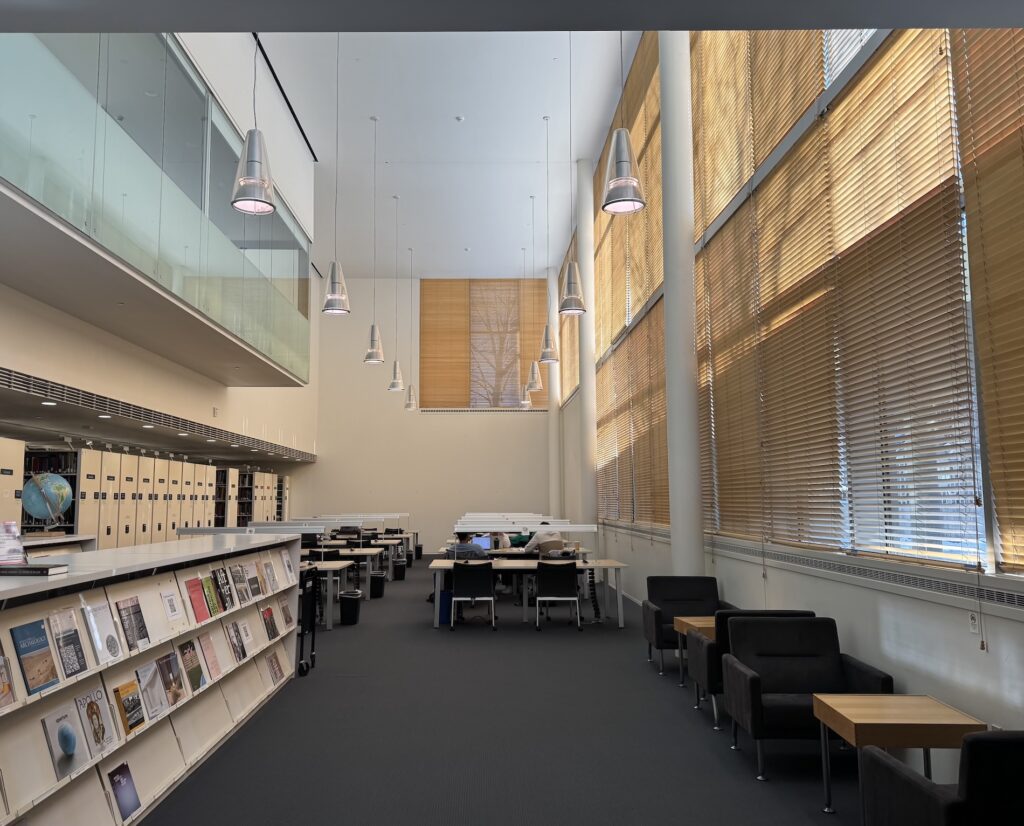
Libraries are an ecosystem of learning. There is nothing more academically engaging than immersing yourself in a collection of different worlds. Whether it’s the staff, facilities, or services they offer, the Libraries act as an excellent academic compass to guide your educational journey.
Maggie Kim, an architecture major, was an Undergraduate Access Intern in the Libraries in fall 2025.