
Darbazi Dwellings of the Republic of Georgia
In March 2025, I traveled to the city of Tbilisi and then to more distant areas (within 200km) in the Republic of Georgia. The aim of my travel was to study and photograph one of the foremost vernacular dwelling structures in the region—the darbazi—and to contribute to ongoing field study work being done by a group of architects, students, and teachers primarily from the Free University in Tbilisi, Georgia.
The Darbazi Dialogues is a multi-dimensional fieldwork project that incorporates multiple modes of engagement. Understanding the darbazi in the context of its long history, cultural contexts, archival materials, listening to local people share their lived experiences, and observing the contemporary landscape conditions are some of the components of the field school research.
My first few days in Tbilisi were spent wandering around the city, looking at the architecture, trying to orient myself around the narrow streets, and accustoming my ear to the language. The writing and language are challenging—sounds and symbols are very different from English. My senses were in fast gear, and I was trying to take in as much as possible. I was struck by the variety of balcony designs, the wooden ornamentation on the houses, balcony structures, window design, and the many courtyards, which were used for all kinds of social and practical domestic use. There was a constant choreography of clothes washing and drying in the courtyard of my Airbnb.
I was able to visit the Free University in Tbilisi, where my collaborator, friend, and former colleague Jesse Vogler built and teaches within the architecture department at the university. Classes were not in session during the time I was there. The semester schedules do not align with WashU’s scheduling. I was, however, able to see the studios and gallery spaces and was also able to see some student work in the classrooms.
My first excursion was to the Tbilisi Open Air Museum of Ethnography. This is a carefully selected and preserved array of darbazi dwelling types, preserved and presented for public study and educational purposes. This outdoor museum is located just outside of Tbilisi and displays a wide range of original structures, situated within the landscape to show the styles and variety of the dwelling type.
This visit was important for a couple of key reasons. Being able to see the variety of types and begin to learn some regional differences was very helpful as I oriented myself. I was also able to begin to understand the vast scope of time that the darbazi structures were built around. I was surprised to see some were built above ground, and some included front communal areas. My initial research anticipated that all darbazi were built underground, but the gathering places and sitting areas at the front of the darbazi looked similar to the front porch arrangement on some American houses.
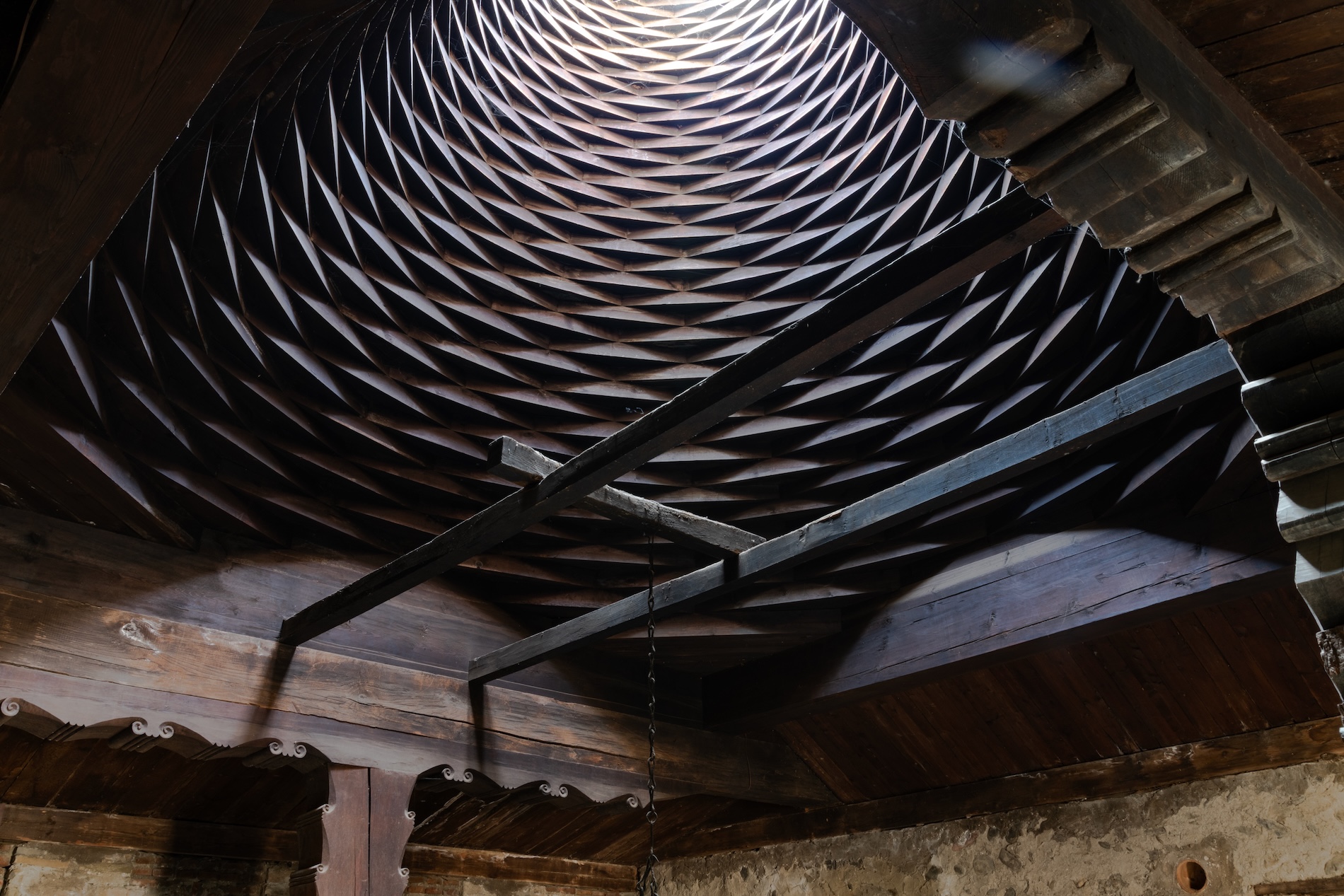
The second important outcome of visiting the Open-Air Museum was my ability to practice photographing inside the structure. I had already anticipated some of the challenges—extremely low light inside the dwellings, and very high contrast with the lighting, especially at the ceiling opening and any doorway openings. There was a further challenge—how to show the important relationship of the ceiling to the ground features. The ceiling is typically built with a corbeled or beehive-like shape. There is a single opening at the ceiling to let light inside and to allow smoke to escape. This opening also has a spiritual significance–allowing a connection with the spirit and celestial realm. Figuring out how to capture these architectural, material, and spiritual components was on my mind.
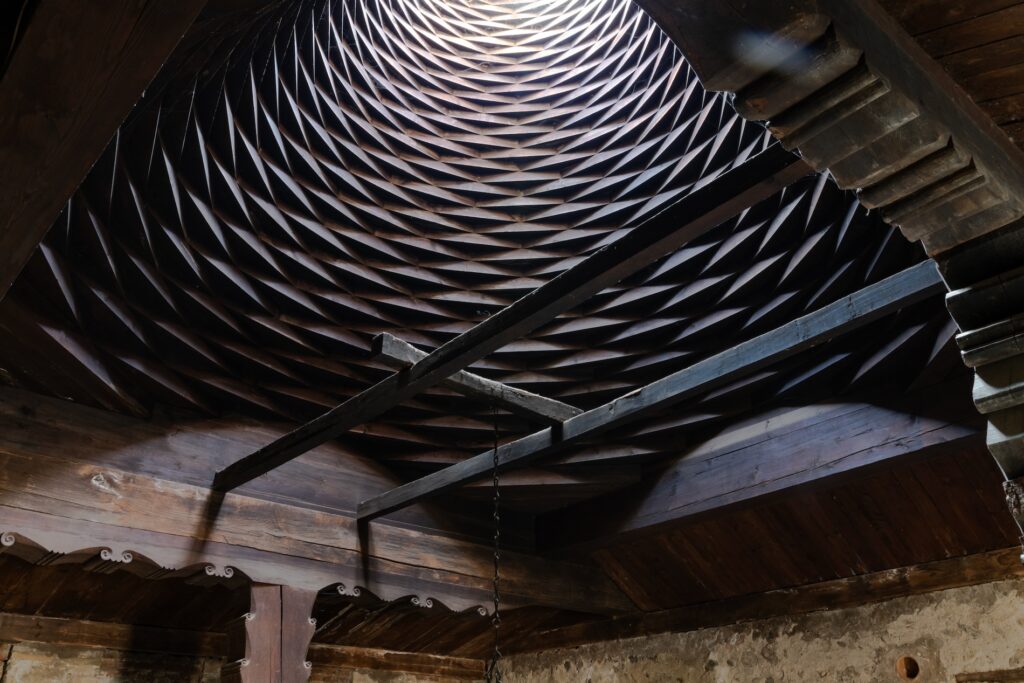
The darbazi structures are more diverse than I had originally understood. The architectural features, the local land characteristics, the age of the structures, and the contemporary usage/or lack of usage had significant impacts on what each dwelling looked like. These conditions also affected how much or whether we were able to enter the darbazi. What could be seen, and how much could be understood of the histories of the site, varied as well. I was able to photograph at each site we visited, observing and recording both details of ancient architectural features as well as some of the current-day conditions at the sites. The goal is that some of this documentation will support and contribute to the Darbazi Dialogue website and larger research goals.
In addition, the regional scope is more extensive than I previously knew. In early research, I believed that the dabazi vernacular dwelling structures were primarily confined to the eastern and southern portions of the Republic of Georgia. I learned that there are similar structures in neighboring countries throughout the Caucasus region–Turkey, Armenia, and Azerbaijan. We visited areas within the Georgian Kartli and Samtskhe-Javakheti regions.
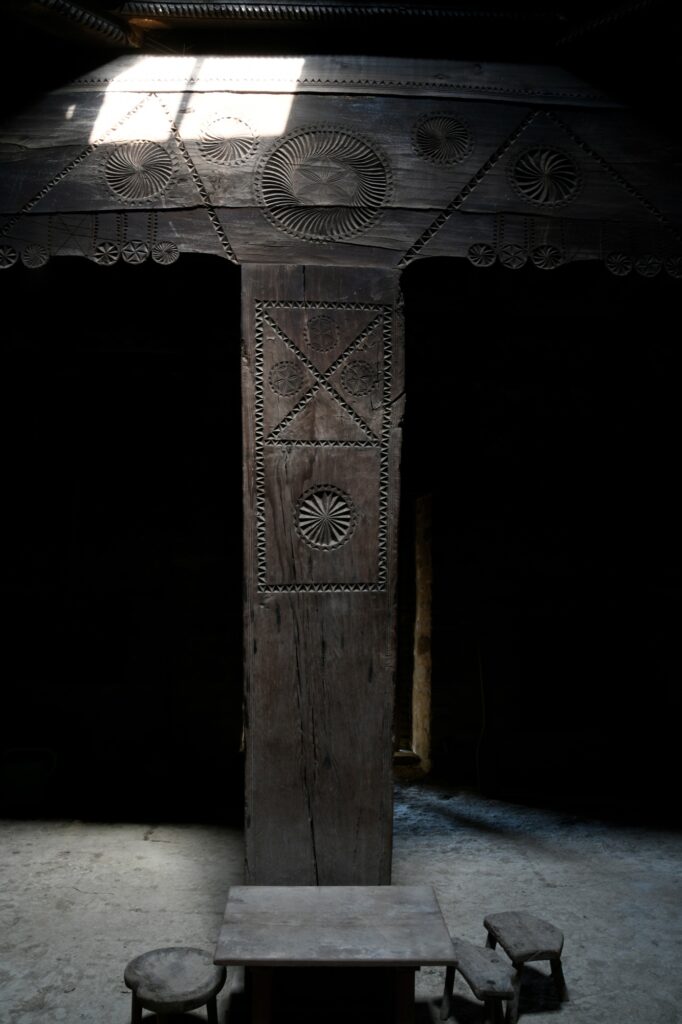
One of the things I anticipated and was very excited to be able to work with was the relationship of the darbazi to the surrounding landscape. Since most darbazi are underground, or at least have a significant portion under the ground, the challenge was to photograph these sites and show the above-ground and below-ground relationship. This “above and below” is an important architectural feature that tells about the necessities of creating safe and warm dwelling spaces, but additionally, showing the connection between the below-ground domestic life and the celestial and spiritual life is significant. Architectural detail of the dedabodzior, the “mother pole,” was present in some of the darbazi. The dedabodzi is often carved with celestial patterns as well as engraved with unique markings that represent the family’s history. These engravings are the interpretations of collective community, marks tracing celestial observations, and records of ongoing and practical everyday events. The significance of the dedabodzi to ancestral identity was so profound that often, if a family had to move, they would bring the inscribed pole with them.
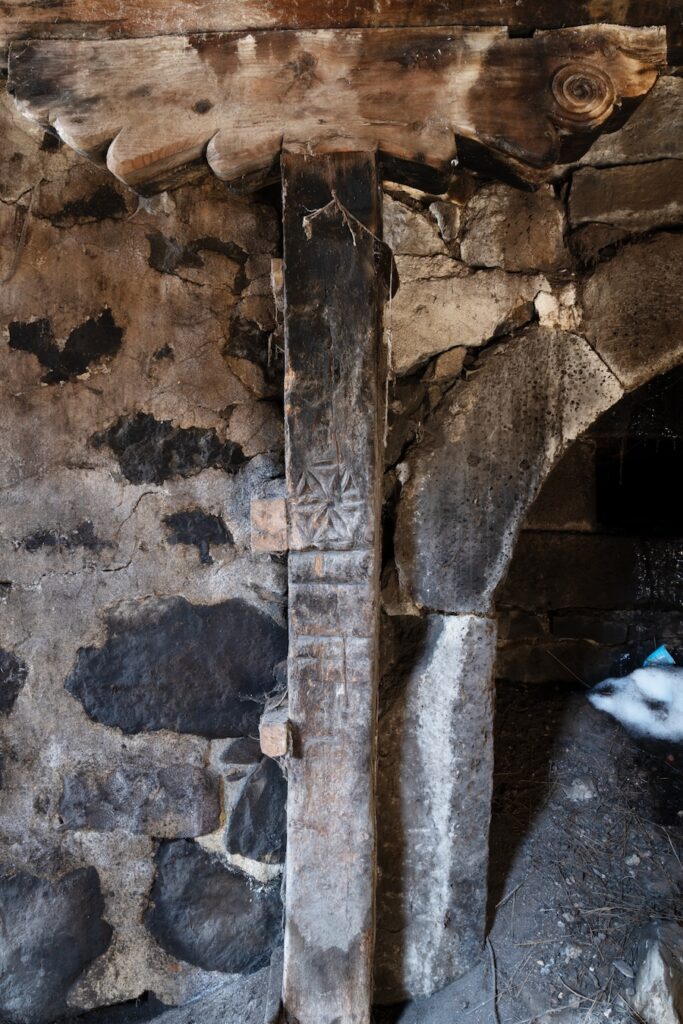
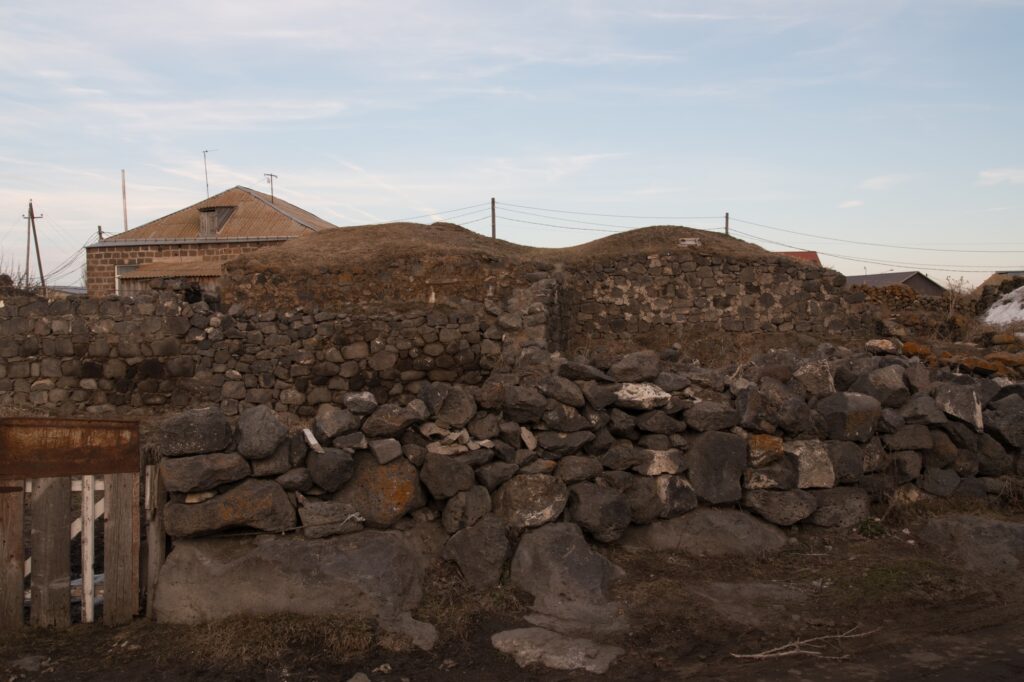
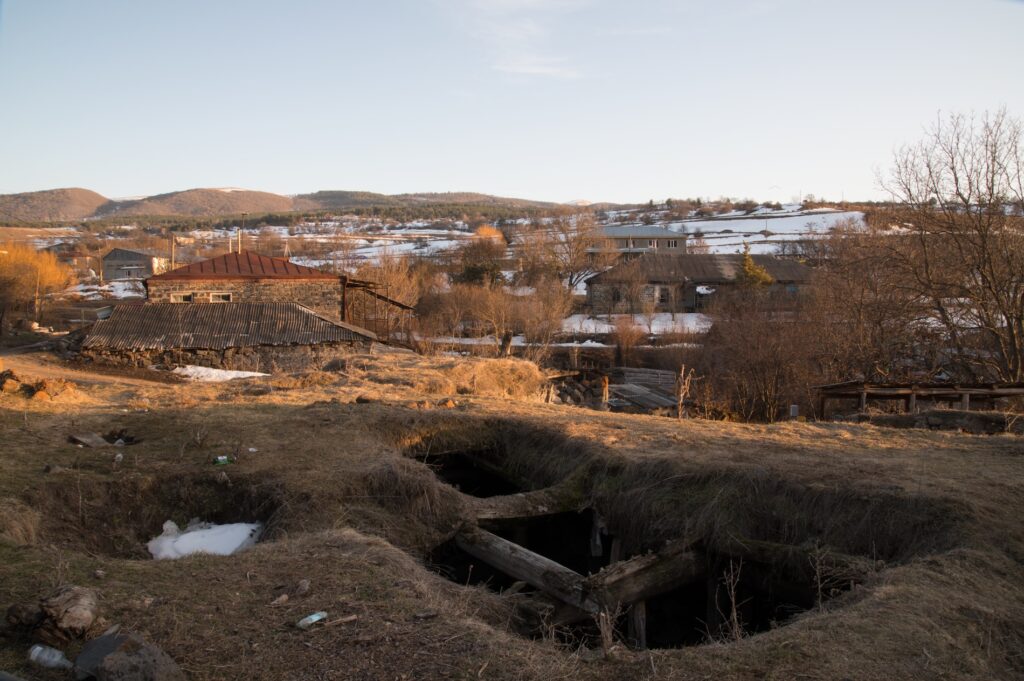
We spent four days of extensive travel, research, laser scanning, and photographing at seven different darbazi sites. Each place was uniquely different. Each presented its own set of challenges—access, lighting conditions, complete (my incomplete) understanding of the wider historical contexts, and in one case, an interaction with a local resident who misunderstood our intentions for the research. After about an hour and some tense exchange, he came to understand that the research was for preservation and educational purposes and not to “steal gold” from his underground property.
This lesson of access, of permissions, and of clear communication and clarity of research intention is one that I am conscious of in all my work. It is a lesson that translates across place and culture. In this case, we were fortunate to have patient individuals who stepped in to help the local person understand our intentions.
We visited a number of other sites–ancient churches, fortresses, villages, and rivers. There is so much to see. I feel I just barely scratched the itch to know more about the darbazi, the landscapes, and the deep histories of Georgia.
I also need to mention the incredible generosity, trust, and care I experienced from everyone. I was welcomed as a member of the Darbazi team, and I am grateful for all I have learned. Through shared meals, toasts of homemade Georgian wine, an impromptu and exceptional lunch made for us as we traveled through the region where Giorgi Maghradze’s relatives live, and many other sites and experiences, I feel I have made friends and hope to have contributed to the important Darbazi Dialogue work.
There is money still left to spend. We are talking about the next visit–likely in March of 2026 and will also be discussing how or if it is possible to produce a publication. If there are funds left, they will support a publication that reflects the research and this very important under-documented piece of Georgian architectural, cultural history.
Jennifer Colten’s research trip to Georgia was supported by the Newman Exploration Travel Fund.
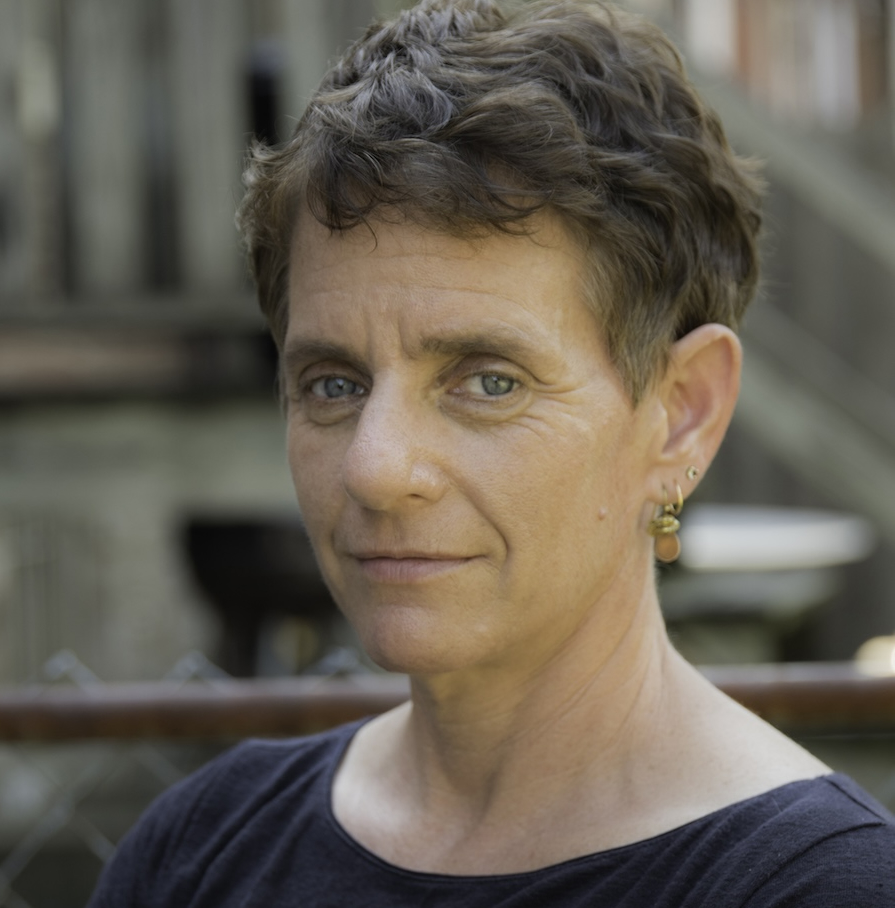
- Name
- Jennifer Colten
- Job Title
- Senior Lecturer, Sam Fox School of Design & Visual Arts