
Beyond Birder Basics: Citizen Science in National Parks & Banding
Everything about birds fascinates me. I’m not an ornithologist; in fact, I’m a data analyst with a PhD in psychology with no background in biology, ecology, or any fieldwork. Lucky for me, birds are everywhere and the Newman Exploration Travel (NEXT) Fund allowed me to find them in places that they may someday disappear from, understand efforts to educate and engage the public on birds, and learn valuable field skills that I plan to take into my continuing volunteer work to save the world—or, at least, save some birds and make some graphs.
National Parks & Birds
In 2025, public land agencies, including the National Park Service, faced budget cuts, park ranger and staff cuts, and rollbacks of protections inhibiting necessary conservation and restoration efforts. In 2024, I visited my first national park, Rocky Mountain National Park in Colorado, and unlocked a new main quest in life: visit all 63 national parks.
The federal changes to these lands that deserve to be public and protected inspired this trip. My goals were to (1) visit national parks and log birding data, (2) investigate national park visitor education efforts through interviewing rangers and exploring exhibits, and (3) complete a bird banding workshop to prepare myself for greater involvement in data collection.
For me, one of the many reasons to visit national parks is to see birds doing bird stuff. As a consequence of ecological changes and changes in temperature and rainfall, some species of birds may be forced to leave an area they historically populated and disappear from that area entirely, a process known as extirpation. On the other hand, species of birds may move into new areas where they can find food, safety, and mates, a process called colonization. Audubon researchers and conservationists actively track extirpation and colonization of the national parks, and they predict that, by 2050, roughly 25 percent of bird species found at any given national park will be different than today. This means that future generations may see completely different species than previous generations. My goal for my summer trip was to visit U.S. national parks and log the birds I see, contributing to tracking their stability, colonization, and extirpation. Logging this data is just one way that I can participate in citizen science, allowing researchers to use the data to track populations over time.
While visiting the national parks, I also wanted to find out what parks and rangers are doing to educate visitors on birds—as it turns out, a lot, with checklists, exhibits, and educational programming. At each park, I stopped visitors centers to get my passport stamps (of course!) and chat with rangers. Some rangers expressed gratefulness to be able to do what they do but concern over their job given the ongoing war against public lands. When I explained the purpose of my trip, rangers were quick to provide me with park-specific bird lists. Some parks, like Badlands, also have a birdwatching list for kids, which has photos to guide them in identifying species. Most parks have at least one exhibit about a native bird and some literature on birds available for purchase, ranging from field guides, big and small, memoirs, and non-fiction selections. I collected a number of books along the way, including Rare Bird: Pursuing the Mystery of the Marbled Murrelet by Maria Mudd Ruth, a handful of pocket guides for the region I was in, and Death in Yellowstone by Lee H. Whittlesey, which I promised I wouldn’t read until I was done solo travelling.
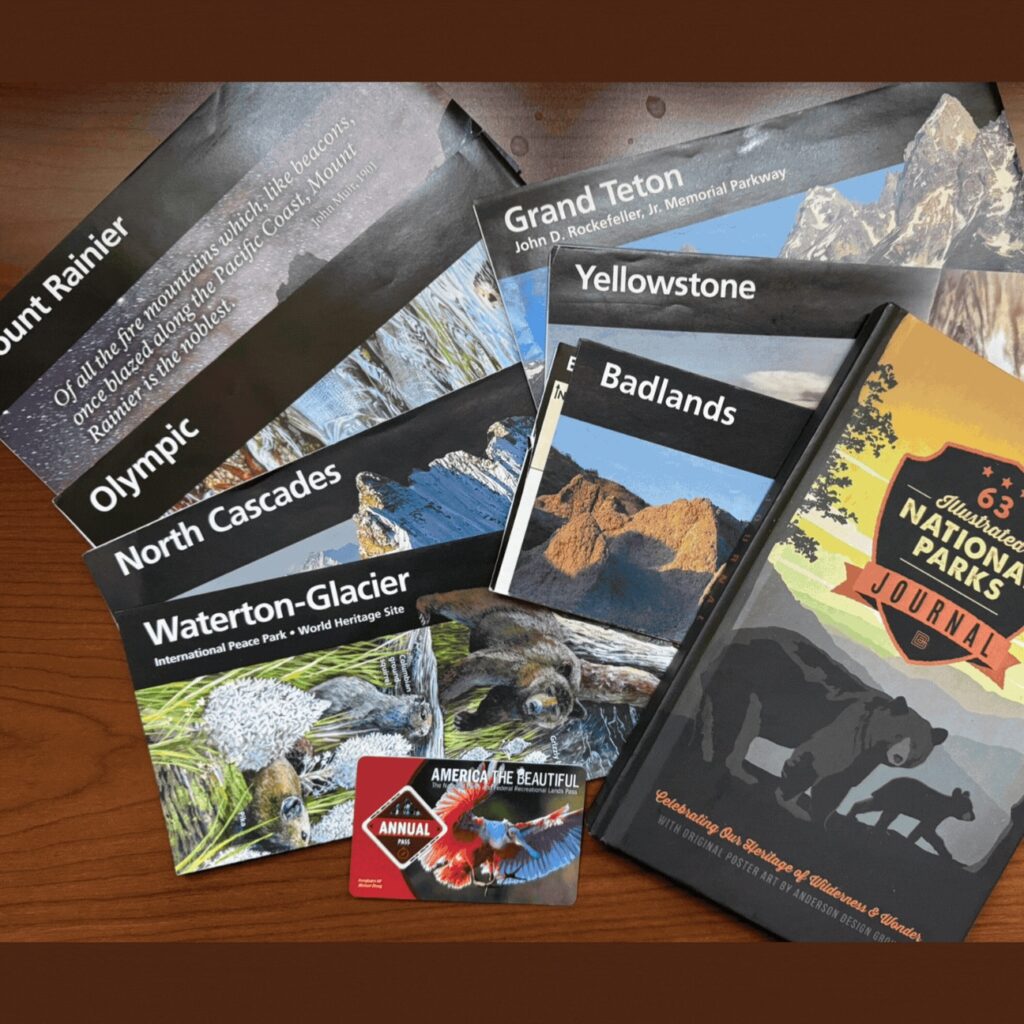
The best and most unexpected bird education I found was in Yellowstone’s Fishing Bridge Museum. From the outside, it’s an unassuming log and rock building with classic “parkitecture.” On the inside, it is a haven of bird specimens filled with wall-to-wall exhibits with information about the birds of Yellowstone. One ranger was the owl expert and suggested some places to look for Great Grays who like to hunt during the day from perches just a few feet off the ground. Another ranger pointed me to the best location to search for the Harlequin ducks I was on a mission to find.
Olympic National Park’s visitor center had a small mock log cabin exhibit specially for children to explore and interact with exhibits. In this area, there were a variety of activities, including some coloring sheets with a seek-and-find of the “elusive wildlife” specific to different habitats of the park: mountains, forest, and seashore. I was excited to see such clear examples of bird propaganda in a place where innocent young minds can be influenced into caring about their world.
In addition to checklists and exhibits, parks also offer daily educational programming. Unfortunately, my travels didn’t align with any of the programming, so I missed Yellowstone’s owl program and Grand Teton’s bird chat by Jenny Lake. Nevertheless, I was impressed by the variety and depth of information about birds available to park visitors.
National Parks Travel Journal
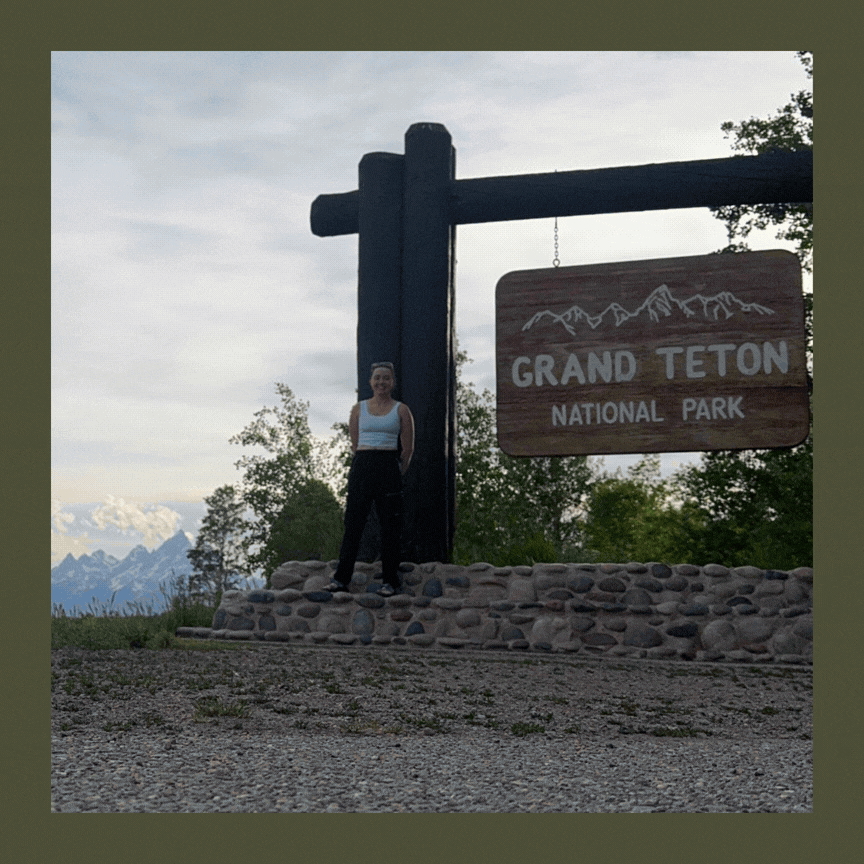
My journey began in the Pacific Northwest, in the Evergreen State—Washington. Approximately 29 percent of Washington consists of natural wilderness, or conservation land, managed by various agencies. Across the region, you will find the Mount Rainier, North Cascades, and Olympic National Parks, the snowcapped peaks of which are visible all throughout the state.
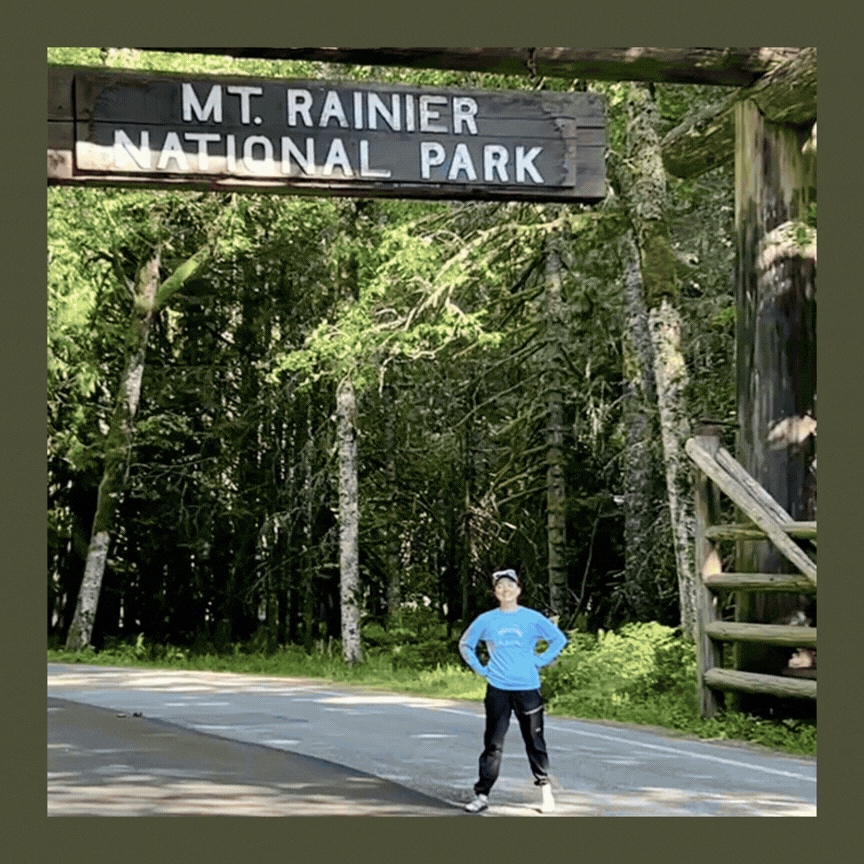
We begin at Mount Rainier, in a place aptly named Paradise. In early June, Paradise was surprisingly still in its winter-state, being grazed by black-tailed deer along the side of the winding road. Most of the hike was along a ridge, but it consisted of a few ups and some slushy, slidey downs. I had so much fun sliding down, despite snow getting in all sorts of places snow should not be. We saw hoary marmots, chipmunks, unexpected ladybugs and wolf spiders, and some goofy half-frozen frogs that emerged a bit early. I watched a White-tailed ptarmigan couple peck around and work on their ground nest in a patchy grassy area surrounded by snow. Towards the end of the hike, we heard a low noise that we instinctively thought was a bear and hustled out of that area. After sharing this with a ranger, we learned that we had actually likely come upon a Ruffed Grouse.
In between park visits in Washington, I took a day “off” the trip to run my first marathon, just a quick 26.2 miles and a lot of elevation change. It wasn’t fast, but it was hilly, beautiful, and done! My visits to Olympic National Park and the North Cascades were briefer, with a lot of time spent in the car.
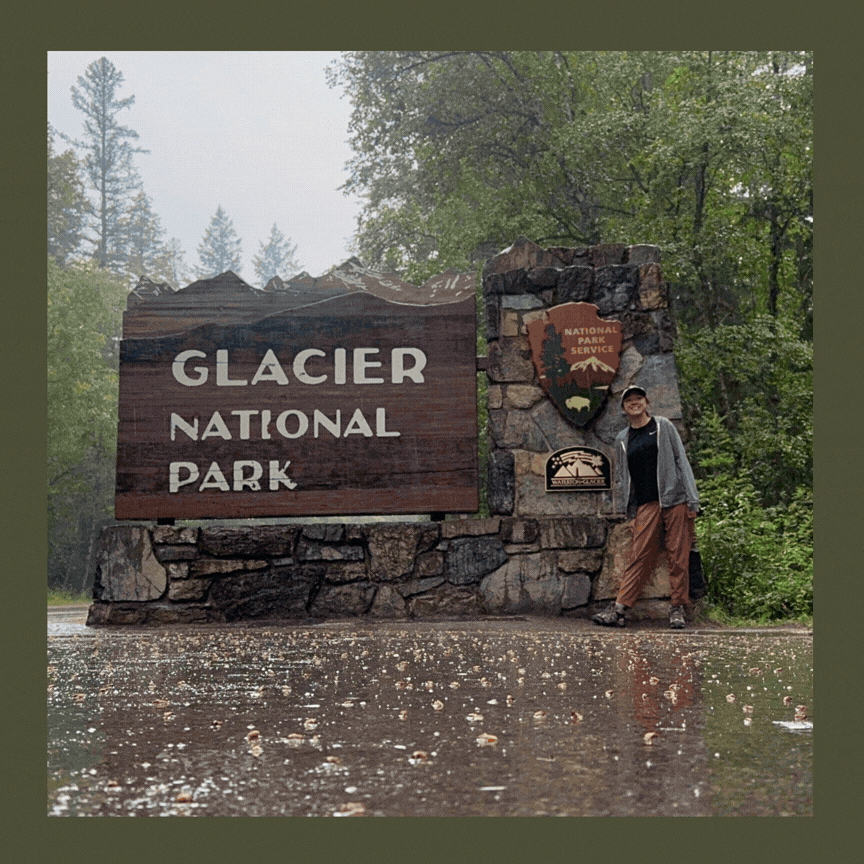
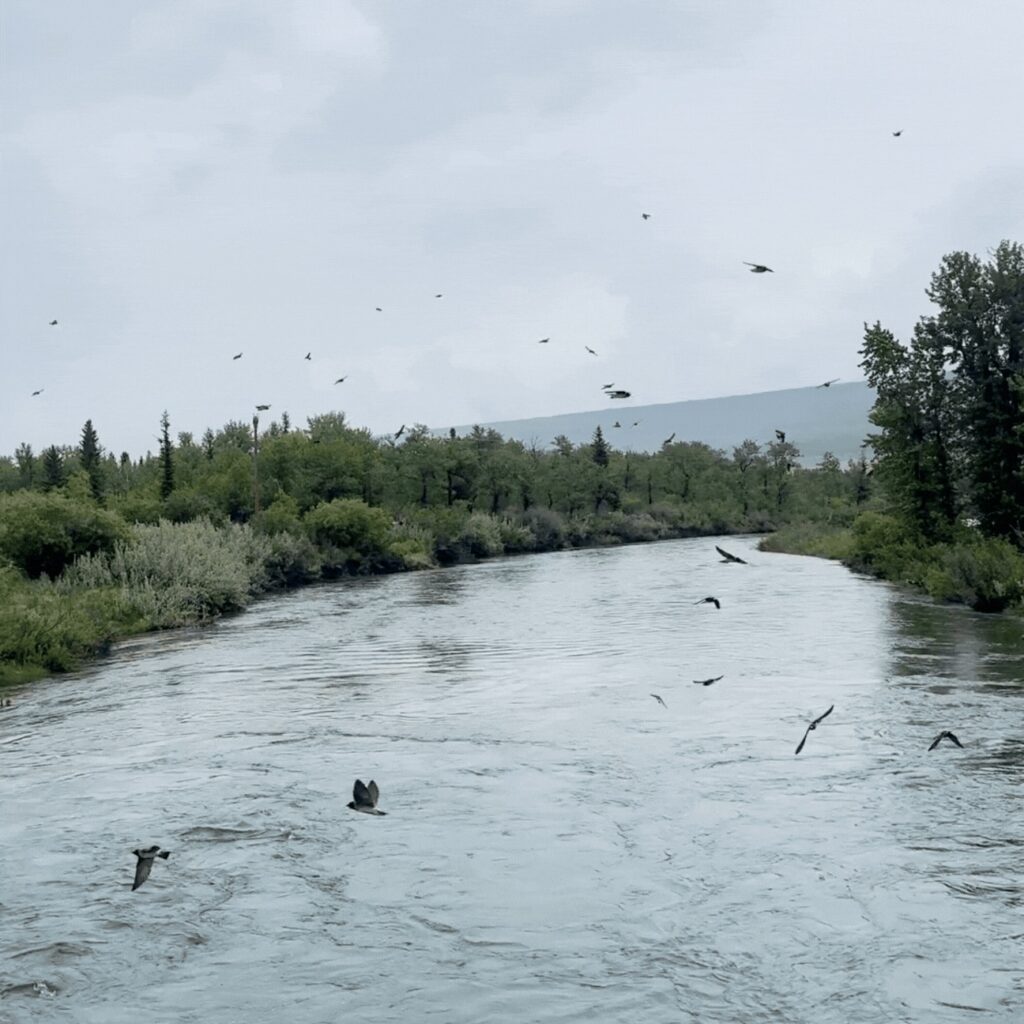
After Washington, I flew to Montana, where I visited Glacier National Park. In a nice coincidence, my visit was the day before the Road to the Sun opened to reservations only. Unfortunately, that meant that the only road through the park was still covered in impassable snow midway through. As soon as I left the visitors center, I drove over a rocky bridge and saw hundreds of birds flittering above the river. I pulled over and hopped out to observe. According to the timestamps on all the videos I recorded (which do no justice), I spent nearly an hour watching Cliff Swallows swoop around for bugs and feed their babies while hovering near their mud-pellet nests magically attached under the bridge. After watching the feeding, I went on top of the bridge and sat on the edge, where I was in the middle of the swarming and swooping.
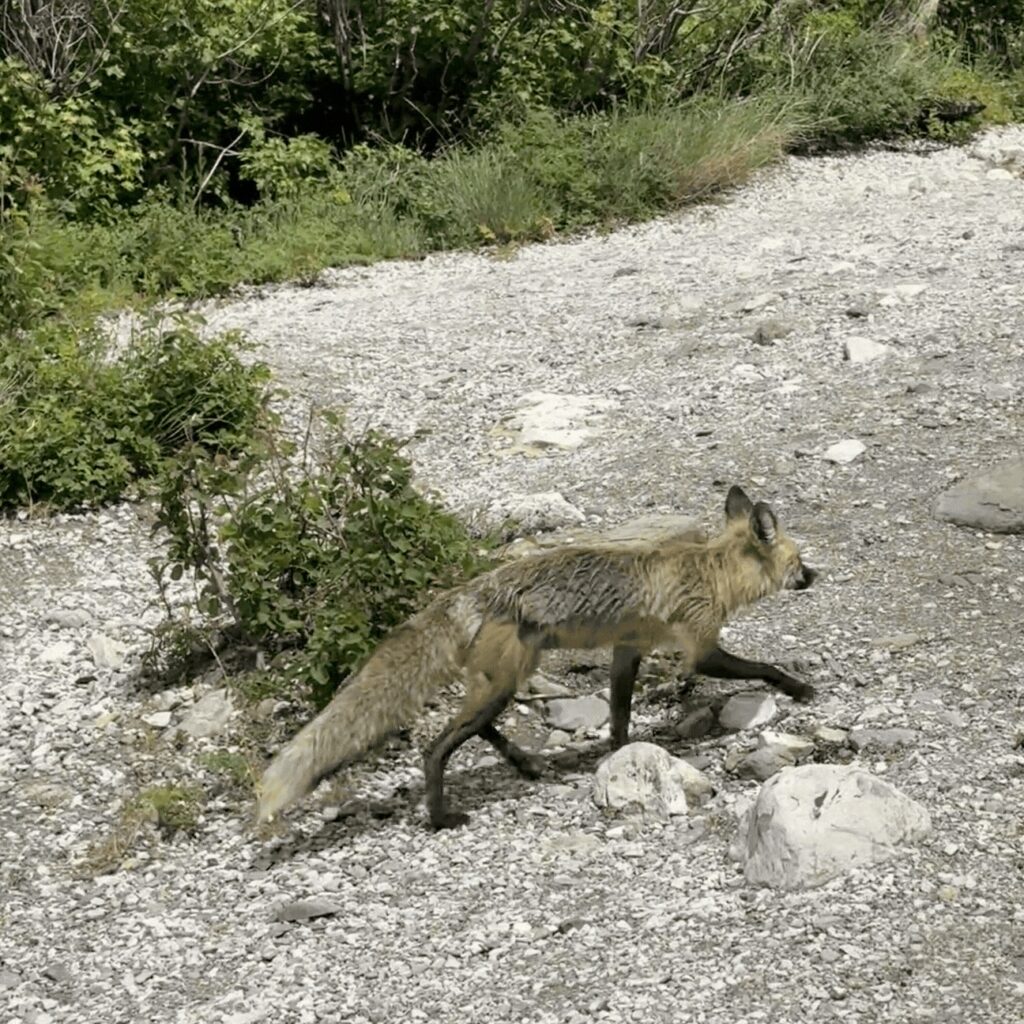
While taking in the view and listening to warblers, I noticed some rustling in the grasses and immediately grabbed for my bear spray. However, it was just a scruffy red fox doing fox stuff. I’ll always remember how equally scared and special I felt to get to see her in the wild.
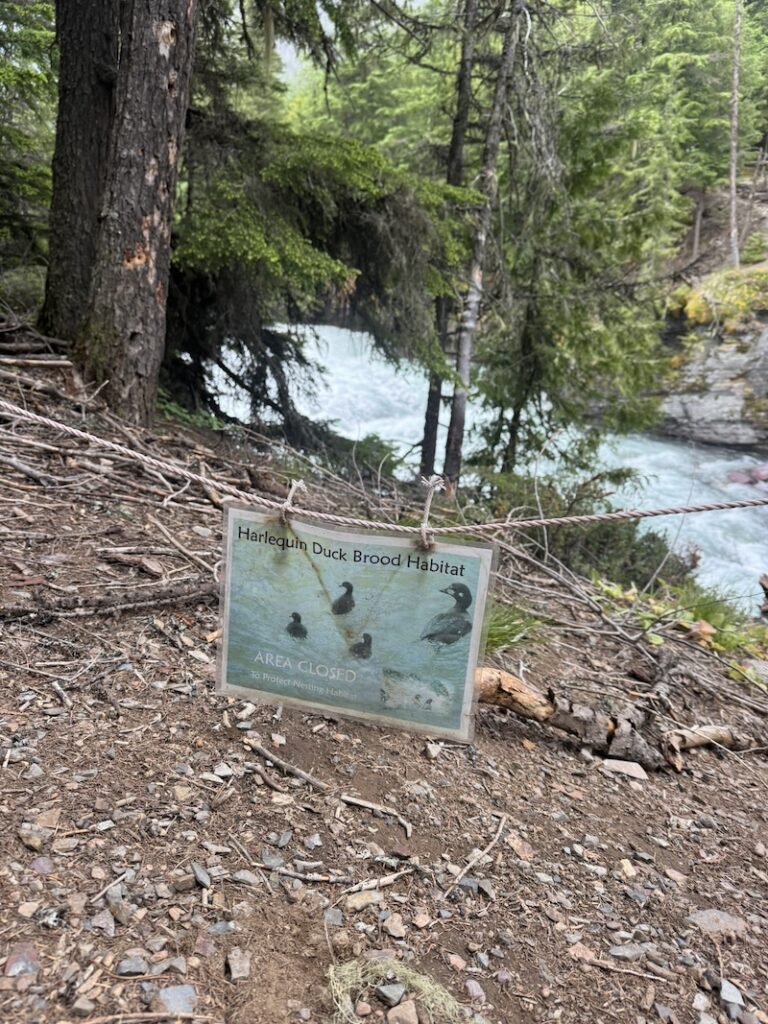
In Glacier, I also began my search for the Harlequin Ducks as they are extremely limited in range and found only in a few isolated places in the northwest US. Towards the end of the day, I finally made it to the area where a ranger said they were last spotted, but it was roped off to protect the nesting grounds. While I was disappointed, I couldn’t be mad that they are being protected and given a place to safely raise the next generation of goofy waterbirds.
Next, I visited Yellowstone National Park and left with many new lifers. Upon entering at dawn, I was greeted by a scene my iPhone could hardly capture the full beauty of: grazing bison on rolling green covered in morning dew and fog. I was in awe. The awe faded as I took in the rank smells and large tourist crowds. I explored the geyser basin areas, though there weren’t too many birds thanks to the thermals, lack of food, and dead trees. Only the Killdeer, who seemed to be in a territory battle with the Dark-eyed Juncos, occupied the space.
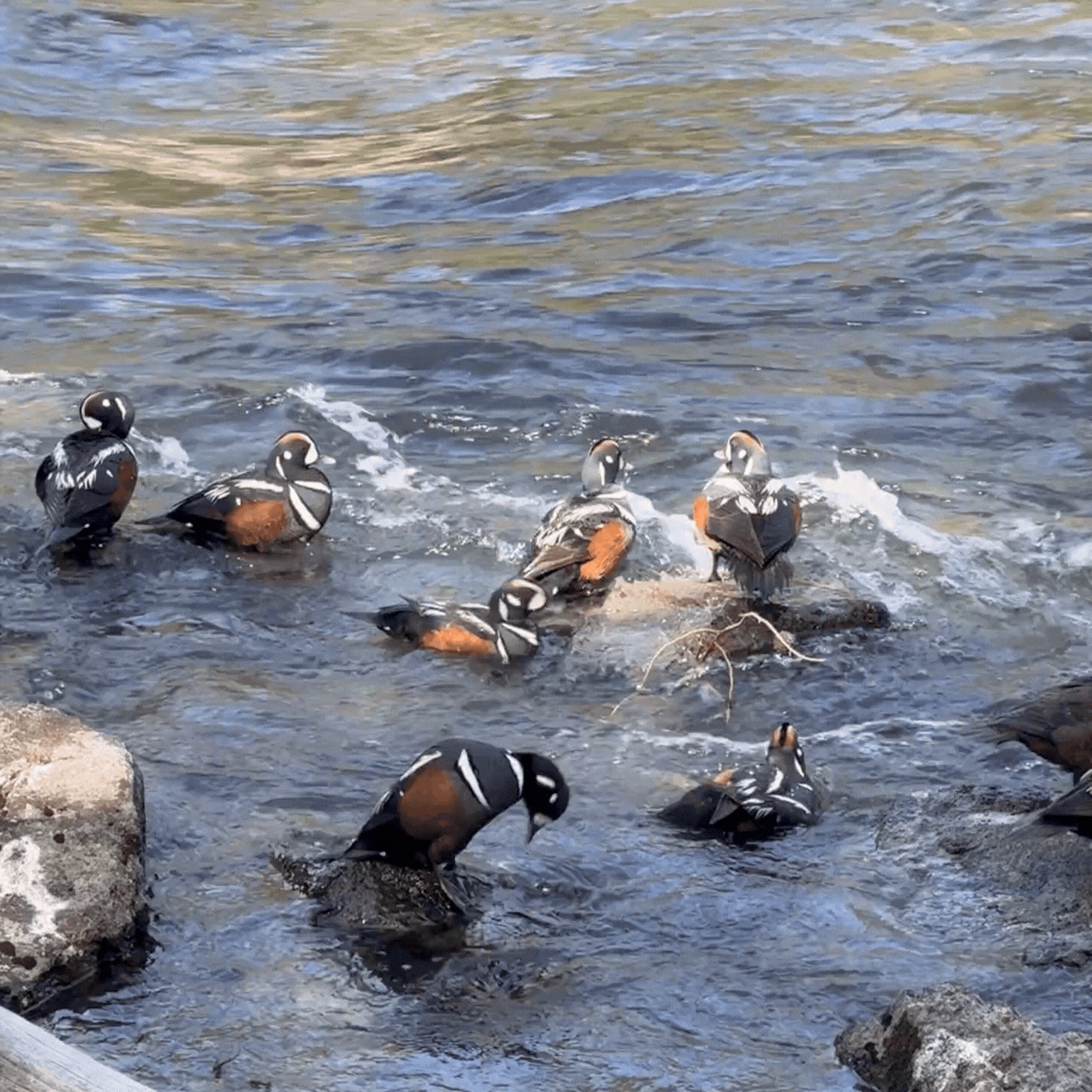
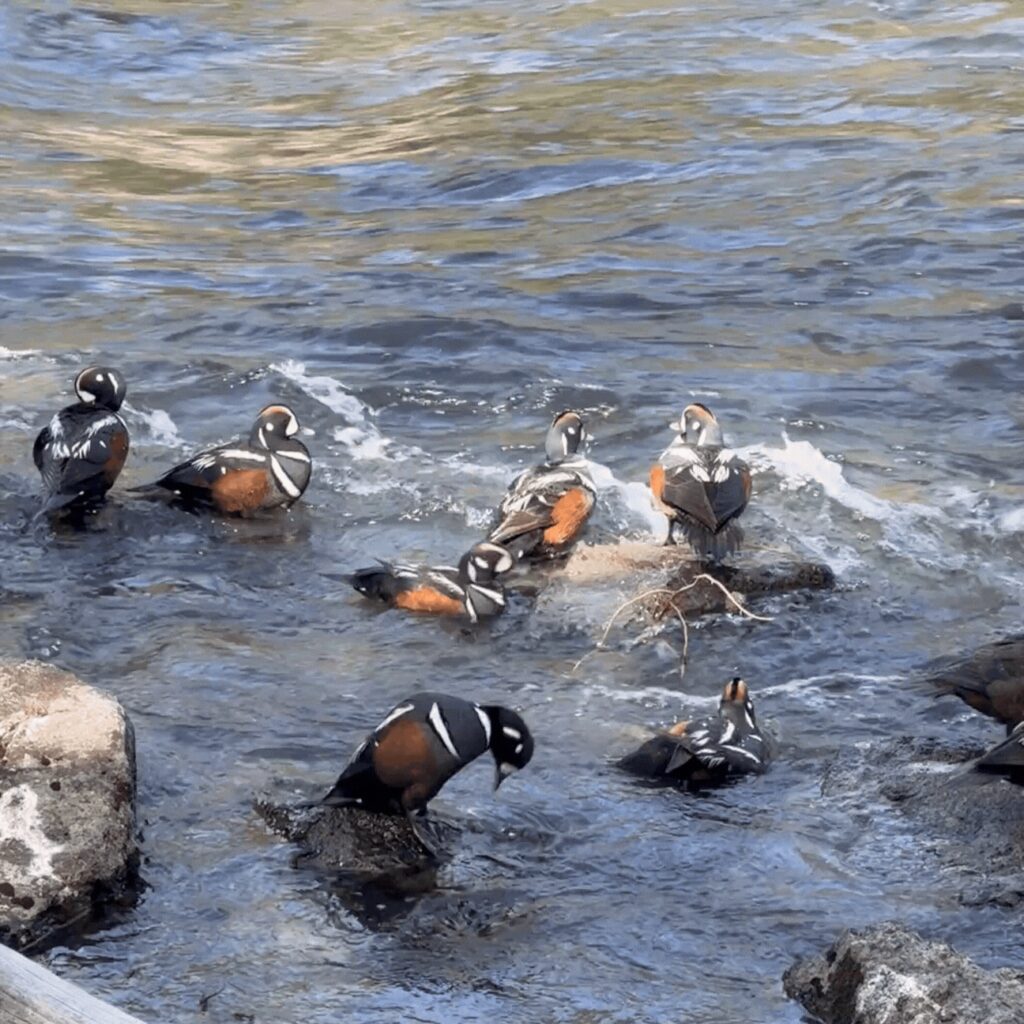
Done with geology, I headed to LeHardy Rapids, where I finally found the Harlequin Ducks! I observed them for nearly an hour as they would fly upstream, ride the rapids down, rest and preen on some rocks, then repeat the cycle. I enthusiastically and unsolicitedly told all the other visitors about the rarity of their appearance and chatted with a wildlife photographer for a while about his experiences. Near Fishing Bridge (where fishing is not allowed), I hiked for a bit and observed a huge group of goldeneyes until a hunting Bald Eagle soared over the lake, sending the ducks scattering into the water to avoid being dinner. On my way out of the park, I couldn’t help but stop by this picturesque pond where some teals, mallards, and Canadian Geese were all moseying about in harmony. In the field behind the pond, I watched two adult Sandhill Cranes wander, and a baby fight the tall grasses to keep up with them.
To finish up Wyoming, I spent a few hours driving to Grand Teton, where I saw tons of songbirds. The real highlight of Grand Teton was watching a moose swim across Jenny Lake. Grand Teton is the park I am most eager to return to, so I can spend more than just a day taking it all in. I then drove to Lander, Wyoming, where I would stay in a yurt on a working ranch. I arrived later than expected (after dark) and felt so bad because, as I drove onto the property and parked facing a field housing my yurt, a few pairs of eyes reflected my headlights. I was greeted by the very hospitable property managers: two sheep and an alpaca. In the morning, I enjoyed my coffee with visits from the rooster and his girlfriends looking to share my bagel. While I would have liked to spend a whole week on this ranch, I packed up and continued east to South Dakota.
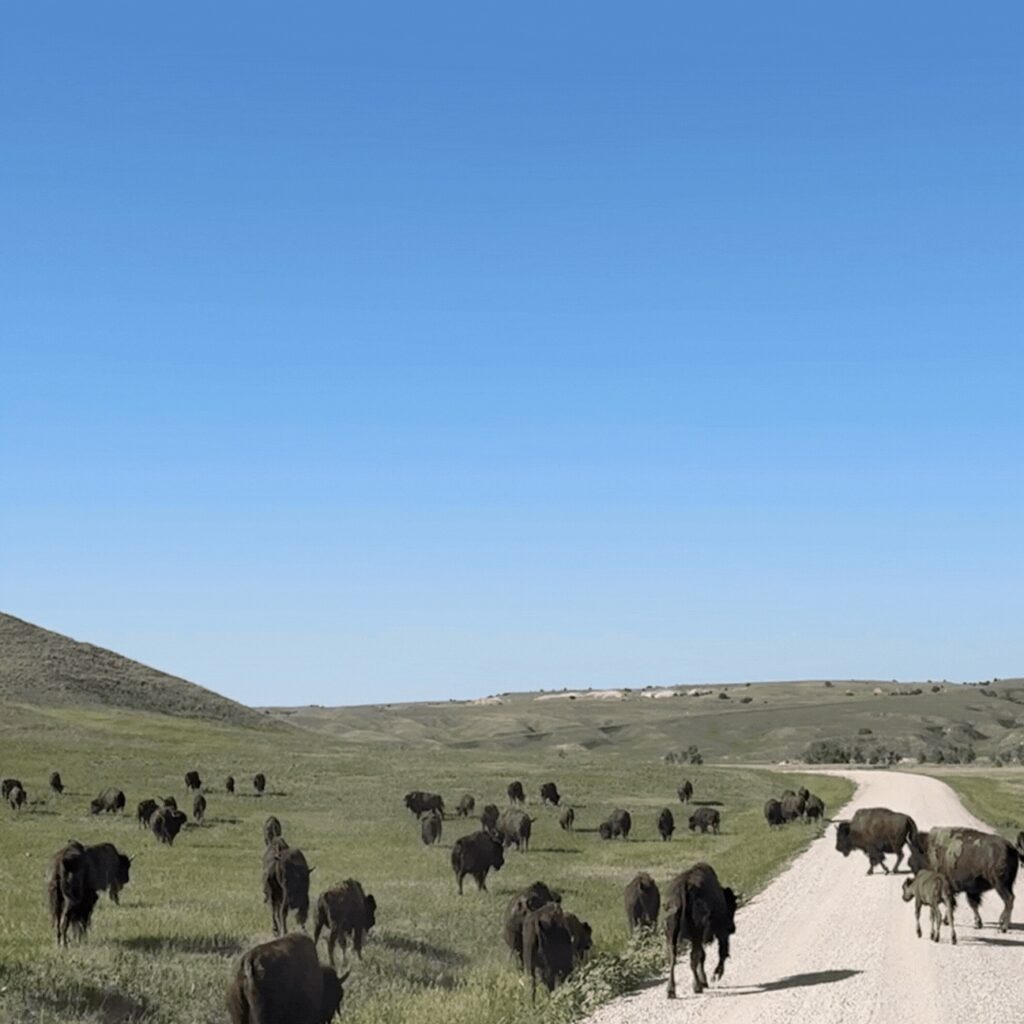
Badlands is the unexpected runner-up for my favorite park of the trip. While the geology of Yellowstone didn’t do it for me, the rocks of Badlands are the “chef’s kiss.” I explored Badlands with drives to various short excursions after discussing some good spots with the ranger at the visitor center. I drove with (through? alongside?) a herd of hundreds of bison. Maybe they thought I was one of them in my dusty brown rental SUV, or maybe they just don’t care what tourists are doing. This was magical.
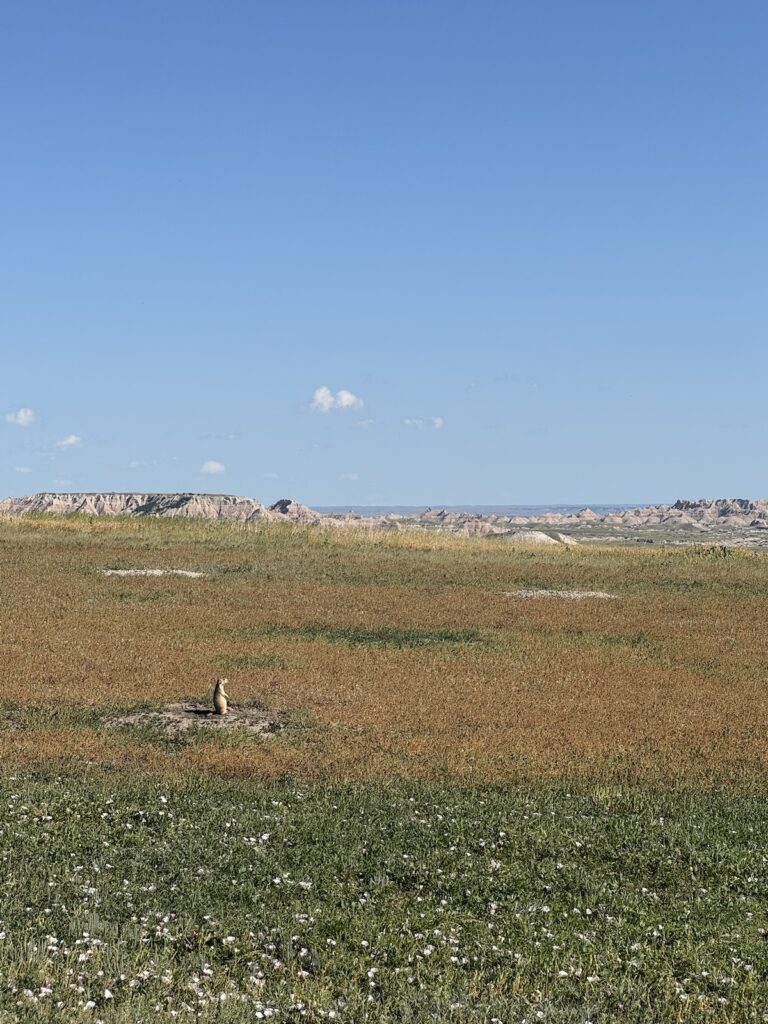
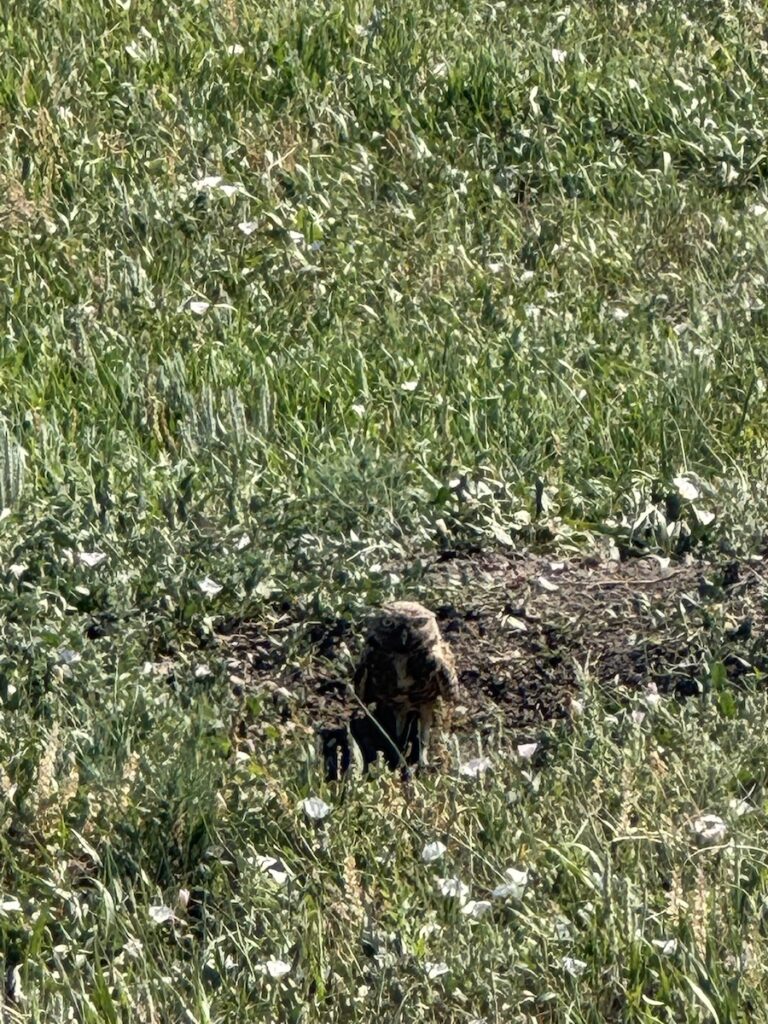
What I really hoped to find at Badlands were some Burrowing Owls. Burrowing Owls have developed a surprising sort of symbiotic relationship with prairie dogs. Prairie dogs provide dwellings, and an alarm system for the owls, and the owls provide pest-control and predator deterrence for the dogs. I love observing prairie dogs in their little towns; they have such serious, yet chaotic personalities. I did eventually see one burrowing owl perched right outside of a burrow. Badlands was also filled with the spaceship-like songs and calls of Western Meadowlarks, which I saw on fence posts, in trees, and hopping along the rocky ground. Leaving Badlands was bittersweet. I was sad to close the chapter on exploring the beauty of the parks, yet full of anticipation to start the bird banding workshop.
On the way from Badlands to my airport hotel, I kept seeing giant ridiculous sign after giant ridiculous sign for WALL DRUG. I decided to stop and … wow, what a cherry on top of my road tripping experience. Wall Drug is one of the most famous traveling stops in the West, likely due to its proximity to Mouth Rushmore and the Badlands. Inside the sprawling complex, there were connected stores, almost like a mall of ye olden days, but resembling a stereotypical Western town. It’s hard to describe and certainly one of the most unexpected things I found on the trip. It was full of kitschy trinkets, artwork, historical displays, and things to do while stretching road-weary legs. Not much bird stuff. I snagged a donut for the next morning, a 5-cent coffee, and got back on the road.
Preparing to leave South Dakota and head to Minnesota for the final part of my journey was bittersweet. I reflected on the adventures of the past week, some of which I’ve shared here, and prepared for time with new people and learning new skills. I boarded a pre-sunrise flight to Duluth, Minnesota.
Bird Banding 101
Day one of the bird banding workshop was mostly full of travel—two hours from Duluth to Finland, where Wolf Ridge Environmental Learning Center can be found—and introductions. We all chatted shyly over our first dining hall dinner. My fellow student banders were Ryan, Caroline, Devin, Brooke, Cindy, and Tim, and the incredible staff that supported us were Danielle, Courtney, Kayla, Lori, and a handful of Joes. Let me walk you through a typical day of the workshop week, which turned out to be summer camp for a bunch of grown-up bird nerds.
First, we’d load on the bus and make sure the gang was all there at 5 am. I am not a morning person, but the threat of being left behind and not getting to see the birds was more than enough to ensure I rolled out of bed by 4:45 am. By the end of the week, I was looking forward to seeing the sunrise over the fog-covered swamp.
Kayla drove us to the Forest Ecology Building, where Joe had the coffee hot and ready. We grabbed a cup, bundled up, and headed out with the gear to open the nets. Opening the nets meant carefully placing the nets in their designated spots along the routes, ensuring they were the right height and resistance, not snagging, and not doing a bunch of other things that I learned weren’t okay. After the nets were open, we had a few minutes to eat our camp cafeteria breakfast.
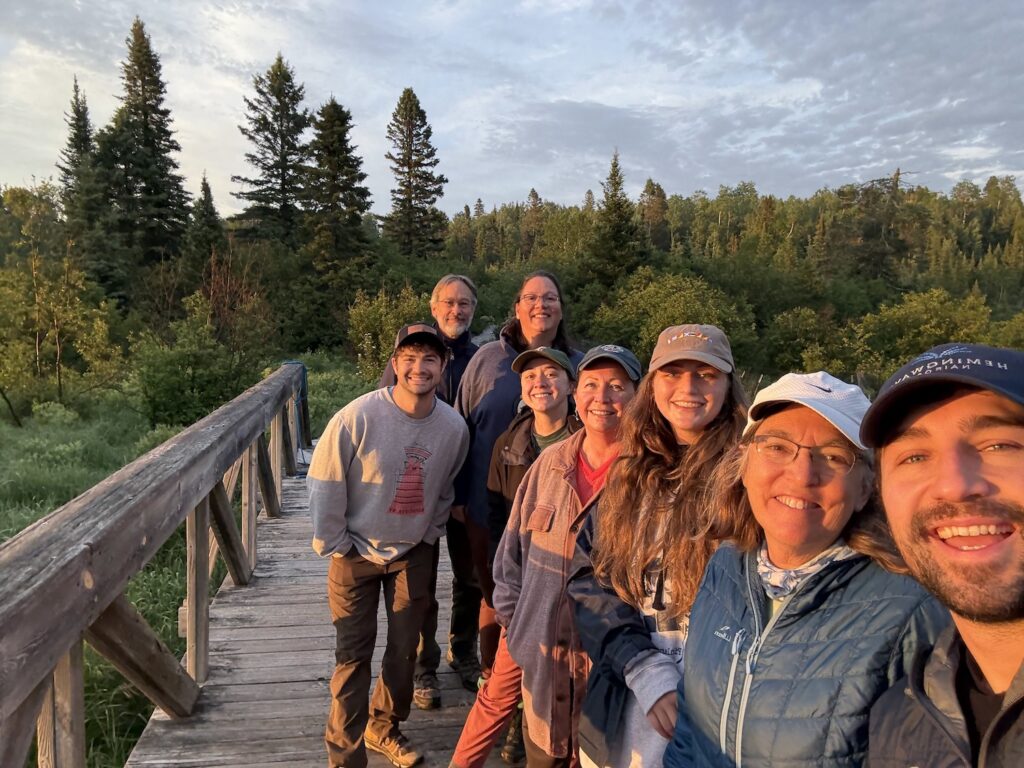
With happy bellies, we trudged through the trails to check each of the 10 nets for birds. Extraction is a life-or-death scenario for every bird requiring immediate triage: what direction did they come from, is their neck/beak caught or wrapped, did they flip, are they wet from dew/rain, did a deer nibble at them? All the fine details of the situation, combined with the fine details of the lines intertwined in feathers and feet, require fast acting. Once extracted, a bird is gently placed in a cloth bag and brought to the station, where it is added in extraction-order to a lineup. Minimizing stress and getting a bird released quickly are the main priorities; collecting any data from them is a privilege.
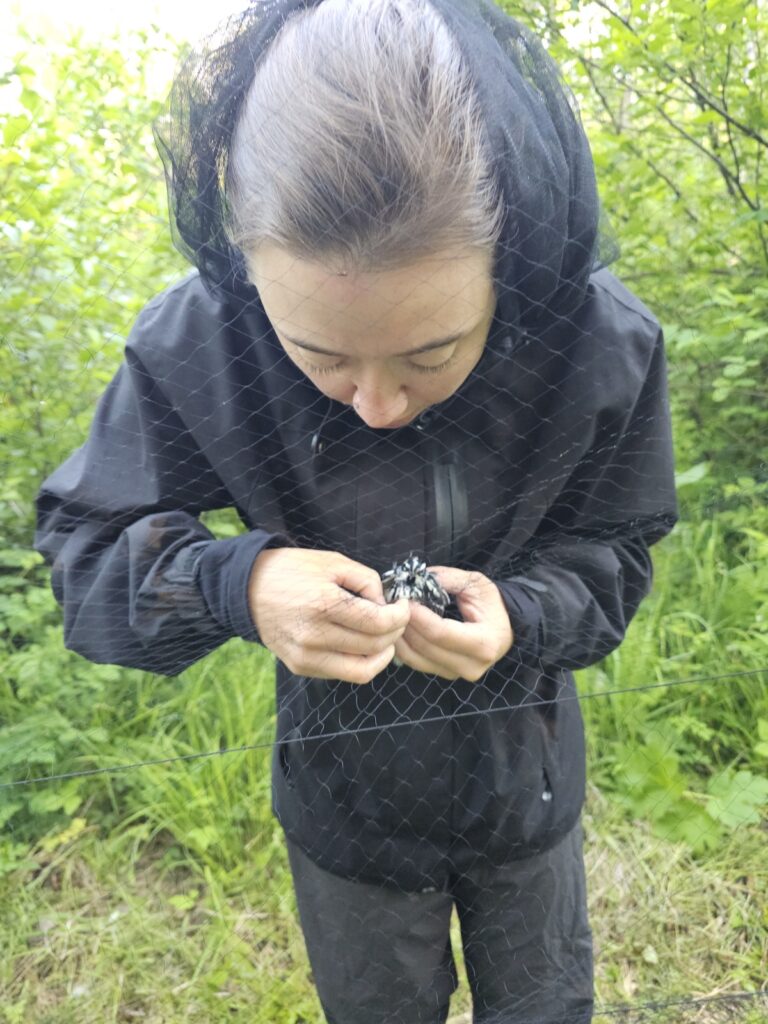
Data collection required three roles: the handler, the recorder, and Danielle. Seriously, though, we could not have done it without Danielle. Danielle is the MAPS Coordinator for IBP and the coordinator of the IBP bird bander training program. Outside of her job title, she is a remarkable instructor and an amazing human. She is an inspiration as a teacher, and I hope to have even a fraction of the impact she had on me on my students and mentees in my lifetime.
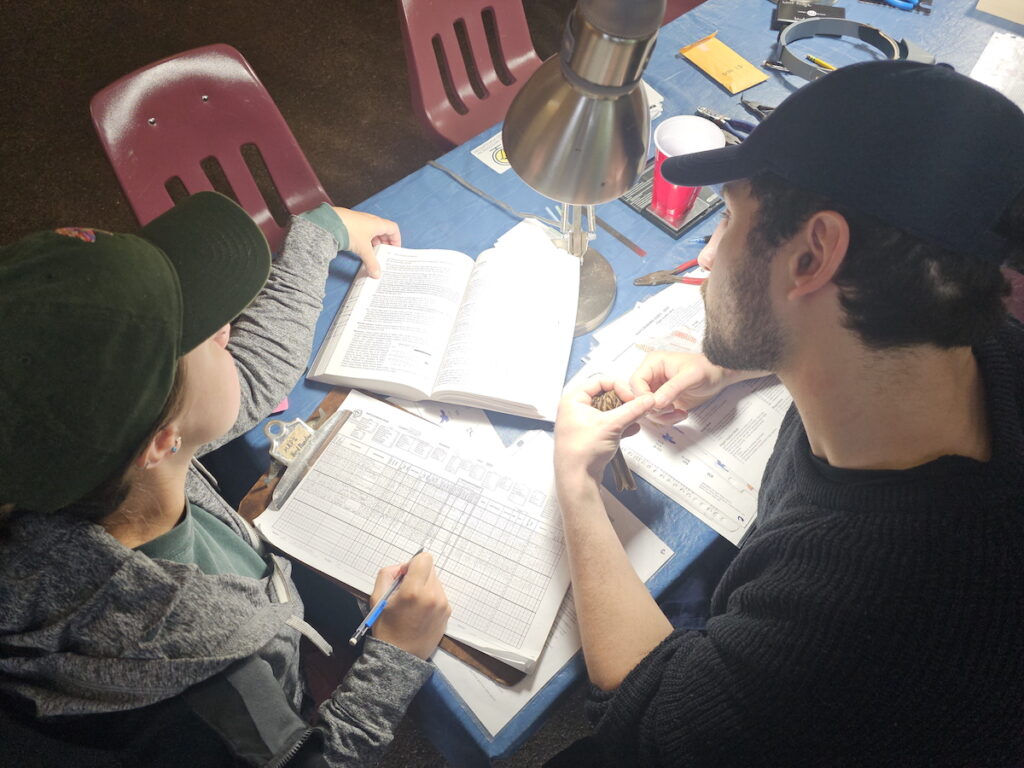
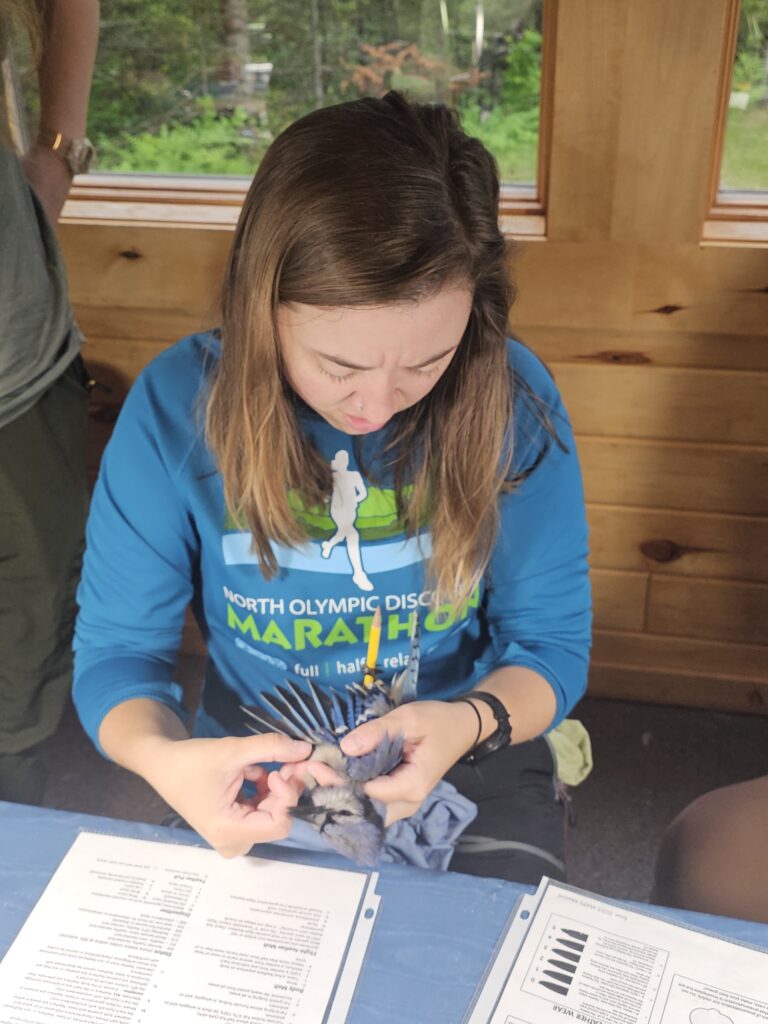
When I had a bird in my hand, it was so easy to get swept up in the awe. It is extraordinary to see a bird this close, alive, blinking at you, with its gently fluttering heartbeat barely noticeable in your palm. It’s truly magical, until it has your thin finger skin clamped in its seed-crushing beak (looking at you, Rose-breasted Grosbeak!). Warblers and sparrows weigh next to nothing: up to half an ounce! That’s about the weight of a small grape or a few M&Ms! My favorite bird to have in my hand was the Blue Jay. Turns out, Blue Jays are very grabby and will move their feet constantly throughout data collection, causing excessive difficulty. The fix? A simple pencil in their feet. If they have something to hold on to, they suddenly become the best subjects around. The pencil acts like a perch and gives them a sense of stability.
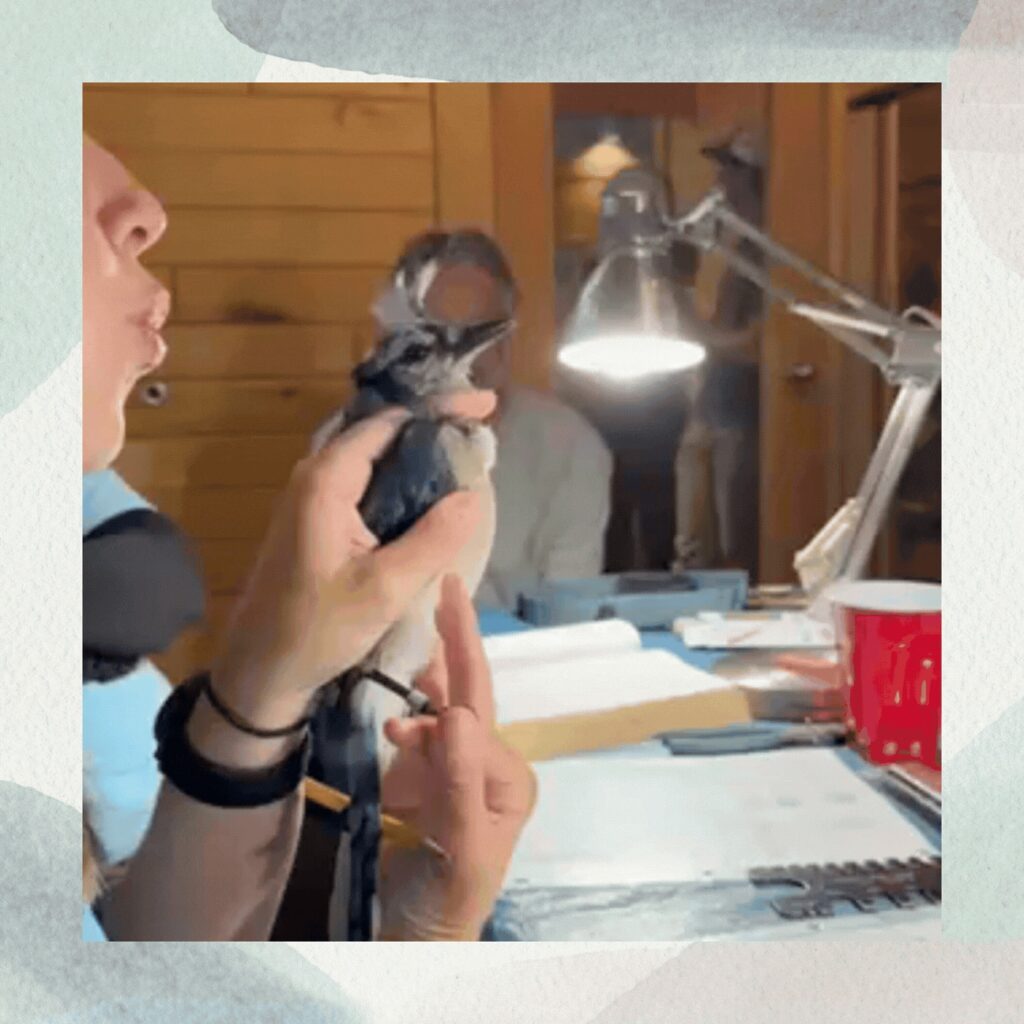
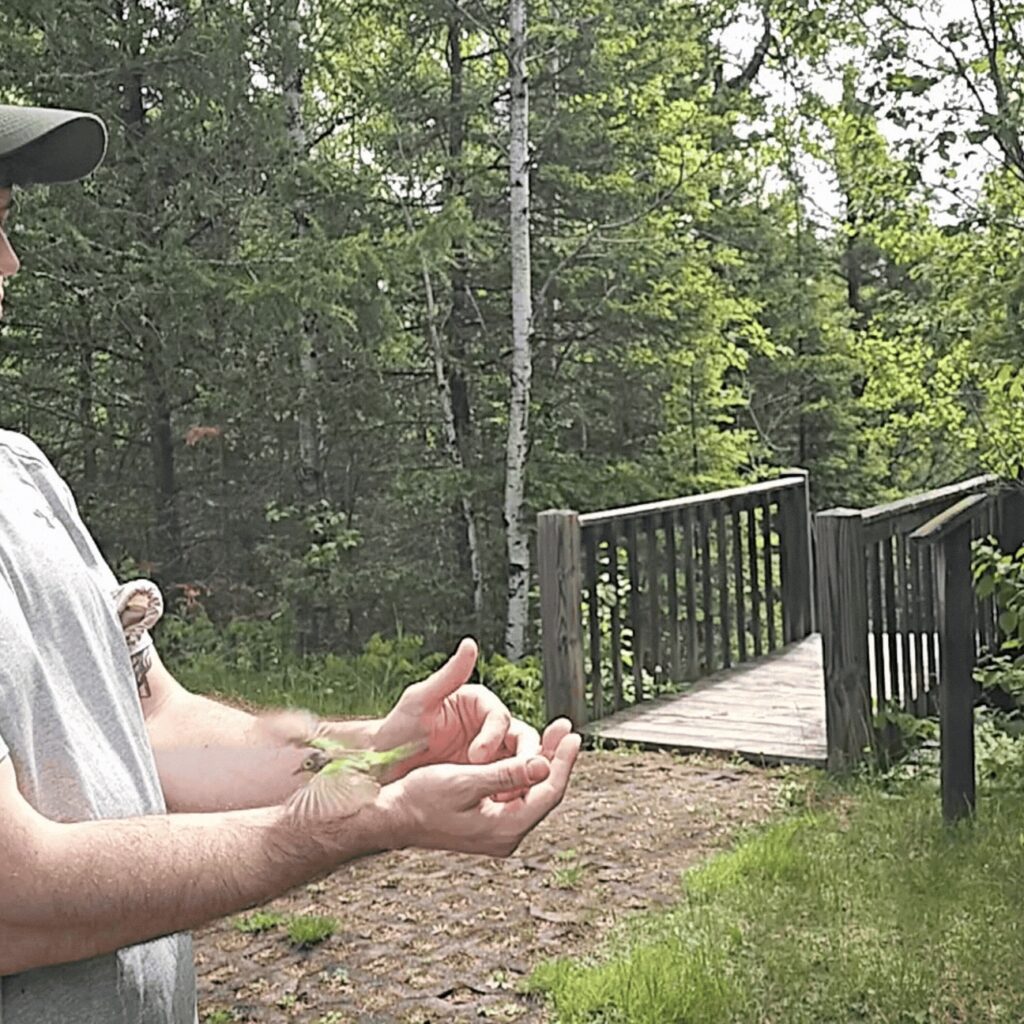
Last up: sweet release! As soon as the data was collected and recorded, we headed outside with the bird to release it and monitor its successful flight. Sometimes we were thanked with a squawk, some nearby peeps from a tree, or even a farewell poop! I often imagine the birds heading back out into the world in the same way you might if you’d been abducted by aliens 100x your size, measured and rated under a bright light, and then released back to your job. Pretty shaken, but also, your friends might not believe you until you show them your new bracelet with a strange series of hieroglyphics on it. Anyways, they say we’re not supposed to anthropomorphize our subjects, right?
After banding, we gathered in the dining hall for lunch, which was typically served to us by children who could be easily convinced by me, “an adult,” to give me an extra serving of whatever was best that day. Sometimes I ate fast enough to rest my eyes before the afternoon lecture, while other days I kept chatting, wandered around, or visited the ambassador animals: Einstein the European Starling, Nibbles the mouse and her friends, Zorra the Silver-phase Red Fox, or Hunter the Great Horned Owl.
In class, we covered a range of topics related to bird banding, including ethics and safety, wings and feathers, data collection procedures, molt cycles, bird anatomy, special projects, and how to run MAPS stations. I knew birds molted, but I had no idea it was so complicated in the order and location of feather replacement. Everything we learned in class was directly applied in the field to improve our identification, ageing, and sexing skills.
In the evenings, there was always some optional programming, and I always opted in. While the days all sort of blend together, every evening stands out in my memory of this week. In these social moments, I got to know the other students and soak in the beauty of the community Wolf Ridge is embedded in.
On the very first night, we went to Lori’s house to observe her banding hummingbirds! The bands are impossibly tiny.
One day after class, we went to Lake Superior, where one of the staff members hosted a bonfire on the beach, followed by an ice cream party in their very cozy home. While on the beach, we observed two Peregrine Falcons soaring and hunting over the lake. Did you know that not only is the Peregrine Falcon the fastest animal (thanks to its 200mph hunting dive), but that it is also the only bird found on six out of seven continents? Keep that in your pocket for your next bar trivia night.
Upon returning to St. Louis, I remain grateful for my chance to wander my public lands and learn how to make a difference in protecting the ones that call it home. The skills I learned at the workshop were put immediately to use in my volunteering at Wild Bird Rehabilitation. I hope to soon be in the field banding in this upcoming migration season, in between planning my next birding excursion.
Bird Banding Workshop Extraction and Banding “Journal”
Day 2: banded – Nashville Warbler, Chestnut-sided Warbler
Day 3: extracted – Black & White Warbler; banded – White-throated Sparrow
Day 4: extracted – Veery; banded – Female Blue Jay
Day 5: extracted – Nashville Warbler; banded – Rose-Breasted Grosbeak, 2 Nashville Warbler
Day 6: extracted – Black & White Warbler, Chestnut-sided Warbler; banded – 2 mourning warblers, chestnut-sided warbler, white-throated sparrow
Day 7: extracted—veery, ovenbird; banded – 2 veery, 2 ovenbird, 3 American redstart
Day 8: extracted – chestnut-sided warbler; banded – 2 chestnut-sided warbler, veery, alder/trail’s flycatcher
All banding was conducted for valid scientific and educational purposes under a federally authorized Bird Banding Permit issued by the U.S. Geological Survey’s BBL. Safe and ethical practices were maintained as per the NABC’s Banders’ Code of Ethics.

- Name
- Jayde Homer
- Job Title
- Statistical Data Analyst in Arts & Sciences