
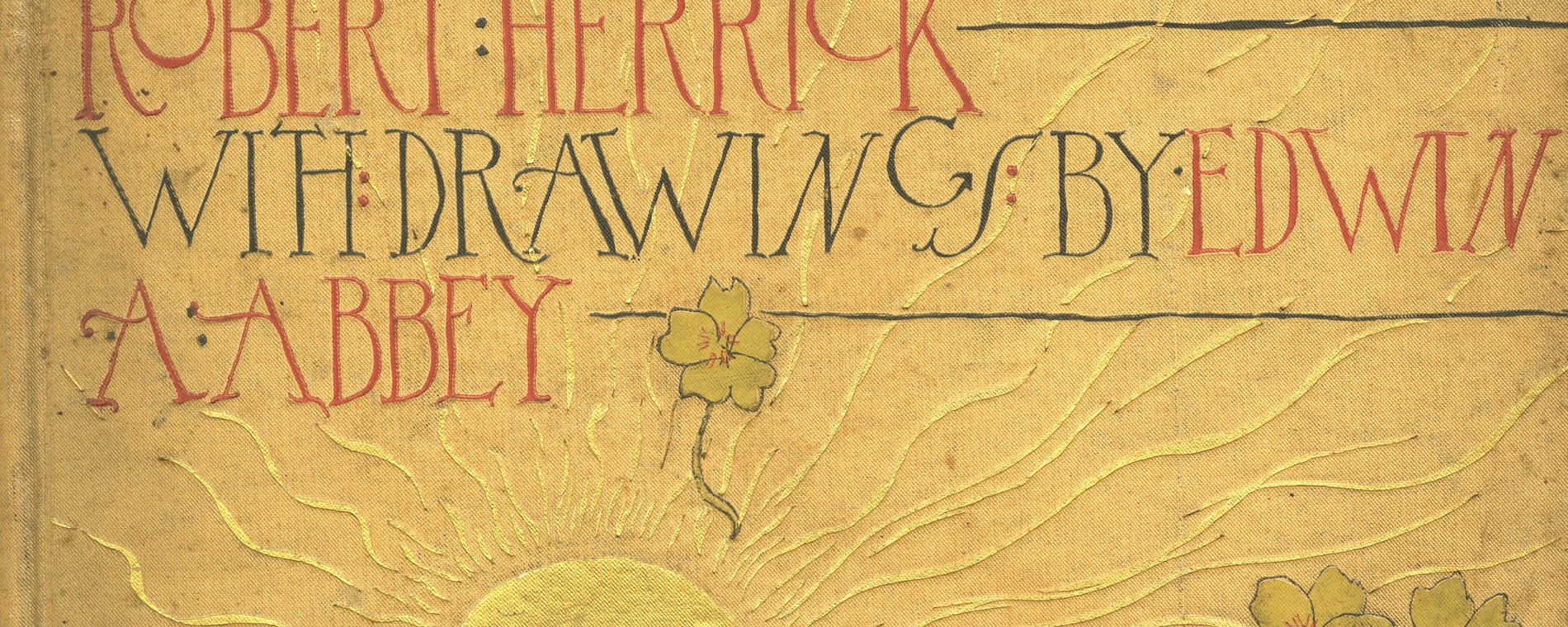
Look/Read Exhibition Highlights a Century of Popular Print
The exhibition Look/Read: Illustration as Media History from 1850-1950 is currently installed in the Thomas Gallery at Olin Library through December 2026. The exhibit closely examines the evolution of illustration and how the relationship between word and image led to increased public demand for popular print, namely illustrated periodicals and books. The exhibition is currently installed in the Thomas Gallery at Olin Library through December 2027. The exhibition includes items from the Rare Book Collections and the Dowd Illustration Research Archive, both collecting areas within the WashU Libraries Julian Edison Department of Special Collections, as well as pieces on loan from the Korshak Collection. The materials exemplify the evolution of popular print over the course of a century.
The items highlight the emergence of notable authors and artists, along with advances in printing technology, both of which played major roles in capturing public interest. Ivanhoe, volume 17 of the Waverly Novels, published in 1829, is the first piece on display. The illustrated frontispiece was a new concept at the time, and the addition of a visual work alongside the text was a highly popular feature.
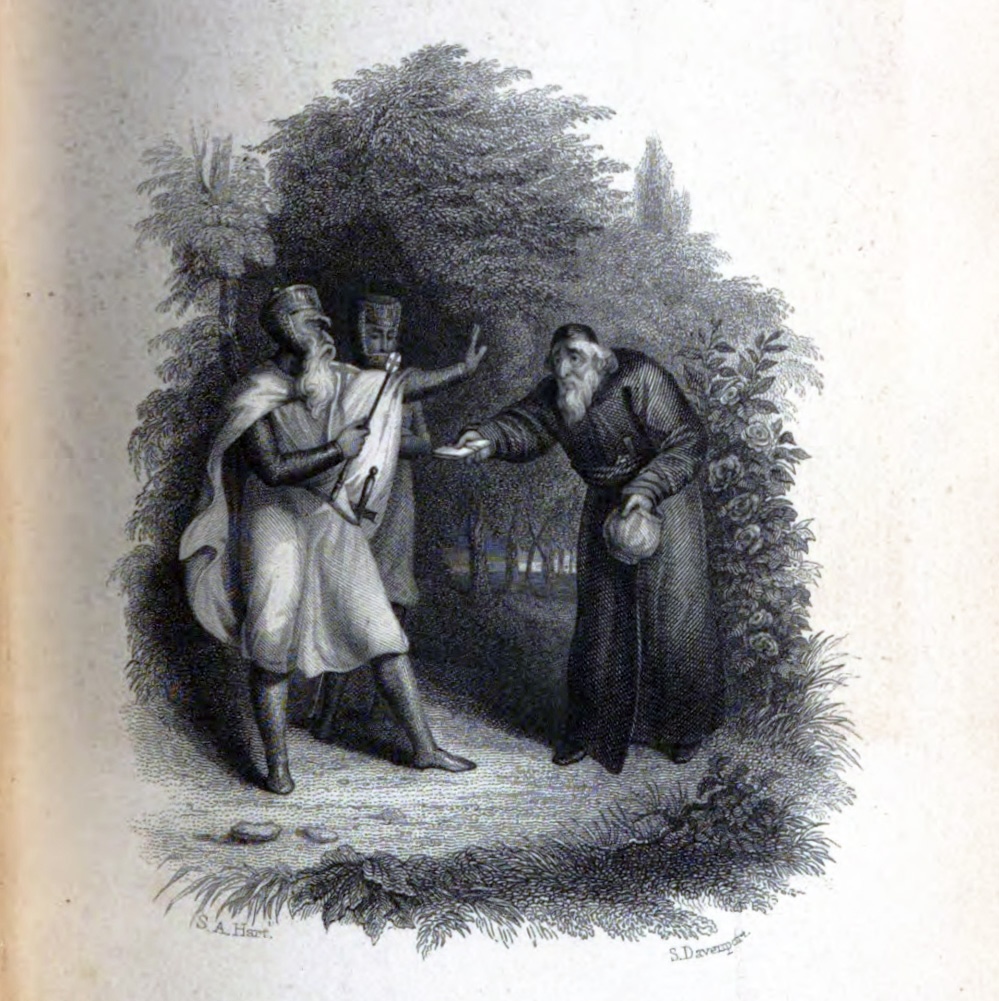
The exhibition’s prolific visuals showcase developments in printing technologies, changes in illustration styles, and how the combination of word and image met demand for entertaining content. Featured are prominent artists and authors from the nineteenth and twentieth centuries, both of whom played a role in supplying the demand for printed entertainment.
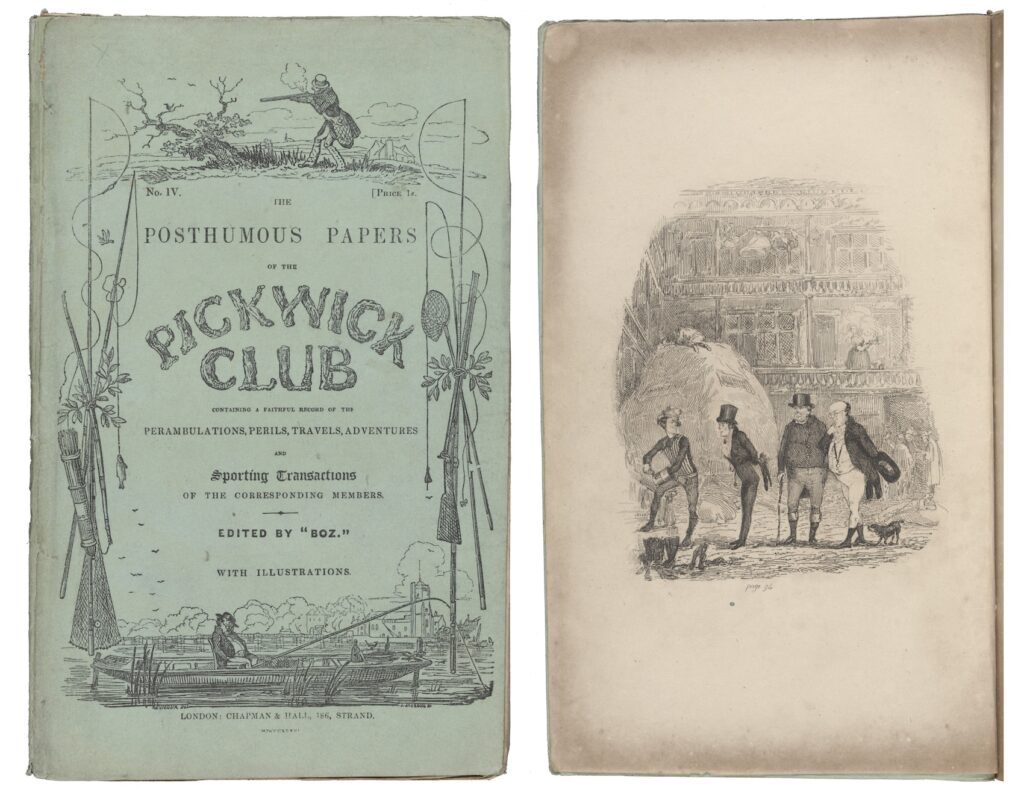
The Pickwick Papers provide a further glimpse into how the relationship between author and illustrator was developed. Charles Dickens famously rejected the idea that he would write text to accompany Robert Seymour’s illustrations, thus setting a precedent that illustrators would visually interpret written text. By the 1840s, illustrators emerged as interpretive professionals for popular print. Pickwick, published from 1836–37, would remain widely circulated through the 1860s due to the comedic plates found throughout the publication.
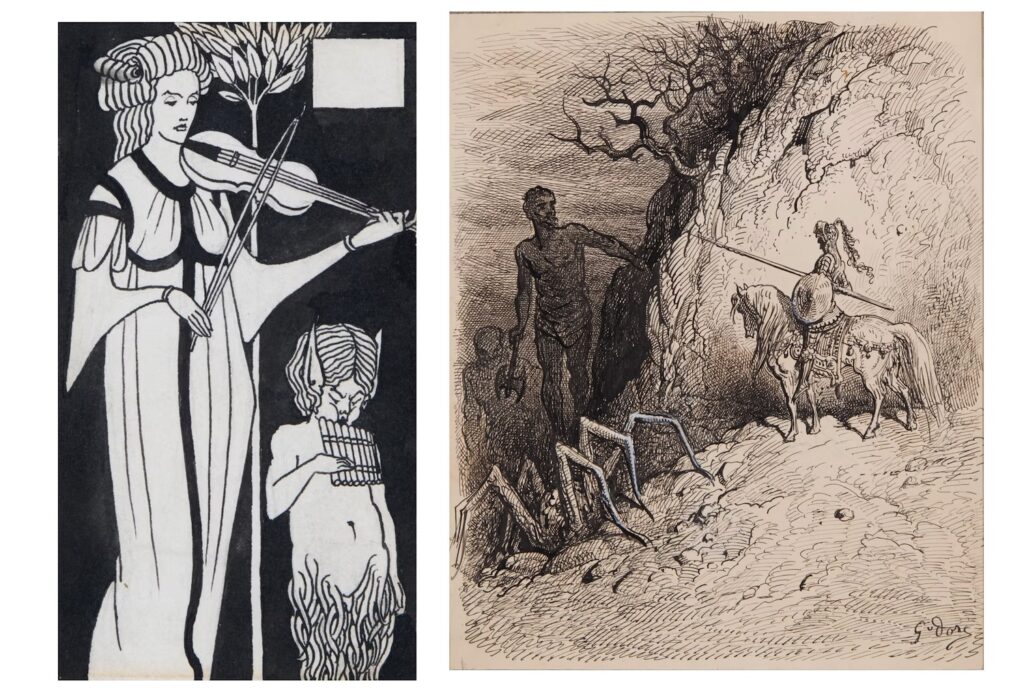
The model of illustrators providing visuals for text would become the norm as pictorial print continued to evolve. Illustrators were staring to gain notoriety and were often just as recognizable as authors. The exhibition features original works and printed materials by some of the most well-known illustrators of the time, including Aubrey Beardsley and Gustav Doré. Both Beardsley and Doré were both prolific illustrators of periodicals and books.
By the twentieth century, the public was growing accustomed to accessible and portable forms of graphic media. Printing technologies continued to evolve, and advertisements brought more color and affordability to the popular periodical. Magazine production now relied on the inclusion of advertising models, and this relationship fueled growing consumerism.
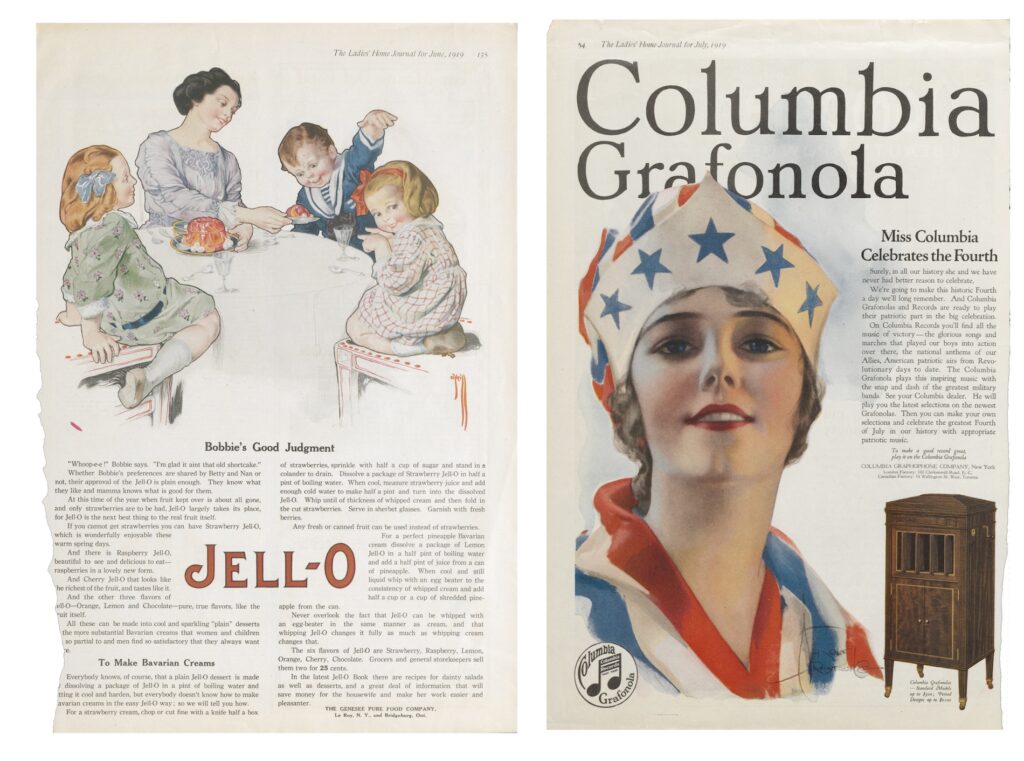
Publishers continued to develop materials for different readership and now recognized women and children as viable markets for both products and publications. The field of illustration would continue to grow, and artists were finding their footholds in the lucrative market of popular print. While advertisements paid well, the brands often stripped the illustrators of their identities. Books and periodicals, however, would often proudly market and feature well-known artists to boost sales.
Additionally, original artwork provides a further glimpse into the production of illustrated print, and several examples highlight the original works alongside the published format. Such examples can be found throughout the exhibit as a way to conceptualize the scale and artistry required to create and reproduce mass-produced visual works. Being able to view the original artwork alongside the published matter speaks to the history of printing technology and also brings to light the creativity behind such publications. Two examples currently featured are created by Harrison Cady and Joseph Clement Coll.
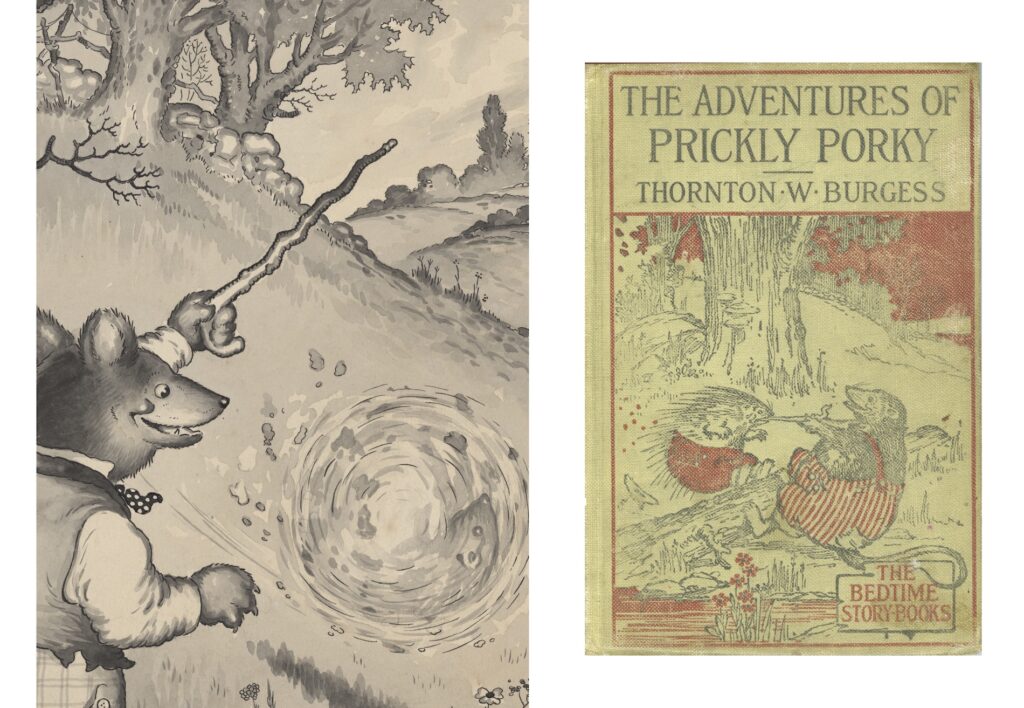
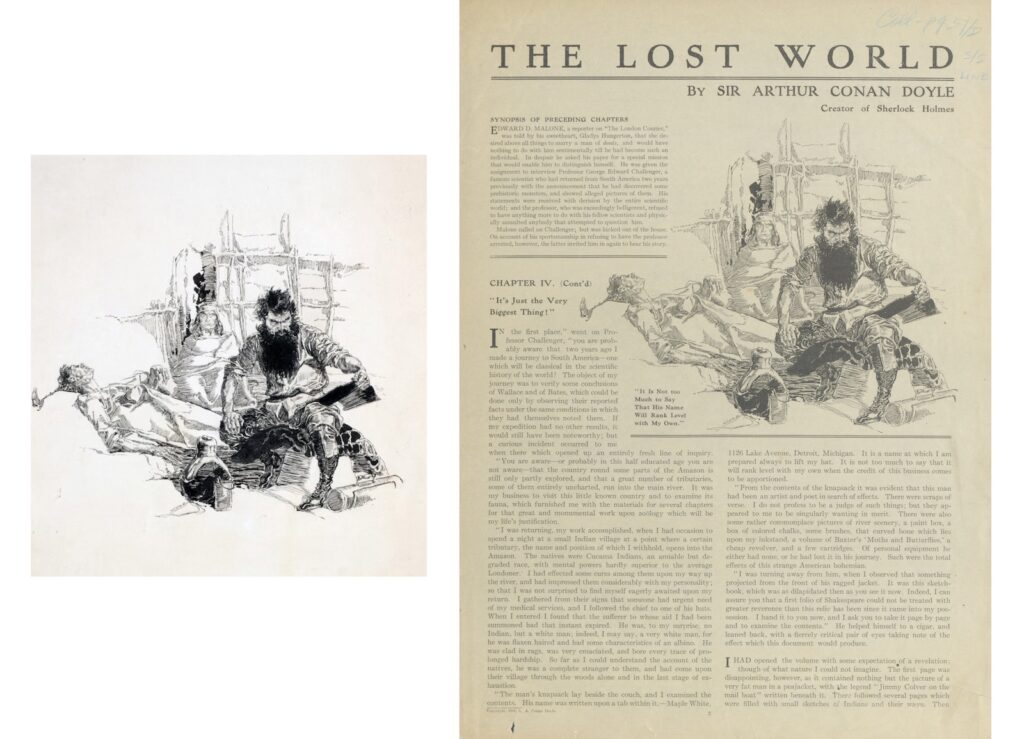
Illustrated books also continued to dominate the market. Retellings of popular literature began to mimic the modern magazine: vividly illustrated covers by well-known artists were deployed to make the products more desirable. Illustrators developed their own unique styles that were then applied to popular print, thus making a wide variety of imagery available to the larger public.
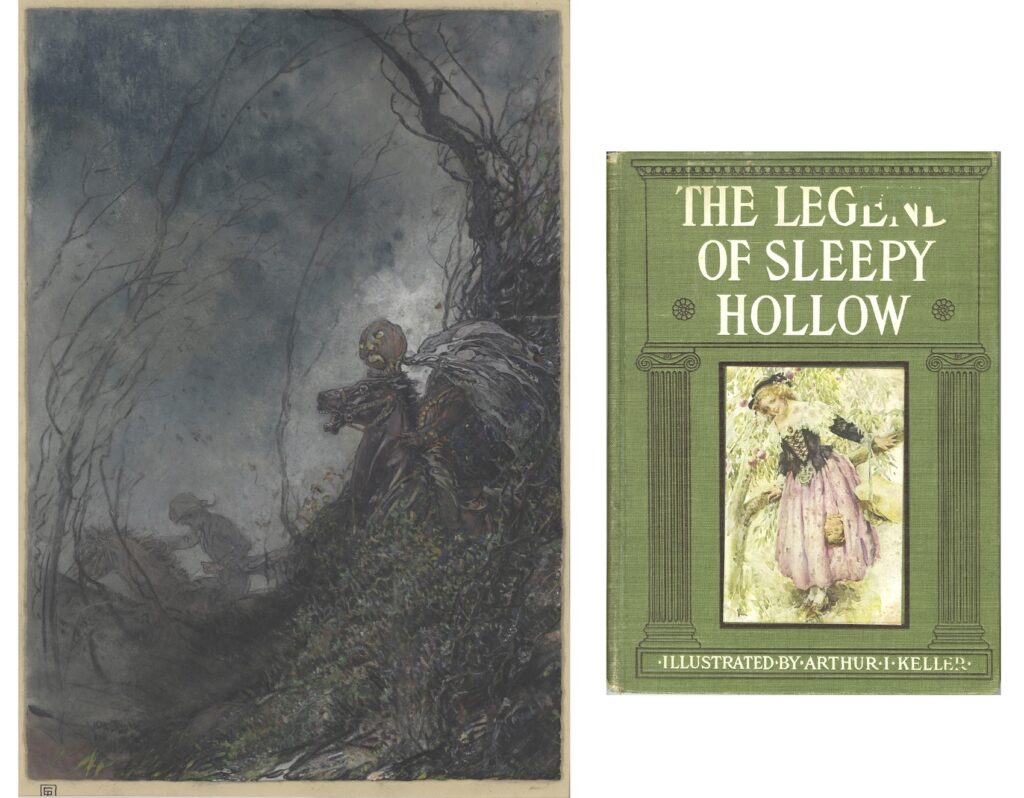
The Legend of Sleepy Hollow, written by Washington Irving in 1820, is one such example of a story that saw continued popularity in the twentieth century. Both Eric Pape and Arthur Keller provided illustrations for this story, and the depictions serve as different examples of stylistic interpretation. Pape and Keller both found success in the illustration field and supplied artwork for popular books and magazines.
By the 1930s, illustrators were finding their own celebrity. To have an illustration featured on a magazine cover meant that you were at the top of your career. Al Parker, one of the most notable illustrators of the mid-century, found himself in high demand due to his skill and innovation. He was known for his glamourous depictions of the American woman in addition to his dynamic compositions. He was featured on the covers and interiors of magazines for decades.
Parker’s illustrations also speak to the limitations and costs of magazine production. Many of his illustrations were produced in two colors through the 1940s. This was not for stylistic reasons, but rather to lower costs of the final printed publication. While magazines always featured a colorful cover illustration, the interiors were often full of fiction stories accompanied by two color illustrations that sat alongside bold advertisements for the latest products.
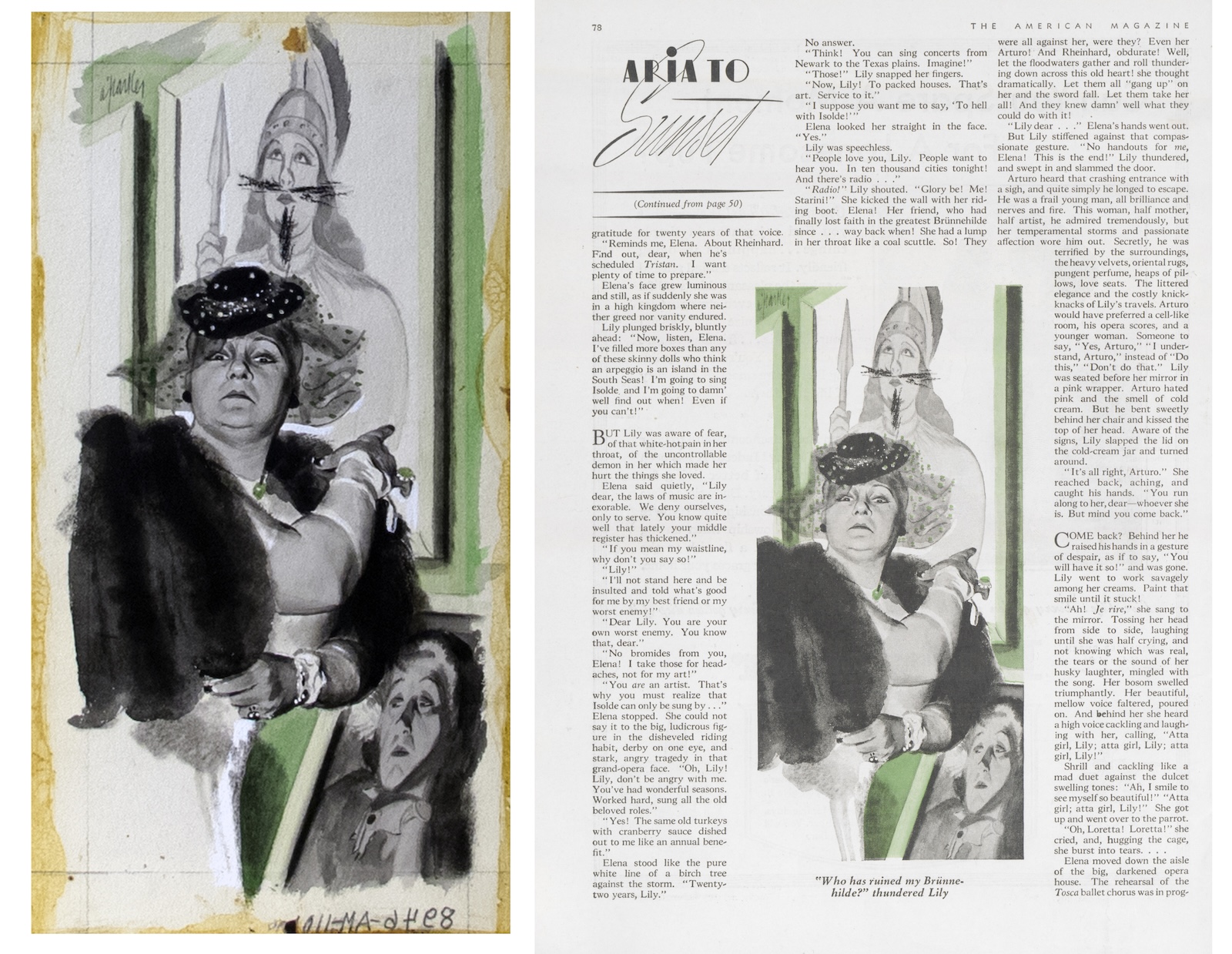
The exhibition continues to follow the trend of popular print and documents other stylistic trends, such as the woodblock style of Rockwell Kent and the work of modern cartoonists like E. Simms Campbell. Such artists continued to find success as illustrators and were featured in some of the most notable publications of the time: The Saturday Evening Post, Judge, Esquire, and others. By the 1950s, however, illustrations were starting to give way to photographic media. Within the rise of a century, illustrated print flourished only to make way for new visual forms like photography and television.
A selection of comics and pulps are on display in the exhibition, a format that would continue to produce a narrative that required both word and image. The popularity of comics and other pulp materials would continue to capture public attention even after the demise of the illustrated periodical. The novels and comic books serve as a reminder of what dominated consumer culture merely decades before through their attention-grabbing covers that followed the story of a cast of well-known characters.
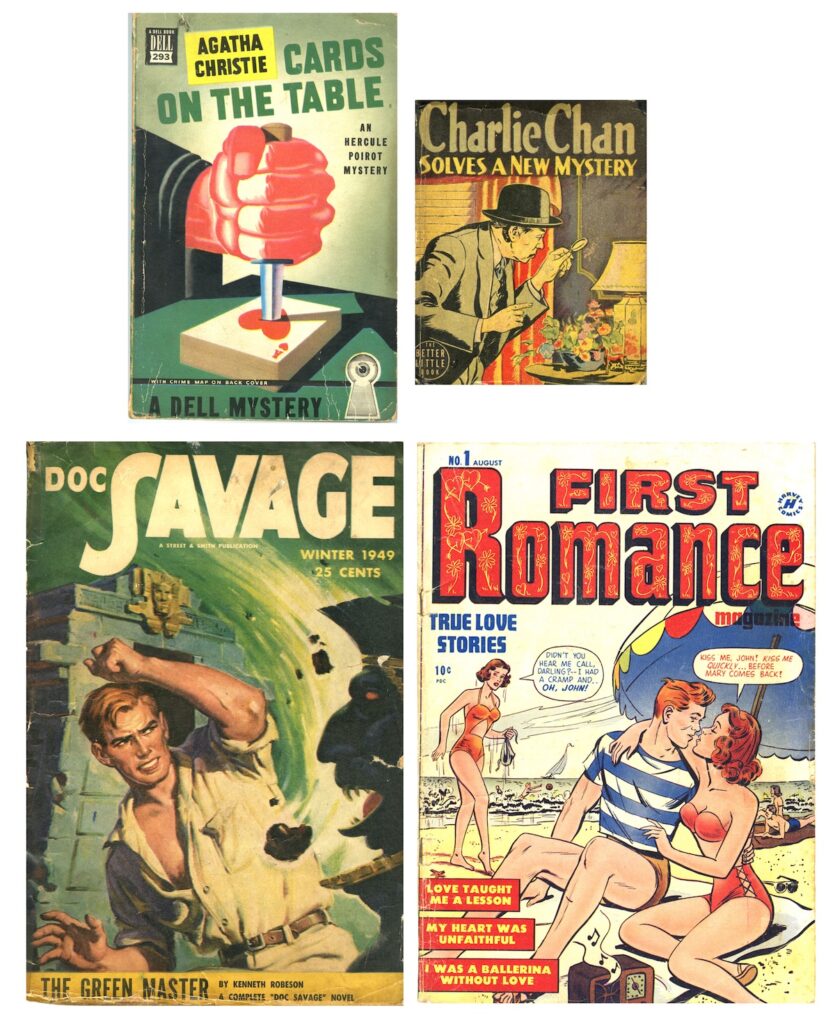
Look/Read was organized as complement to the text Reading pictures: a history of illustration by D.B. Dowd and is on display through December 2027. Over 100 items are on display and provide an opportunity to browse material from across Special Collections. WashU Libraries would like to thank the generosity of the Korshak Collection for lending additional pieces to help add to the overall narrative.
The exhibition was organized by Andrea Degener, Dowd Illustration Research Archive curator, and D.B. Dowd, professor of design and MFA in Illustration and Visual Culture and faculty director of the Dowd Illustration Research Archive.

- Name
- Andrea Degener
- Job Title
- Curator for the Dowd Illustration Research Archive