
John Max Wulfing’s Passport to the Past
John Max Wulfing was born in 1859 to Charles and Hermine (Diekriede) Wulfing in St. Louis, MO. He was educated in both the United States and Germany before entering the family business and becoming a third-generation wholesale grocer in St. Louis.

The wealth accumulated through his business success enabled Wulfing to engage in local philanthropy through Park Unity Church and to support German relief efforts and academic causes following World War I. His personal interests focused on archaeology and the classics.
Wulfing is best known for his ancient coin collection, which was donated in 1928 and forms the nucleus of the Wulfing Collection at Washington University in St. Louis. Less well known is the substantial collection of Native American artifacts, Japanese tsuba (sword guards), and books that Wulfing collected until his death in 1929.
Wulfing added many objects to his collections during his travels across the United States, Central America, Europe, Africa, and Asia. This exhibition highlights some of those travels and the items he acquired along the way. To Wulfing, these were not just objects, but lenses into past times and cultures that served as invaluable teaching aids.
John Max Wulfing’s Passport to the Past exhibition is curated by guest curator Jeremy Haag, courtesy of the Newman Numismatic Portal at WashU.
About the Curator
Jeremy Haag is a Senior Scientist at Bayer Crop Science, where he develops insect control traits for major row crops. In addition to his work in agricultural biotechnology, Haag is an independent numismatic researcher specializing in Roman Republican coinage and Roman coins with legionary themes.
Haag has collaborated extensively with WashU Libraries on research into the John Max Wulfing Coin Collection, combining the study of individual coins with archival research to reconstruct the collection’s history and explore the development of numismatics in St. Louis during the early twentieth century. His research has contributed to new interpretations of the Wulfing Collection, bringing together numismatic evidence, institutional archives, and local history to illuminate the origins and significance of one of the country’s leading university numismatic collections.
As guest curator of John Max Wulfing’s Passport to the Past, Haag examines Wulfing’s travels, collecting interests, and enduring legacy at WashU.
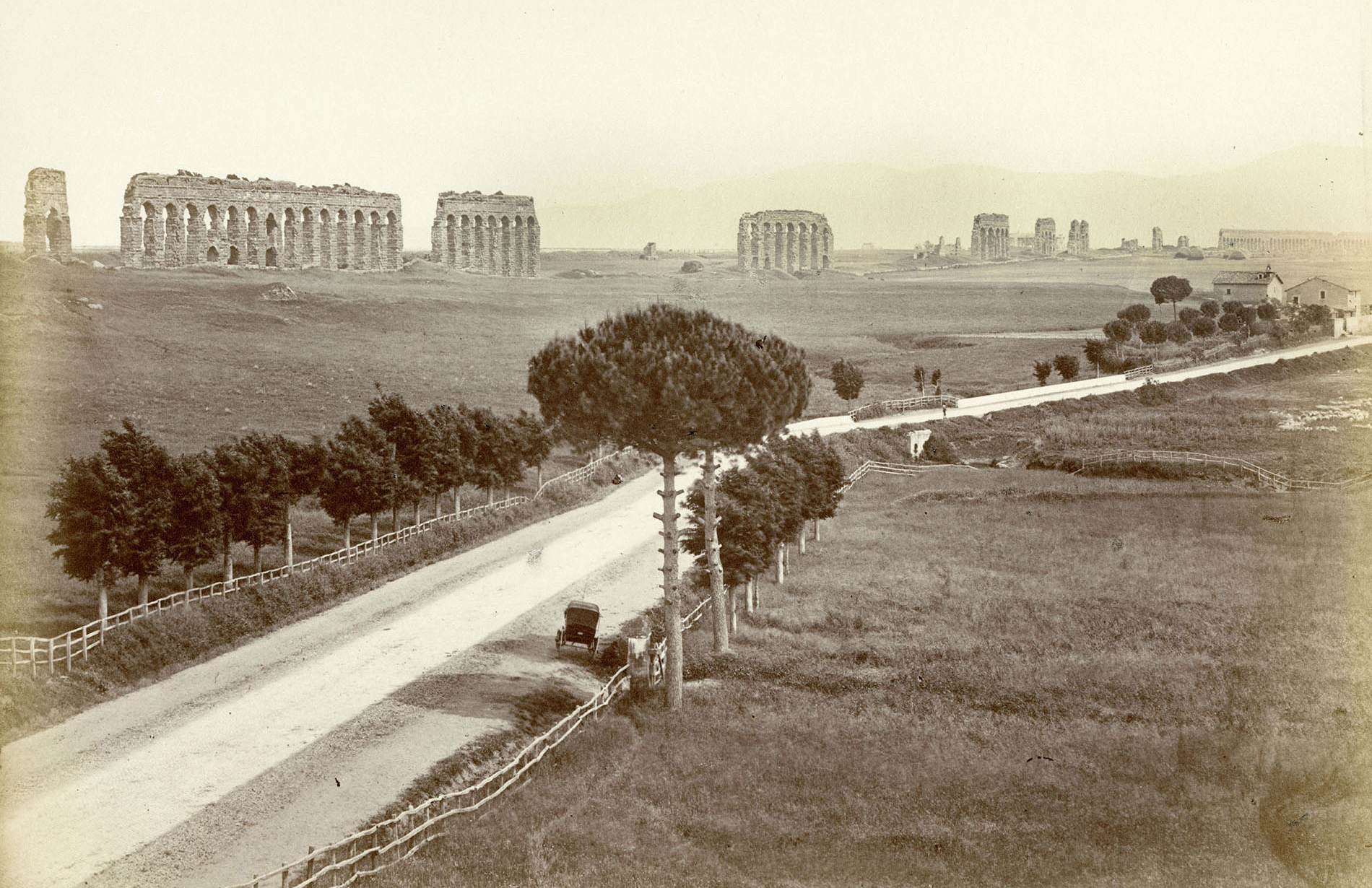
Header Image Credit: Rome (Aqueduct of Claudius, Appian Way) from the Russell Sturgis Photograph Collection, University Archives.