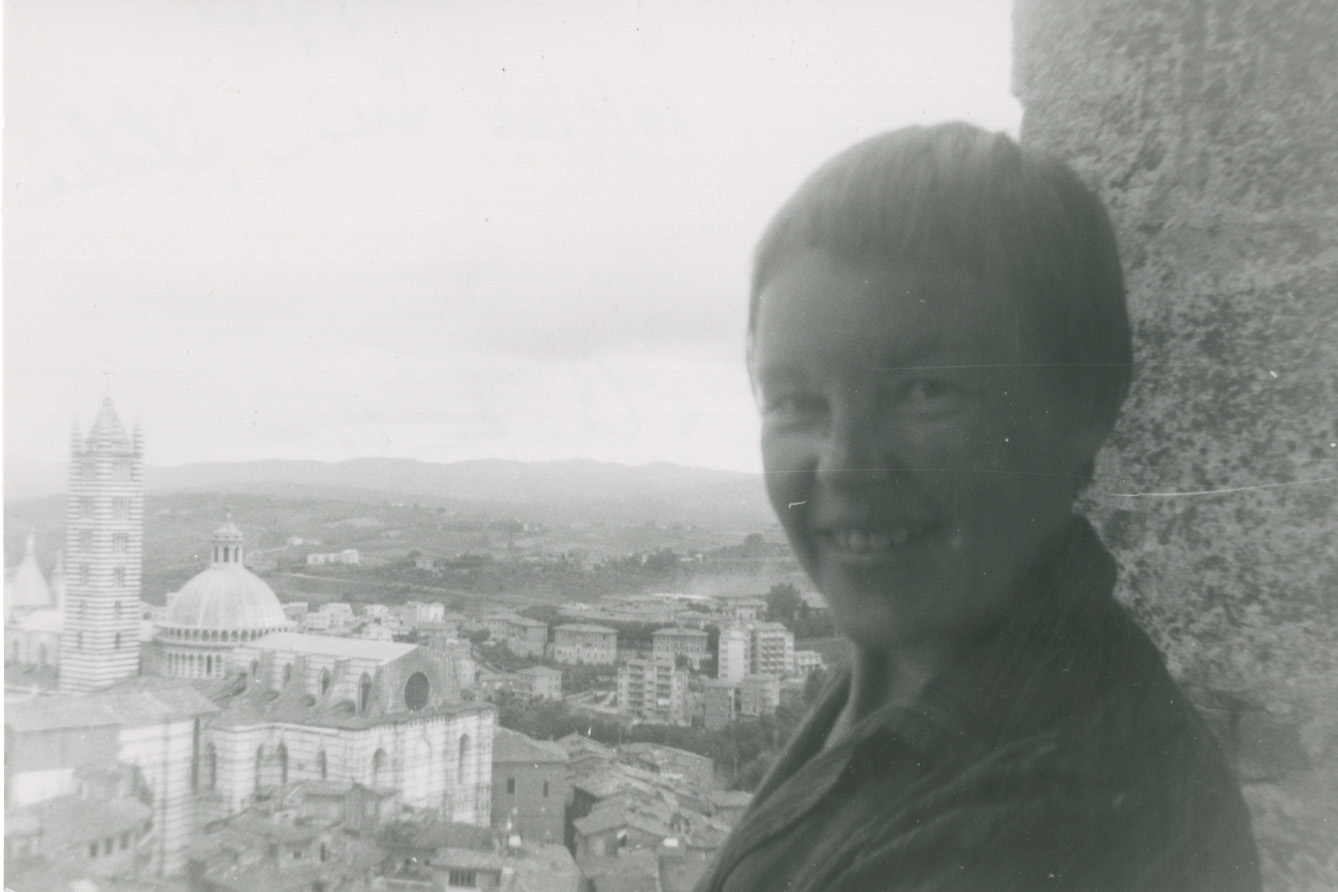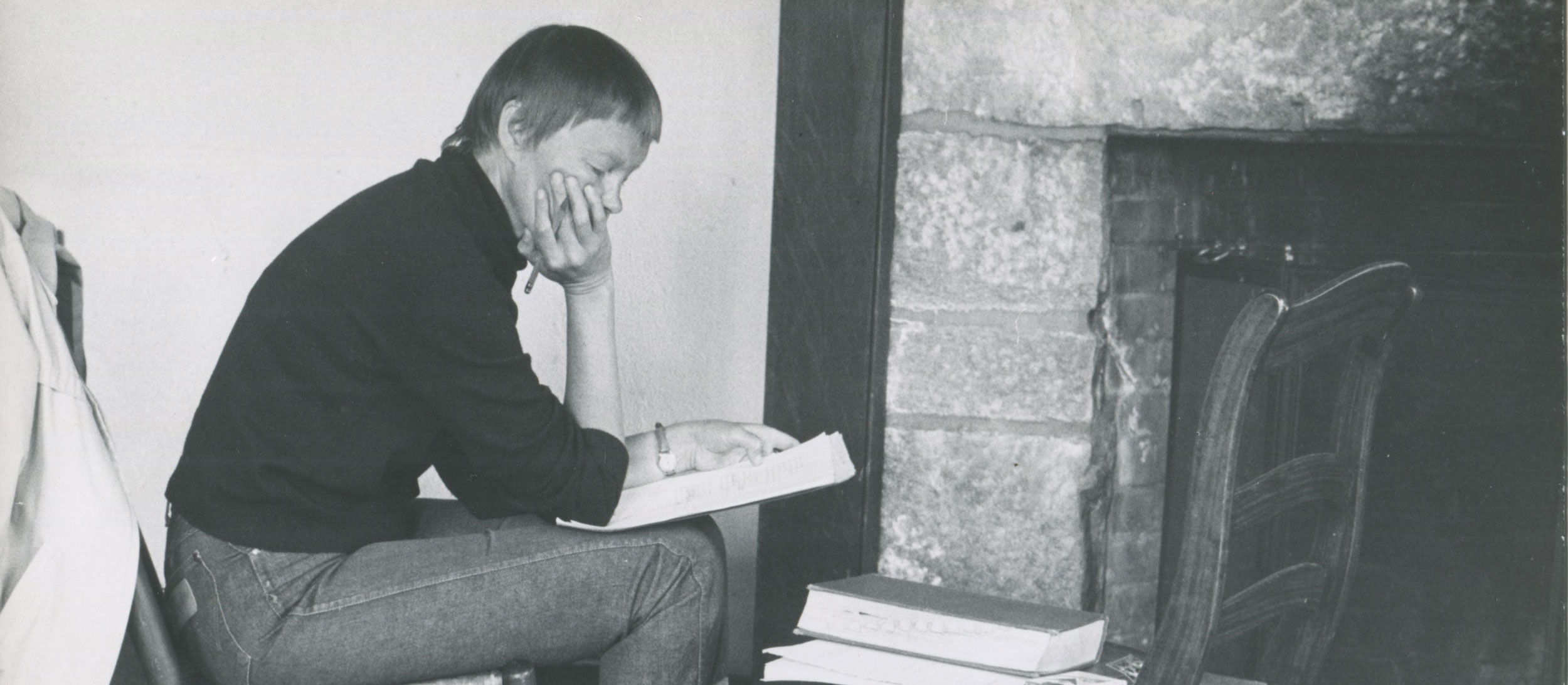
Authentic Voices in The Key to Everything from the May Swenson Papers
Curator’s note: The publication of The Key to Everything: May Swenson, A Writer’s Life, by Margaret Brucia, and the recent donations by Carole Berglie of important Swenson manuscripts inspired me to create a new digital exhibit, May Swenson in the Modern Literature Collection. I asked Margaret to reflect on how the May Swenson Papers informed her book, leading to the following collaborative essay. All materials are from the May Swenson Papers. –Joel Minor, Curator of Modern Literature Collection
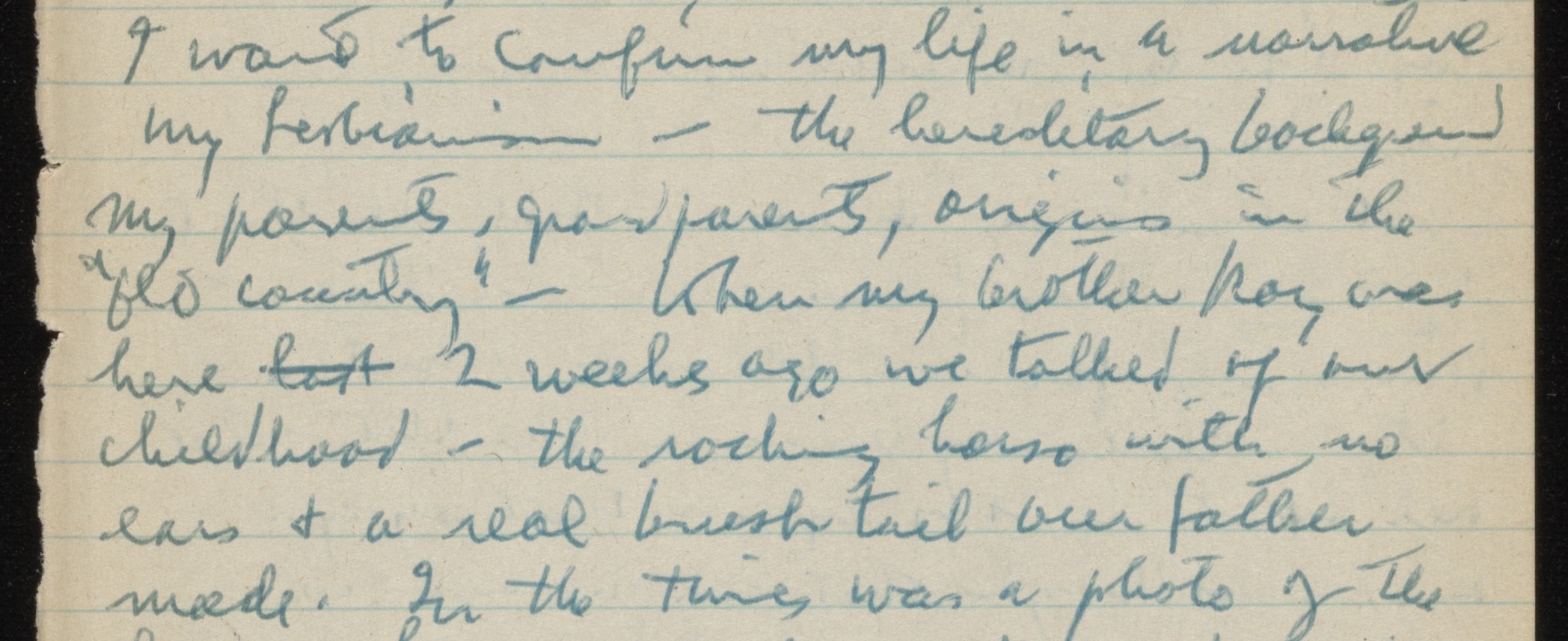
The impetus for finding May Swenson’s voice and allowing her to tell her own life story in her own words came from May’s diary entry on December 22, 1952:
I want to confirm my life in a narrative—my Lesbianism—the hereditary background of my parents, grandparents, origins in the ‘old country’—When my brother Roy was here 2 weeks ago we talked of our childhood—the rocking horse with no ears & a real brush tail our father made. (The Key to Everything [TKtE], 1)
The modernist poet May Swenson (1913–1989) was a lifelong diarist whose earliest surviving diary dates from 1935, when May was twenty-two. A portion of her diaries, those from 1935 until 1959, when she was forty-six, capture May’s distinctive voice as she writes about her journey from Salt Lake City to New York City, her struggle to support herself in Depression-Era New York, her search for self-identity, and her determination to forge a career as a poet.
May wanted the narrative of her autobiography to begin much earlier than 1935. “The hereditary background of my parents, grandparents, origins in the ‘old country’” was her chosen starting point.
The May Swenson Papers at WashU made this possible. The 139-page autobiography of May’s father, Dan Swenson (box 167, folder 5393), enabled me to tap Dan’s authentic voice as he related the story of his own and his daughter’s “hereditary background.”
Dan wrote:
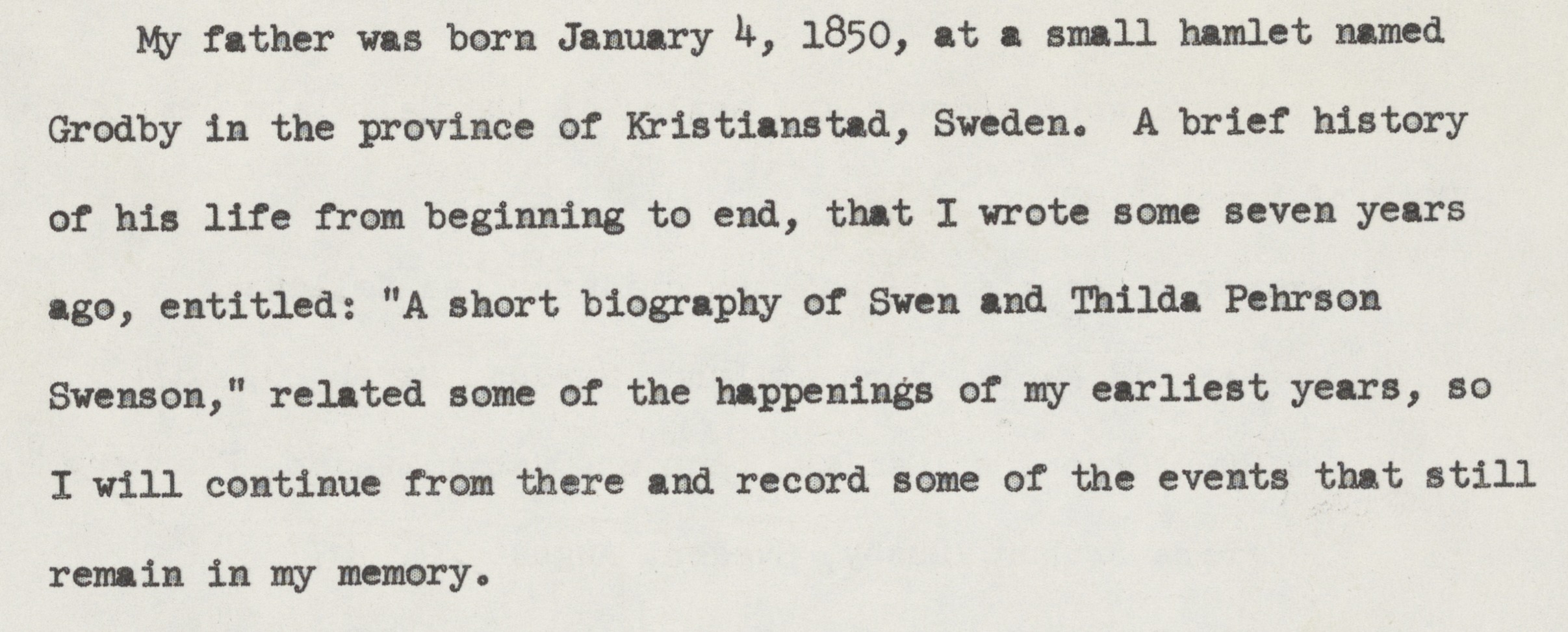
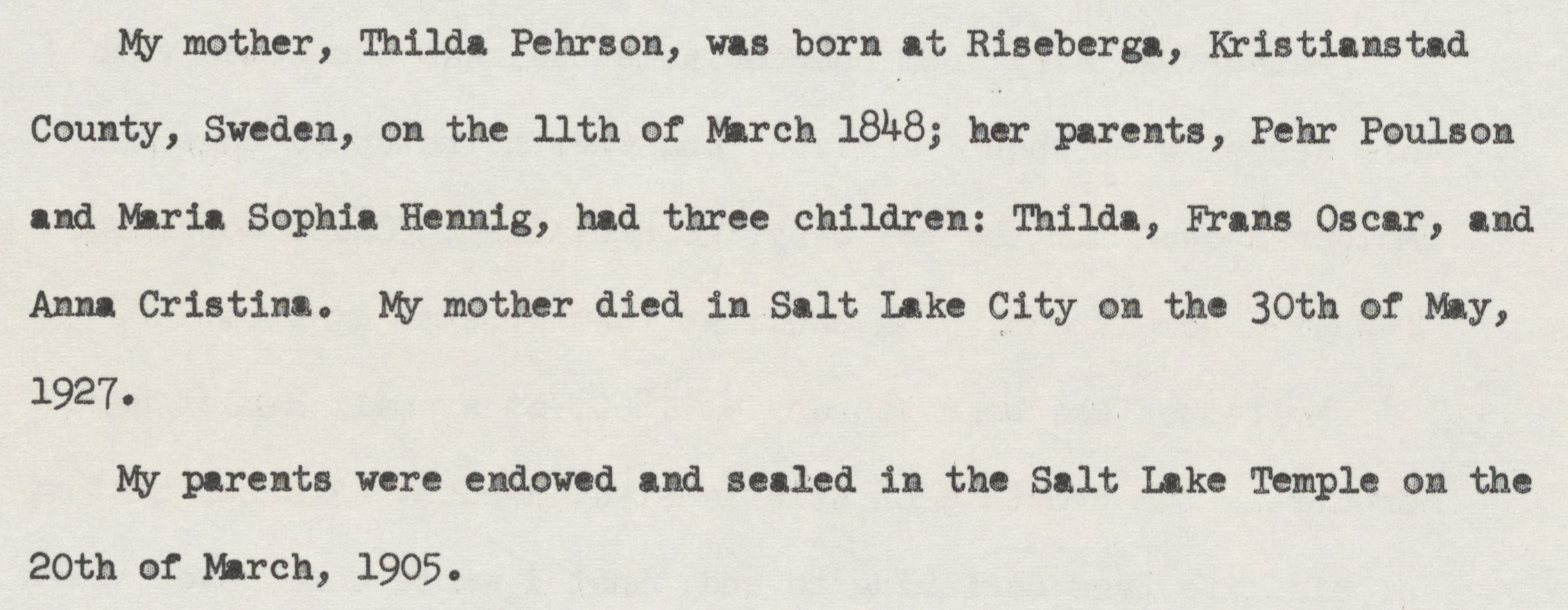
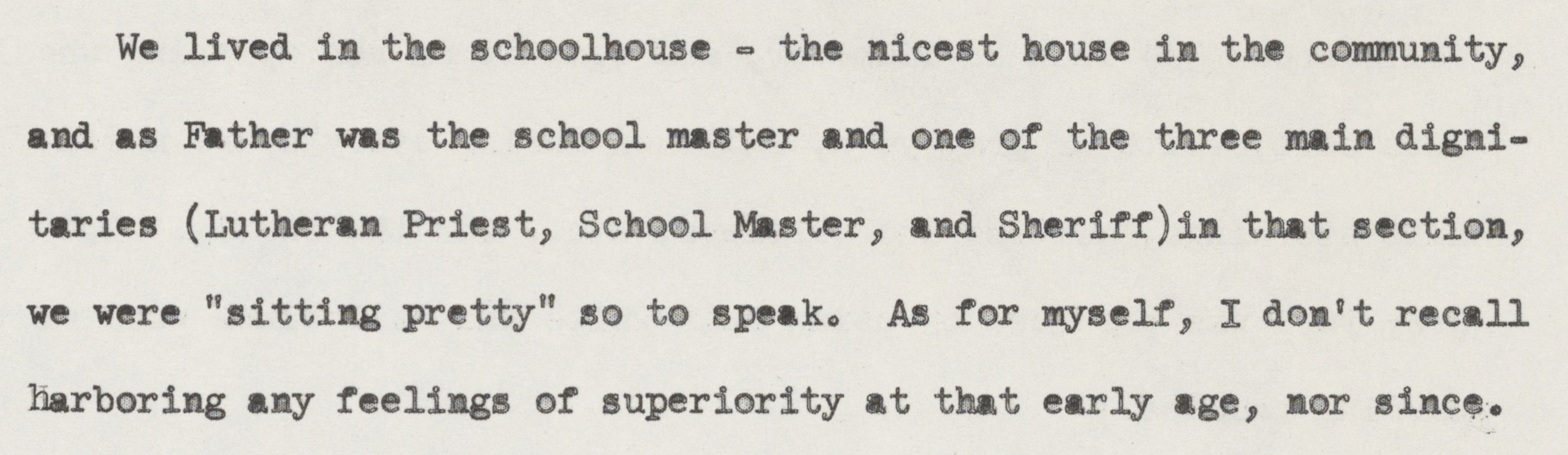
After tracing in detail his family’s conversion to Mormonism, their relocation to Zion in Utah, and his marriage to May’s mother, Margaret Hellberg, Dan wrote about his eldest child’s birth:
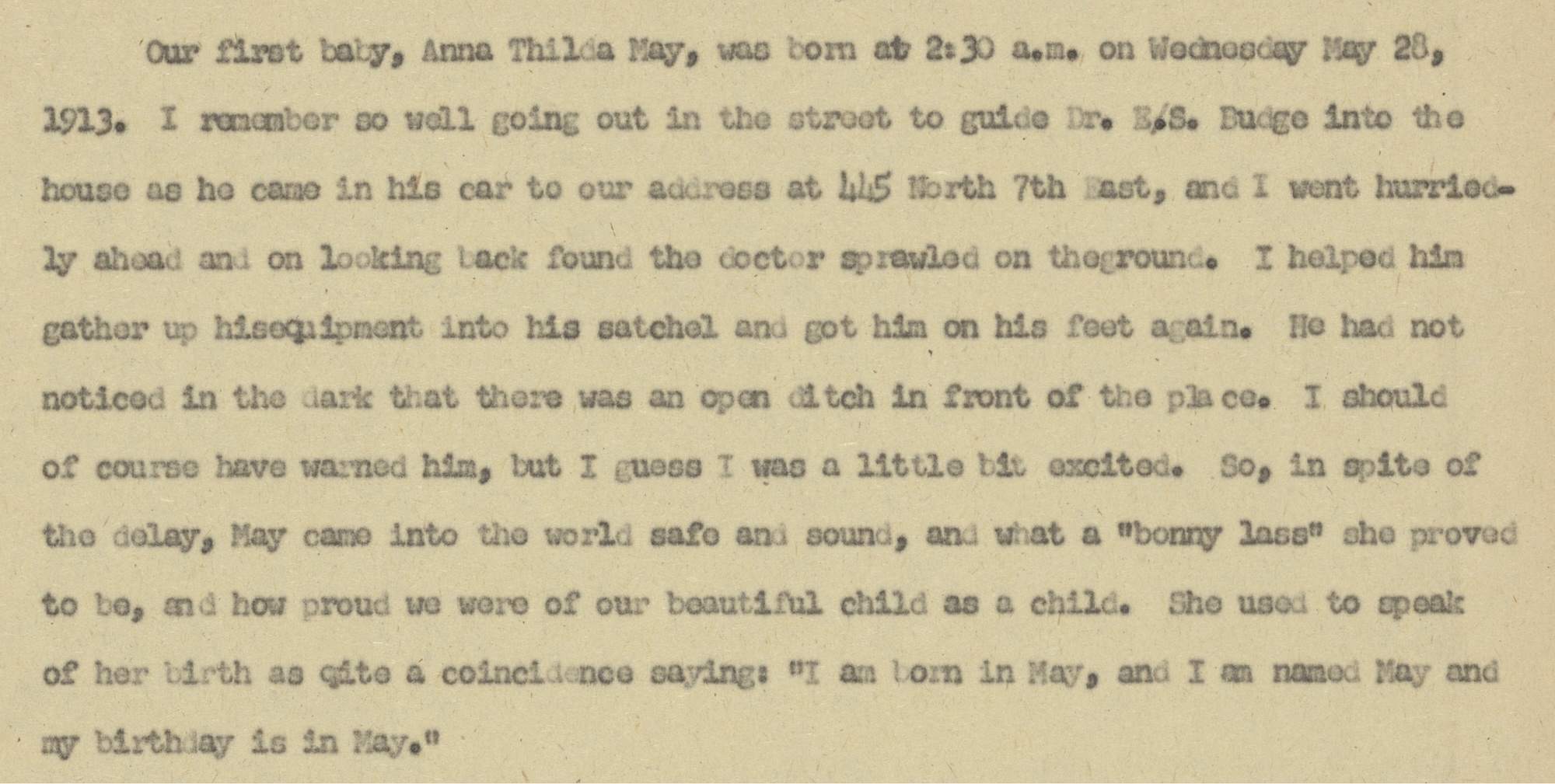
Dan did not write about May’s early life. However, in 1994, five years after May’s death, her third partner Rozanne Knudson arranged for the recording of lengthy interviews with six of May’s sisters and brothers (MS111, box 222). These taped interviews allow for an easy transition from May’s father’s voice to those of her siblings: Dan, George, Ruth, Beth, Margaret, and Paul. Their interviews are valuable primary sources of detailed information about May’s early life from childhood through high school, college and beyond.
May’s brother George remembered May as an ideal older sister who told wonderfully engaging stories to her young siblings. As George reflected on May’s imaginative storytelling, he realized that in talking to her brothers and sisters May was “able to put into words her dreams.” (MS111 Series 7.1.b Interview with George Swenson; TKtE,12)
May’s brother Dan spoke about her falling away from the Mormon Church during her college years. Trying to make sense of his sister’s religious lapse, Dan attributed it to the influence of May’s friendships with classmates, particularly those in the drama department, who were not Church-approved types. They smoked, for example, as did May. But May was never confrontational at home and tried to hide her smoking from the family. Dan recalled that she used to sneak up to the roof of her father’s workshop to smoke. (MS111 Series 7.1.b Interview with Dan Swenson; TKtE, 26)
May’s sister Margaret was the sibling who first knew about May’s attraction to women. Several years after May left home Margaret “inherited” May’s bedroom in Logan. In the room was a cedar chest still filled with May’s earliest diaries, mementos, and letters from friends, including from May’s first female crush, her elementary school classmate Helen Richards. “I am ashamed to say that I read them,” confessed Margaret. “Maybe that’s how I knew she was gay.” (MS111 Series 7.1.b Interview with Margaret Woodbury; TKtE, 22, 27)
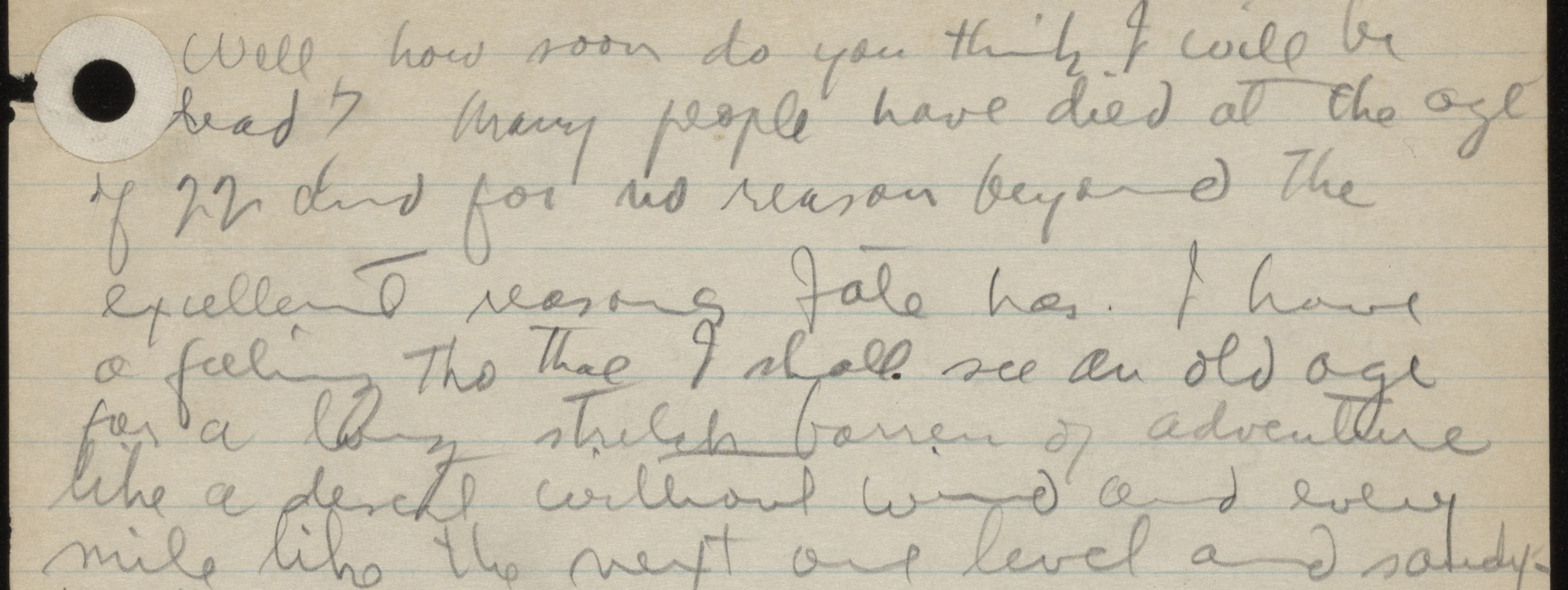
A year after May graduated from Utah State Agricultural College, she left the security of her loving family for Salt Lake City, where she worked selling ads for Utah magazine. Her earliest extant diary begins then, on November 24, 1935, with the words:
Well, how soon do you think I will be dead? Many people have died at the age of twenty-two and for no reason beyond the excellent reasons Fate has. I have a feeling tho that I shall see an old age for long stretch barren of adventure like a desert without wind and every mile like the next and level and sandy. (TKtE, 30)
At this point, May herself takes control of the narrative as she reveals in the pages of her diaries: her decision to leave Salt Lake City and settle permanently in New York City; the succession of low-paying ghostwriting and typing jobs she holds in New York; social interaction with other struggling artists; employment with the Federal Writers Project; love interests from Arnold Kates to Anca Vebrovska to Sylvia Norman to Pearl Schwartz; the early successes of her career as a poet; and her friendship with literary colleagues such as James Laughlin, Alfred Kreymborg, and Elizabeth Bishop. May’s extensive correspondence in the May Swenson Papers supplements her diaries and helps to further flesh out her interpersonal relationships.
For example, the poet and literary critic Alfred Kreymborg, who was thirty years older than May, diligently promoted her work in the late 1940s and early 1950s and was responsible for May’s invitation to Yaddo in the fall of 1950. Kreymborg’s genuine enthusiasm for May’s talent as a writer is apparent in his letters to her.
On March 15, 1949, Kreymborg wrote:
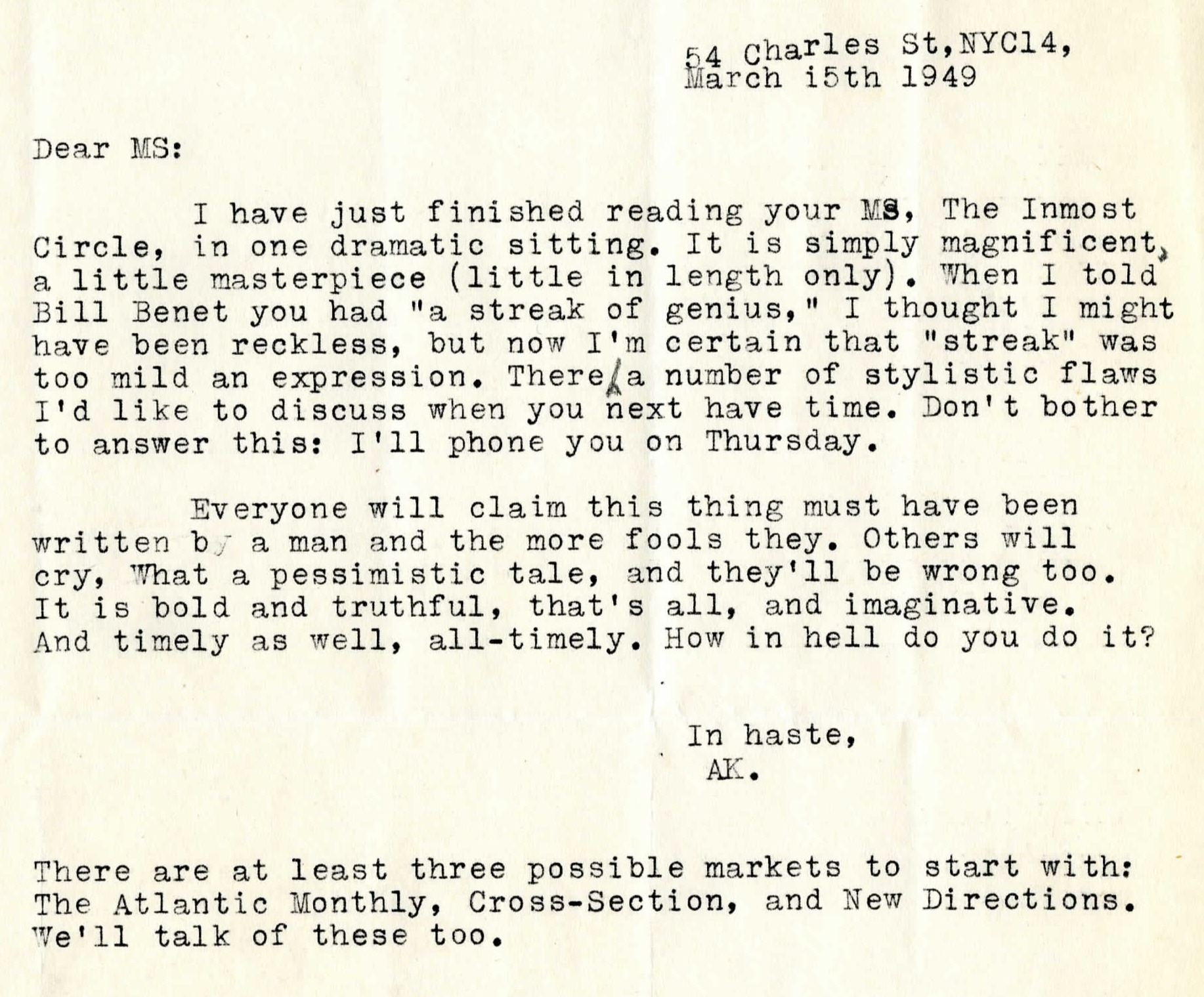
With an eye toward Kreymborg’s usefulness, May sent him equally flattering replies. “I deeply value your comment and criticism,” she wrote in an undated letter, “and your advice as to publication of a volume would, of course be especially appreciated.” (MS111 box 85 folder 3192;TKtE, 157)
May’s polite letters, however, stand in sharp contrast to her private assessment of Kreymborg as revealed in her diary. During the summer of 1950, for instance, she wrote that while Kreymborg was away at the MacDowell Colony for several weeks it was “a relief to be deprived of his 9 o’clock phone calls,” adding, “I’m afraid he is really senile—the way he plays chess (the most abject defensiveness) and his mewling puling mannerisms—he’s pitiful—and disgusting.” (MS111 box 184.1 folder 7). May’s deep sense of independence caused her to resent accepting help with her career from her eager, self-appointed patron. Their relationship was far more complex than one might assume without the benefit of both May’s diary entries and their letters.
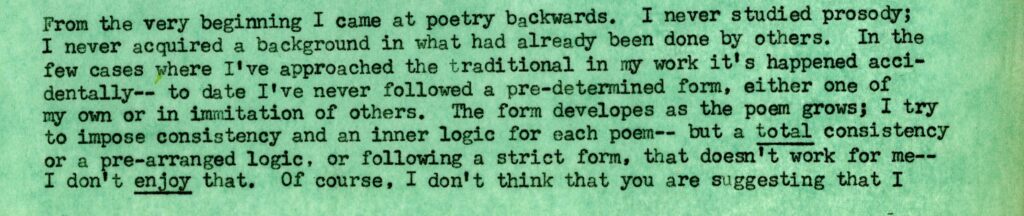
Of unparalleled importance to me in creating May’s biography was her correspondence with Elizabeth Bishop, whom she first met at Yaddo in the fall of 1950. May and Elizabeth engaged in an active correspondence from December 1950 until shortly before Elizabeth’s death in 1979. Their letters record the development of a nearly three-decadeslong epistolary friendship. More important for my purpose, May’s unfiltered honesty in her letters to Elizabeth makes their correspondence a viable substitute for the diaries that are absent after 1959.
On June 24, 1958, for example, May confessed to Elizabeth:
And in May’s letter to Elizabeth, written on December 5, 1960, we have May’s summary account of her first trip to Europe, with her partner Pearl Schwartz:

Fortunately for posterity, May Swenson was a packrat. Her papers at the Olin Library are filled with drafts of her work, extensive correspondence, photographs, drawings, audio-visual material, and now her diaries. The wealth of this material invites seemingly limitless paths of exploration for scholars into the world of this accessible yet complex poet.
For more of Margaret’s thoughts on May Swenson, see this Library of America interview with Brucia and scholar Paul Crumbley.
Read More
-
Manuscripts/Modern Literature Collection
-
Manuscripts/Modern Literature Collection