
New Grant to Preserve Six Films from the Father of Forensic Science
The National Film Preservation Foundation (NFPF) has awarded WashU Libraries $19,860 to preserve six short reels of film made by the founder of modern forensic science, Dr. Rutherford Birchard Hayes Gradwohl (1877–1959). Gradwohl produced the films from 1921 to 1950 to engender a more rigorous approach to criminal pathology and to promote his medical training schools. These six films exist at the intersection of early science films and amateur filmmaking, albeit one that focuses on the workplace rather than the domestic sphere.
Born in Baltimore in 1877, Gradwohl moved to St. Louis and graduated from the Washington University School of Medicine in 1898. He immediately began working as a clinical pathologist at the St. Louis City Hospital. His interests in modernizing public health bore fruit thanks to his updating the local hospital’s laboratory and working to remove bacteria from the St. Louis water supply.
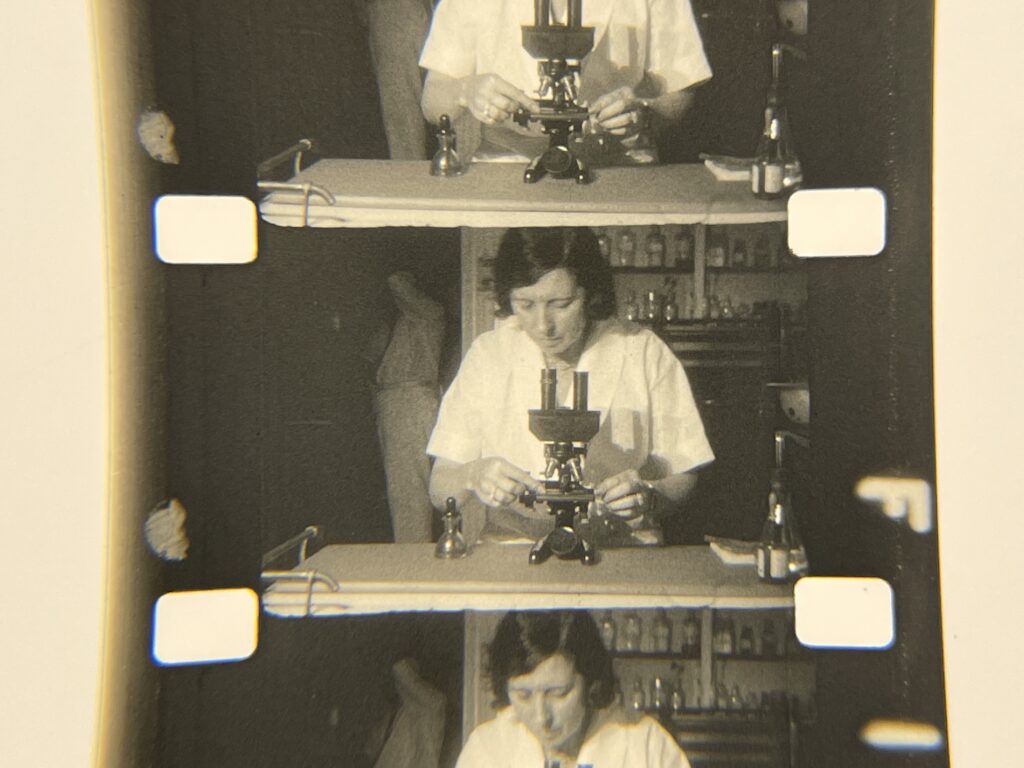
Throughout his career, Gradwohl completely transformed crime science at the beginning of the twentieth century. He helped turn the field in the U.S. from one based on bias, intuition, and political influence to one built upon measurable scientific facts. Through trips to Europe at the turn of the last century, Gradwohl brought the techniques of the more advanced crime labs developed by the French and German scientists back to the States. At his medical schools, he trained hundreds of pathologists who spread his new approach across the country. He founded the professional organizations of crime scientists, the American Academy of Forensic Scientists, which still awards a prize in Gradwohl’s name to the member who has most advanced the field. And his filmmaking played an important, if now forgotten, role in popularizing his approach to pathology.
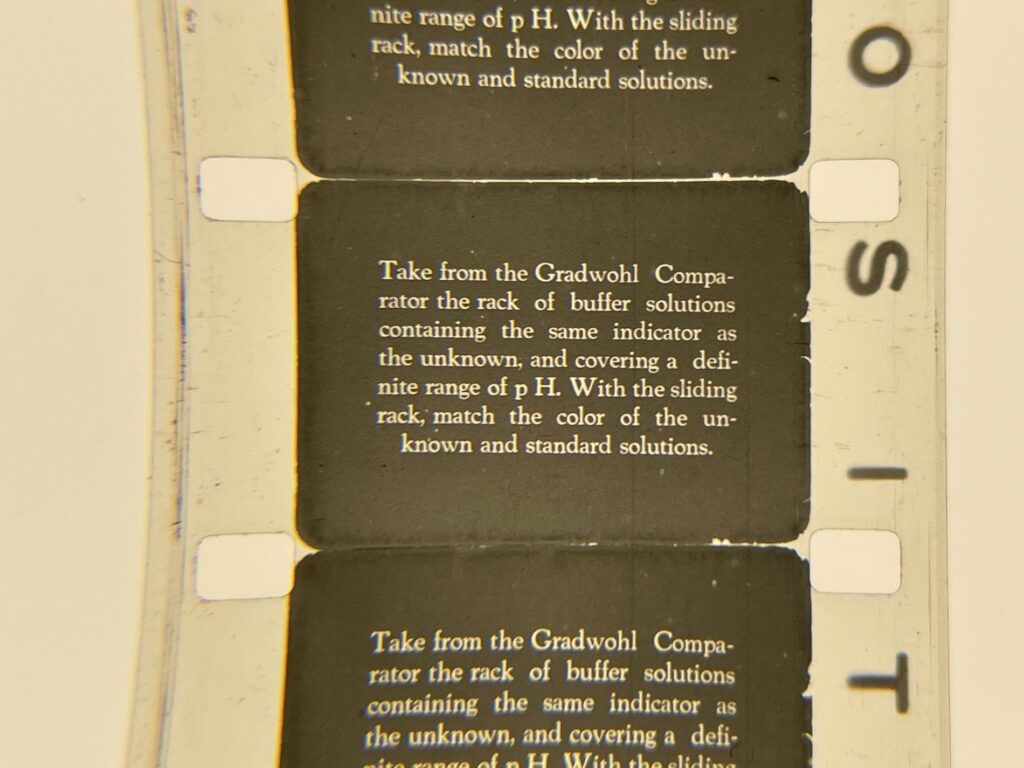
Gradwohl’s collection features several home movies from his time in the Navy Reserve Medical Corps; travel films from trips he took to Mexico, Europe, and North Africa; two reels of a golf tournament that showcased a “who’s-who” of doctors in St. Louis; and films in his labs and school that showcase not just students learning in the classroom but also the various techniques and methodologies.
This grant features a small selection of the film in Gradwohl’s collection, focusing on films Gradwohl made in his professional life. They are:
- The Van Slyke C02 Test of Blood Plasma for Acidosis (1921, 35mm, 650’, black and white with tinted intertitles)
- Motion Pictures of Laboratory Technique as Taught in the Gradwohl School of Laboratory Technique (1928, 16mm, 275’, silent, black and white)
- Classroom Activities at the Gradwohl School of Laboratory Technique (1945 and 1946, two reels, 8mm, 320’ total, silent, color and black and white)
- Technic of Blood Grouping and Blood Typing . . . and the Preparation of Blood Plasma (ca. late 1940s, 8mm, 225’, silent, color)
- High Lights of a Day’s Work, Gradwohl School of Laboratory and X-Ray Technique, St. Louis, Missouri (1950, 8mm, 360′, silent, color)
NFPF is an independent nonprofit supported by federal funds and is devoted to saving America’s diverse film heritage. This grant pays for creating new photochemical preservation elements and projection prints, which, as they will be on polyester stock, should survive for centuries. The grant also covers the cost of digitizing these titles, which will allow the Libraries to make them widely available to all.
After the completion of this grant, the newly created film prints will be available for public screenings, and digitized versions will be placed online for streaming.