
Thomas Jefferson Collection
Thomas Jefferson was a dedicated book collector. In 1815, after the 1814 British burning of the U.S. Capitol destroyed the congressional library, Jefferson sold some 6,700 volumes from his personal collections to the United States Congress to become the new foundation of the Library of Congress. Sitting in his empty library, he wrote the now-famous phrase, “I cannot live without books,” and began collecting again. After he passed in 1826, the remainder of Jefferson’s personal library (some 1,600 individual books, or volumes, representing 931 titles) was auctioned off in 1829 to settle his debts. With no known records of sale produced during this auction, public knowledge of the fate of Jefferson’s personal collections was seemingly lost to time and circumstance.
As we now know, Joseph Coolidge, Jr., and his wife purchased a collection of Jefferson’s personal books at that same auction.
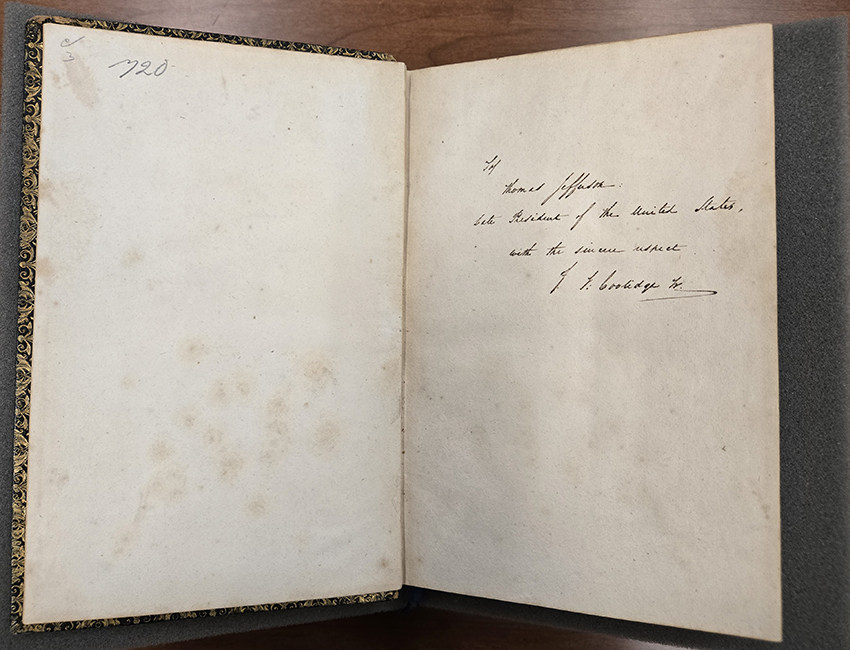
Another avid book collector, Coolidge met and eventually married his wife, Ellen Wayles Randolph—Jefferson’s granddaughter—at Jefferson’s estate, Monticello. When Coolidge passed in 1880 (three years after his wife), their eldest daughter and her husband, Ellen and Edmund Dwight, inherited Coolidge’s personal library. The Dwights then gifted the nearly 3,000-volume collection to Washington University in St. Louis. At the time, the WashU Libraries was unaware that the collection contained books once owned by Thomas Jefferson. The donation was reported in university publications such as WashU’s Student Life and The Harvard Register.
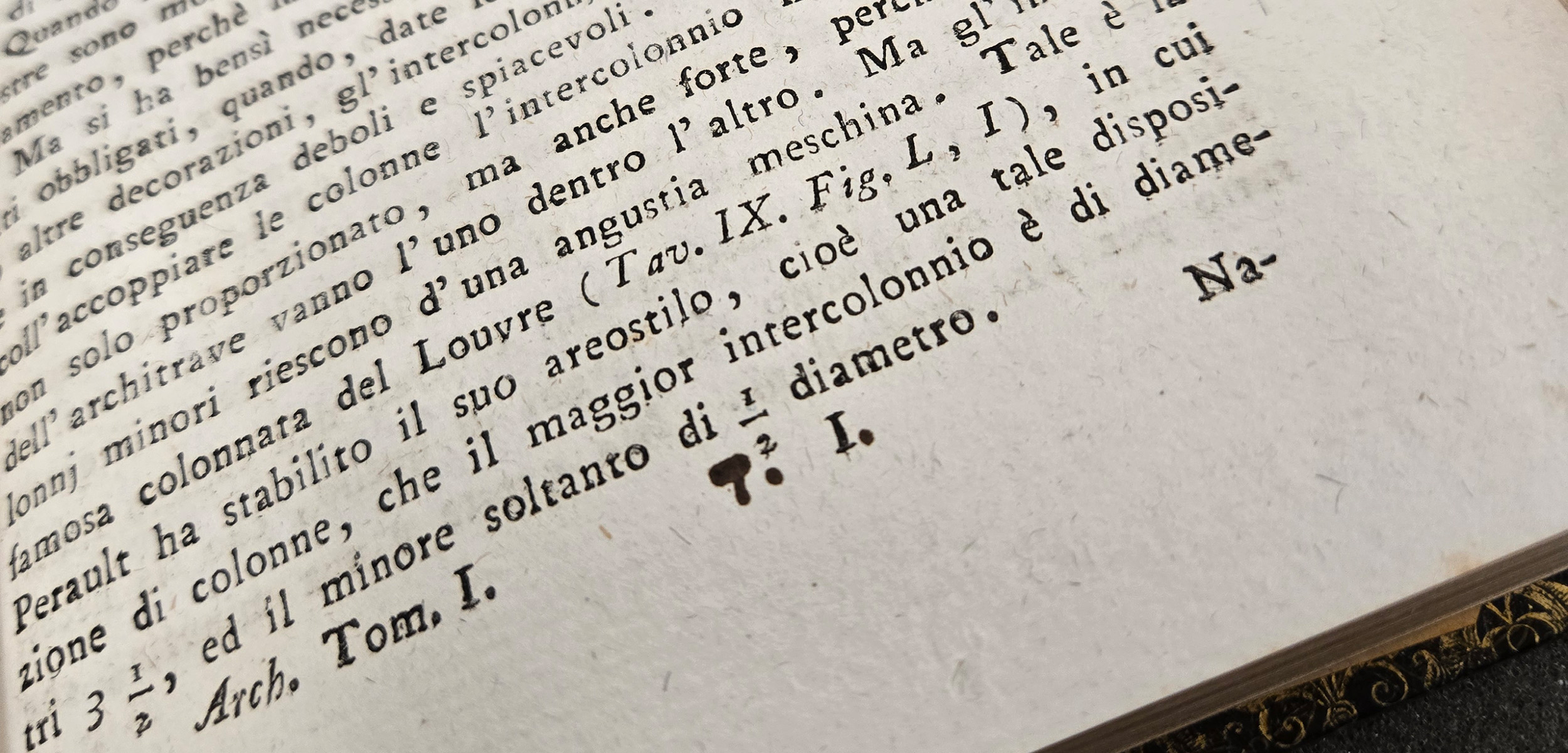
The Coolidge Collection was integrated into the library, and many students used Thomas Jefferson’s books without knowing whose books they held. Jefferson did not write his name on the front of his books like many people; he had a unique way of marking his books as his own that is less obvious to those who do not know where to look. In the simplest explanation, he would mark specific pages with his initials: TJ.
Printers assembled books by hand in Jefferson’s day, and they would mark not only individual pages with numbers, but groupings of pages with letters. These groupings, called signatures or quires, were marked with letters of the 23-letter Latin alphabet to aid bookbinders in correctly assembling the pages. This Latin alphabet excluded certain letters, including J. Thus, sequentially, the letter I stood in the place of the letter J when marking quires.
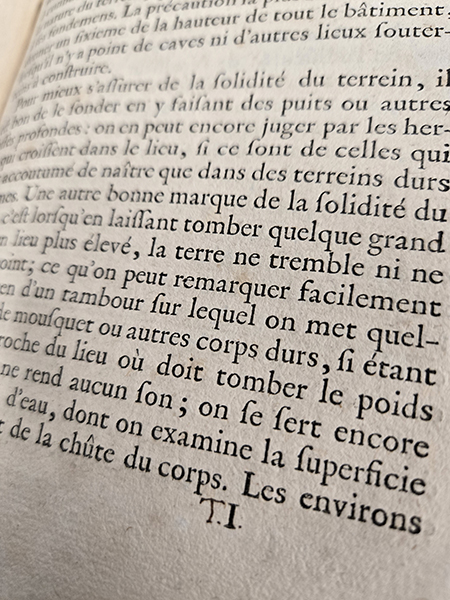
On pages marking the beginning of the I-quire in his books, Jefferson would write the letter T in front of the I already printed on the page: TI, equating to TJ. He did the opposite on pages marking the start of the T-quire, writing an I (again, standing in for J) behind the T marking.
Given the lack of information on the fate of much of his personal library, this hyper-specific way of marking books has helped scholars accurately identify which books belonged to Jefferson.
In 2010, Monticello researcher Ann Lucas Birle discovered the Harvard Register’s report of the 1880 donation of The Joseph Coolidge Library to WashU. She and Monticello librarian Edrina Tay, understanding the connection between Coolidge and Jefferson and their respective personal libraries, reached out to WashU. Tay provided a list of known titles purchased from Jefferson’s library by Coolidge to the Libraries staff.
By early 2011, staff located Jefferson’s unique TI markings in 74 volumes within The Joseph Coolidge Library, representing 28 titles. These 74 volumes within Coolidge’s collection became The Thomas Jefferson Collection, representing the third largest known collection of Jefferson’s personal library following its dispersal nearly 200 years ago.
Contact
- Department
- Special Collections, Special Collections, Preservation, and Digital Strategies
- Name
- Cassie Brand
- she/her
- Job Title
- Curator of Rare Books
- Email Address
- cassie.brand@wustl.edu
- Phone Number
- (314) 935-4950
Related Exhibitions
-
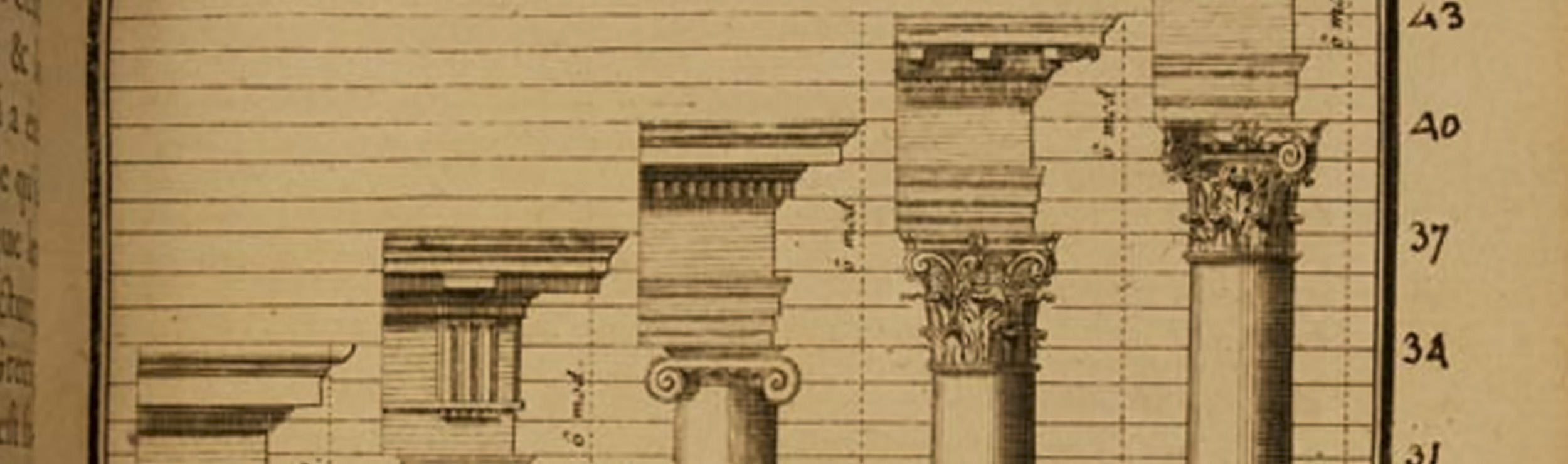
Exhibition The State of the Union: Reconstructing a Thomas Jefferson Family Library
This exhibition highlights the 82 items within the 1880 gift by Joseph Coolidge that were discovered to have once belonged…View Exhibition about The State of the Union: Reconstructing a Thomas Jefferson Family Library -
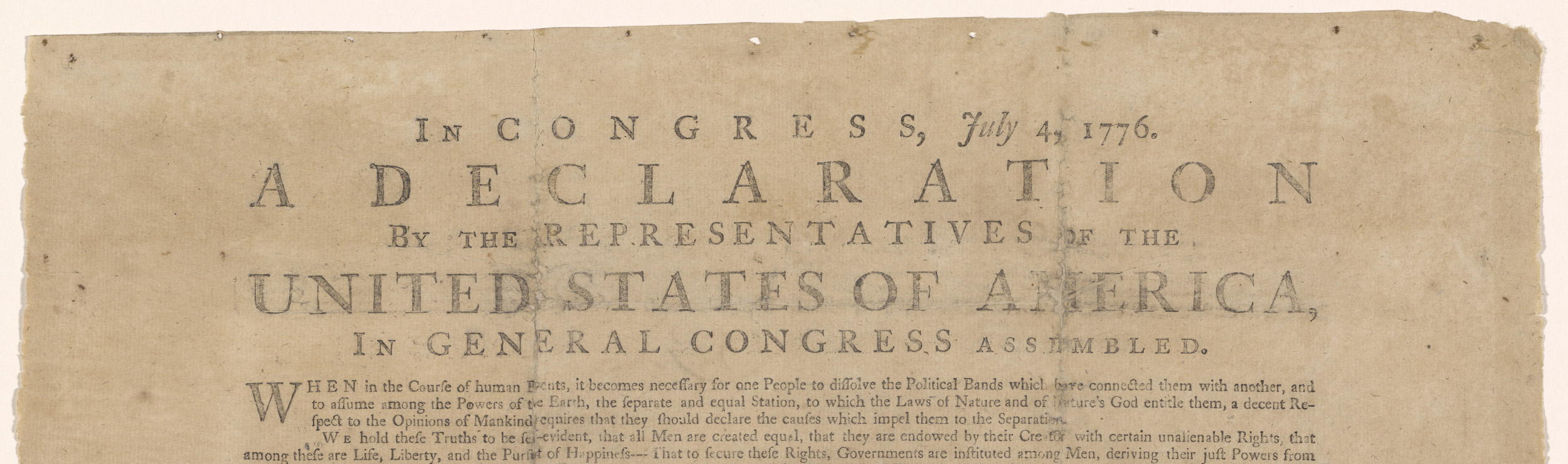
Exhibition Declaration of Independence
An exhibition of the Southwick Broadside, which was given to Washington University by the Newman Family in 2015.View Exhibition about Declaration of Independence -
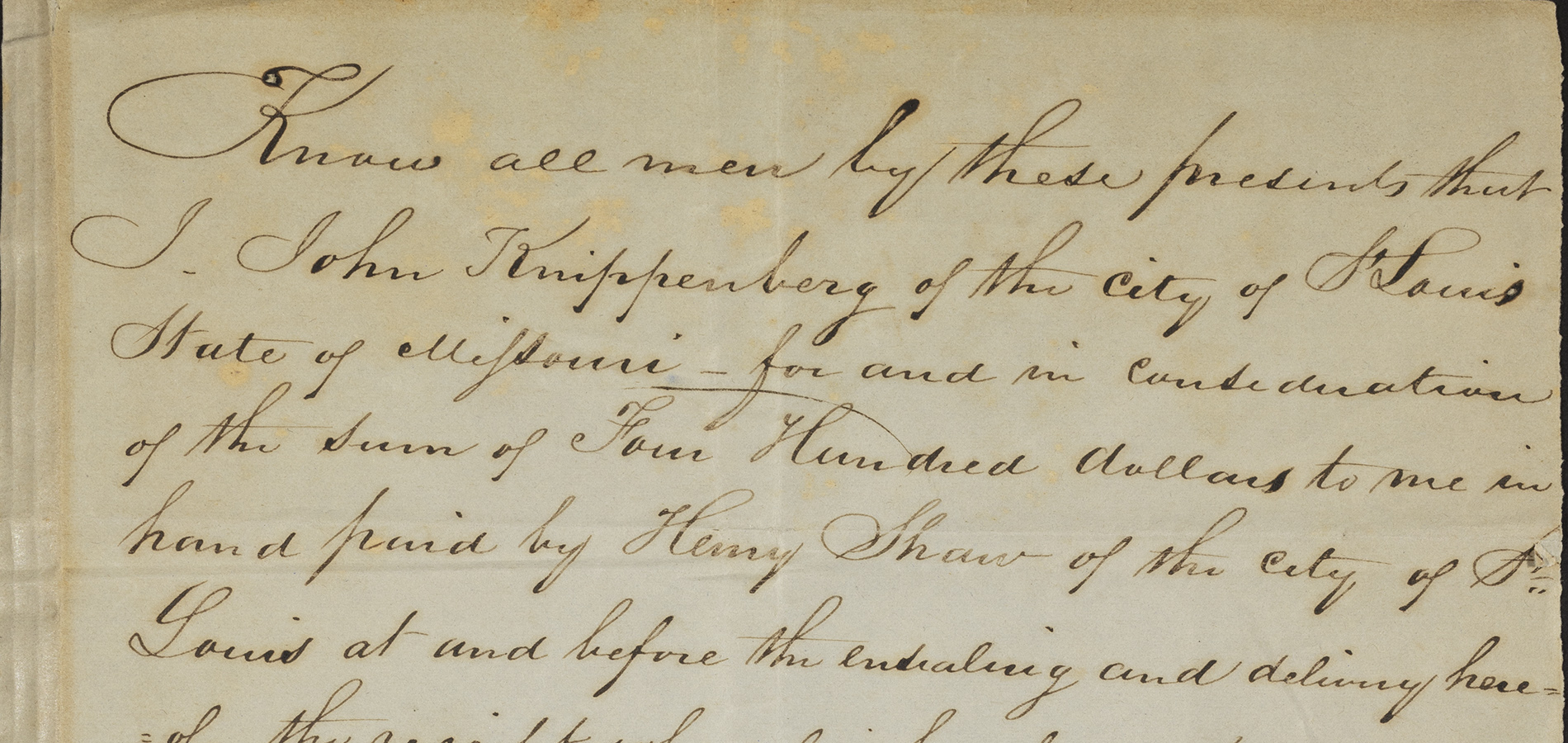
Exhibition Created Equal: Slavery and the Declaration of Independence
Created Equal looks at historical documents like the Declaration of Independence to elaborate on the narratives told by and with…View Exhibition about Created Equal: Slavery and the Declaration of Independence